
0/ Yesterday was my last day as the Rosetta Technical Lead at @coinbase. Starting tomorrow (crypto never sleeps, right?), I’ll join @el33th4xor, @kevinsekniqi, and the rest of the talented team at @avalabsofficial in building @avalancheavax.
More from Crypto

Out of curiosity I dug into how NFT's actually reference the media you're "buying" and my eyebrows are now orbiting the moon
Short version:
The NFT token you bought either points to a URL on the internet, or an IPFS hash. In most circumstances it references an IPFS gateway on the internet run by the startup you bought the NFT from.
Oh, and that URL is not the media. That URL is a JSON metadata file
Here's an example. This artwork is by Beeple and sold via Nifty:
https://t.co/TlJKH8kAew
The NFT token is for this JSON file hosted directly on Nifty's servers:
https://t.co/GQUaCnObvX
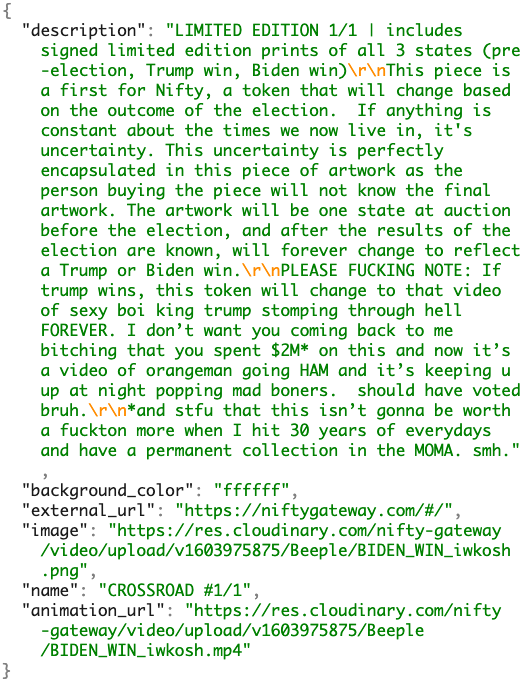
THAT file refers to the actual media you just "bought". Which in this case is hosted via a @cloudinary CDN, served by Nifty's servers again.
So if Nifty goes bust, your token is now worthless. It refers to nothing. This can't be changed.
"But you said some use IPFS!"
Let's look at the $65m Beeple, sold by Christies. Fancy.
https://t.co/1G9nCAdetk
That NFT token refers directly to an IPFS hash (https://t.co/QUdtdgtssH). We can take that IPFS hash and fetch the JSON metadata using a public gateway:
https://t.co/CoML7psBhF

Short version:
The NFT token you bought either points to a URL on the internet, or an IPFS hash. In most circumstances it references an IPFS gateway on the internet run by the startup you bought the NFT from.
Oh, and that URL is not the media. That URL is a JSON metadata file
Here's an example. This artwork is by Beeple and sold via Nifty:
https://t.co/TlJKH8kAew
The NFT token is for this JSON file hosted directly on Nifty's servers:
https://t.co/GQUaCnObvX
THAT file refers to the actual media you just "bought". Which in this case is hosted via a @cloudinary CDN, served by Nifty's servers again.
So if Nifty goes bust, your token is now worthless. It refers to nothing. This can't be changed.
"But you said some use IPFS!"
Let's look at the $65m Beeple, sold by Christies. Fancy.
https://t.co/1G9nCAdetk
That NFT token refers directly to an IPFS hash (https://t.co/QUdtdgtssH). We can take that IPFS hash and fetch the JSON metadata using a public gateway:
https://t.co/CoML7psBhF


2020 was a game changer for Ethereum.
The vast majority of its success was fueled by #DeFi.
Here's what happened in 5 Tweets 🔽
1) Governance Tokens 🪙
Projects gave complete ownership of billion dollar protocols to their users, often using retroactive airdrops.
Early adopters earned tokens for past usage, and token-based voting now dictates all technical
2) Liquidity Mining ⛏️
Power users were the first to earn on-going distribution by providing liquidity.
$COMP sparked the wave, with $BAL coining the term a few weeks
3) Yield Faming 🌾
Projects coupled liquidity mining and governance tokens to boost 'yields' by combining lending rates with an incentive layer.
APYs peaked as high as 1M% during 'DeFi summer', leading to a 'food coin' craze like $YAM and
4) Fair Launches ✅
Who needs investment when you can launch using yield farming?
@iearnfinance debuted $YFI with no formal funding, seeding a community treasury for self-sustainability.
The notion of a core team and community became one and the
The vast majority of its success was fueled by #DeFi.
Here's what happened in 5 Tweets 🔽
1) Governance Tokens 🪙
Projects gave complete ownership of billion dollar protocols to their users, often using retroactive airdrops.
Early adopters earned tokens for past usage, and token-based voting now dictates all technical
It pays to be a web3 power user.
— Coopahtroopa \U0001f525_\U0001f525 (@Cooopahtroopa) December 9, 2020
Five networks that issued retroactive airdrops to value added actors \U0001f4dd
2) Liquidity Mining ⛏️
Power users were the first to earn on-going distribution by providing liquidity.
$COMP sparked the wave, with $BAL coining the term a few weeks
BAL is live!
— Balancer Labs (@BalancerLabs) June 23, 2020
The 435k BAL for liquidity providers of the first three weeks of liquidity mining (145k per week) have just been sent out to the wallets used to provide liquidity on Balancer.https://t.co/pkXFzwzPVC
3) Yield Faming 🌾
Projects coupled liquidity mining and governance tokens to boost 'yields' by combining lending rates with an incentive layer.
APYs peaked as high as 1M% during 'DeFi summer', leading to a 'food coin' craze like $YAM and
Check out @Cooopahtroopa's latest post for all the #DeFi farmers out there \U0001f468\u200d\U0001f33e
— Zerion \U0001f3e6 (@zerion_io) June 26, 2020
Turns out @synthetix_io & @CurveFinance were ploughing the fields long before $COMP & $BAL came along.
Learn how to put your #crypto to work with this #yieldfarming 101 \U0001f4b8
\U0001f449 https://t.co/zYUKtqx3BK
4) Fair Launches ✅
Who needs investment when you can launch using yield farming?
@iearnfinance debuted $YFI with no formal funding, seeding a community treasury for self-sustainability.
The notion of a core team and community became one and the
2/ What is a Fair Launch?
— fair launch capital (@fairlaunchcap) August 26, 2020
A FL enables founders to bootstrap new crypto networks that are earned, owned, and governed by their community from the outset.
In this dynamic, everyone participates on equal footing\u2014there is no early access, pre-mine, or allocation of tokens.


Where should I start?
1) Is Blockfi profitable?
2) How much money does BlockFi have on its balance sheet?
3) Is the yield that BlockFi pays to its depositors earned or subsidized by billionaire investors?
4) Has BlockFi ever been profitable?
5) Are you planning to go public?
1) Is Blockfi profitable?
2) How much money does BlockFi have on its balance sheet?
3) Is the yield that BlockFi pays to its depositors earned or subsidized by billionaire investors?
4) Has BlockFi ever been profitable?
5) Are you planning to go public?
When is the interview published? @otisa502
— Jakob.Cel (@HedegaardJakob) February 14, 2021
You May Also Like


1/x Fort Detrick History
Mr. Patrick, one of the chief scientists at the Army Biological Warfare Laboratories at Fort Detrick in Frederick, Md., held five classified US patents for the process of weaponizing anthrax.
2/x
Under Mr. Patrick’s direction, scientists at Fort Detrick developed a tularemia agent that, if disseminated by airplane, could cause casualties & sickness over 1000s mi². In a 10,000 mi² range, it had 90% casualty rate & 50% fatality rate
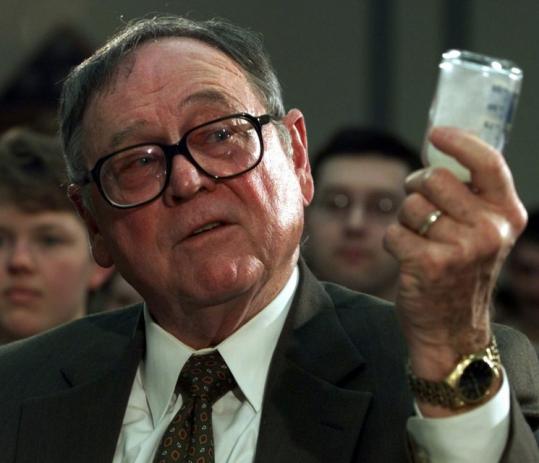
3/x His team explored Q fever, plague, & Venezuelan equine encephalitis, testing more than 20 anthrax strains to discern most lethal variety. Fort Detrick scientists used aerosol spray systems inside fountain pens, walking sticks, light bulbs, & even in 1953 Mercury exhaust pipes

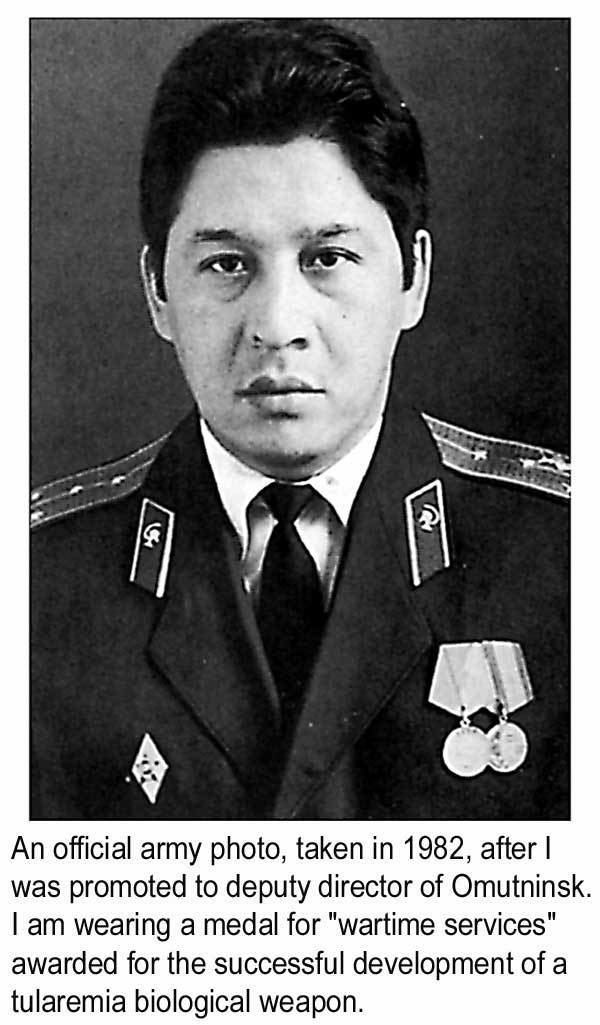
4/x After retiring in 1986, Mr. Patrick remained one of the world’s foremost specialists on biological warfare & was a consultant to the CIA, FBI, & US military. He debriefed Soviet defector Ken Alibek, the deputy chief of the Soviet biowarfare program
https://t.co/sHqSaTSqtB
5/x Back in Time
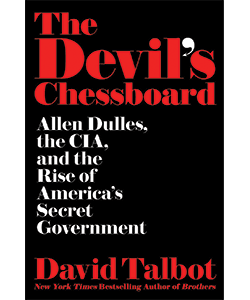
In 1949 the Army created a small team of chemists at "Camp Detrick" called Special Operations Division. Its assignment was to find military uses for toxic bacteria. The coercive use of toxins was a new field, which fascinated Allen Dulles, later head of the CIA
Mr. Patrick, one of the chief scientists at the Army Biological Warfare Laboratories at Fort Detrick in Frederick, Md., held five classified US patents for the process of weaponizing anthrax.
2/x
Under Mr. Patrick’s direction, scientists at Fort Detrick developed a tularemia agent that, if disseminated by airplane, could cause casualties & sickness over 1000s mi². In a 10,000 mi² range, it had 90% casualty rate & 50% fatality rate
3/x His team explored Q fever, plague, & Venezuelan equine encephalitis, testing more than 20 anthrax strains to discern most lethal variety. Fort Detrick scientists used aerosol spray systems inside fountain pens, walking sticks, light bulbs, & even in 1953 Mercury exhaust pipes
4/x After retiring in 1986, Mr. Patrick remained one of the world’s foremost specialists on biological warfare & was a consultant to the CIA, FBI, & US military. He debriefed Soviet defector Ken Alibek, the deputy chief of the Soviet biowarfare program
https://t.co/sHqSaTSqtB
5/x Back in Time
In 1949 the Army created a small team of chemists at "Camp Detrick" called Special Operations Division. Its assignment was to find military uses for toxic bacteria. The coercive use of toxins was a new field, which fascinated Allen Dulles, later head of the CIA


