https://t.co/vCoETA8CPn
Breaking—UK scientists just reported a case-control study that the mutated UK 🇬🇧B.1.1.7 variant is not associated w/ more severe #COVID19— “found no significant differences in hospital admissions and case fatality at 28 days, & occurrence of reinfections”, says @mvankerkhove
https://t.co/vCoETA8CPn
All things equal, a new mutated variant that is more contagious & no more severe is worse. And that is what we now have. https://t.co/F39PjnaiPu
Why a SARS-CoV-2 variant that's 50% more transmissible would in general be a much bigger problem than a variant that's 50% more deadly. A short thread... 1/
— Adam Kucharski (@AdamJKucharski) December 28, 2020
More from Eric Feigl-Ding
Stupid—Oregon church has huge 74+ person #COVID19 outbreak after dozens of maskless churchgoers stood onstage singing & clapping inside a packed indoor venue for Easter Sunday service. The Peoples Church, is vowing to do continue church service on Sunday.
2) Now, the Oregon Health Authority says that at least 74 people associated with the church have tested positive for the coronavirus — one of the state’s largest workplace outbreaks.
3) “In a statement, the church’s leaders attributed the outbreak to a recent rise in covid-19 cases in Marion County, Ore.
Murray said the church, which has held in-person services throughout the pandemic, intends to continue with in-person ceremonies on Sunday.
4) Who saw this coming? Countless scientists. If only airborne-denialists didn’t muzzle the airborne aerosols science.
2) Now, the Oregon Health Authority says that at least 74 people associated with the church have tested positive for the coronavirus — one of the state’s largest workplace outbreaks.
3) “In a statement, the church’s leaders attributed the outbreak to a recent rise in covid-19 cases in Marion County, Ore.
Murray said the church, which has held in-person services throughout the pandemic, intends to continue with in-person ceremonies on Sunday.
4) Who saw this coming? Countless scientists. If only airborne-denialists didn’t muzzle the airborne aerosols science.
\u26a0\ufe0fAIRBORNE >6 FEET / 2 METERS! The CDC finally acknowledged #SARSCoV2 has major transmission via airborne aerosols beyond 6 feet / 2 meters, not just close contact. The CDC/WHO & airborne deniers are a year late\u2014and negligently endangered many. #COVID19 \U0001f9f5https://t.co/1YMqDGbD0v pic.twitter.com/DUm5FA3V90
— Eric Feigl-Ding (@DrEricDing) May 8, 2021
JUST IN — "Camp Auschwitz" insurrectionist of the Capitol siege was just arrested this morning in Newport News, VIrginia.
2) this guy was just arrested.

3) We cannot have a repeat of the fascism from WW2. This is @Schwarzenegger’s speech was so powerful.
4) My wife @andreafeigl1’s 🇦🇹 great grandfather secretly fought Hilter’s Nazi regime & smuggled many Jews to safety as an aircraft engineer. He was thrown into a concentration camp, and escaped.
She knows a few things about Nazi history—Jan 6th was downright fascist. Read 👇
5) So this cover is from a semi-tabloid magazine in Germany, according to @andreafeigl1. But even so, how did such a magazine still get it so damn right?! Maybe Germany 🇩🇪 has seen this kinda fascism before...

2) this guy was just arrested.
3) We cannot have a repeat of the fascism from WW2. This is @Schwarzenegger’s speech was so powerful.
This speech will go down as one of the greatest speeches. @Schwarzenegger is right\u2014Jan 6th 2021 was our Kristallnacht. Austria \U0001f1e6\U0001f1f9 tried to resist Hilter takeover for years but succumbed because Hitler\u2019s lies went unchallenged. We must #impeach now. pic.twitter.com/gOChiGLuHK
— Eric Feigl-Ding (@DrEricDing) January 10, 2021
4) My wife @andreafeigl1’s 🇦🇹 great grandfather secretly fought Hilter’s Nazi regime & smuggled many Jews to safety as an aircraft engineer. He was thrown into a concentration camp, and escaped.
She knows a few things about Nazi history—Jan 6th was downright fascist. Read 👇
Some saw clearly what MAGAism is - pure fascism - in 2016.
— Dr. Andrea Feigl (@andreafeigl1) January 6, 2021
More see it 2day
Some saw this playbook b4: WW2
Americans r too unaware of history since it didn't happen on home soil
But we MUST heed these lessons, lest it b 2 late 4 democracy & consequences are unfathomable
\U0001f9f5 pic.twitter.com/QdoVG3LsrB
5) So this cover is from a semi-tabloid magazine in Germany, according to @andreafeigl1. But even so, how did such a magazine still get it so damn right?! Maybe Germany 🇩🇪 has seen this kinda fascism before...
⚠️TWO DIFFERENT #COVID19 PANDEMICS—Many think with cases dropping that pandemic is nearly over. But truth is, there are now 2 different #SARSCoV2 pandemics diverging—old strain is waning, while the more contagious #B117 strain is dominating. We will be soon slammed very hard. 🧵
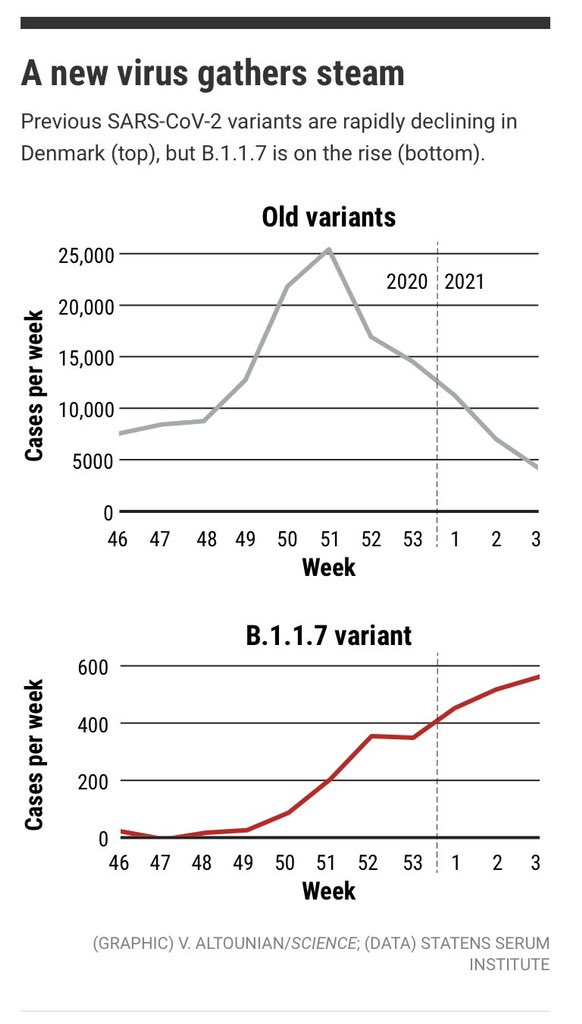
2) Here is what is really going to happen... most countries are having a gentle case decline with R(e) currently around 0.9. But this is deceiving. The #B117 is still relatively rare so far, so the R is being influenced mostly by the old common variant. But not for long...
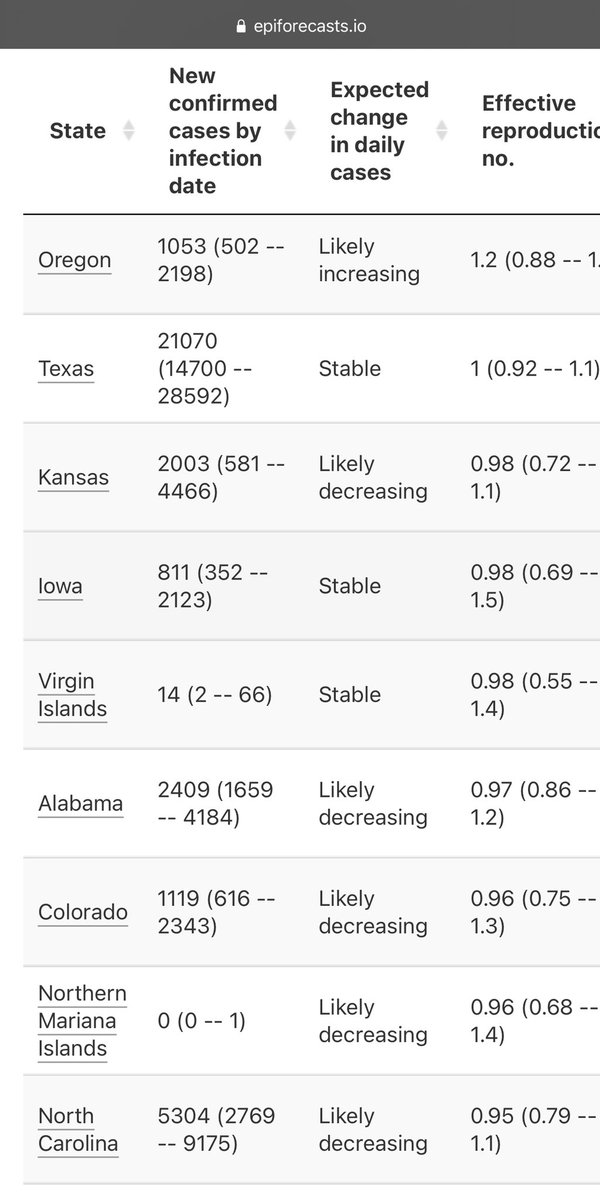
3) Here is what is going to happen... currently R is ~0.9 in many places, but with the more infectious #B117, the R will jump 50% approximately. And it is inevitable (all CDC and Danish models say this) that B117 will take over as the reigning dominant variant soon...
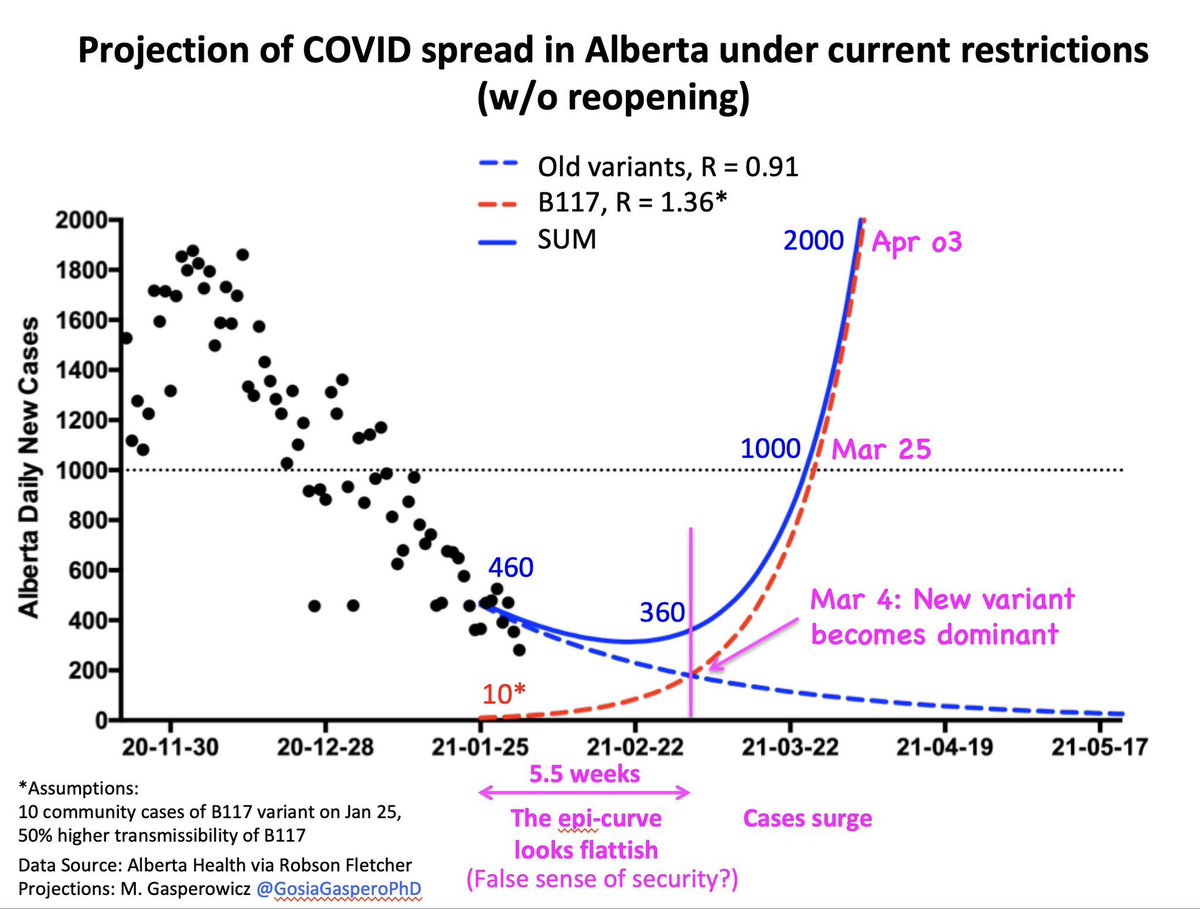
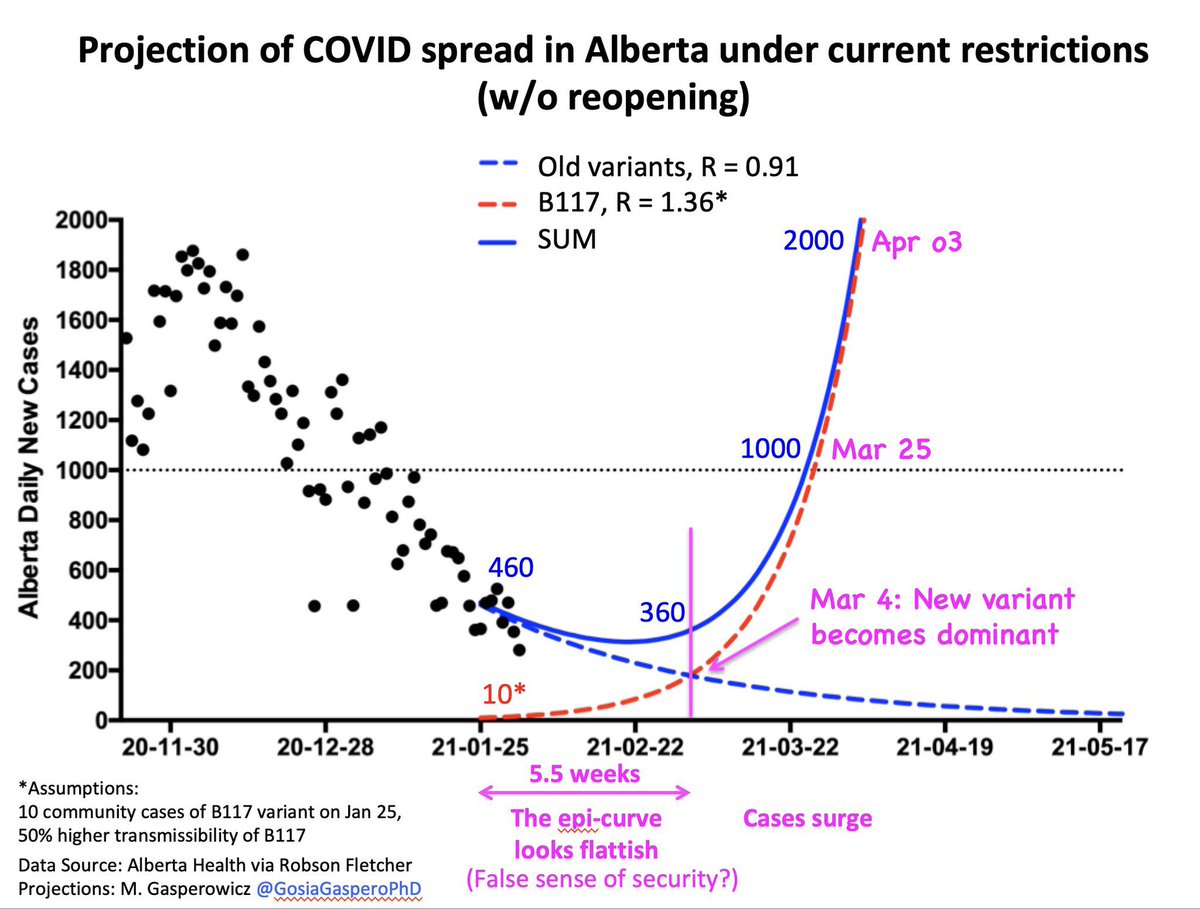
4) and when that happens, what worked before to keep the pandemic contained at R of 0.9 will no longer work. Here is the model for Alberta, 🇨🇦 by @GosiaGasperoPhD. The B117 dotted red line will soon dominate and drive a new surge in latter half of March and April.
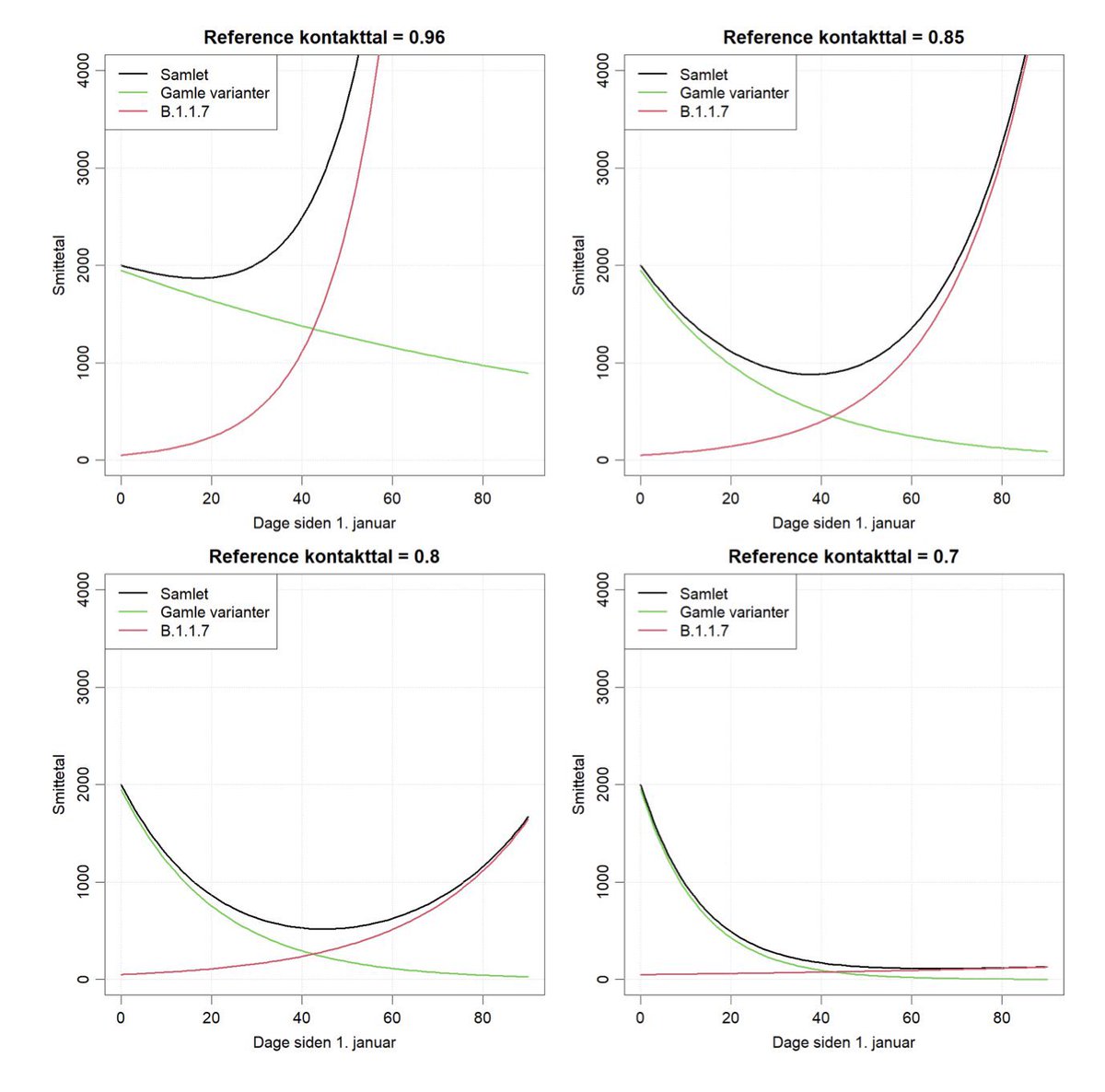
5) And Denmark 🇩🇰 CDC has found the same thing. I GQR works now for keeping R around 0.9 or even 0.8, will absolutely not work anymore once #B117 variant takes over. Forget about it. We will be hit hard. But there is a way—if we suppress R to 0.7 or less.
https://t.co/gOq0put4H5
2) Here is what is really going to happen... most countries are having a gentle case decline with R(e) currently around 0.9. But this is deceiving. The #B117 is still relatively rare so far, so the R is being influenced mostly by the old common variant. But not for long...
3) Here is what is going to happen... currently R is ~0.9 in many places, but with the more infectious #B117, the R will jump 50% approximately. And it is inevitable (all CDC and Danish models say this) that B117 will take over as the reigning dominant variant soon...
4) and when that happens, what worked before to keep the pandemic contained at R of 0.9 will no longer work. Here is the model for Alberta, 🇨🇦 by @GosiaGasperoPhD. The B117 dotted red line will soon dominate and drive a new surge in latter half of March and April.
5) And Denmark 🇩🇰 CDC has found the same thing. I GQR works now for keeping R around 0.9 or even 0.8, will absolutely not work anymore once #B117 variant takes over. Forget about it. We will be hit hard. But there is a way—if we suppress R to 0.7 or less.
https://t.co/gOq0put4H5
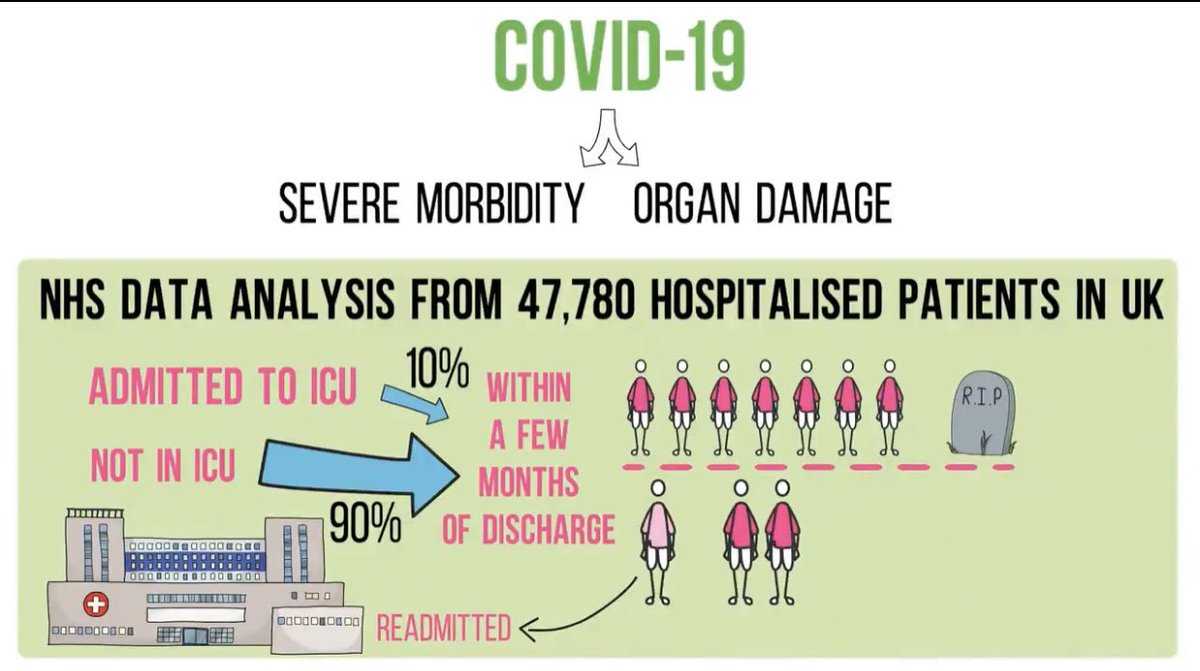
Wow. 1 in 3 hospitalized with #COVID19 gets readmitted to the hospital within a few months after discharge. ~48,000 UK patients.
Great animated lecture on #LongCovid by @Dr2NisreenAlwan, animated by @VickiGSP using info from UK @IndependentSage experts.

2) Furthermore, 1 in 8 of those who were discharged subsequently die. And many suffer long term ailments like heart disease, liver, kidney, diabetes, and more. This doesn’t even include less clinical critical cognitive effects. #LongCovid is real.
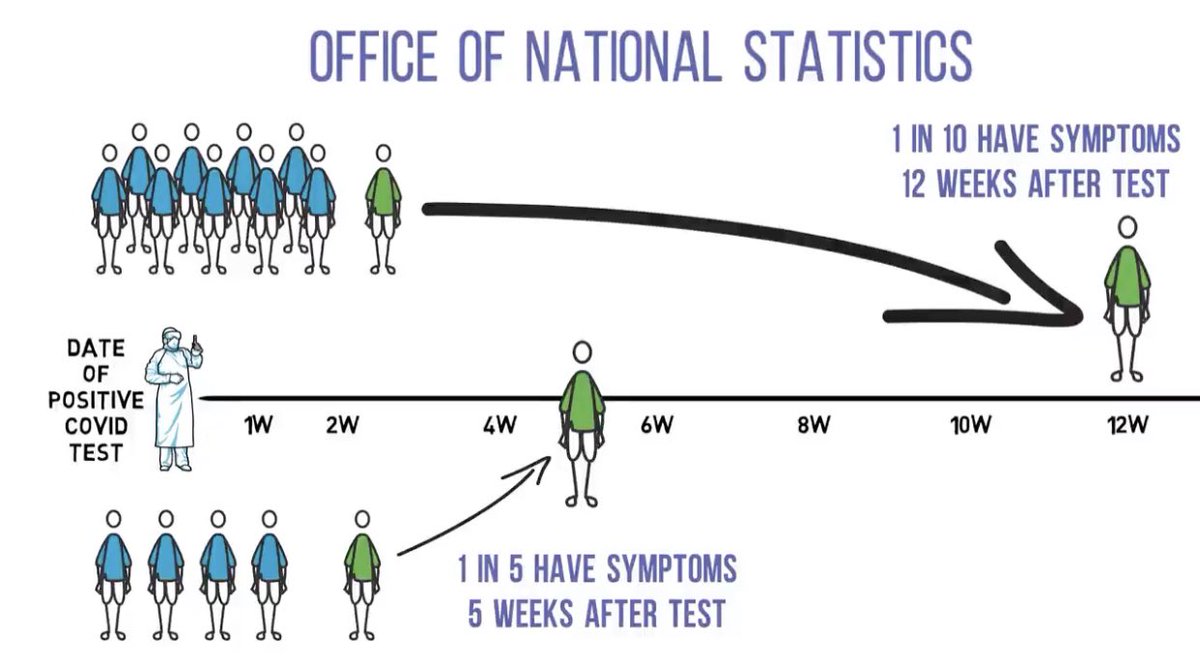
3) How common is #LongCovid overall? UK estimates 1 in 5 at 5 weeks and 1 in 10 have symptoms have even 12 weeks after initial #COVID19 diagnosis.
Lecture again by @Dr2NisreenAlwan

4) Let these numbers sink in... 1 in 10 at 12 weeks still have symptoms!
5) Here is the original study of the above lecture from few weeks ago. We need to prepare our healthcare system long term for the impact of millions with #LongCovid. This is gonna be larger than Gulf War Syndrome or long term health of 9/11 first responders.
Great animated lecture on #LongCovid by @Dr2NisreenAlwan, animated by @VickiGSP using info from UK @IndependentSage experts.
2) Furthermore, 1 in 8 of those who were discharged subsequently die. And many suffer long term ailments like heart disease, liver, kidney, diabetes, and more. This doesn’t even include less clinical critical cognitive effects. #LongCovid is real.
3) How common is #LongCovid overall? UK estimates 1 in 5 at 5 weeks and 1 in 10 have symptoms have even 12 weeks after initial #COVID19 diagnosis.
Lecture again by @Dr2NisreenAlwan
4) Let these numbers sink in... 1 in 10 at 12 weeks still have symptoms!
5) Here is the original study of the above lecture from few weeks ago. We need to prepare our healthcare system long term for the impact of millions with #LongCovid. This is gonna be larger than Gulf War Syndrome or long term health of 9/11 first responders.
LONG COVID\u201430% of hospital recovered #COVID19 patients end up back in hospital in <5 months; up to 12% die of complications. \u201cwe really need to prepare for #LongCovid. It\u2019s a mammoth task to follow up w/ these patients, but monitoring needs to be arranged\u201dhttps://t.co/h0y8WUn8sQ pic.twitter.com/Pk8GhQc9J5
— Eric Feigl-Ding (@DrEricDing) January 18, 2021
JUST ONE PERSON—UK 🇬🇧 scientists think one immunocompromised person who cleared virus slowly & only partially wiped out an infection, leaving behind genetically-hardier viruses that rebound & learn how to survive better. That’s likely how #B117 started. 🧵 https://t.co/bMMjM8Hiuz
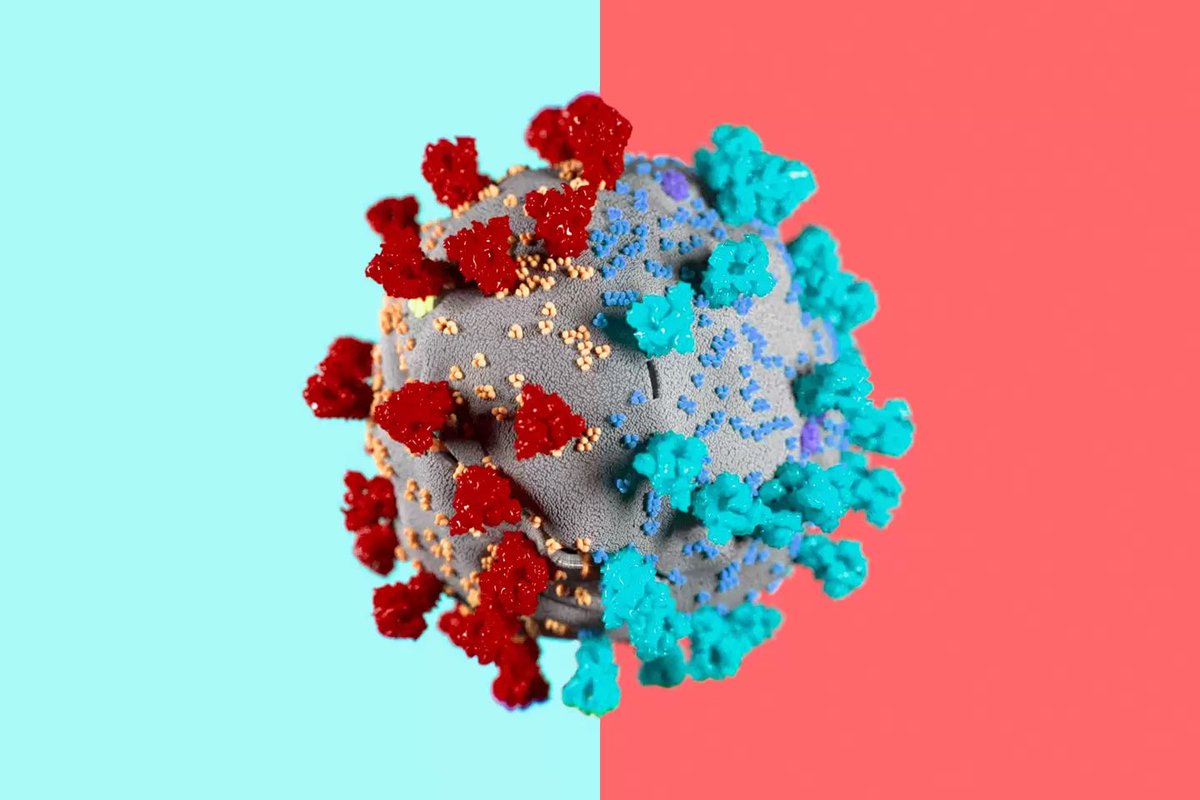
2) The leading hypothesis is that the new variant evolved within just one person, chronically infected with the virus for so long it was able to evolve into a new, more infectious form.
same thing happened in Boston in another immunocompromised person that was sick for 155 days.
3) What happened in Boston with one 45 year old man who was highly infectious for 155 days straight before he died... is exactly what scientists think happened in Kent, England that gave rise to #B117.
4) Doctors were shocked to find virus has evolved many different forms inside of this one immunocompromised man. 20 new mutations in one virus, akin to the #B117. This is possibly how #B1351 in South Africa 🇿🇦 and #P1 in Brazil 🇧🇷 also evolved.
5) “On its own, the appearance of a new variant in genomic databases doesn’t tell us much. “That’s just one genome amongst thousands every week. It wouldn’t necessarily stick out,” says Oliver Pybus, a professor of evolution and infectious disease at Oxford.
2) The leading hypothesis is that the new variant evolved within just one person, chronically infected with the virus for so long it was able to evolve into a new, more infectious form.
same thing happened in Boston in another immunocompromised person that was sick for 155 days.
3) What happened in Boston with one 45 year old man who was highly infectious for 155 days straight before he died... is exactly what scientists think happened in Kent, England that gave rise to #B117.
Immunocompromised 45 year old suffered from #COVID19 for 155 days before he died. The virus was changing very quickly inside the man's body\u2014it acquired a big cluster of >20 mutations\u2014resembled the same ones seen in #B117 & #B1351. (NPR audio Part 1 of 2)\U0001f9f5https://t.co/7kWiBZ1xGk pic.twitter.com/ZJ7AExB78Y
— Eric Feigl-Ding (@DrEricDing) February 8, 2021
4) Doctors were shocked to find virus has evolved many different forms inside of this one immunocompromised man. 20 new mutations in one virus, akin to the #B117. This is possibly how #B1351 in South Africa 🇿🇦 and #P1 in Brazil 🇧🇷 also evolved.
2) NPR report audio part 2 of 2:
— Eric Feigl-Ding (@DrEricDing) February 8, 2021
Dr. Li couldn't believe what they found. "I was shocked," he says. "When I saw the virus sequences, I knew that we were dealing with something completely different and potentially very important." pic.twitter.com/HT3Yt6djFd
5) “On its own, the appearance of a new variant in genomic databases doesn’t tell us much. “That’s just one genome amongst thousands every week. It wouldn’t necessarily stick out,” says Oliver Pybus, a professor of evolution and infectious disease at Oxford.
More from Covid


A teachable moment for Bayesian reasoning – when one study finds a result that's massively different than all the others, and, moreover, conflicts with what we know about the science, there's a pretty good chance it's either a fluke or it's wrong.
The Israeli estimate of relatively high immune escape from Delta that a lot of you were freaking out about now looks like it was the result of sloppy statistical analysis. https://t.co/F5sHsJDFF1
— Nate Silver (@NateSilver538) July 28, 2021