They find the property, do all the work, hire the management company and take fees. They often co-sign debt and always secure the financing.
A THREAD on how most real estate folks structure deals with outside investors.
Most people utilize the "preferred equity" structure when they raise money from outside investors. They "syndicate" deals.
Here's the basics:
They find the property, do all the work, hire the management company and take fees. They often co-sign debt and always secure the financing.
They don't co-sign debt. They simply read reports and ask the sponsors questions and cash checks every month (if the deal is going well).
"Preferred equity" belongs to the LPs. Cash talks, so this is a higher class of shares. They are first in the "capital stack" behind the debt (bank loan).
"Common equity" belongs to the sponsor. They are generally last in the capital stack.
That means the GP has skin in the game. His 10% co-invest makes him both an LP and a GP.
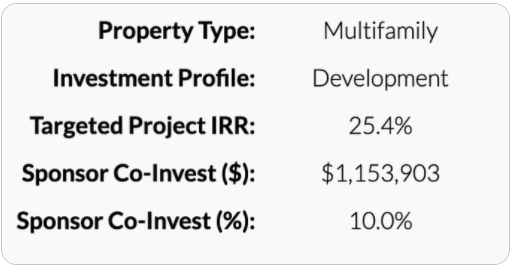
That means they get paid first. The pref signals how much. Its generally 6-12%. That means the LP is entitled to the first 6-12% of profit the project generates.
New development, or high risk value add projects, generally warrant lower prefs and higher "promotes"
Its a percentage of profits the sponsor gets AFTER the LPs get their preferred return on their cash.
This ranges from 20% to 50%. It can change based on checkpoints, or "waterfall".
Because every day your LP capital isn't returned its accumulating "preferred returns" that you owe to the LP. The only way to stop it is to return it.
There are often additional waterfalls. 80/20 after an 8 pref and 50/50 after a 20% "hurdle".
A hurdle is a return percentage you need to hit to get into the next level of promote.
Internal Rate of Return.
When the deal is done, and my capital is back, what percent return have I earned?
Sponsors hate it because there are so many other factors that are more important to the health of the deal.
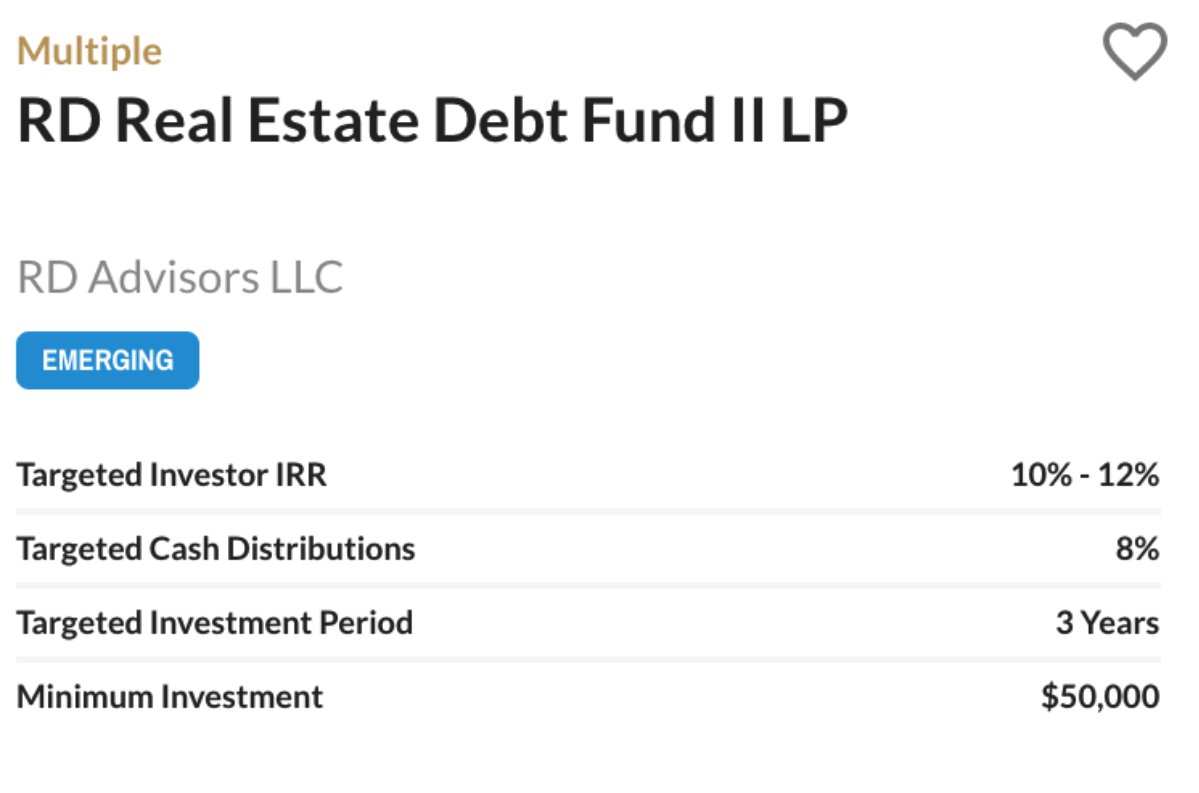
How long of a time frame are we on? These deals aren't liquid. LPs can't just ask for their money back.
Sponsors lay out the investment timeline and let everyone know how long this thing is expected to go.
Acquisition fees can be anywhere from 1-5%.
AUM fees are generally .5-2%.
The market sets these fees (as well as the pref and promote). If you have a track record, more fees.
I buy storage facilities so lets say we have a $1MM operational facility already at 90% occupancy.
Its (relatively) low risk so lets say the structure is 7 pref and 50% promote thereafter. No waterfalls.
We raise 300k from outside LPs to close out the deal. No co-invest to keep the math simple.
Starting on day 1 we owe the LPs a 7% annual rate (pref) on the $300k.
I would get paid $50k on day one to buy the deal and get it under ownership.
To keep the math simple we aren't building this in, but keep it in mind.
The 1% AUM fee would be $3,000 a year on the $300k.
That goes to the sponsor.
Our cash on cash would be around 15% or higher if we can secure Interest Only debt (not paying principle for the first period of time).
That means on day one I'm hitting the hurdle and getting paid
But we have $45k in cashflow, or $24k after the pref.
That money is split 50/50 between the GP and the LPs because we have a 50% promote.
Yr 1 the LPs get $21k+$12k for $33k. 11% IRR pace.
Yr 2 cashflow is even higher, $45k+$30k for $75k.
LPs are owed $21k as their pref and we have more to split up between the sponsor and LPs. LPs get another $27k and Sponsors get $27k.
Lets do a sale first. Our property might be worth a 7 cap on the new NOI, or $1.428MM. Lets say $1.5 for simple math.
We sell it for $1.5M at the 24 month mark. Home run deal.
Bank gets their $700k back first.
LPs get their $300k back next.
They've already been getting their pref from day 1 so we don't have a preferred return to "catch up" when we sell. So its 50/50 from here.
In 24 months the LPs made $81k in cashflow (or 13.5% per year).
That means the targeted cash yield on the deal should have been around 13.5% if the sponsors projections were correct. Cash yield doesn't account for sale, only ops.
A $331k total profit. In 2 yrs.
IRR: 55.16%
Equity Multiple: 2.1x
Add it to your resume, pay a bunch of taxes, and do a bigger deal!
Instead of selling the property for $1.5MM and paying a bunch of taxes and being stuck with $500k in capital that is earning nothing and needs re-deployed, lets hold the asset and put more debt on it.
They get the property appraised for $1.5MM, look at the debt service coverage ratio, and agree to lend 75% of the new value.
That means you can take $1,125,000 in new debt.
Bank gets paid $700k (original debt is cleared).
LPs get paid $300k (original investment, pref is no longer accruing)
You have $125k left over. Sponsor gets 50%. LPs get 50%.
EVERYTHING FROM HERE IS BUTTER.
The property still cashflows. You didn't pay a bunch of taxes. You still got LPs their money back and they're ready to do another deal with you.
You as the sponsor, now own 50% of a building you put $0 into.
I'm not a pro at this. Looking forward to getting corrected where I missed something.
There are thousands of ways to do this and terms and factors I didn't mention.
I just wish I could have read something like this a year ago when I first started on ReTwit.
https://t.co/h4fybmycuK
I use @GroundbreakerCo to manage my LPs. Same thing as Juniper Square except 1/5 the cost. Love it.
https://t.co/FEt1sBoSWS
More from Nick Huber
How to get smarter very fast:
Interact with smart people here on Twitter who have different world-views than you do.
And let them change your mind on something.
Here are the 30 people you should follow (along with my favorite tweet from each)👇👇
Twitter can be terrible if you follow negative people.
It can also be more valuable than a college degree if you follow (and network with) the right people.
You get to look right into their brain and read a daily narrative of HOW they think.
Ok lets go:
#1: @ShaanVP
You know he's all about venture capital based entrepreneurship. I'm about small (non-sexy) business. We disagree on a lot of stuff.
But he's done it and he's won. Bonus follow: @theSamParr (@myfirstmilpod podcast
#2: @fortworthchris
He is where I want to be in 15 years. Has built a massive real estate private equity firm from the ground up. Super grounded with what the way he does business and his podcast @theFORTpodcast is top
#3: @Julian
I'm a scattered thinker and procrastinator.
Julian is a master of clear thinking and simple but effective writing. A world class example of content marketing and
Interact with smart people here on Twitter who have different world-views than you do.
And let them change your mind on something.
Here are the 30 people you should follow (along with my favorite tweet from each)👇👇
Twitter can be terrible if you follow negative people.
It can also be more valuable than a college degree if you follow (and network with) the right people.
You get to look right into their brain and read a daily narrative of HOW they think.
Ok lets go:
#1: @ShaanVP
You know he's all about venture capital based entrepreneurship. I'm about small (non-sexy) business. We disagree on a lot of stuff.
But he's done it and he's won. Bonus follow: @theSamParr (@myfirstmilpod podcast
10 years ago, Netflix spent $0 on original content.
— Shaan Puri (@ShaanVP) January 14, 2021
This year:
Netflix: $11B
Apple: $6B
Disney: $1B
+ amazon, hulu HBO etc.
=
$20B+
Here's a crazy startup idea to take a swing at this $20B+ content pi\xf1ata. \U0001f447 Here's a quick business plan \U0001f914
#2: @fortworthchris
He is where I want to be in 15 years. Has built a massive real estate private equity firm from the ground up. Super grounded with what the way he does business and his podcast @theFORTpodcast is top
When buying a deal, every day that goes by, the potential for tunnel vision grows.
— Chris Powers (@fortworthchris) January 7, 2021
Obsessing over executing detailed Due Diligence early and efficiently is paramount to limiting this.
#3: @Julian
I'm a scattered thinker and procrastinator.
Julian is a master of clear thinking and simple but effective writing. A world class example of content marketing and
THREAD: 10 significant lies you're told about the world.
— Julian Shapiro (@Julian) January 9, 2021
On startups, writing, and your career: