A few thoughts in advance of seeing the Brexit deal, assuming it's not scuppered at the last.
1. It will save industries, in the short term. For all the problems it *won't* solve, there is at least that. Tariffs would have finished off some sectors like switching off a light.
6. Expect a few positive surprises. (Not compared to EU membership, but to what would otherwise have been.)
8. How have services fared? They're what keep our trade deficit from being a larger trade deficit. They can't get stuck at ports, but they can suffer from changes.
- There are dozens of new direct ferry services between Ireland and the Continent, all introduced in the last 12 months or so. These include the 2 largest Ro-Ro ships in the world. So less via the landbridge.
More from Edwin Hayward 🦄 🗡



Handy guide for Dominic Raab and other Brexiteers, and for anyone keen to replace our EU trade with trade with the rest of the world on WTO terms...
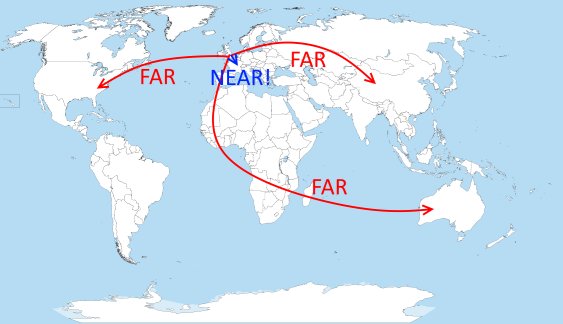
You can't magic away the vast distances involved. Clue: we fly in only 1/192th of our trade compared to the amount that arrives via sea
But even if you invented a teleporter tomorrow, WTO terms are so bad, so stacked against us, that a no-deal Brexit will be a total economic disaster
And while the Brexiteers fantasise, real jobs are being lost, investments are drying up, companies are moving assets to the EU27 or redomiciling. All already happened and happening right now, not in some mythical
Of course, there are many, many myths that Brexiteers perpetuate that are total fiction. You've seen a couple of them already. The thread below busts a whole lot
You can't magic away the vast distances involved. Clue: we fly in only 1/192th of our trade compared to the amount that arrives via sea
In 2016, the UK transported 484,000,000 tons of freight by sea, but just 2,511,000 tons by air (192x less than by sea). Therefore absurd to think of simply substituting air freight for sea freight (e.g. if we have to fly in food or medicines because of post-Brexit jams at ports)
— Edwin Hayward (@uk_domain_names) October 28, 2018
But even if you invented a teleporter tomorrow, WTO terms are so bad, so stacked against us, that a no-deal Brexit will be a total economic disaster
Here's the truth about Brexit, the "punishment" some people claim the EU wants to inflict on us, the full horrific consequences of no deal, and the dangers lurking behind any deal we reach. Buckle in, it's pretty long. Better to be thorough than to leave anything out. 1/47
— Edwin Hayward (@uk_domain_names) October 14, 2018
And while the Brexiteers fantasise, real jobs are being lost, investments are drying up, companies are moving assets to the EU27 or redomiciling. All already happened and happening right now, not in some mythical
Ok, it's high time to look at the REAL effects of Brexit. As the Tories implode & Labour sits on its hands, companies are executing contingency plans, shifting jobs & assets, slashing investments, or redomiciling (accounting exercise). Happening NOW, not in a fantasy future. 1/95
— Edwin Hayward (@uk_domain_names) November 14, 2018
Of course, there are many, many myths that Brexiteers perpetuate that are total fiction. You've seen a couple of them already. The thread below busts a whole lot
Unicorn Shredder: Hard Brexit Truths
— Edwin Hayward (@uk_domain_names) November 15, 2018
- The major economic harm Brexit is already inflicting on the UK
- Reality of "no deal" & WTO terms
- EU "punishment" narrative
- Endangered industries: automotive & haulage
+ much, much more...
(Each tweet is a self-contained thread.)
More from Brexit


On this, I think it’s highly unlikely to occur in the timeframe given. For several reasons, I don’t think it’s realistic for Scotland to secede, and then join the EU, in 9 years.
For that, thanks goes to Brexit.
A thread because why not...
Two important dates: March 2016 and January 1st 2021.
Firstly, prior to the 2014 referendum, the Nationalists proposed a date of March 2016 to secede.
Secondly, today - the end completion of Brexit five-and-a-half years after Cameron’s majority in 2015.
Brexit has demonstrated many things, primarily that splitting unions is not easy. The UKs membership of the EU was 47 years and by the end it was not at the heart of the EU. The Union has existed for over 300 as a unitary state.
Dividing a unitary state, like the UK, will not be easy. Frankly, it will make Brexit look simple. Questions of debt, currency, defence, and more will need to be resolved ... something not addressed with Brexit.
Starting with debt. Scotland will end up with its proportionate share of the UKs national debt. It’s not credible to suggest otherwise. Negotiating what is proportionate won’t be easy when both sides disagree.
It’s importance will be seen shortly.
For that, thanks goes to Brexit.
A thread because why not...
On the current trajectory, I think this is likely to be the map of Europe of 2030. pic.twitter.com/65i1A8CiP8
— Ben Judah (@b_judah) January 1, 2021
Two important dates: March 2016 and January 1st 2021.
Firstly, prior to the 2014 referendum, the Nationalists proposed a date of March 2016 to secede.
Secondly, today - the end completion of Brexit five-and-a-half years after Cameron’s majority in 2015.
Brexit has demonstrated many things, primarily that splitting unions is not easy. The UKs membership of the EU was 47 years and by the end it was not at the heart of the EU. The Union has existed for over 300 as a unitary state.
Dividing a unitary state, like the UK, will not be easy. Frankly, it will make Brexit look simple. Questions of debt, currency, defence, and more will need to be resolved ... something not addressed with Brexit.
Starting with debt. Scotland will end up with its proportionate share of the UKs national debt. It’s not credible to suggest otherwise. Negotiating what is proportionate won’t be easy when both sides disagree.
It’s importance will be seen shortly.


End of week 2 thread on post Brexit food trade
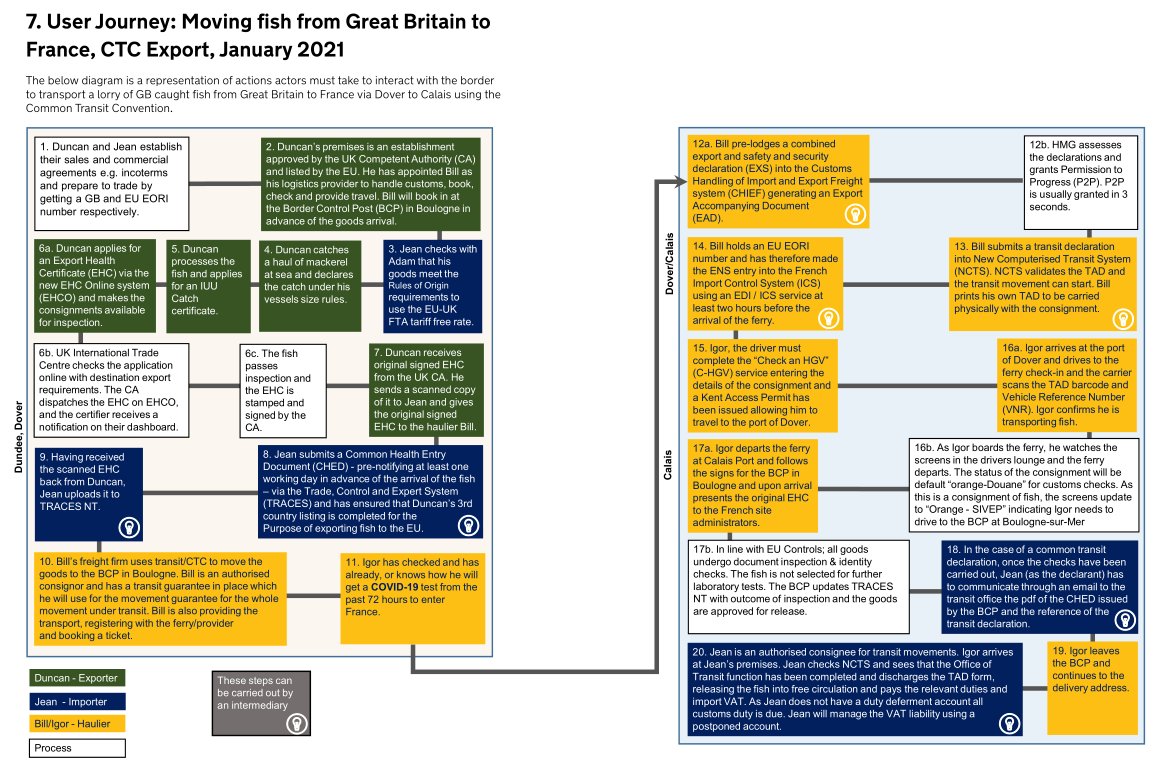
There is continued growing unease. The main picture remains one of depressed/tentative trade (c50% down y-o-y) and some high profile logistics business have taken the rational step to stop and regroup.
The big worry here is that ‘not-trading’becomes a habit. We can’t/won’t carry on at half the volumes of before, but as volumes claw back we may only reach something like 80% of previous volumes and that is a disaster for a food industry already battered by a recession.
Lots of focus has been on the idea of EU businesses stopping serving the UK. Worries about how we feed ourselves has trumped worry about our exporters at every stage. Even though it is the collapse of our export businesses that is (and has always been) the greater threat.
To reassure the mainland British shopper that feels like less of a risk. UK is a large market of wealthy consumers, and UK gov has shown it will do anything (however unfair) to ensure stuff gets in - even letting supermarkets have access to the fast track lane to Dover.
I am not as close to this but it feels like shortage on the shelves is more of a genuine immediate threat for the island of Ireland. The types of innovative solutions we have discussed this week can help but will they come in quick enough?
There is continued growing unease. The main picture remains one of depressed/tentative trade (c50% down y-o-y) and some high profile logistics business have taken the rational step to stop and regroup.
The big worry here is that ‘not-trading’becomes a habit. We can’t/won’t carry on at half the volumes of before, but as volumes claw back we may only reach something like 80% of previous volumes and that is a disaster for a food industry already battered by a recession.
Lots of focus has been on the idea of EU businesses stopping serving the UK. Worries about how we feed ourselves has trumped worry about our exporters at every stage. Even though it is the collapse of our export businesses that is (and has always been) the greater threat.
To reassure the mainland British shopper that feels like less of a risk. UK is a large market of wealthy consumers, and UK gov has shown it will do anything (however unfair) to ensure stuff gets in - even letting supermarkets have access to the fast track lane to Dover.
NEW. \U0001f6a8\U0001f6a8\U0001f69b\U0001f1ec\U0001f1e7\U0001f644\U0001f69b\U0001f69a\U0001f6a8\U0001f6a8 clear signs govt is preparing for coming #brexit turbulence - consulting on new fast-track scheme for food lorries returning to Europe /1
— Peter Foster (@pmdfoster) January 13, 2021
https://t.co/QqDKxBUu3f
I am not as close to this but it feels like shortage on the shelves is more of a genuine immediate threat for the island of Ireland. The types of innovative solutions we have discussed this week can help but will they come in quick enough?
You May Also Like


1/ Some initial thoughts on personal moats:
Like company moats, your personal moat should be a competitive advantage that is not only durable—it should also compound over time.
Characteristics of a personal moat below:
2/ Like a company moat, you want to build career capital while you sleep.
As Andrew Chen noted:
3/ You don’t want to build a competitive advantage that is fleeting or that will get commoditized
Things that might get commoditized over time (some longer than
4/ Before the arrival of recorded music, what used to be scarce was the actual music itself — required an in-person artist.
After recorded music, the music itself became abundant and what became scarce was curation, distribution, and self space.
5/ Similarly, in careers, what used to be (more) scarce were things like ideas, money, and exclusive relationships.
In the internet economy, what has become scarce are things like specific knowledge, rare & valuable skills, and great reputations.
Like company moats, your personal moat should be a competitive advantage that is not only durable—it should also compound over time.
Characteristics of a personal moat below:
I'm increasingly interested in the idea of "personal moats" in the context of careers.
— Erik Torenberg (@eriktorenberg) November 22, 2018
Moats should be:
- Hard to learn and hard to do (but perhaps easier for you)
- Skills that are rare and valuable
- Legible
- Compounding over time
- Unique to your own talents & interests https://t.co/bB3k1YcH5b
2/ Like a company moat, you want to build career capital while you sleep.
As Andrew Chen noted:
People talk about \u201cpassive income\u201d a lot but not about \u201cpassive social capital\u201d or \u201cpassive networking\u201d or \u201cpassive knowledge gaining\u201d but that\u2019s what you can architect if you have a thing and it grows over time without intensive constant effort to sustain it
— Andrew Chen (@andrewchen) November 22, 2018
3/ You don’t want to build a competitive advantage that is fleeting or that will get commoditized
Things that might get commoditized over time (some longer than
Things that look like moats but likely aren\u2019t or may fade:
— Erik Torenberg (@eriktorenberg) November 22, 2018
- Proprietary networks
- Being something other than one of the best at any tournament style-game
- Many "awards"
- Twitter followers or general reach without "respect"
- Anything that depends on information asymmetry https://t.co/abjxesVIh9
4/ Before the arrival of recorded music, what used to be scarce was the actual music itself — required an in-person artist.
After recorded music, the music itself became abundant and what became scarce was curation, distribution, and self space.
5/ Similarly, in careers, what used to be (more) scarce were things like ideas, money, and exclusive relationships.
In the internet economy, what has become scarce are things like specific knowledge, rare & valuable skills, and great reputations.