Mollyycolllinss's Categories
Mollyycolllinss's Authors


Latest Saves


🧵 We're riding shotgun tonight. Here's a little thread on remote leadership with your's truly Ernst Fehr (@econ_uzh), @raffasadun and @Gerhard_Fehr. https://t.co/FcO1CFyRZk
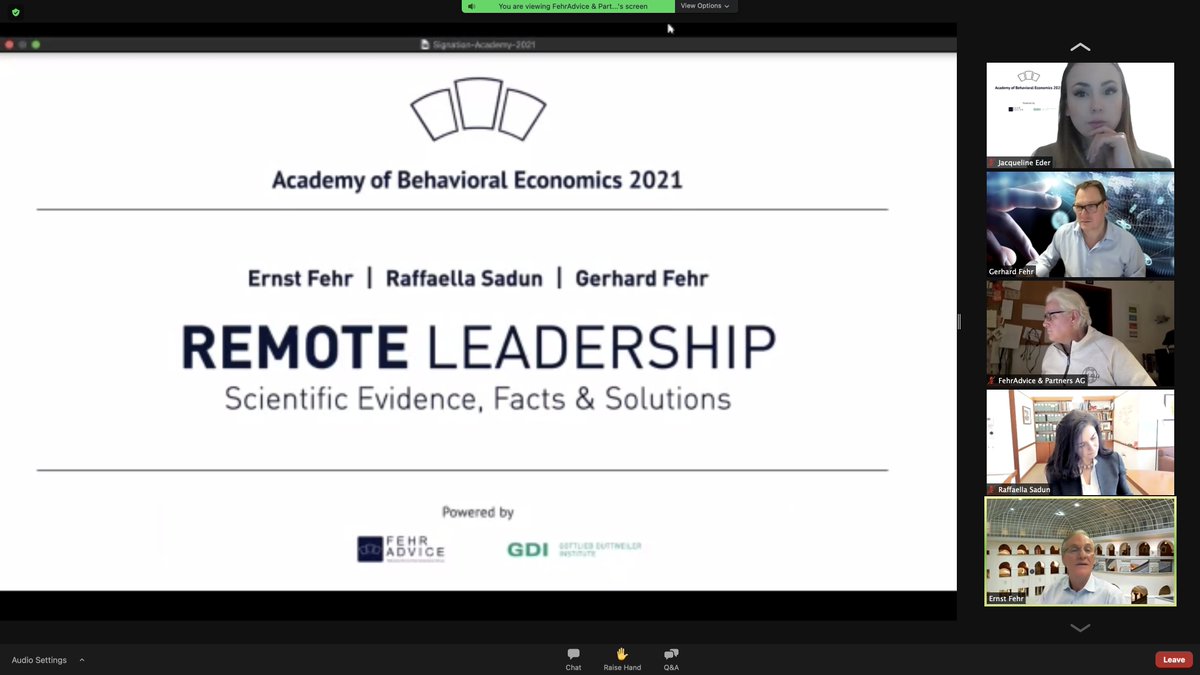
Ernst Fehr is talking about evidence and challenges of work at home arrangements.
Key question: Do we have the technological capacities to work at home? And is it a trend or a sustainable transformation?
Ernst Fehr @econ_uzh #EconomicsForSociety
Will this prevail in the long-run?
Ernst Fehr @econ_uzh #EconomicsForSociety
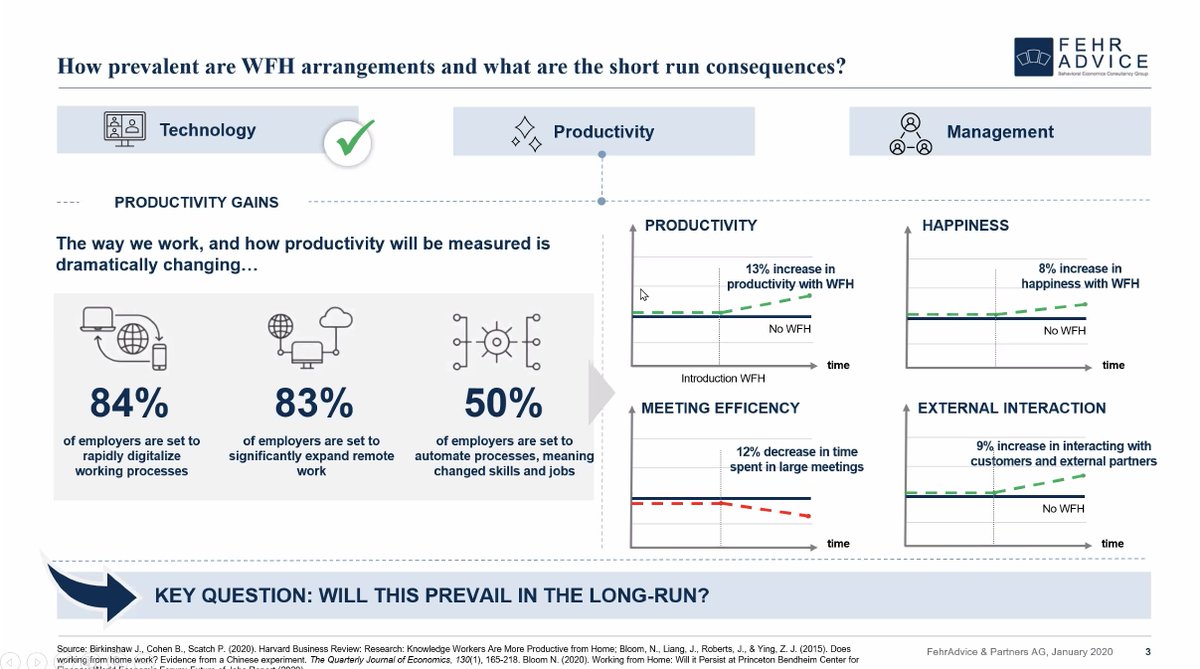
The problem of sustaining cooperation in the long-run: How do we prevent the deterioration of collaboration?
Ernst Fehr @econ_uzh #EconomicsForSociety

What does good leadership look like when everyone works from home?\u2013Top scientists @raffasadun and Ernst Fehr will provide you with some answers on 27 January \u2013 online and for free in our Academy of Behavioral Economics https://t.co/Di6hRqPvAA
— G. Duttweiler Inst' (@GDInstitute) January 15, 2021
Ernst Fehr is talking about evidence and challenges of work at home arrangements.
Key question: Do we have the technological capacities to work at home? And is it a trend or a sustainable transformation?
Ernst Fehr @econ_uzh #EconomicsForSociety
Will this prevail in the long-run?
Ernst Fehr @econ_uzh #EconomicsForSociety
The problem of sustaining cooperation in the long-run: How do we prevent the deterioration of collaboration?
Ernst Fehr @econ_uzh #EconomicsForSociety






This is a good @mattyglesias post about techno-politics but I want to quibble with the part of it that’s about my essay on the policy feedback loops you can build by Just Helping People Fast. Matt writes: https://t.co/MuBlgQV6LW
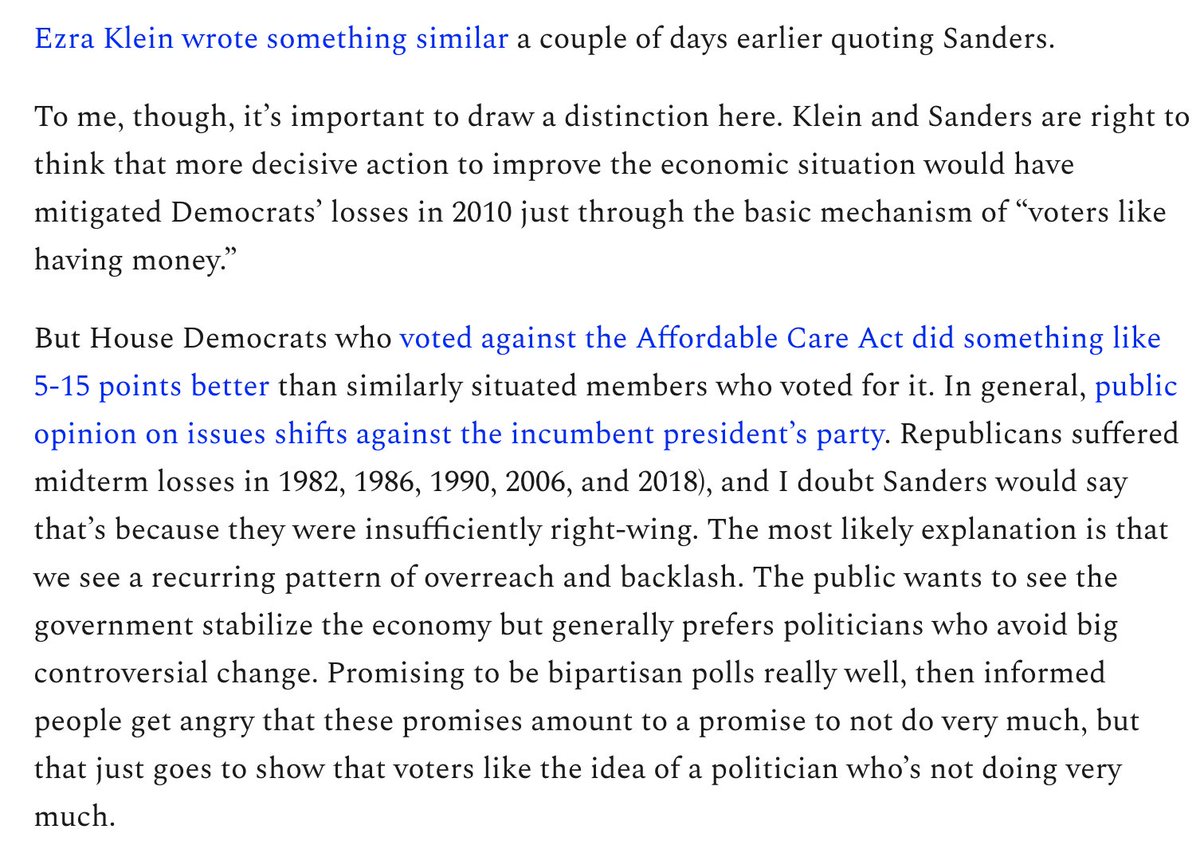
Over at Mischiefs of Faction, @Smotus makes a similar point: https://t.co/al6fS5tZXP
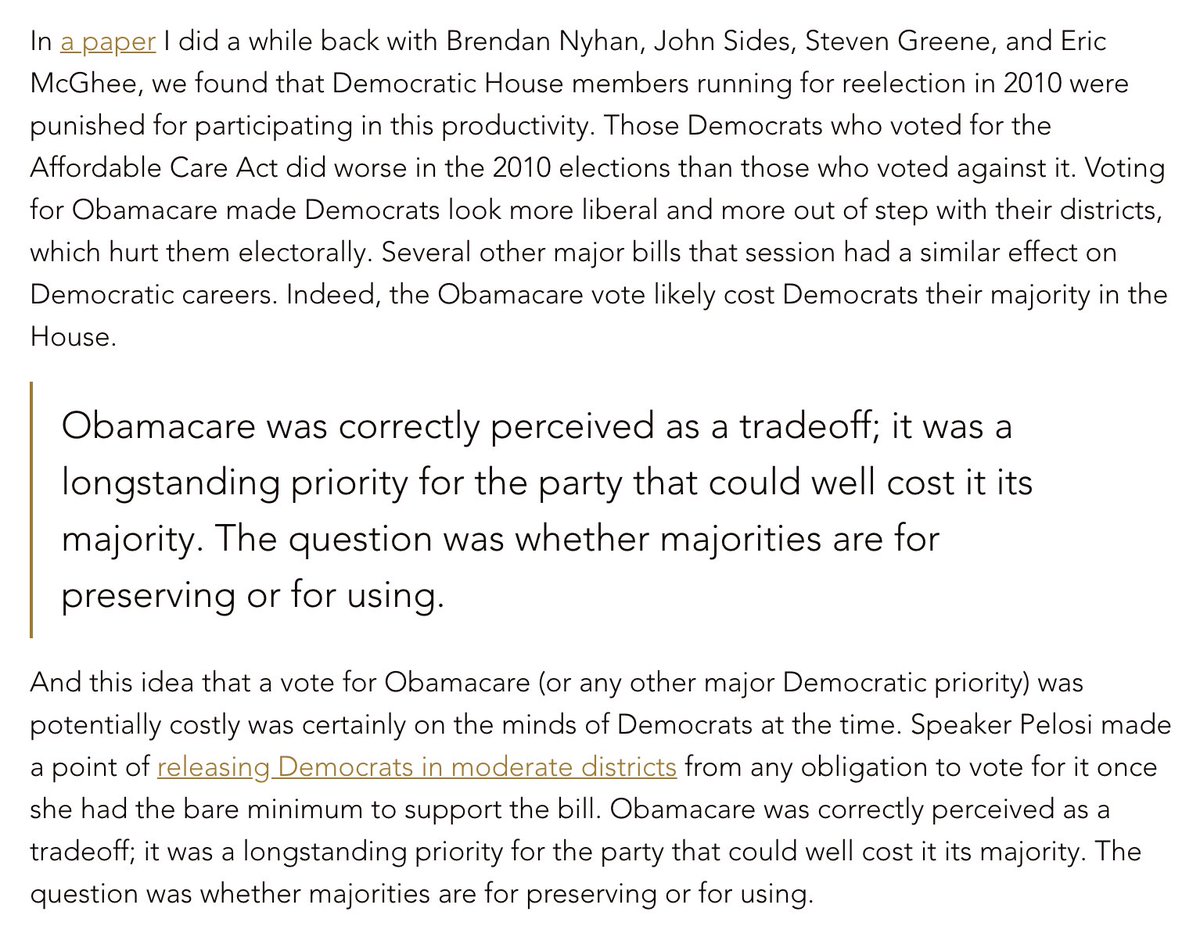
I want to be clear here: I’m saying that the Affordable Care act was, from a political perspective, badly designed, and that *a different health care plan* might’ve led to a better Dem performance in 2010. But these arguments don't grapple with that.
To @Smotus’s point, Pelosi released those House Democrats at the end, not the beginning. Having covered the beginning of this, I can tell you a lot of those Democrats thought a bipartisan health care bill would be great politics for them!
But they didn’t get that.
This is key. The ACA was built on the political theory that:
1. Bipartisan policy is easier to pass — and more popular once passed.
2. Working off of the Heritage Foundation/Romney template could get you a bipartisan health bill.
1 was probably right. 2 was utterly wrong.
Over at Mischiefs of Faction, @Smotus makes a similar point: https://t.co/al6fS5tZXP
I want to be clear here: I’m saying that the Affordable Care act was, from a political perspective, badly designed, and that *a different health care plan* might’ve led to a better Dem performance in 2010. But these arguments don't grapple with that.
To @Smotus’s point, Pelosi released those House Democrats at the end, not the beginning. Having covered the beginning of this, I can tell you a lot of those Democrats thought a bipartisan health care bill would be great politics for them!
But they didn’t get that.
This is key. The ACA was built on the political theory that:
1. Bipartisan policy is easier to pass — and more popular once passed.
2. Working off of the Heritage Foundation/Romney template could get you a bipartisan health bill.
1 was probably right. 2 was utterly wrong.




I’ve been reading lots recently about the interaction between First Amendment law and free speech principles with respect to online services in light of the events of the last few weeks.
And I have thoughts (MY OWN). So, I’m sorry ... a thread 1/25
One of the main reasons I think users are best served by a recognition that social media services have 1st Amendment rights to curate the content on their sites is because many users want filtered content, either by topic, or by behavior, or other. 2/
So online services should have the right to do this filtering, and to give their users the tools to do so too. For more detail see our Prager U amicus brief https://t.co/73PswB9Q7Q 3/
So, I disagree with my friends (and others) who say that every online service should apply First Amendment rules, even though they cannot be required to do so. There are both practical and policy reasons why I don’t like this. 4/
Most obviously, the 1st Amendment reflects only one national legal system when this is inherently an international issue. So it’s politically messy, even if you think a 1st Amendment-based policy will be most speech-protective (though probably only non-sexual speakers). 5/
And I have thoughts (MY OWN). So, I’m sorry ... a thread 1/25
One of the main reasons I think users are best served by a recognition that social media services have 1st Amendment rights to curate the content on their sites is because many users want filtered content, either by topic, or by behavior, or other. 2/
So online services should have the right to do this filtering, and to give their users the tools to do so too. For more detail see our Prager U amicus brief https://t.co/73PswB9Q7Q 3/
So, I disagree with my friends (and others) who say that every online service should apply First Amendment rules, even though they cannot be required to do so. There are both practical and policy reasons why I don’t like this. 4/
Most obviously, the 1st Amendment reflects only one national legal system when this is inherently an international issue. So it’s politically messy, even if you think a 1st Amendment-based policy will be most speech-protective (though probably only non-sexual speakers). 5/





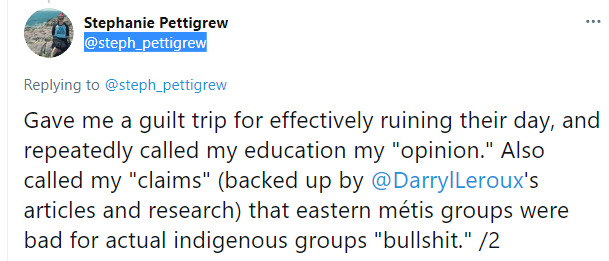
@steph_pettigrew I identify as EasternMetis , can you tell me exactly how I am hurting Indigenous groups? Oh please, this should be interesting.
I feel sorry for you that you believe @DarrylLeroux, have you done any independent research into "The Other Metis" at all ? LAC - Metis Circle Special Consultation -- Rock Matte, Claude Aubin, Frank Palmater etc.
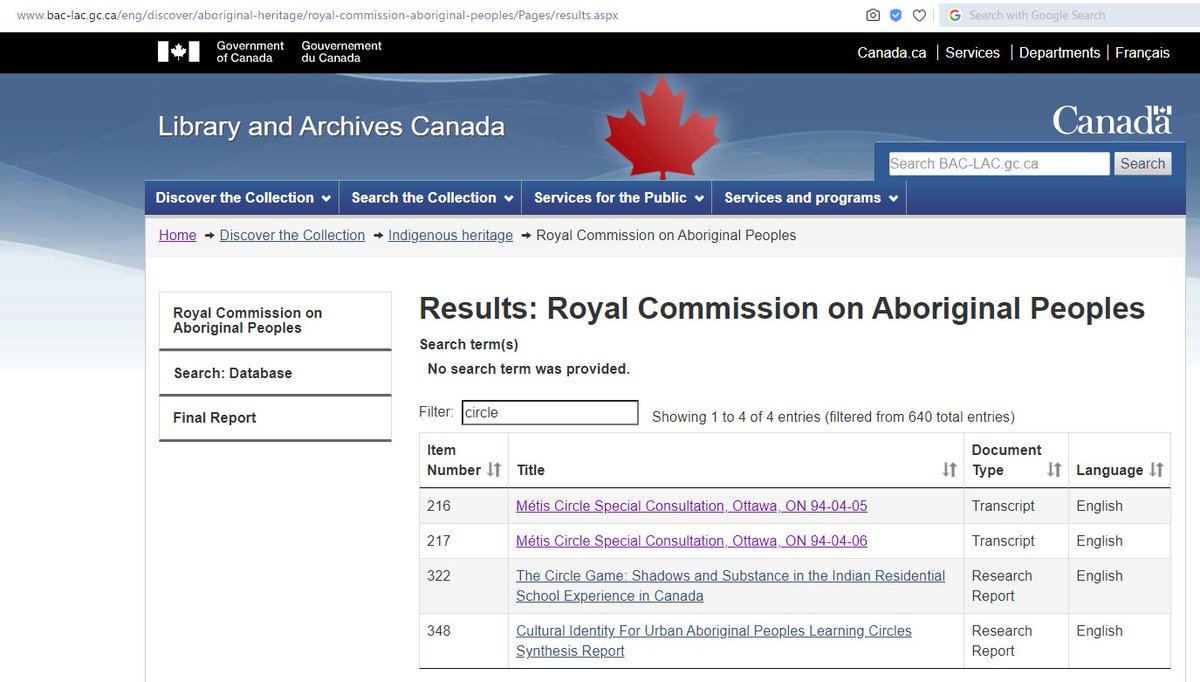
Have you read the RCAP reports, specifically RCAP 432 and RCAP 433 ?
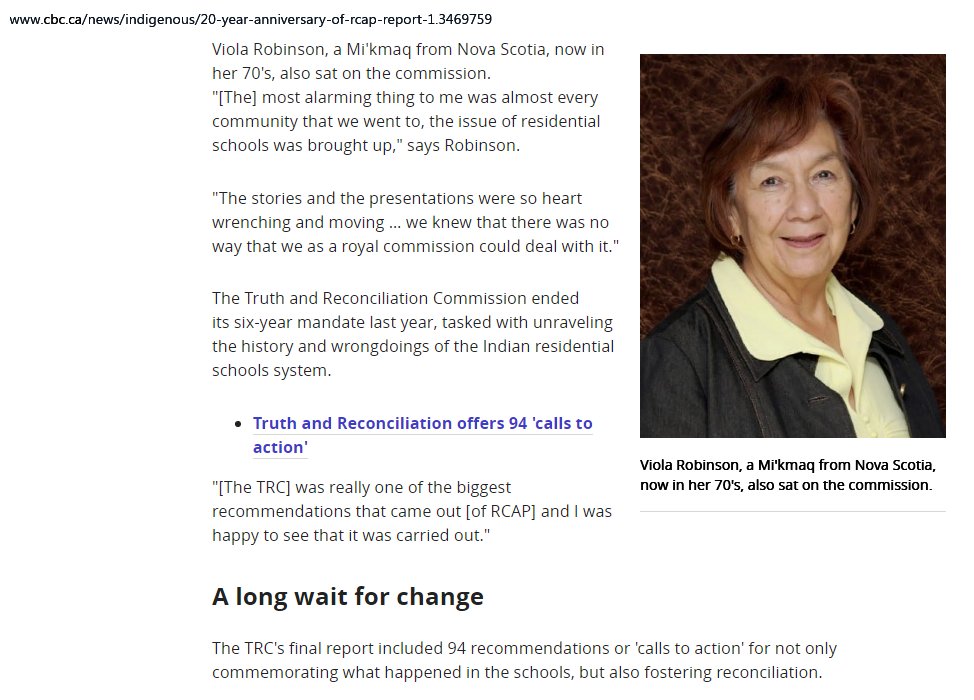
CBC - RCAP - Viola Robinson sat on the commission. https://t.co/3cD8CA8tu6
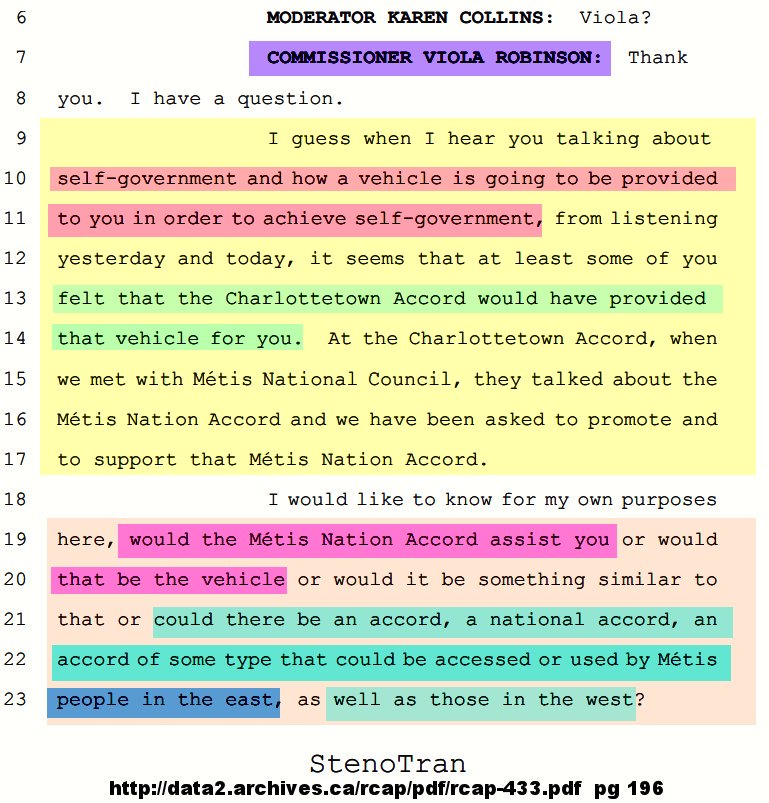
Métis Circle Special Consultation- Viola Robinson , asking if the Metis Nation Accord would be a vehicle that the Metis in the East could use.
I feel sorry for you that you believe @DarrylLeroux, have you done any independent research into "The Other Metis" at all ? LAC - Metis Circle Special Consultation -- Rock Matte, Claude Aubin, Frank Palmater etc.
Have you read the RCAP reports, specifically RCAP 432 and RCAP 433 ?
CBC - RCAP - Viola Robinson sat on the commission. https://t.co/3cD8CA8tu6
Métis Circle Special Consultation- Viola Robinson , asking if the Metis Nation Accord would be a vehicle that the Metis in the East could use.