https://t.co/LjpdlHa0C7 is getting a good face-lift.
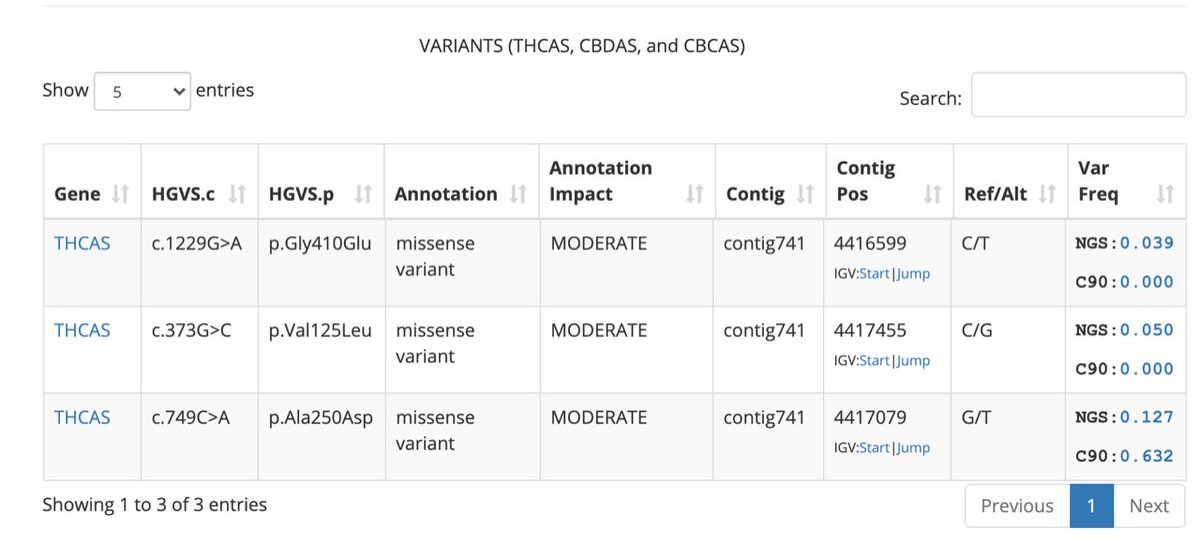
Samples now have variant tables with annotation on their impact to the gene.
There is also an IGV integration. You need IGV installed locally but the Start|Jump links will open up you BAM file in IGV.

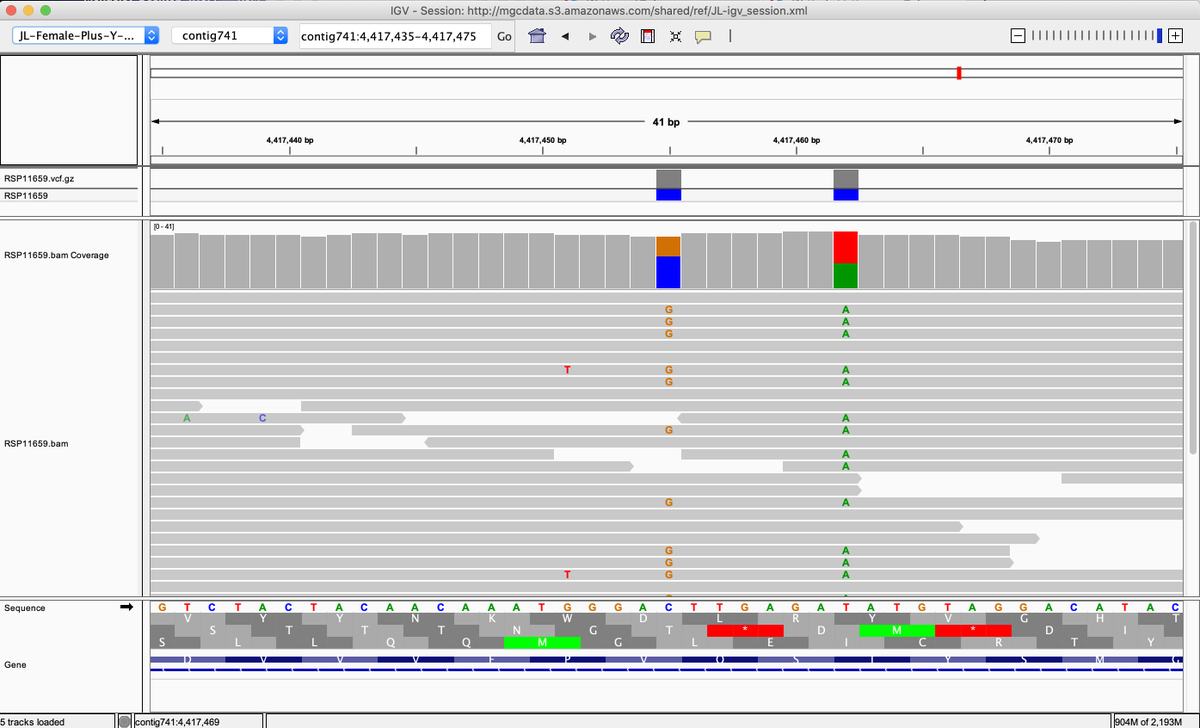
You must have IGV open and then click the start link.
The sample's BAM will show up for viewing in IGV.
Once open, you can use the jump link to move swiftly around to each variant. This is a variant in THCAS.
You can jump to other variants in the same gene. In this case we have one non-synonymous variant in phase with a synonymous variant in THCAS.
Cannabinoid synthase genes are cute but some folks can answer those questions with HPLC.
How about flowering genes?

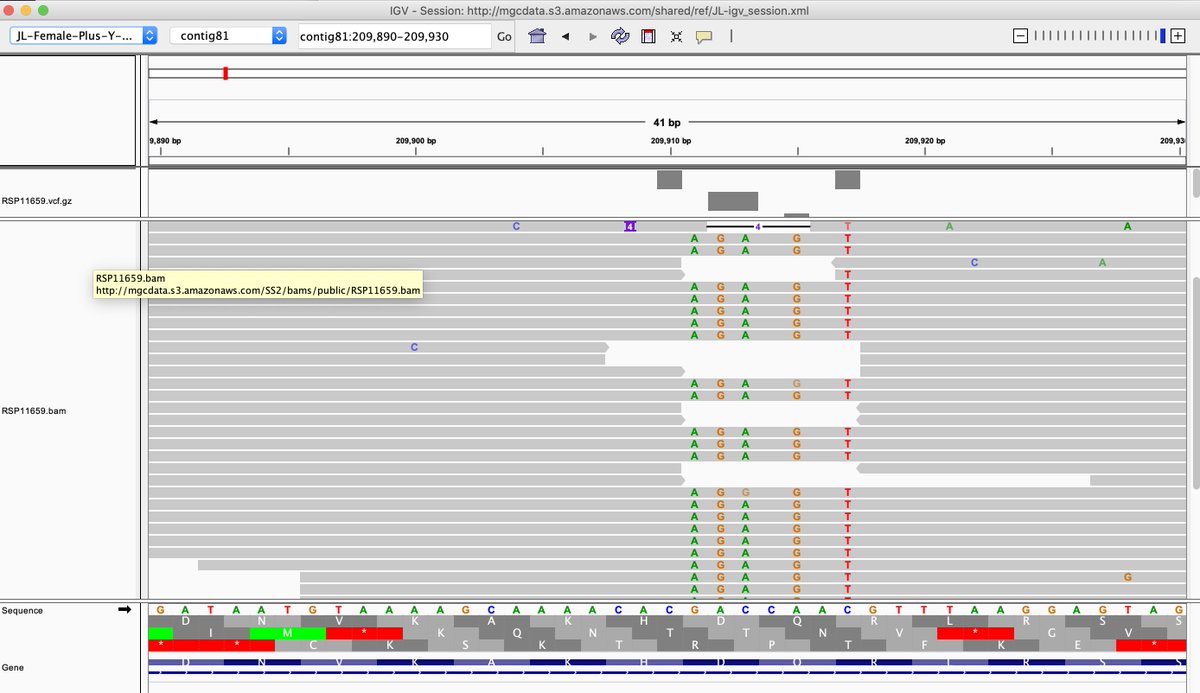
This sample has a disruptive in frame deletion on a late flowering gene. And it's very rare in the population.
Looks to be heterozygous....
But its never this simple in cannabis.

Let's look at what other damaging variations it has.
7 Damaging inframe deletions or insertions (indels) in Early and Late flowering genes.
When it comes to Indels, IGV can be very helpful to inspect the read frequency and if there appears to be any read mismapping with short reads. They all look real and diploid.
Here is another one in AAE1-2. This gene is involved in making the pre-cursors to cannabinoid synthesis.

It is not just a simple presence or absence of the cannabinoid synthase genes. One has to pay close attention to variants up stream in the pathway as well.
@threadreaderapp unroll

More from Tech

Recently, the @CNIL issued a decision regarding the GDPR compliance of an unknown French adtech company named "Vectaury". It may seem like small fry, but the decision has potential wide-ranging impacts for Google, the IAB framework, and today's adtech. It's thread time! 👇

It's all in French, but if you're up for it you can read:
• Their blog post (lacks the most interesting details):
https://t.co/PHkDcOT1hy
• Their high-level legal decision: https://t.co/hwpiEvjodt
• The full notification: https://t.co/QQB7rfynha

I've read it so you needn't!

Vectaury was collecting geolocation data in order to create profiles (eg. people who often go to this or that type of shop) so as to power ad targeting. They operate through embedded SDKs and ad bidding, making them invisible to users.

The @CNIL notes that profiling based off of geolocation presents particular risks since it reveals people's movements and habits. As risky, the processing requires consent — this will be the heart of their assessment.

Interesting point: they justify the decision in part because of how many people COULD be targeted in this way (rather than how many have — though they note that too). Because it's on a phone, and many have phones, it is considered large-scale processing no matter what.

You May Also Like