Create a digital "roll" with friends. Take pictures from the roll. You can't see them until: the roll is used up, a time limit expires, or you get to a specific location.
Great thread full of potential https://t.co/jA8h08M48z ideas! 💡
Create a digital "roll" with friends. Take pictures from the roll. You can't see them until: the roll is used up, a time limit expires, or you get to a specific location.
Send a guest a video or audio clip asking a question. Guest replies when able with same medium. Repeat. When done, share produced video/podcast.
A web app to track the progress of your project: ideation, naming, shipping code, launching.
Page can also be a dynamic browser overlay for live streaming.
Have tools for polls, surveys, sharing, launching to various outlets, etc.
If health insurance screws you over, no one has your back but you. Instead, can pay a small monthly fee to a service to take care of BS like this for you should issues arise.
Find local/regional businesses, gyms, co-working, cafés, etc. that offer discounts for digital nomads or van lifers. Akin to Epic Pass.
Send URLs and/or pictures of recipes to service and receive a simple, well formatted/standard book, catalog or cue cards in box of those recipes.
Simple site for displaying a company's first sale (like framed dollar bills in small businesses).
More from Tech

On Wednesday, The New York Times published a blockbuster report on the failures of Facebook’s management team during the past three years. It's.... not flattering, to say the least. Here are six follow-up questions that merit more investigation. 1/
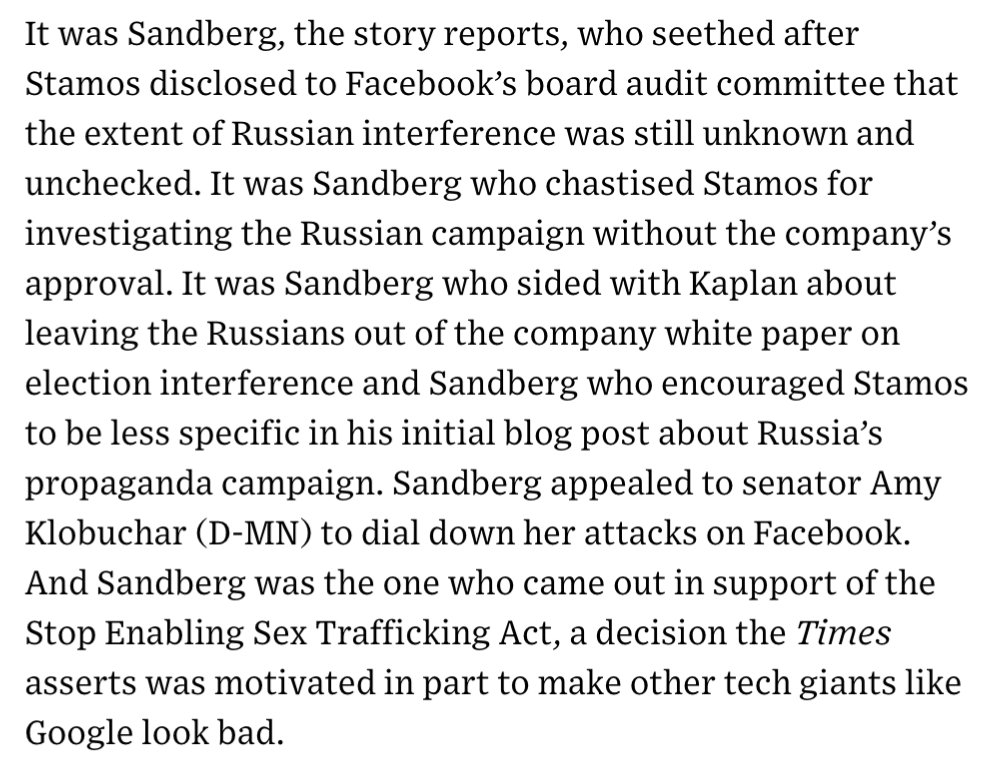
1) During the past year, most of the anger at Facebook has been directed at Mark Zuckerberg. The question now is whether Sheryl Sandberg, the executive charged with solving Facebook’s hardest problems, has caused a few too many of her own. 2/ https://t.co/DTsc3g0hQf
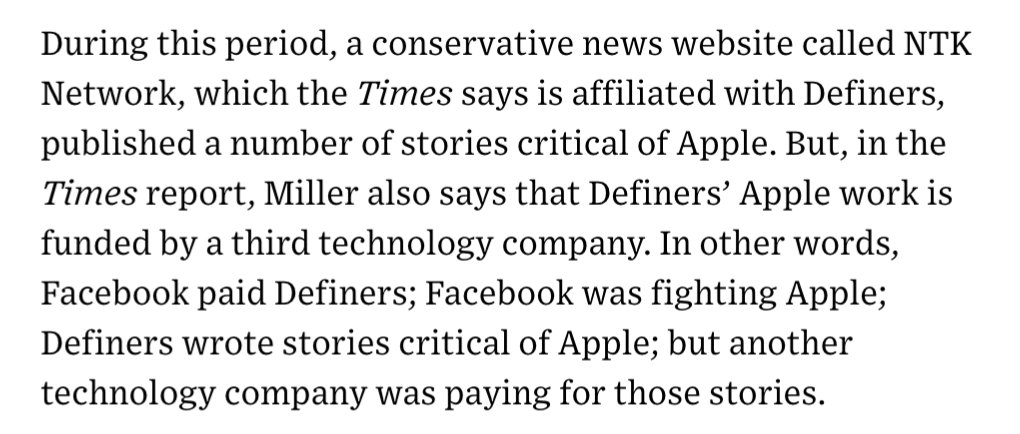
2) One of the juiciest sentences in @nytimes’ piece involves a research group called Definers Public Affairs, which Facebook hired to look into the funding of the company’s opposition. What other tech company was paying Definers to smear Apple? 3/ https://t.co/DTsc3g0hQf
3) The leadership of the Democratic Party has, generally, supported Facebook over the years. But as public opinion turns against the company, prominent Democrats have started to turn, too. What will that relationship look like now? 4/
4) According to the @nytimes, Facebook worked to paint its critics as anti-Semitic, while simultaneously working to spread the idea that George Soros was supporting its critics—a classic tactic of anti-Semitic conspiracy theorists. What exactly were they trying to do there? 5/
1) During the past year, most of the anger at Facebook has been directed at Mark Zuckerberg. The question now is whether Sheryl Sandberg, the executive charged with solving Facebook’s hardest problems, has caused a few too many of her own. 2/ https://t.co/DTsc3g0hQf
2) One of the juiciest sentences in @nytimes’ piece involves a research group called Definers Public Affairs, which Facebook hired to look into the funding of the company’s opposition. What other tech company was paying Definers to smear Apple? 3/ https://t.co/DTsc3g0hQf
3) The leadership of the Democratic Party has, generally, supported Facebook over the years. But as public opinion turns against the company, prominent Democrats have started to turn, too. What will that relationship look like now? 4/
4) According to the @nytimes, Facebook worked to paint its critics as anti-Semitic, while simultaneously working to spread the idea that George Soros was supporting its critics—a classic tactic of anti-Semitic conspiracy theorists. What exactly were they trying to do there? 5/