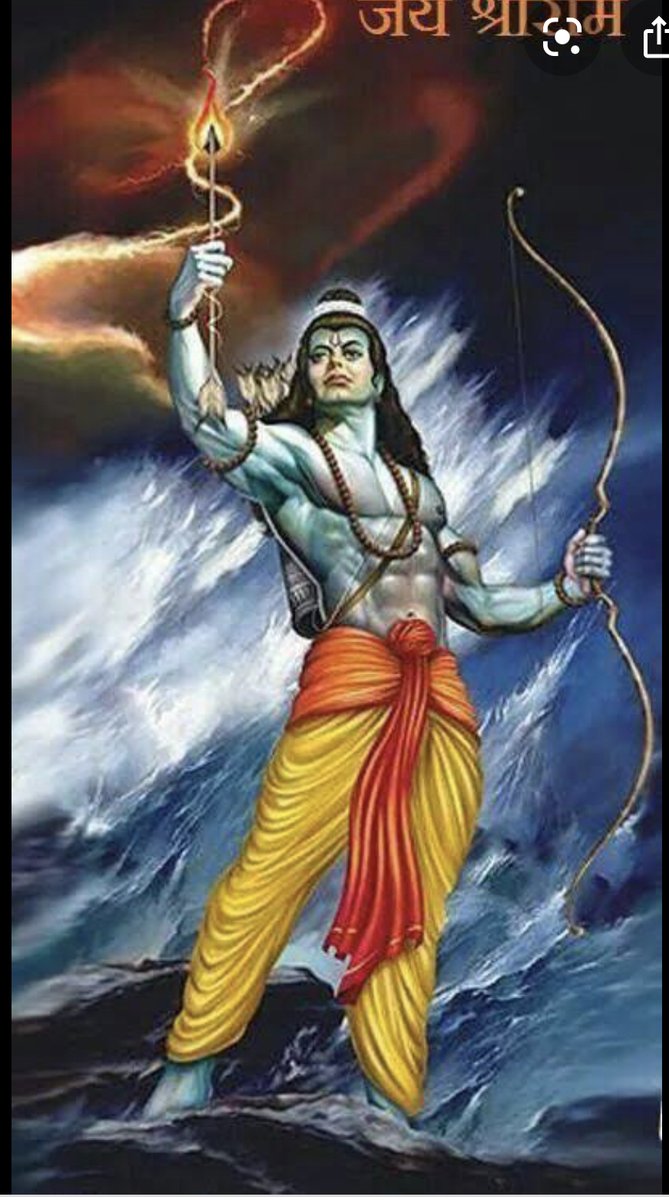
Shri Hanuman had boon to be immortal. And be present where ever there is Ram stuti.
I came across this beautiful story that I would like to share
#threadstories
#Hanuman ji is believed to live in the foothills of Himalayas. But once he spent a lot of time in Sri Lanka
1/9

Where Ravan's brother ruled for many years..
On his way back he came across tribal people from community called #Mathanga
He gave Darshan to them. The chief of the tribe asked him to keep coming back to guide their generations
Hanuman ji said that whoever recites this mantra
2/9
I will give them Darshan. But there are two conditions
1st he/she must know his relationship with me
2nd there must not be anyone around him in 950 mts radius. If present, that person must also know about my relationship with him /her.

He promised to come after every 41 yrs
3/9
The Mathangs also maintain a ‘logbook’ where they record all the words spoken and ‘leelas’ performed by Lord Hanuman.
They call him their Guru
Who teaches them how to live their lives.
A Sri Lankan organization called Setuu is studying this ‘logbook’ and also conduct
4/9
programmes for Hanuman devotees who can do ‘Sadhna‘ under the guidance of Setuu masters. Devotees who qualify all the criteria will be eligible for Hanuman’s ‘sakshaat darshan‘
The Setuu has certain conditions that need to be kept in mind which includes devoting one complete
5/9
year in the service of Lord Hanuman. During this one year, the devotee cannot have any contact with the outside world and his soul should be deeply connected to Lord Hanuman.

Also person is asked questions, only if he is found spiritually connected to Hanuman,gets selected
6/9
The place also has a foot print of Hanuman ji. That's worshipped by the sadhaks.
So far they have only been able to translate 3 chapters of log book.
The place where devotees perform ‘Charan Pooja‘ and ‘Sakshat Hanuman Pooja‘ is called ‘HanuMandal’. It is a circle made with
7/9
wheat flour on which special oil lamps are lit. Apart from the Mathangs, Setuu Masters or the devotees who have successfully completed one year of complete devotion to Hanuman can enter this place. This circle is usually made either in a cave or in dense forest and
8/9
Hanuman ji only appears on that circle.
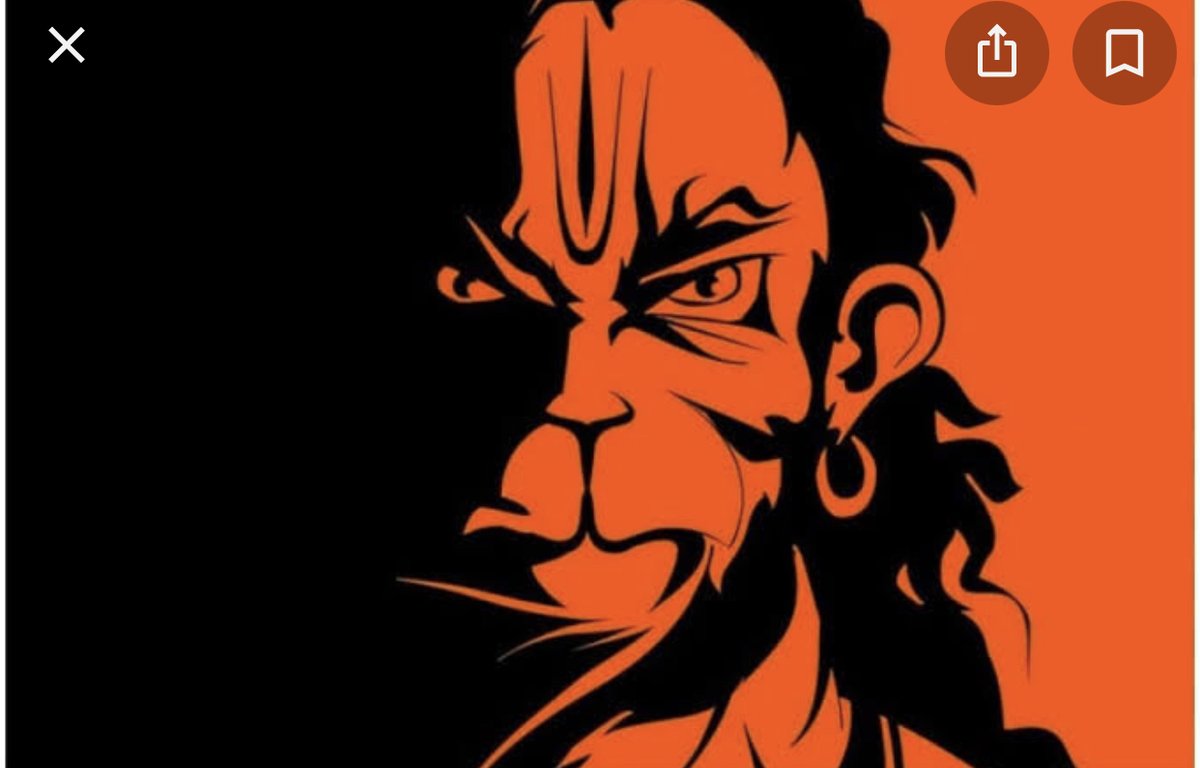
This pic here is the one clicked by one of the devotees.
This is the mysterious legend of
Setuu Hanuman Bodhi temple located in the jungles of Piduru mountain, Sri Lanka.
#JaiShriRam
9/9

More from Religion

#Ramayana #LecturesOnTheRamayana

In the past, we had a glimpse of Lakshmana's devotion towards Sri Rama, his brother and father figure.

However, it is interesting to note his unique relationship with Sita, especially as seen by from her perspective.

Thread below

1/

We all know about the Golden Deer / Maricha incident and the way Sita influences Lakshmana to go in search of his brother.

Personally, I am unable to get 2 strong emotional points in one thread and hence, I will skip this incident for today.

2/

In Sundara Kanda, when Hanuman meets Sita, she says the following

सिंहस्कन्धो महाबाहुर्मनस्वी प्रियदर्शिनः।
पितृवद्वर्तते रामे मातृवन्मां समाचरन्।।

Lakshmana, who has lionshoulders and strong arms, who is handsome, who takes Rama as his father & treats me as his own mother

3/

ह्रियमाणां तदा वीरो न तु मां वेद लक्ष्मणः।
वृद्धोपसेवी लक्ष्मीवान् शक्तो न बहुभाषिता।।

Heroic Lakshmana, did not know while I was borne away. He is prosperous, foremost in serving elders. He is energetic and reserved in his speech like my father-in-law ..

4/

He is a prince dear (to his brother).

These are from Sarga-38, shlokas 60 and 61.

There are 3 distinct points which I want to draw the attention of the reader to.

1. She also compares Lakshmana to Dasaratha much like how Rama did when he constructed the hut in panchavati

5/
"Hinduism was one of the world's most easy-going faith traditions, famed for it's non-persecutory history."

I can assure you, it is NOT.

It is neither easy-going, nor non-persecutory. In fact it is the very opposite.

Thread.


Modern Hinduism is a British colonial concept, created in concert with Brahmins, who are at the "apex" of the caste system. The word "Hindoo" in fact, is of Persian origin, meaning a person who lives in the Indus valley.

Colonialists who attempted to study Indian religion in the 18th century (NOT, at the time, Hinduism) were baffled by it. Strata of people living distinctly (the caste system) with overlapping gods didn't fit into their Judeo-Christian understanding of religion.

Which has an ecclesiastical authority, a holy book etc., which Indian religions lacked. In studying "The Hindoo", colonialists prioritized textual sources of knowledge, which is where Brahmins, the priestly caste with a monopoly over education/text come in.

Brahminism was a distinct "religion" (although i don't really want to use the term in this way) that was frankly terrorized of other castes. In fact, the very basis of Brahminism is oppression. Brahmins had scholars who recorded *Brahminical* canon textually.

You May Also Like