
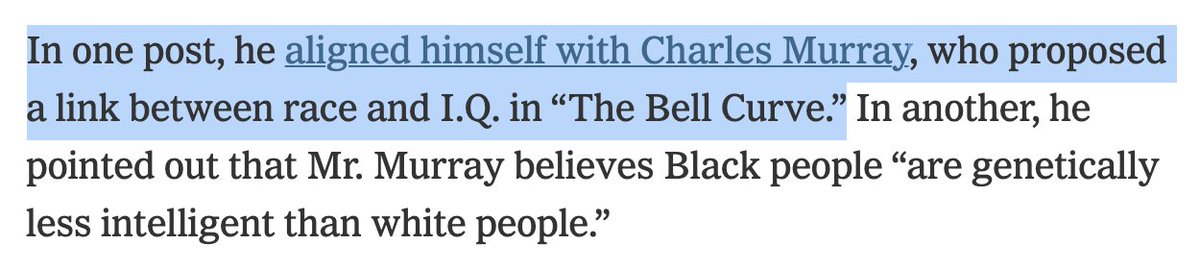
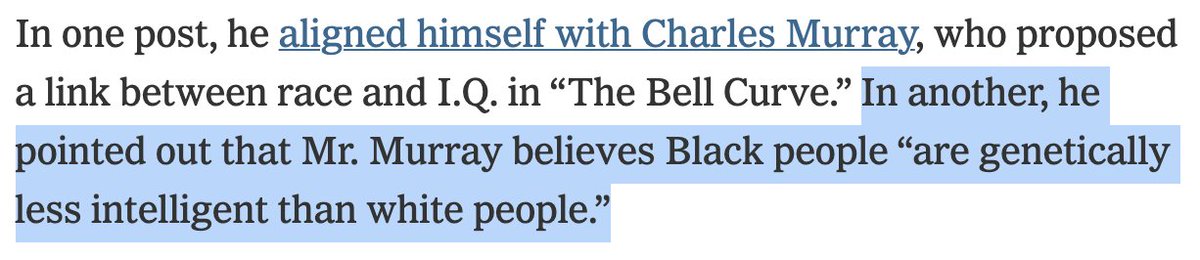
The New York Times article about SlateStarCodex is finally out and it is...bad. There's a lot I could parse, but let me just walk you through one paragraph that is so misleading as to be
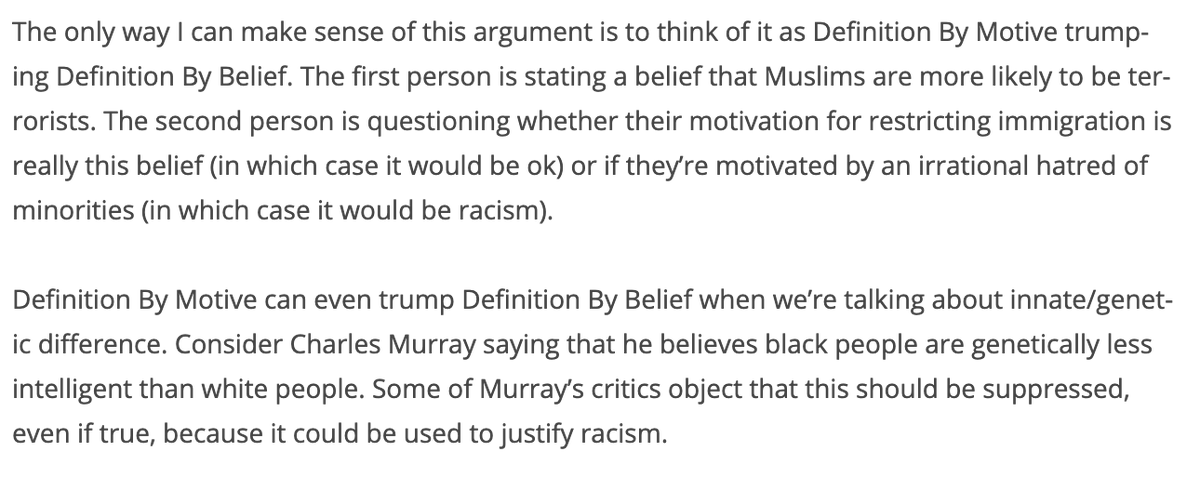
No wonder he didn't provide a link; it doesn't say what he implies it does!
https://t.co/4Q3GrFr2zN
More from Paul Matzko
This is a great question from @HeerJeet and it has very old roots. In my book, I discuss a similar period of anxiety in the 1960s about the possibility of Air Force officers being involved in a coup. Thread.
Given the size of the US military in WW2, afterwards there was a spike in concern that some of these demilitarized veterans would be amenable to radicalization and supportive of insurrection. These fears heightened after the coups in France/Algiers in 1958 and 1961.
This was the peak era of the Cold War, so anti-communist anxiety was layered over top. The Right feared that communist infiltrators in the government would subvert the Republic. The Left feared that anti-communist military officers would launch a preemptive, paranoid coup.
Note as well that the foundation for these fears was rooted in a novel concept that journalist Edward Hunter had recently coined, "brainwashing." The idea was that US POWs held by North Korea had been brainwashed into accepting communism & might act as a fifth column back home.
You can see that particular paranoia in cultural artifacts from the time like "The Manchurian Candidate," novel in 1959 and the hit 1962 movie starring Frank Sinatra and the incomparable Angela Lansbury. Those sneaky commies nearly infiltrated the Oval Office itself, oh no!!
What's the back story about why so many former air force people are coup friendly?
— Jeet Heer (@HeerJeet) January 10, 2021
Given the size of the US military in WW2, afterwards there was a spike in concern that some of these demilitarized veterans would be amenable to radicalization and supportive of insurrection. These fears heightened after the coups in France/Algiers in 1958 and 1961.
This was the peak era of the Cold War, so anti-communist anxiety was layered over top. The Right feared that communist infiltrators in the government would subvert the Republic. The Left feared that anti-communist military officers would launch a preemptive, paranoid coup.
Note as well that the foundation for these fears was rooted in a novel concept that journalist Edward Hunter had recently coined, "brainwashing." The idea was that US POWs held by North Korea had been brainwashed into accepting communism & might act as a fifth column back home.
You can see that particular paranoia in cultural artifacts from the time like "The Manchurian Candidate," novel in 1959 and the hit 1962 movie starring Frank Sinatra and the incomparable Angela Lansbury. Those sneaky commies nearly infiltrated the Oval Office itself, oh no!!
More from Tech


I could create an entire twitter feed of things Facebook has tried to cover up since 2015. Where do you want to start, Mark and Sheryl? https://t.co/1trgupQEH9
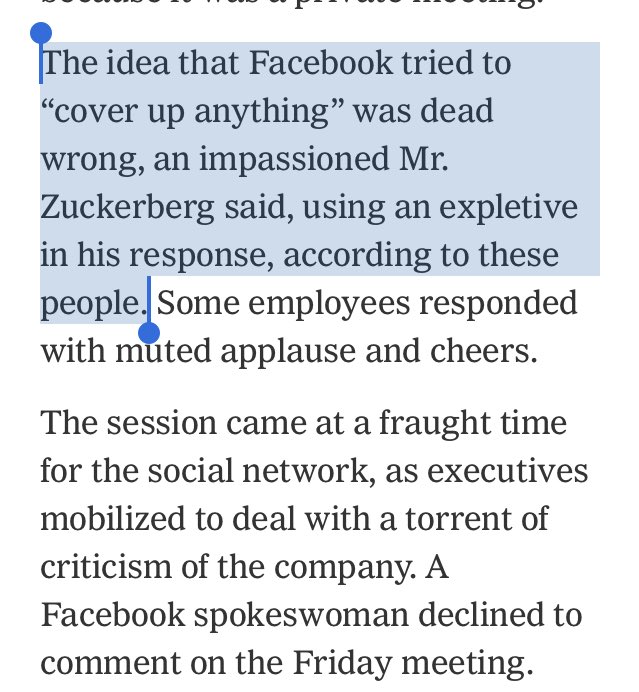
Ok, here. Just one of the 236 mentions of Facebook in the under read but incredibly important interim report from Parliament. ht @CommonsCMS https://t.co/gfhHCrOLeU
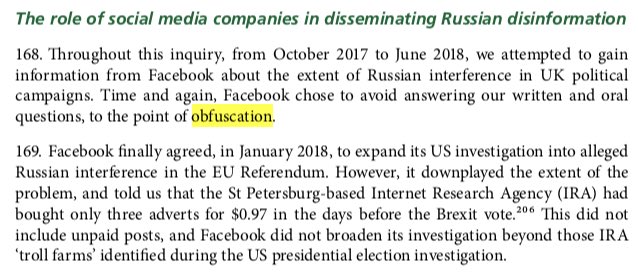
Let’s do another, this one to Senate Intel. Question: “Were you or CEO Mark Zuckerberg aware of the hiring of Joseph Chancellor?"
Answer "Facebook has over 30,000 employees. Senior management does not participate in day-today hiring decisions."
Or to @CommonsCMS: Question: "When did Mark Zuckerberg know about Cambridge Analytica?"
Answer: "He did not become aware of allegations CA may not have deleted data about FB users obtained through Dr. Kogan's app until March of 2018, when
these issues were raised in the media."

If you prefer visuals, watch this short clip after @IanCLucas rightly expresses concern about a Facebook exec failing to disclose info.
Ok, here. Just one of the 236 mentions of Facebook in the under read but incredibly important interim report from Parliament. ht @CommonsCMS https://t.co/gfhHCrOLeU
Let’s do another, this one to Senate Intel. Question: “Were you or CEO Mark Zuckerberg aware of the hiring of Joseph Chancellor?"
Answer "Facebook has over 30,000 employees. Senior management does not participate in day-today hiring decisions."
Or to @CommonsCMS: Question: "When did Mark Zuckerberg know about Cambridge Analytica?"
Answer: "He did not become aware of allegations CA may not have deleted data about FB users obtained through Dr. Kogan's app until March of 2018, when
these issues were raised in the media."
If you prefer visuals, watch this short clip after @IanCLucas rightly expresses concern about a Facebook exec failing to disclose info.
A company as powerful as @facebook should be subject to proper scrutiny. Mike Schroepfer, its CTO, told us that the buck stops with Mark Zuckerberg on the Cambridge Analytica scandal, which is why he should come and answer our questions @DamianCollins @IanCLucas pic.twitter.com/0H4VMhtIFu
— Digital, Culture, Media and Sport Committee (@CommonsCMS) May 23, 2018


Thought I'd put a thread together of some resources & people I consider really valuable & insightful for anyone considering or just starting out on their @SorareHQ journey. It's by no means comprehensive, this community is super helpful so no offence to anyone I've missed off...
1) Get yourself on the official Sorare Discord group https://t.co/1CWeyglJhu, the forum is always full of interesting debate. Got a question? Put it on the relevant thread & it's usually answered in minutes. This is also a great place to engage directly with the @SorareHQ team.
2) Bury your head in @HGLeitch's @SorareData & get to grips with all the collated information you have to hand FOR FREE! IMO it's vital for price-checking, scouting & S05 team building plus they are hosts to the forward thinking SO11 and SorareData Cups 🏆
3) Get on YouTube 📺, subscribe to @Qu_Tang_Clan's channel https://t.co/1ZxMsQR1kq & engross yourself in hours of Sorare tutorials & videos. There's a good crowd that log in to the live Gameweek shows where you get to see Quinny scratching his head/ beard over team selection.
4) Make sure to follow & give a listen to the @Sorare_Podcast on the streaming service of your choice 🔊, weekly shows are always insightful with great guests. Worth listening to the old episodes too as there's loads of information you'll take from them.
1) Get yourself on the official Sorare Discord group https://t.co/1CWeyglJhu, the forum is always full of interesting debate. Got a question? Put it on the relevant thread & it's usually answered in minutes. This is also a great place to engage directly with the @SorareHQ team.
2) Bury your head in @HGLeitch's @SorareData & get to grips with all the collated information you have to hand FOR FREE! IMO it's vital for price-checking, scouting & S05 team building plus they are hosts to the forward thinking SO11 and SorareData Cups 🏆
3) Get on YouTube 📺, subscribe to @Qu_Tang_Clan's channel https://t.co/1ZxMsQR1kq & engross yourself in hours of Sorare tutorials & videos. There's a good crowd that log in to the live Gameweek shows where you get to see Quinny scratching his head/ beard over team selection.
4) Make sure to follow & give a listen to the @Sorare_Podcast on the streaming service of your choice 🔊, weekly shows are always insightful with great guests. Worth listening to the old episodes too as there's loads of information you'll take from them.


You May Also Like






I'm going to do two history threads on Ethiopia, one on its ancient history, one on its modern story (1800 to today). 🇪🇹
I'll begin with the ancient history ... and it goes way back. Because modern humans - and before that, the ancestors of humans - almost certainly originated in Ethiopia. 🇪🇹 (sub-thread):
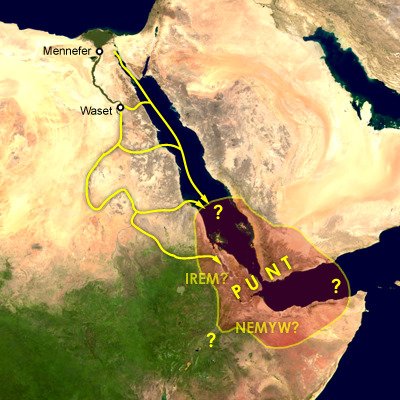
The first likely historical reference to Ethiopia is ancient Egyptian records of trade expeditions to the "Land of Punt" in search of gold, ebony, ivory, incense, and wild animals, starting in c 2500 BC 🇪🇹
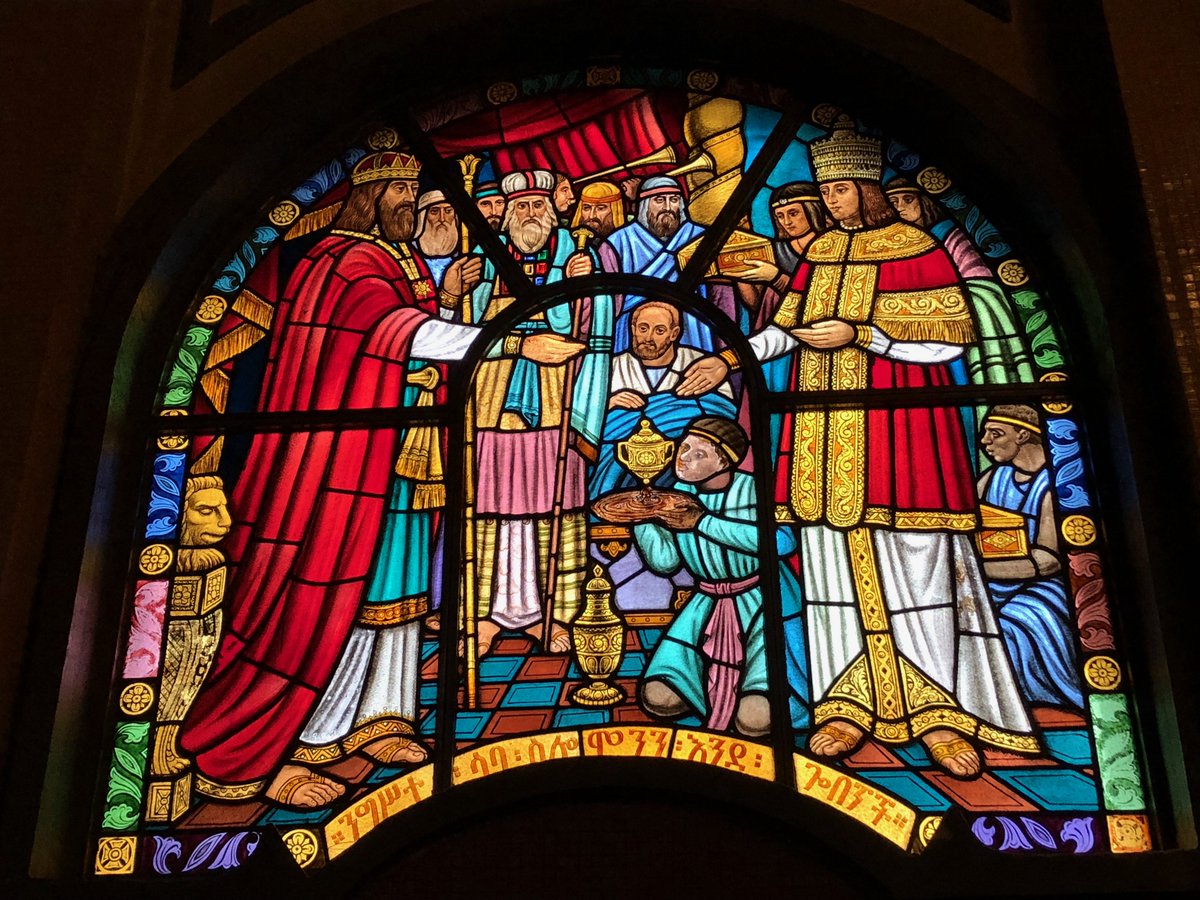
Ethiopians themselves believe that the Queen of Sheba, who visited Israel's King Solomon in the Bible (c 950 BC), came from Ethiopia (not Yemen, as others believe). Here she is meeting Solomon in a stain-glassed window in Addis Ababa's Holy Trinity Church. 🇪🇹
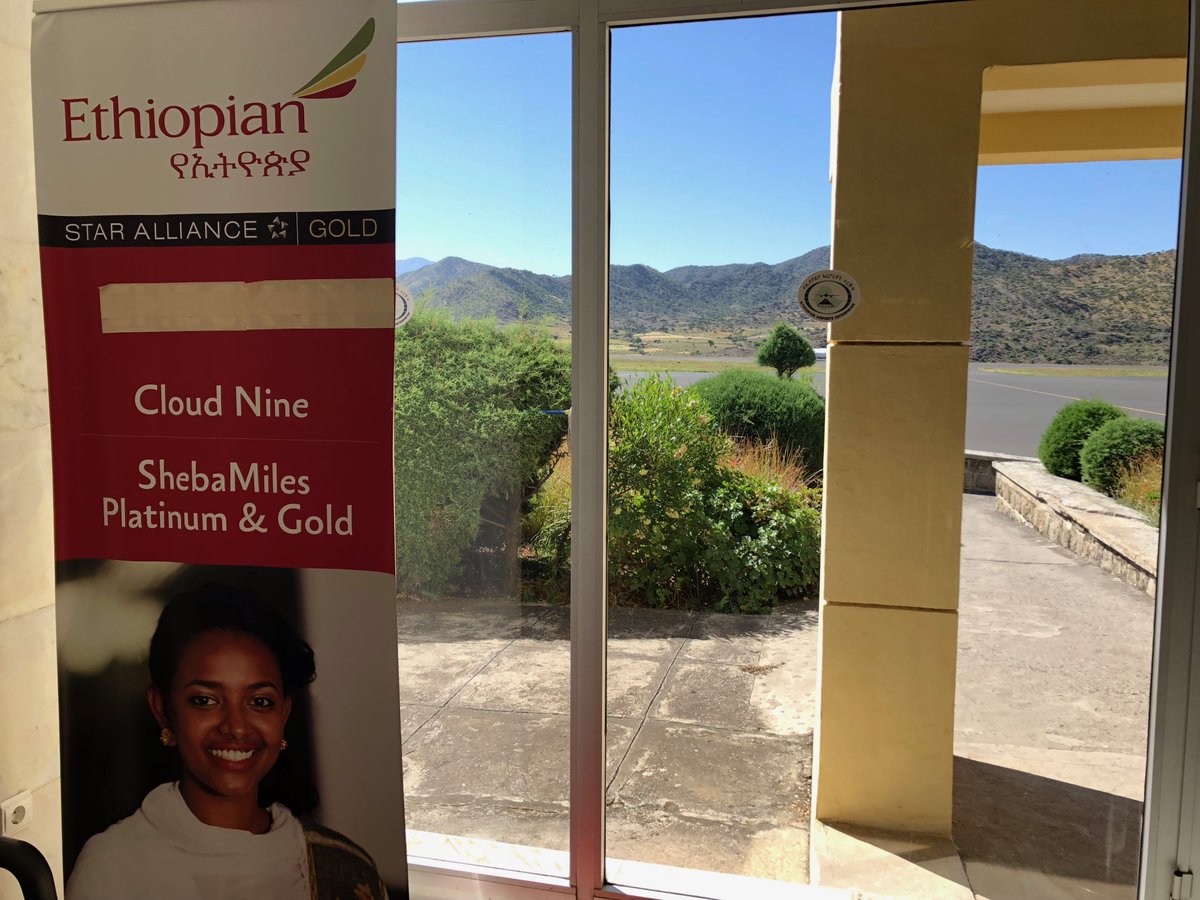
References to the Queen of Sheba are everywhere in Ethiopia. The national airline's frequent flier miles are even called "ShebaMiles". 🇪🇹
I'll begin with the ancient history ... and it goes way back. Because modern humans - and before that, the ancestors of humans - almost certainly originated in Ethiopia. 🇪🇹 (sub-thread):
The famous \u201cLucy\u201d, an early ancestor of modern humans (Australopithecus) that lived 3.2 million years ago, and was discovered in 1974 in Ethiopia, displayed in the national museum in Addis Ababa \U0001f1ea\U0001f1f9 pic.twitter.com/N3oWqk1SW2
— Patrick Chovanec (@prchovanec) November 9, 2018
The first likely historical reference to Ethiopia is ancient Egyptian records of trade expeditions to the "Land of Punt" in search of gold, ebony, ivory, incense, and wild animals, starting in c 2500 BC 🇪🇹
Ethiopians themselves believe that the Queen of Sheba, who visited Israel's King Solomon in the Bible (c 950 BC), came from Ethiopia (not Yemen, as others believe). Here she is meeting Solomon in a stain-glassed window in Addis Ababa's Holy Trinity Church. 🇪🇹
References to the Queen of Sheba are everywhere in Ethiopia. The national airline's frequent flier miles are even called "ShebaMiles". 🇪🇹