I follow SL for my long term positions based on weekly previous swing lows. I am out if it gets hit.
So, I am least worried in these minor dips as manier times it will give you opportunity to add more of your favorite names.
LEARNING \u2b55\ufe0f\u2b55\ufe0f\u2b55\ufe0f
— The_Chartist \U0001f4c8 (@nison_steve) April 7, 2021
Balaji Amines -
An explanation of how trailing stop loss works. With every base formation, the stop loss level is moved up thereby locking profits. Stop-loss can be placed via GTT Orders.
Assumption - Trading on a weekly scale pic.twitter.com/hojzClLOhg
More from The_Chartist 📈

although a must-have portfolio stock. Faced resistance right at the upper channel boundary. Volumes high. Any retracement back to the lower boundary will be an opportunity to accumulate. https://t.co/5uDsUXsbPP
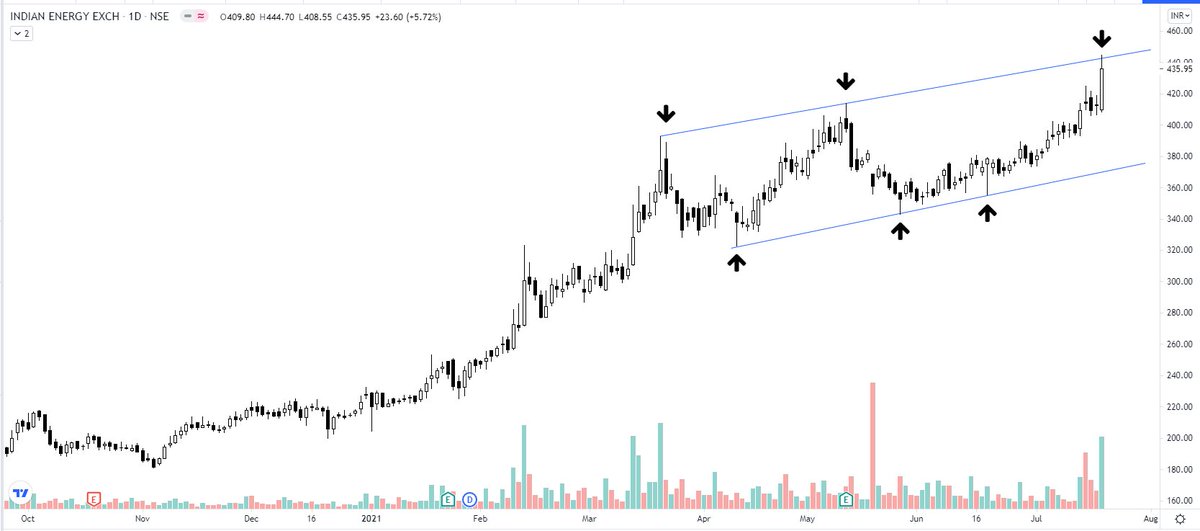
IEX - the resistance turning support. Kindly review, please. @nishkumar1977 @suru27 @rohanshah619 @indian_stockss @sanstocktrader @BissaGauravB @RajarshitaS @PAVLeader @Rishikesh_ADX @VijayThk @Investor_Mohit @TrendTrader85 pic.twitter.com/7CCzmee5If
— Steve Nison (@nison_steve) December 18, 2020
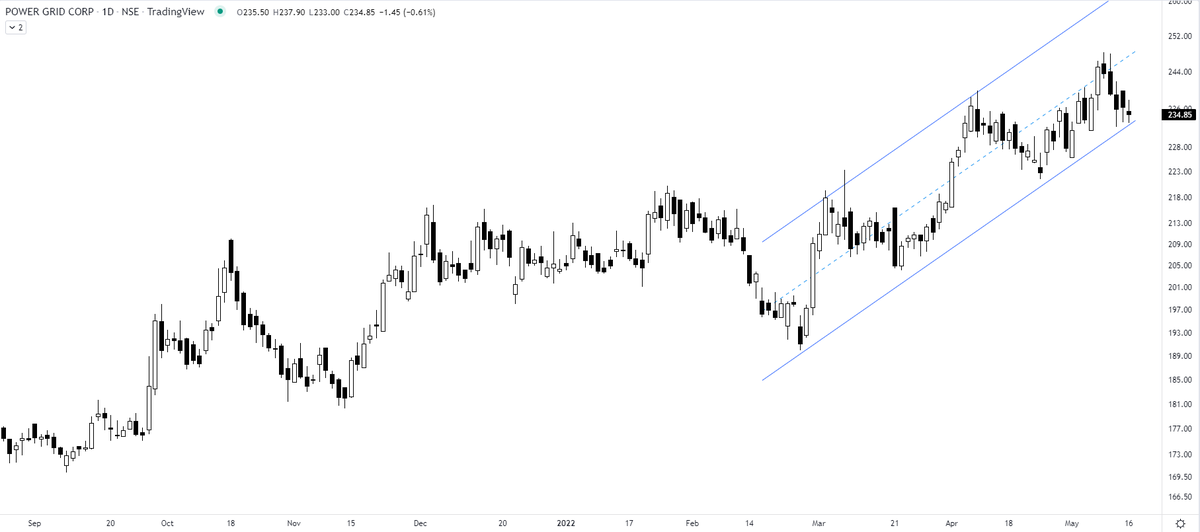
This exercise will tell you about your inherent strengths & weaknesses. 👇👇
How to record a trading journal (TJ) & what to analyze?
— The_Chartist \U0001f4c8 (@charts_zone) December 14, 2021
What is in a TJ?
Buy Date
Stock Name
The time frame you analyzed (D/W/M)
Long/Short?
Buy Price
SL
Sell Price
Risk took (% of capital)
Sell date
No. of days held
P/L
P/L as % of capital
Buy Reason?
Invested capital/trade pic.twitter.com/WnrvmYuOV0
More from Stoploss

One of the best way that I know is ATR based trailing.
Here is an example https://t.co/BTATx5fyW6
An example of ATR based TSL.
— Professor (@DillikiBiili) April 9, 2021
SL for coming candle is Low of the just completed candle - ATR of previous candle. Chart is self explanatory. https://t.co/D95iv4t5j6 pic.twitter.com/e8BkO2j5rn

Read and follow this.. he has aptly explained about various methods to trail.
2. TRAILING METHODS-
— Trader knight (@Traderknight007) December 24, 2020
1. SWING POINT METHOD-
In this method we use the swing points or the HH- HL OR LH-LL points for placing sl,
In this method we trail our sl when the stock make a Higher low after our entry and keep Trailing the sl till it hits. pic.twitter.com/CqzCkLdWmC


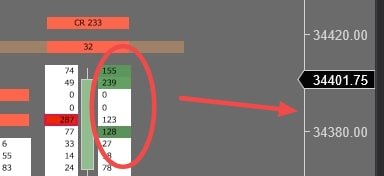
This is the reason for retailers stoploss. Check it out \U0001f447 https://t.co/fnHPgzCCVn pic.twitter.com/njvqgM9PI3
— Learn to Trade (@learntotrade365) July 28, 2021