
So here is a secret: Not everything I write goes anywhere. I have at least 4 books completely written and edited that never went on submission. I have books that stalled out at 20k. I have docs on my computer with opening paragraphs I don't remember writing. But! 1/
* it's more idea than plot
* your characters or world aren't fully built
* you're writing the wrong form for that particular story
Is it a journey or a stabbing? 11/
* identify beginning, inciting incident, conflict, climax, end
* craft a protagonist uniquely challenged by the world & conflict
* write straight through, front to back, no editing/self-judging
* if you stall, insert [tk] &write the next scene you know 18/
* identify the gut punch/twist
* craft a protagonist who will succumb to it
* create a short, action-filled plot (not infodump/rambling) that will lead to the twist
* make sure it's self-contained and complete
* polish to perfection
* NO RAMBLING 19/
NO.
Action and dialogue. Kenneth saves a turtle in the road, and as he returns it to the pond, he meets THE TURTLE KING. 20/
More from Writing

The world's most valuable skill:
Writing effectively.
But colleges charge you 120k and still do a terrible job teaching it.
Instead, here are 9 writing frameworks that cost you nothing and will save you hundreds of hours:
1. Start with building your writing habit by leveraging @jamesclear's Four Laws of Behavior
2. With your writing habit down, study these 10 tips from the world's most legendary marketer: David Ogilvy.
3. Then, immerse yourself in the takeaways from the bible on business
4. Like to learn on the go?
Dive into the creative process of the world's best writers in these 10 episodes of the @timferriss show.
Writing effectively.
But colleges charge you 120k and still do a terrible job teaching it.
Instead, here are 9 writing frameworks that cost you nothing and will save you hundreds of hours:
1. Start with building your writing habit by leveraging @jamesclear's Four Laws of Behavior
Atomic Habits from @jamesclear changed my life.
— Dickie Bush \U0001f6a2 (@dickiebush) March 10, 2021
In Atomic Habits, James lays out the Four Laws of Behavior Change.
1. Make it obvious
2. Make it attractive
3. Make it easy
4. Make it satisfying
Here's how to leverage them to build a daily writing habit (\U0001f9f5\u270d\U0001f3fc):
2. With your writing habit down, study these 10 tips from the world's most legendary marketer: David Ogilvy.
One of the most legendary marketers of all time: David Ogilvy
— Dickie Bush \U0001f6a2 (@dickiebush) June 2, 2021
In 1982, David wrote an internal memo to the employees of his advertising agency titled "How to write."
And in just 10 bullets he put together a masterclass in effective writing.
Here's a breakdown of each one: pic.twitter.com/MxRYuQRLyA
3. Then, immerse yourself in the takeaways from the bible on business
Business writing is a superpower.
— Dickie Bush \U0001f6a2 (@dickiebush) June 8, 2021
But schools and employers do a horrible job teaching people to write.
In 1981, two advertising executives wrote a timeless guide for how to write in the business world.
And here are 12 of their tips you should staple to your desktop: pic.twitter.com/w0hh0qBOG4
4. Like to learn on the go?
Dive into the creative process of the world's best writers in these 10 episodes of the @timferriss show.
I've listened to every episode of the @tferriss show.
— Dickie Bush \U0001f6a2 (@dickiebush) March 3, 2021
And some of my favorites are when Tim interviews prolific writers, diving into their creative process to improve his own.
If you are looking to build a writing habit, these 10 episodes are a must-listen:
\u270d\U0001f3fc\U0001f3a7\U0001f447\U0001f3fc





I can second this observation through personal experience. I was only able to start writing because "it's just dumb weeb fanfiction quests, who cares." 100,000 pages of dumb weeb fanfic later, and I actually got better... but only because I was trying my best with every page.
"It's dumb weeb fanfiction" gave me permission to be bad, to vomit things onto the page that I knew fell far short of what I wanted it to be. To just write and write instead of laboring over six paragraphs for weeks like I'd always done before.
But I still *wanted* to be good.
Writing is HARD. And unfortunately, most people don't appreciate just how hard writing (or communication in general) is, and that cultural attitude infects writers, too.
You must give yourself permission to be bad. And realize that all writing is practice.
IT. COUNTS.
And as the folks in my mentions are pointing
... it's an excellent way to find out what actually resonates with other people - putting work out there. Even your early bad stuff you'll cringe at later.
What resonates is NOT easy to tell, because we all, inherently cringe at ourselves, a lot.
I think the mistake a lot of people make is that they write to make a good work instead of writing to make themselves a better writer (who will eventually be able to make good works). The second promotes training and builds humility while the first is just narcissism.
— Dan Kim (@CloneManga) October 31, 2020
"It's dumb weeb fanfiction" gave me permission to be bad, to vomit things onto the page that I knew fell far short of what I wanted it to be. To just write and write instead of laboring over six paragraphs for weeks like I'd always done before.
But I still *wanted* to be good.
Writing is HARD. And unfortunately, most people don't appreciate just how hard writing (or communication in general) is, and that cultural attitude infects writers, too.
You must give yourself permission to be bad. And realize that all writing is practice.
IT. COUNTS.
And as the folks in my mentions are pointing
It gave us hellcow, so it clearly worked
— Argatson (@warhammer651) October 31, 2020
... it's an excellent way to find out what actually resonates with other people - putting work out there. Even your early bad stuff you'll cringe at later.
What resonates is NOT easy to tell, because we all, inherently cringe at ourselves, a lot.
\u201cDumb weeb X\u201d is a concept with a lot of power.
— J (@Becquerl1) October 31, 2020

I want to talk about how western editors and readers often mistake protags written by BIPOC as "inactive protagonists." It's too common an issue that's happened to every BIPOC author I know.
Often, our protags are just trying to survive overwhelming odds. Survival is an active choice, you know. Survival is a story. Choosing to be strong in the face of the world ending, even if you can't blast a wall down to do it, is a choice.
It's how we live these days.
Western editors, readers, and writers are too married to the three-act structure, to the type of storytelling that is driven by conflict, to that go-getter individualism. Please read more widely out of your comfort zone. A lot of great non-western stories do not hinge on these.
Sometimes I wonder if you're all so hopped up on the conflict-driven story because that's exactly how your colonizer ancestors dealt with people different from them. Oops, I said it, sorry not sorry. Yes, even this mindset has roots in colonialism, deal with it.
If you want examples of non-conflict-driven storytelling google the following: kishoutenketsu, johakyu, daisy chain storytelling/wheel spoke storytelling. There was another one whose name I forgot but I will tweet it when I recall it.
Writing tip: let\u2019s talk about the INACTIVE PROTAGONIST. I\u2019ve seen a lot of amazing books lately with incredible plots, intricate worlds, and just really great writing with one recurring issue, which is the inactive protagonist. I think it can get tough when you\u2019re writing (1/10)
— Briston Brooks (@briston_brooks) January 26, 2021
Often, our protags are just trying to survive overwhelming odds. Survival is an active choice, you know. Survival is a story. Choosing to be strong in the face of the world ending, even if you can't blast a wall down to do it, is a choice.
It's how we live these days.
Western editors, readers, and writers are too married to the three-act structure, to the type of storytelling that is driven by conflict, to that go-getter individualism. Please read more widely out of your comfort zone. A lot of great non-western stories do not hinge on these.
Sometimes I wonder if you're all so hopped up on the conflict-driven story because that's exactly how your colonizer ancestors dealt with people different from them. Oops, I said it, sorry not sorry. Yes, even this mindset has roots in colonialism, deal with it.
If you want examples of non-conflict-driven storytelling google the following: kishoutenketsu, johakyu, daisy chain storytelling/wheel spoke storytelling. There was another one whose name I forgot but I will tweet it when I recall it.
You May Also Like






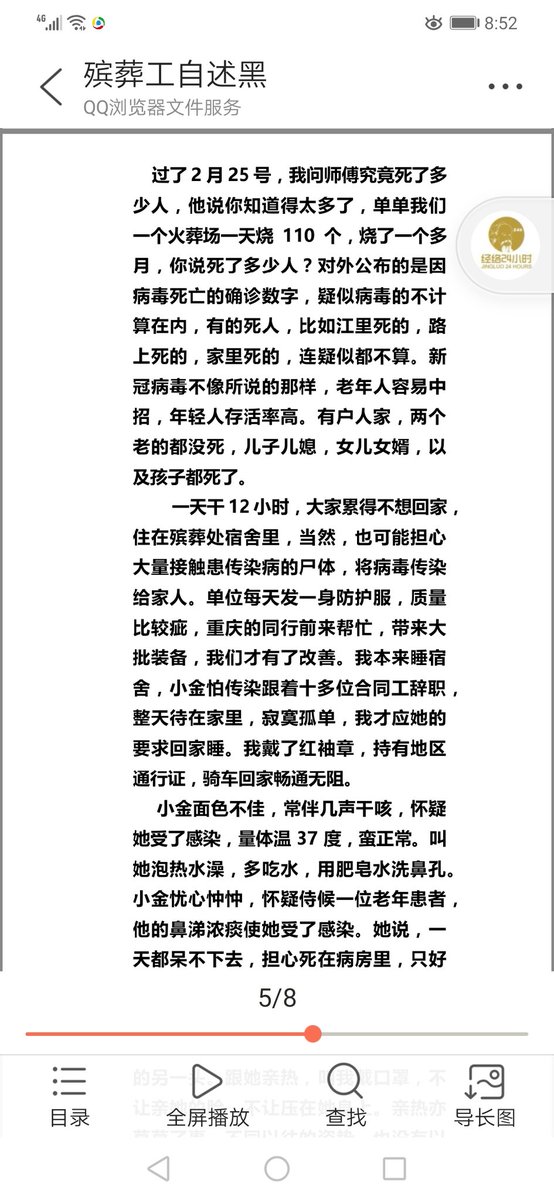

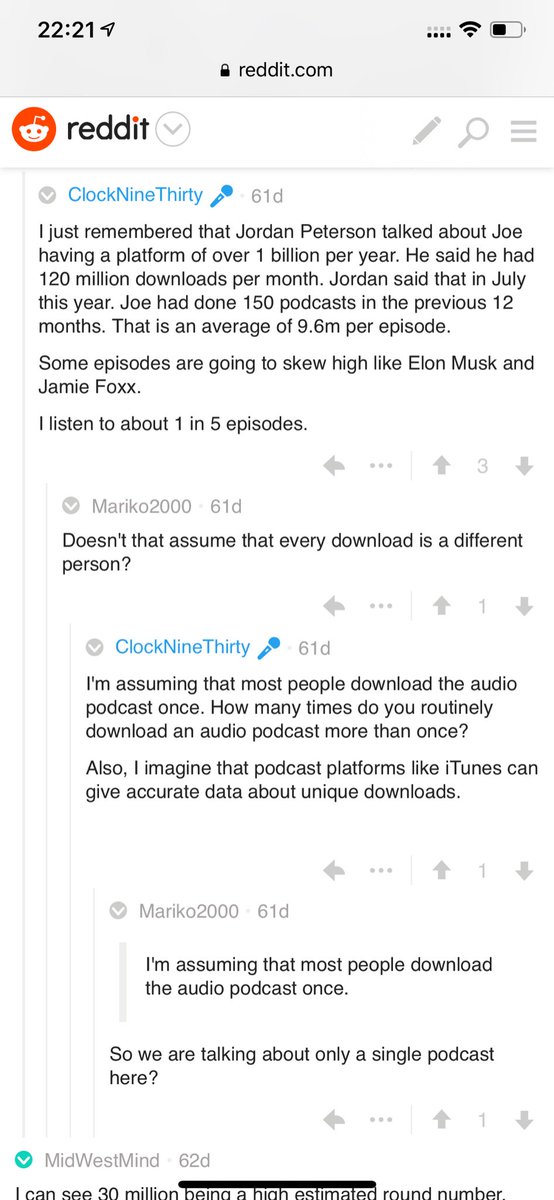
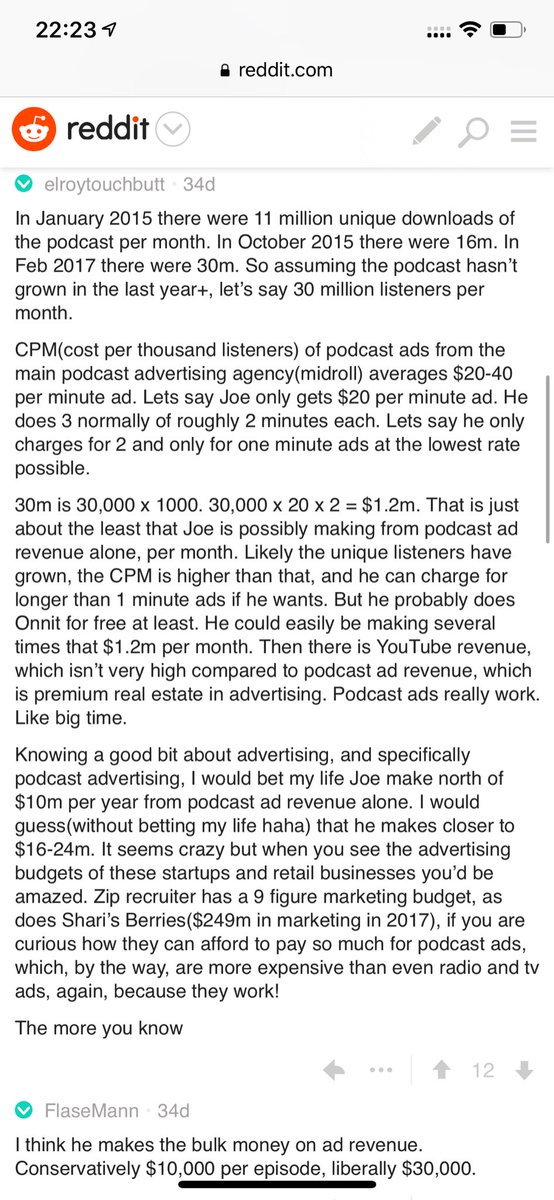
Joe Rogan's podcast is now is listened to 1.5+ billion times per year at around $50-100M/year revenue.
Independent and 100% owned by Joe, no networks, no middle men and a 100M+ people audience.
👏
https://t.co/RywAiBxA3s
Joe is the #1 / #2 podcast (depends per week) of all podcasts
120 million plays per month source https://t.co/k7L1LfDdcM
https://t.co/aGcYnVDpMu
Independent and 100% owned by Joe, no networks, no middle men and a 100M+ people audience.
👏
https://t.co/RywAiBxA3s
Joe is the #1 / #2 podcast (depends per week) of all podcasts
120 million plays per month source https://t.co/k7L1LfDdcM
https://t.co/aGcYnVDpMu
