
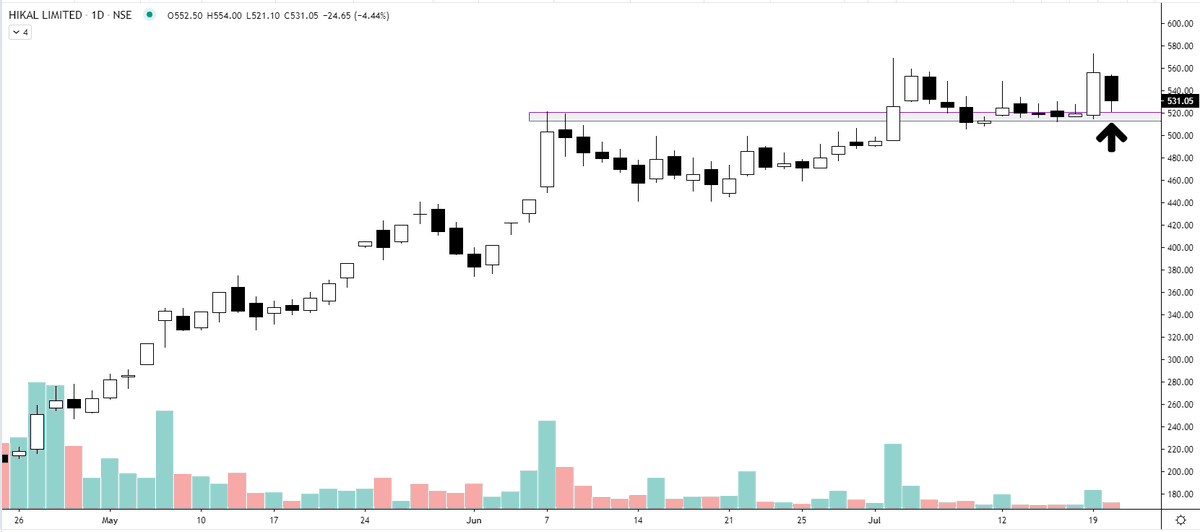
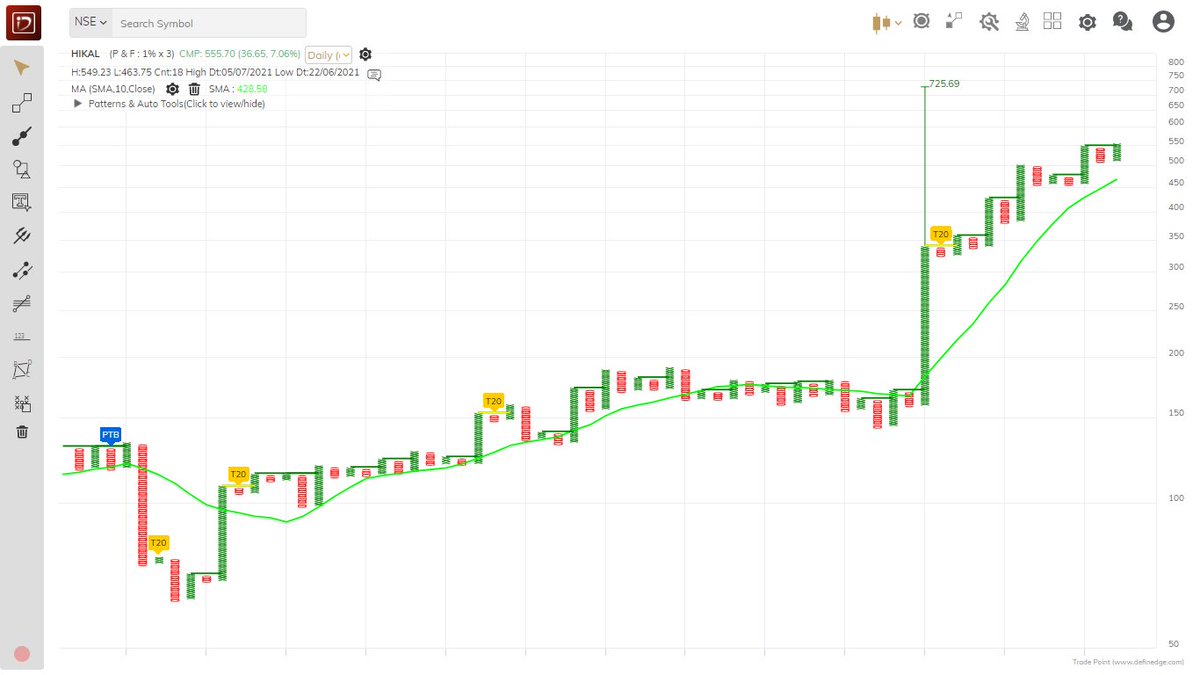
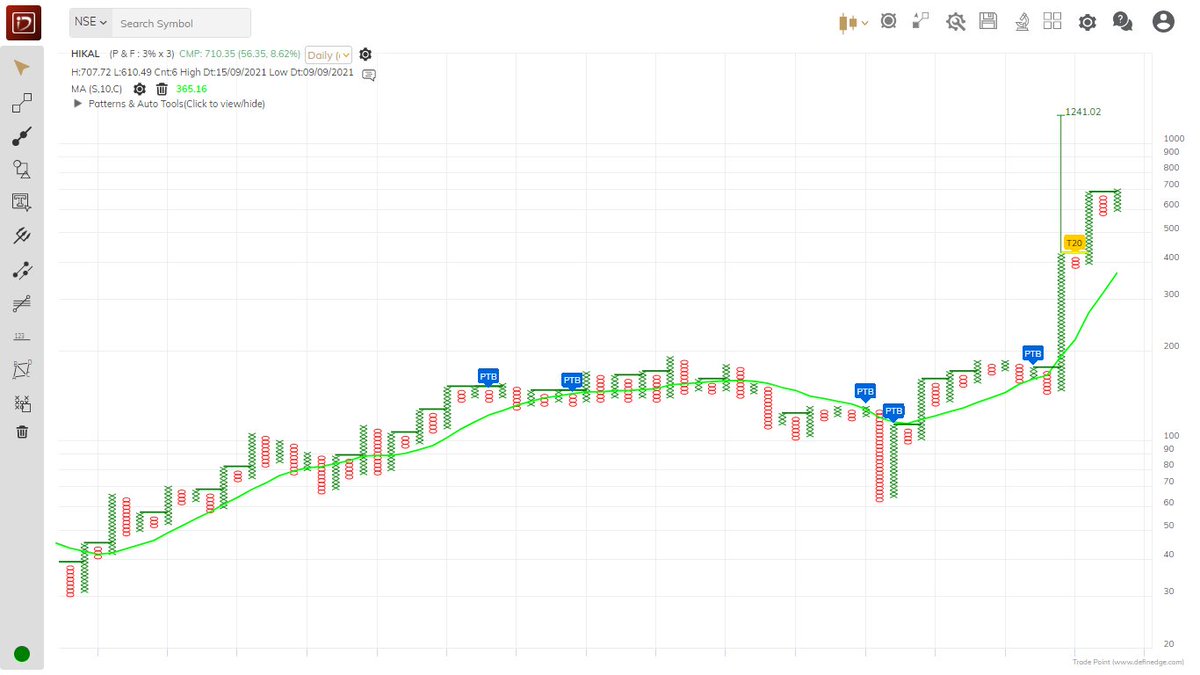
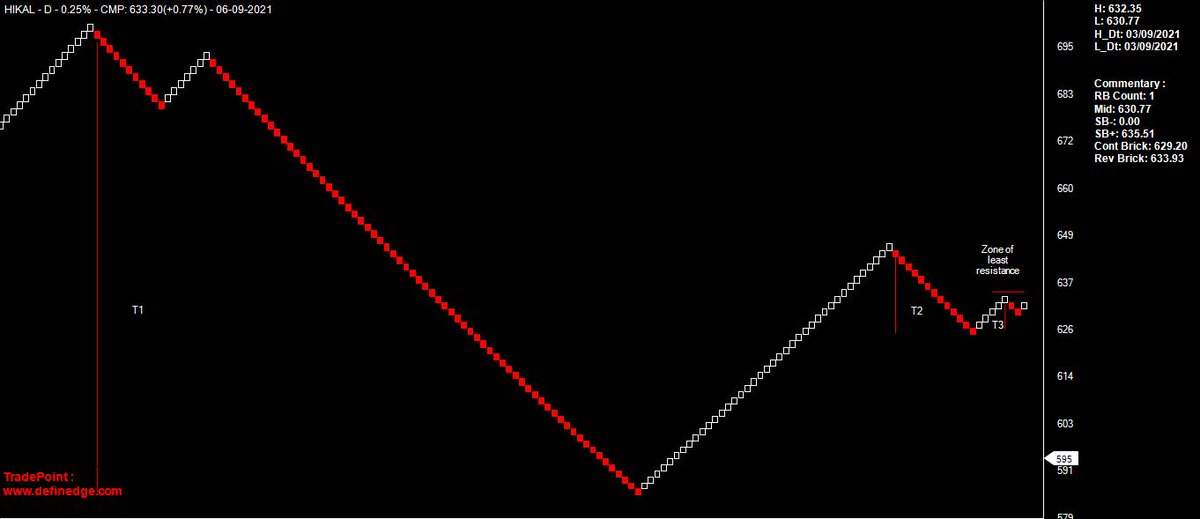
Hikal - for me a high conviction bet now as buying volumes are high and stock is retesting the support. SL 495. Buy zone 525-535
More from Steve Nison
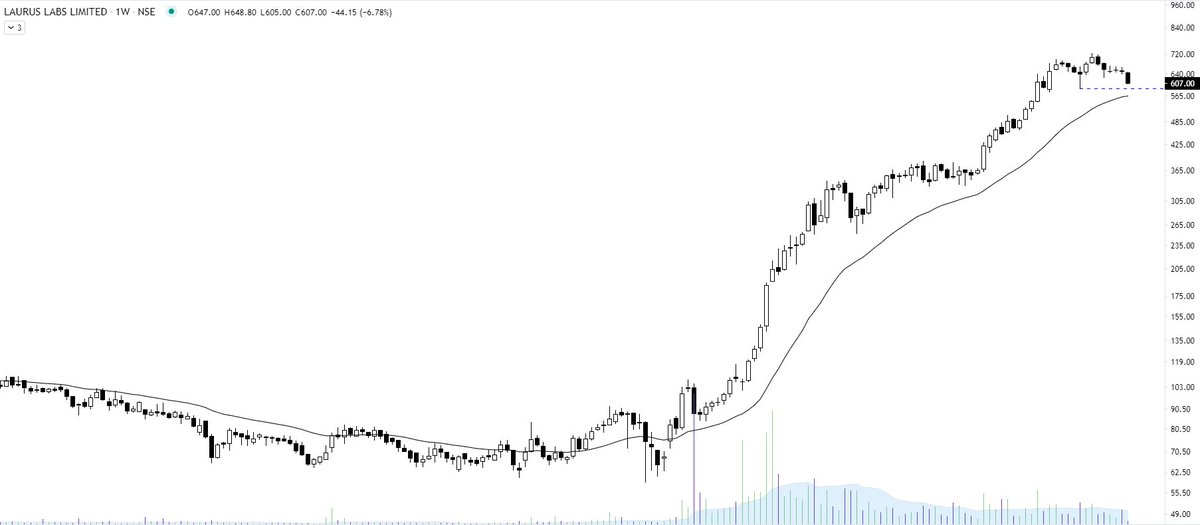
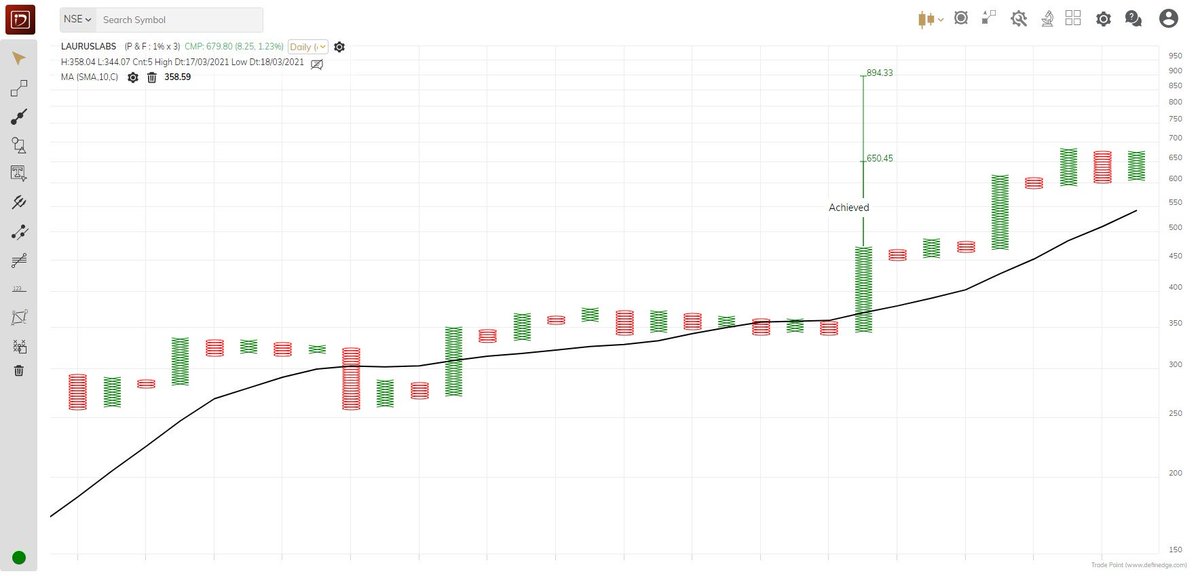
Laurus Labs - Double top buy will be activated above closing of 690. Target still active: 895 (1%*3 box size and reversal)
✅✅ https://t.co/MtJOLfpzYj
✅✅ https://t.co/MtJOLfpzYj
Laurus Labs - I am waiting till 3:15 PM to get confirmation of closing above 700 to add more of it in my portfolio. \u2705\u2705 pic.twitter.com/UxZCuxhuIX
— Steve Nison (@nison_steve) August 9, 2021
More from Hikal

Key insights from Hikal
🧪 Lowered interest rates
🧪 Pharma: Growth in generics as well as CDMO
🧪 Crop Protection: Scaleup of a fungicide for a Japanese CDMO client
🧪 Healthy pipeline of new products: Supported by new capacities; Investing in Animal Health & Biocides verticals https://t.co/D70j9oriCa

🧪 Lowered interest rates
🧪 Pharma: Growth in generics as well as CDMO
🧪 Crop Protection: Scaleup of a fungicide for a Japanese CDMO client
🧪 Healthy pipeline of new products: Supported by new capacities; Investing in Animal Health & Biocides verticals https://t.co/D70j9oriCa
Hikal: Strong
— JST Investments (@JstInvestments) August 5, 2021
\U0001f9ea Rev up 27% YoY
\U0001f9ea 22% EBITDA margin
\U0001f9ea Pat of 50crs
\U0001f9ea Growth across both pharmaceuticals & crop protection.#Q1withJST #Pharma pic.twitter.com/8lFo68KzPe



You May Also Like





1/“What would need to be true for you to….X”
Why is this the most powerful question you can ask when attempting to reach an agreement with another human being or organization?
A thread, co-written by @deanmbrody:
2/ First, “X” could be lots of things. Examples: What would need to be true for you to
- “Feel it's in our best interest for me to be CMO"
- “Feel that we’re in a good place as a company”
- “Feel that we’re on the same page”
- “Feel that we both got what we wanted from this deal
3/ Normally, we aren’t that direct. Example from startup/VC land:
Founders leave VC meetings thinking that every VC will invest, but they rarely do.
Worse over, the founders don’t know what they need to do in order to be fundable.
4/ So why should you ask the magic Q?
To get clarity.
You want to know where you stand, and what it takes to get what you want in a way that also gets them what they want.
It also holds them (mentally) accountable once the thing they need becomes true.
5/ Staying in the context of soliciting investors, the question is “what would need to be true for you to want to invest (or partner with us on this journey, etc)?”
Multiple responses to this question are likely to deliver a positive result.
Why is this the most powerful question you can ask when attempting to reach an agreement with another human being or organization?
A thread, co-written by @deanmbrody:
Next level tactic when closing a sale, candidate, or investment:
— Erik Torenberg (@eriktorenberg) February 27, 2018
Ask: \u201cWhat needs to be true for you to be all in?\u201d
You'll usually get an explicit answer that you might not get otherwise. It also holds them accountable once the thing they need becomes true.
2/ First, “X” could be lots of things. Examples: What would need to be true for you to
- “Feel it's in our best interest for me to be CMO"
- “Feel that we’re in a good place as a company”
- “Feel that we’re on the same page”
- “Feel that we both got what we wanted from this deal
3/ Normally, we aren’t that direct. Example from startup/VC land:
Founders leave VC meetings thinking that every VC will invest, but they rarely do.
Worse over, the founders don’t know what they need to do in order to be fundable.
4/ So why should you ask the magic Q?
To get clarity.
You want to know where you stand, and what it takes to get what you want in a way that also gets them what they want.
It also holds them (mentally) accountable once the thing they need becomes true.
5/ Staying in the context of soliciting investors, the question is “what would need to be true for you to want to invest (or partner with us on this journey, etc)?”
Multiple responses to this question are likely to deliver a positive result.


