Lots of tweets about this today!
Let's see what we can see in the focal S:E484 build!

Phylogenetics (what I do - making 'family trees' from virus genetics) can be very informative to see how different variants are spreading, and how cases

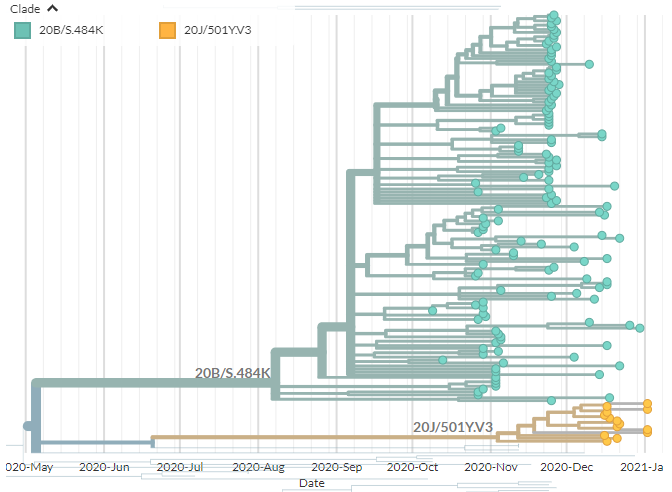
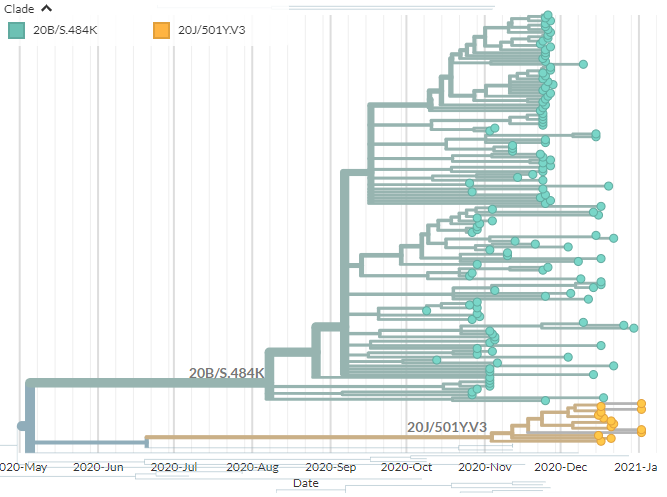
There are two variants circulating predominantly in Brazil:
- 20B/S.484K seems to be older & more widespread. It has (among others) a mutation at position 484
- 20J/501Y.V3 is smaller & detected recently. It has mutations at 501 *and* 484.

2/10

https://t.co/Cw5u2kuATa
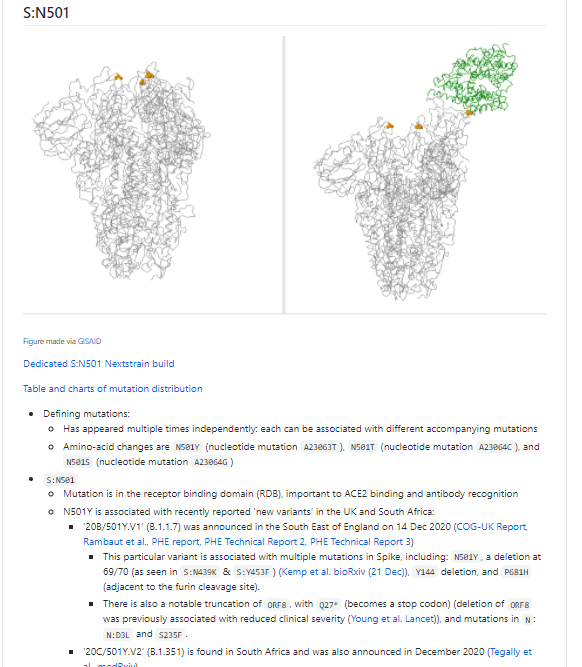
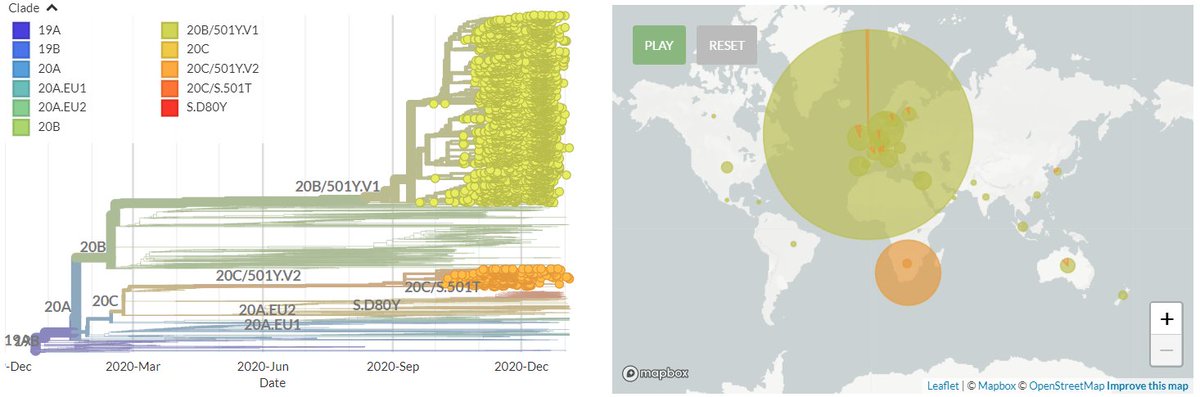
The variant predominantly in the UK (501Y.V1 / B.1.1.7) and the variant predominantly in South Africa (501Y.V2) also both have 501. 501Y.V2 *also* has the 484K mutation.

Why are there concerns about these mutations? You can read more at https://t.co/wVE7ubYBoy!

3/10
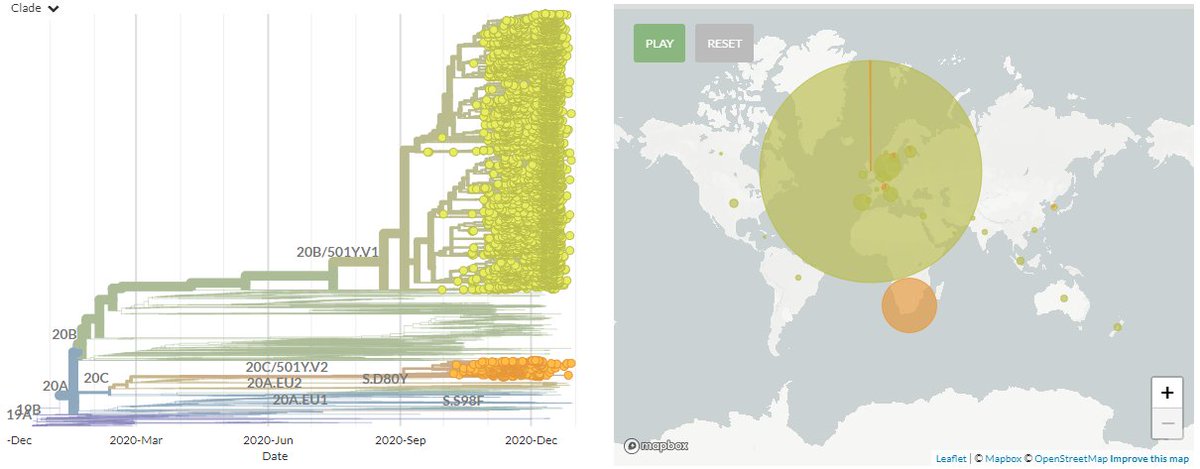
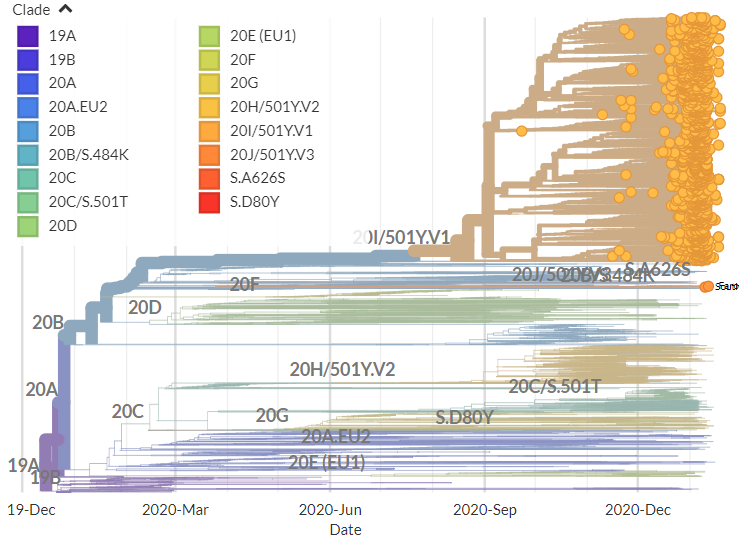
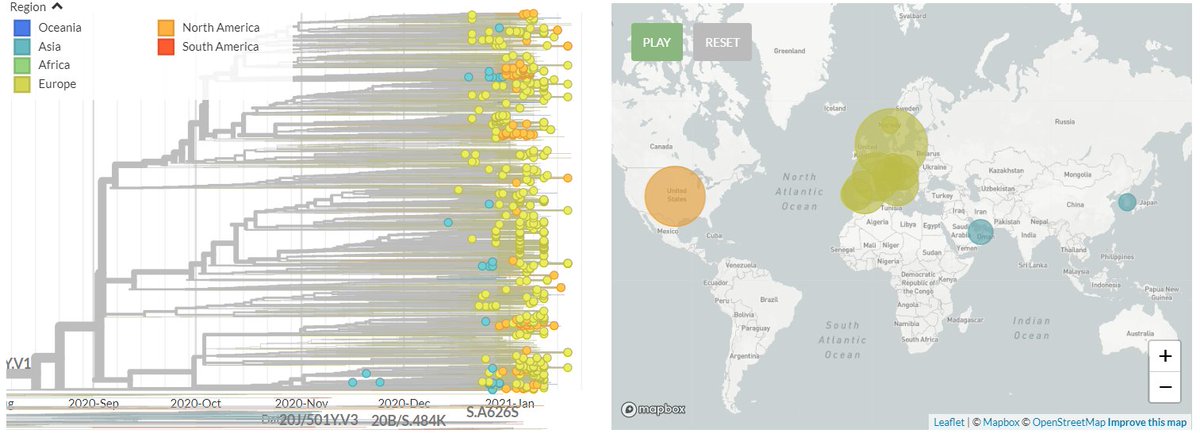
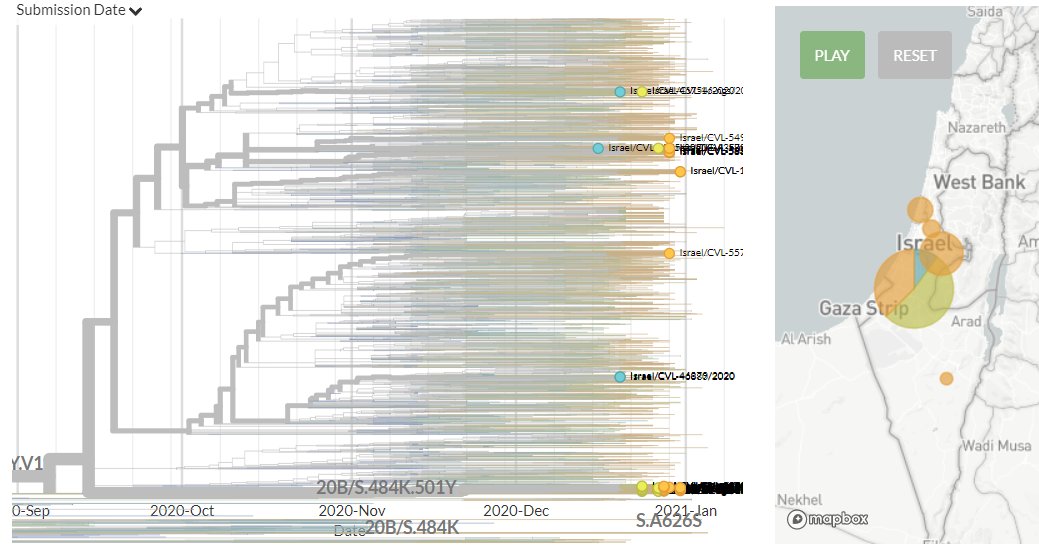
The view below is from an analysis focusing on sequences with a mutation at 484. It shows all the samples in the 2 variants (20B/S.484K & 20J/501Y.V3) & how they're related. More closely related = closer together (very, very roughly).

4/10
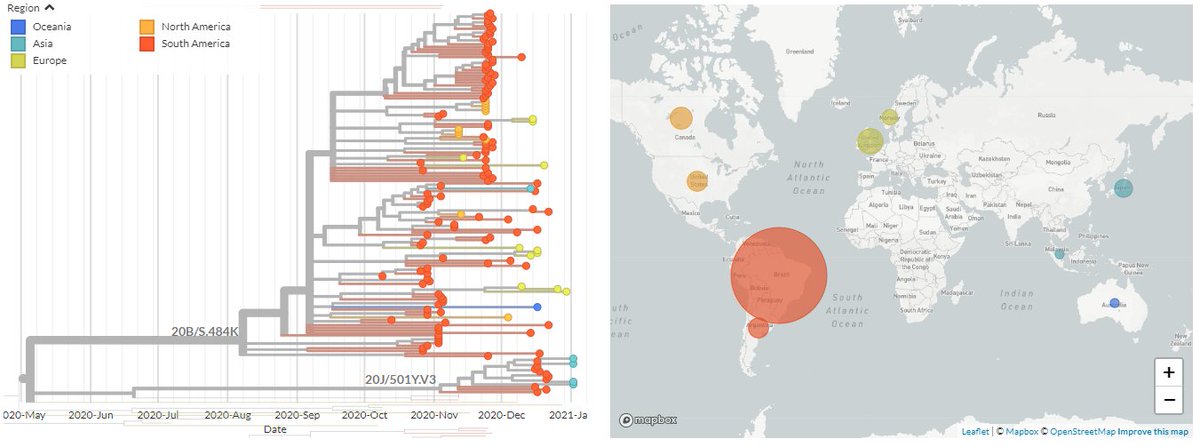
We can colour these samples by region to see where they're from. As we expect - most are in Brazil! A few are in Argentina (also red).

5/10

https://t.co/Cw5u2kuATa
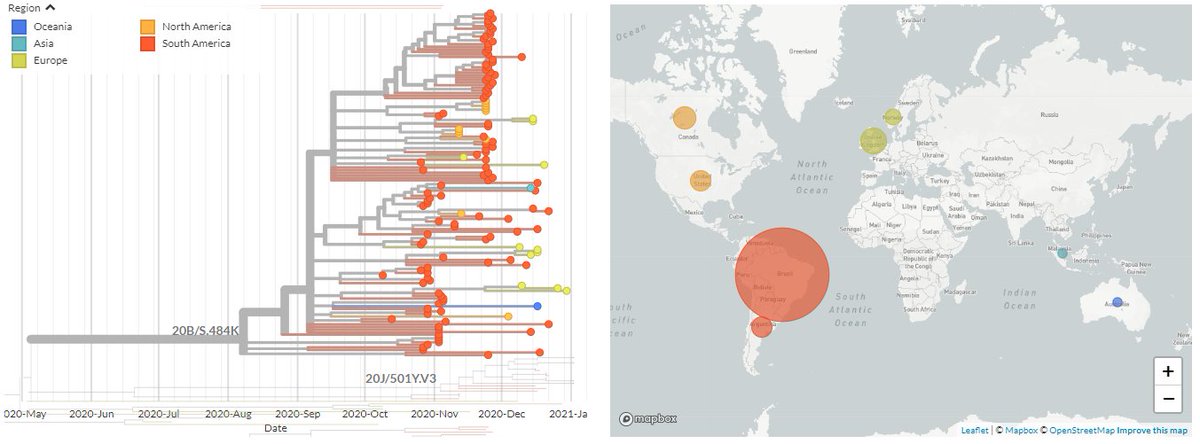
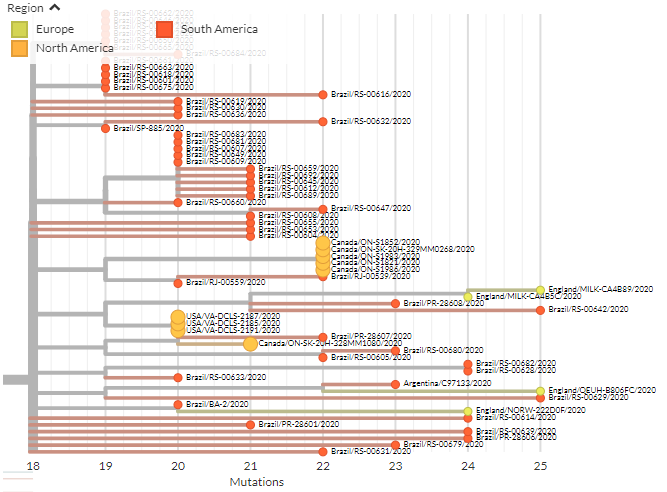
If we look just at 20B/S.484K (top cluster), we can see there are clusters of sequences in the UK, Canada & the USA, and exports to Norway, Malaysia, & Australia.

6/10

https://t.co/D3AE3V9GOw
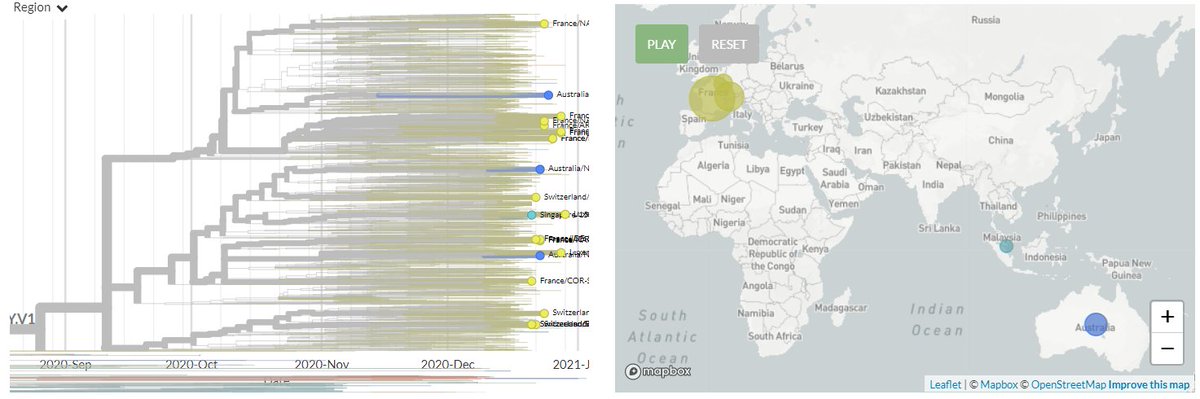
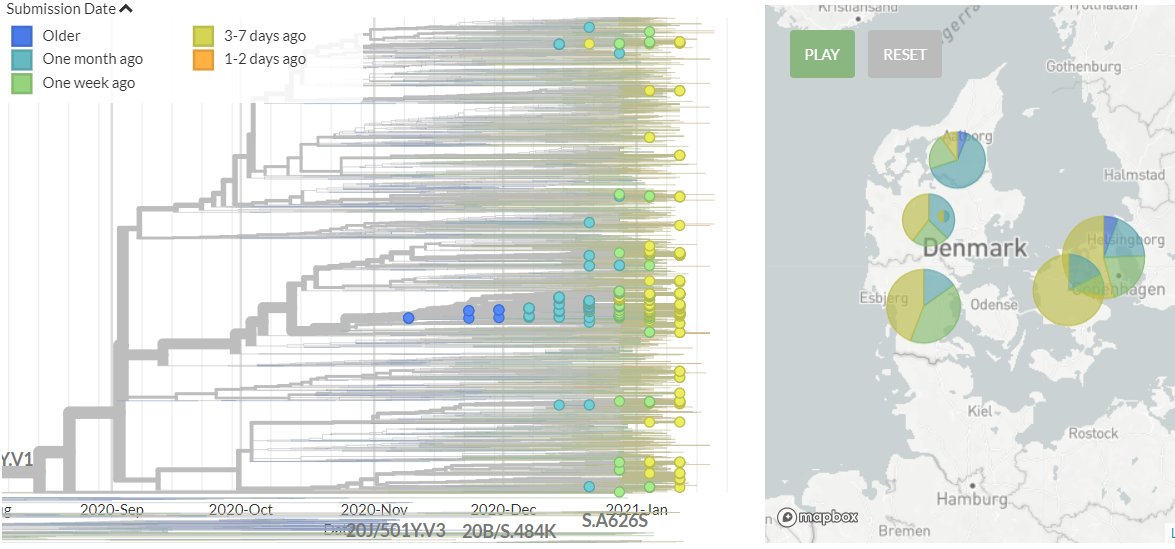
Importantly, the clusters in the USA & Canada are identical (though each country also has an additional imports), so they may be from a group of travellers returning, rather than local transmission (left pic). They also date from Nov - so not recent (right pic).

7/10
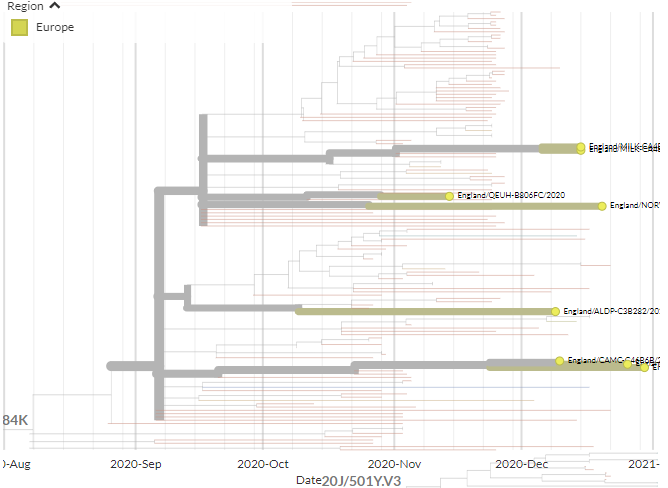
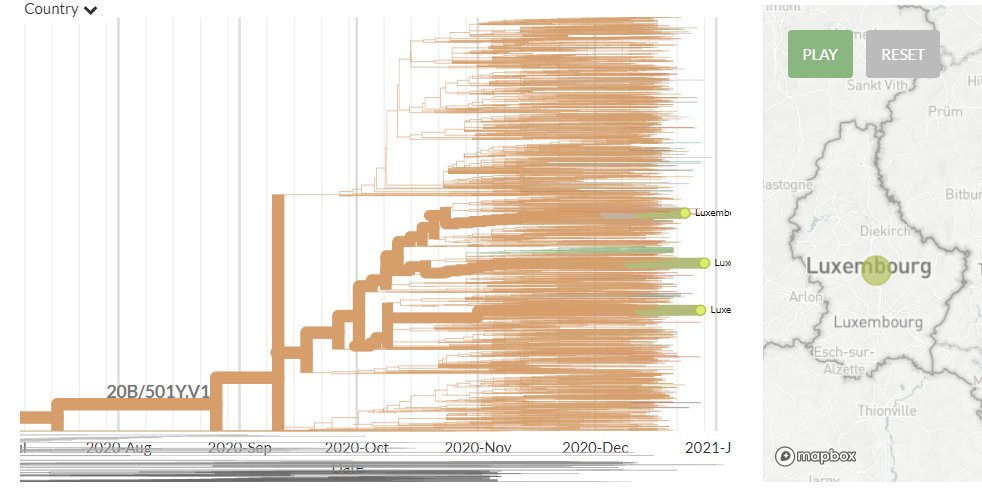
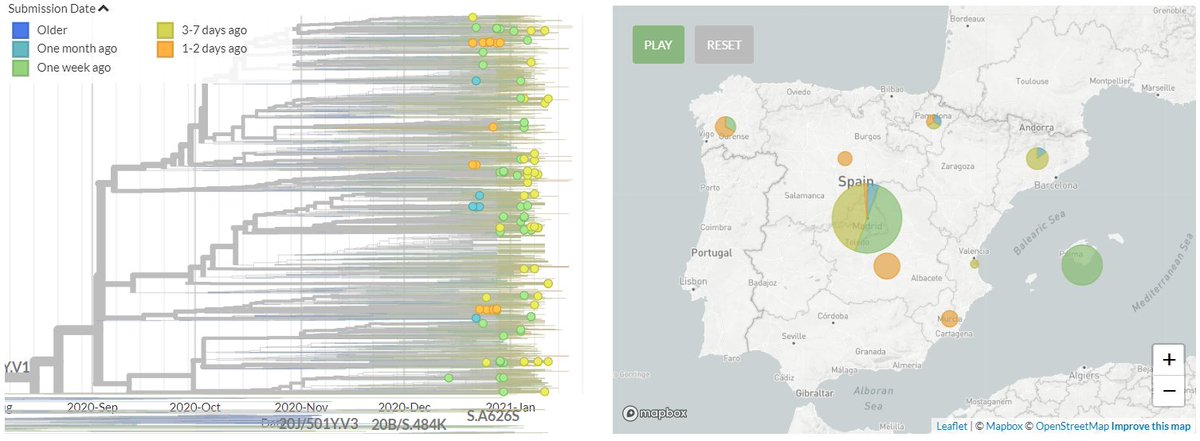
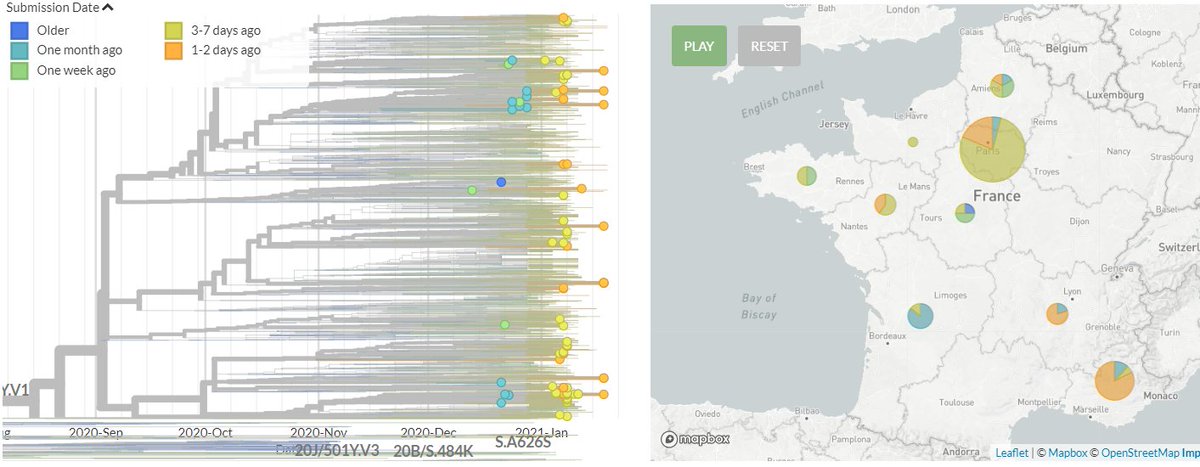
We can see 8 UK sequences in the 20B/S.484K cluster. There are 2 clusters, but neither are identical. They could be from a common exposure (same part of Brazil, same travel group), or possibly be local transmission. These samples are from Nov & Dec.

8/10

https://t.co/w5oISsCFYb
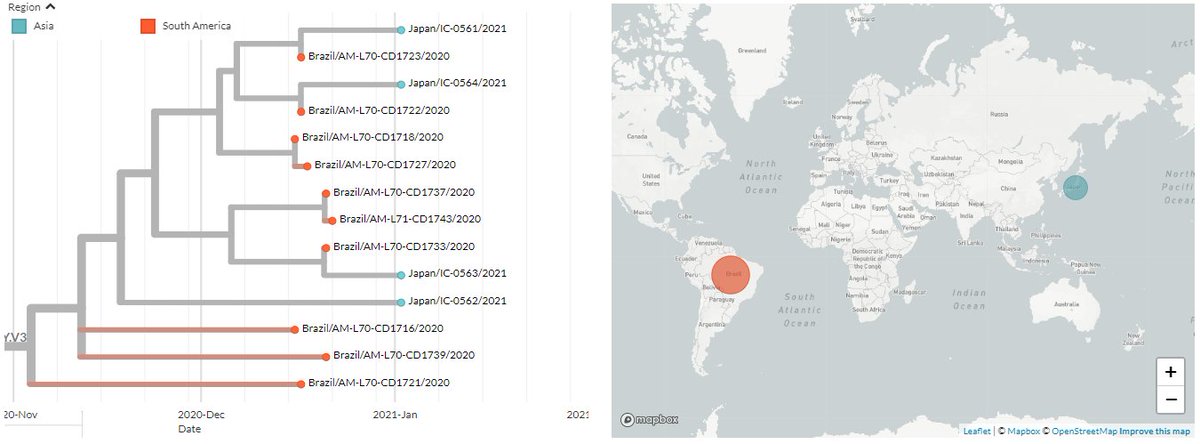
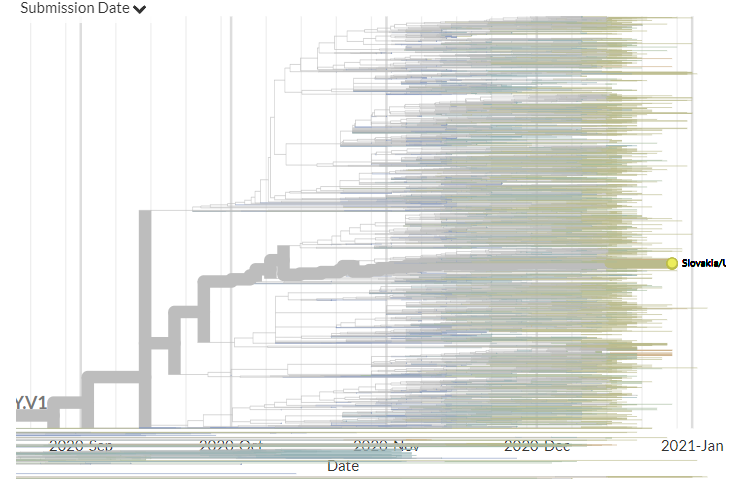
If we look at 20J/501Y.V3, we can see that sequences only are found in Brazil and Japan (known travel to Brazil), but no other countries.

9/10

https://t.co/4lzibcXzmW
Hopefully, this thread helps distinguish what the '2 variants' are that are circulating in Brazil, and from which there have been samples detected in the UK.

And, I hope it shows how phylogenetics can help us 'tell viruses apart' & follow them as they move & change!

10/10
To add: why are scientists concerned about these variants circulating primarily in Brazil?

@BillHanage write a fantastic thread here:

11/10

https://t.co/qvF92BV7CZ

More from Dr Emma Hodcroft

🎉Happy New Year!🎉

To kick off 2021, here's an update on:
- S:N501 variants (501Y.V1/V2) with data from 31 Dec 2020
- 69/70del variants
- 20A.EU1 variant (most prevalent variant in Europe)

(Here are some fireworks that look a bit like phylogenies! 🎆)

1/23


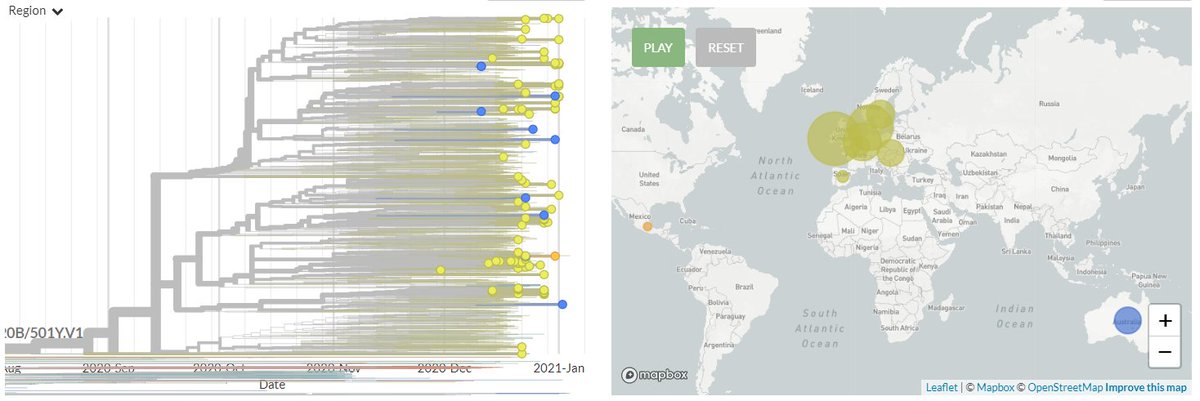
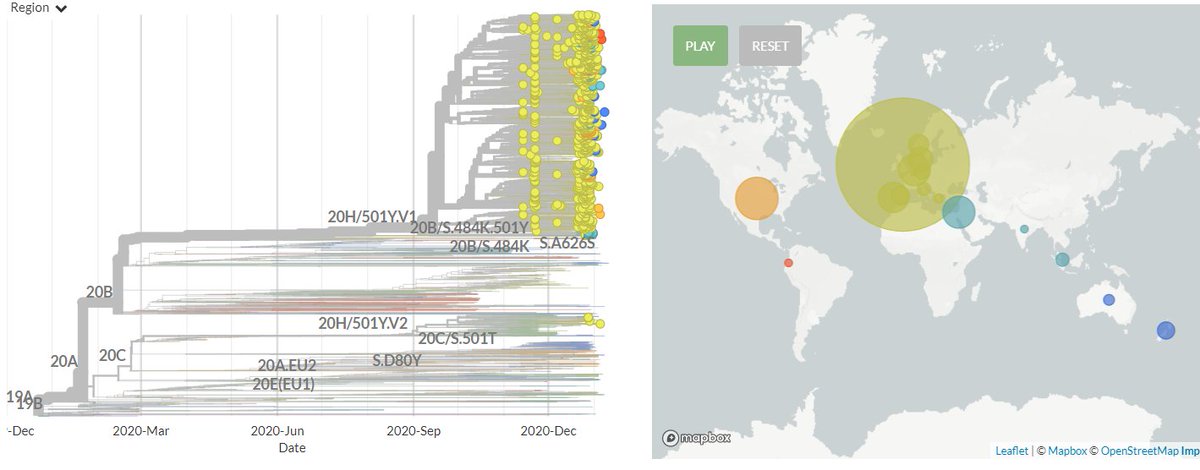
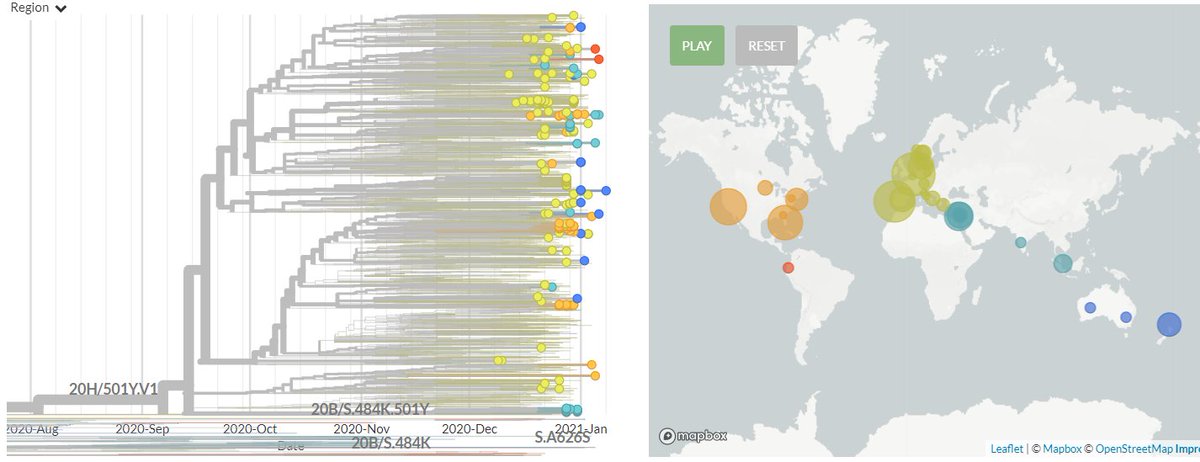
The latest sequences from 31 Dec show new sequences in the S:N501Y.V1 variant (originating from SE England) from Netherlands, Denmark, Australia, Italy, Canada, the USA, Germany, Switzerland, & India.

2/23

S:N501 link
https://t.co/TfHfPgBEBS

Image link
https://t.co/3aCKv1pAcI


Canada, Germany, & Switzerland all have sequences that fall in 501Y.V1 for the first time, scattered across the tree.

3/23


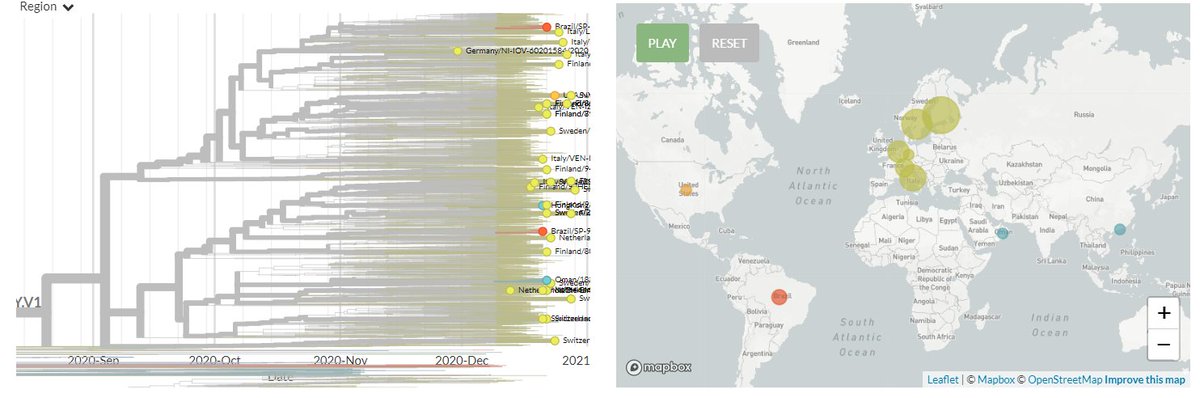
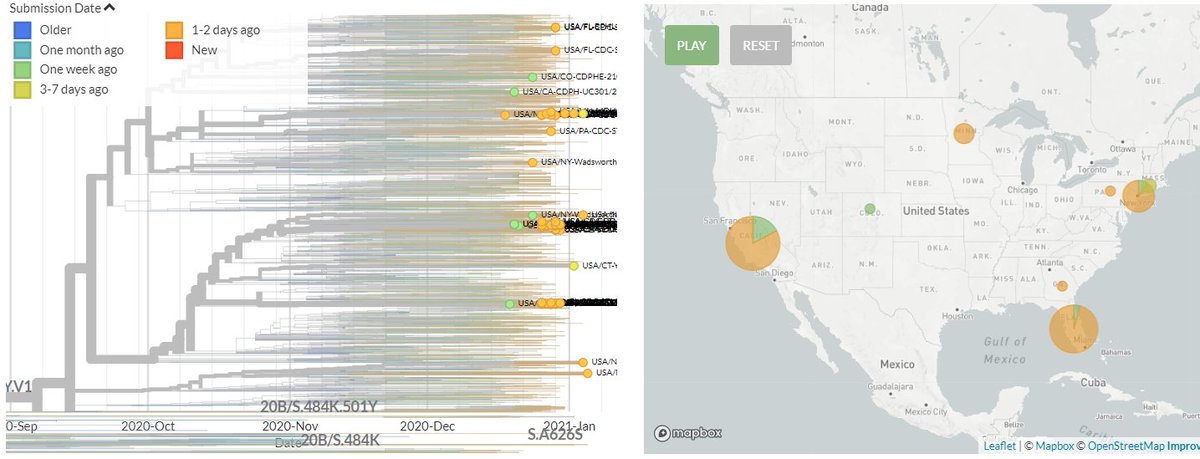
The USA also has its first 2 sequences that fall in 501Y.V1, from Colorado & California. India also had its first 3 sequences, also from different regions.

In both cases, the sequences are not connected, indicating separate introductions.

4/23


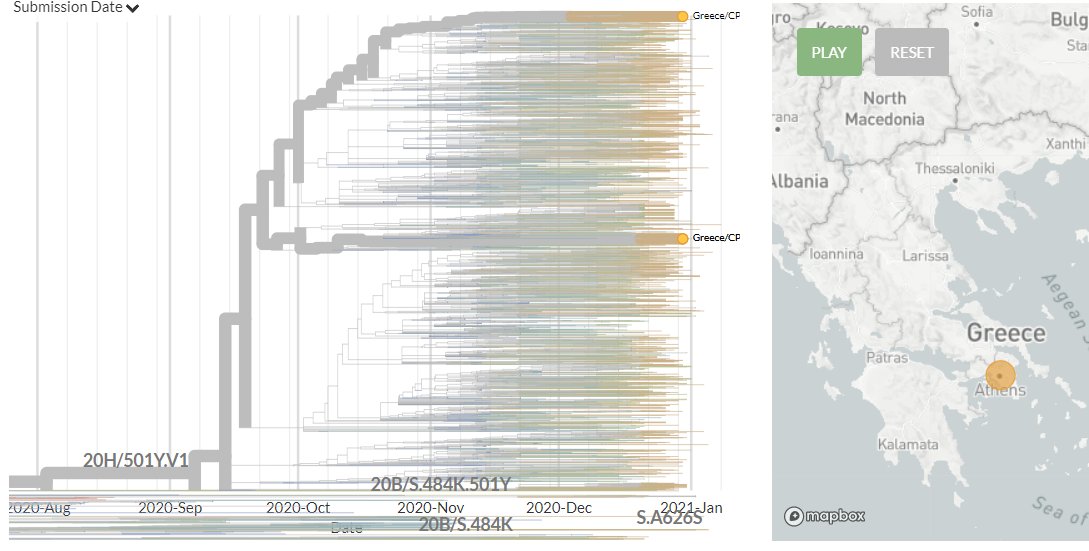
In countries with previous sequences:

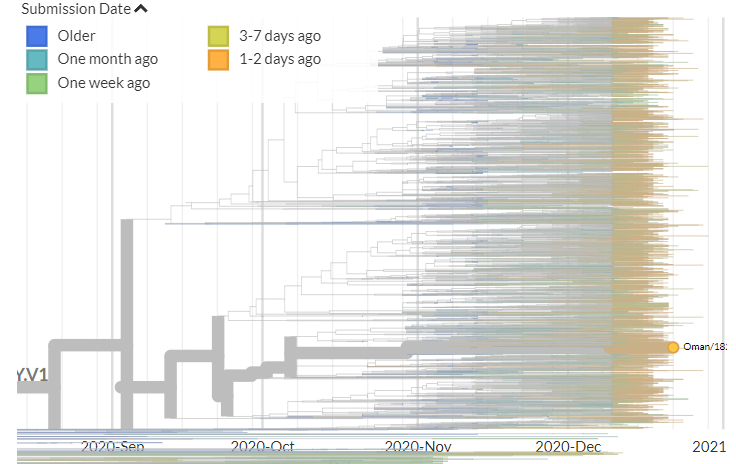
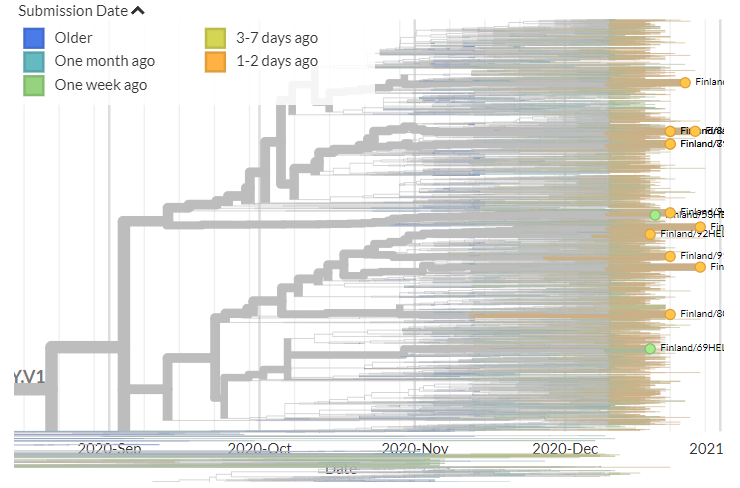
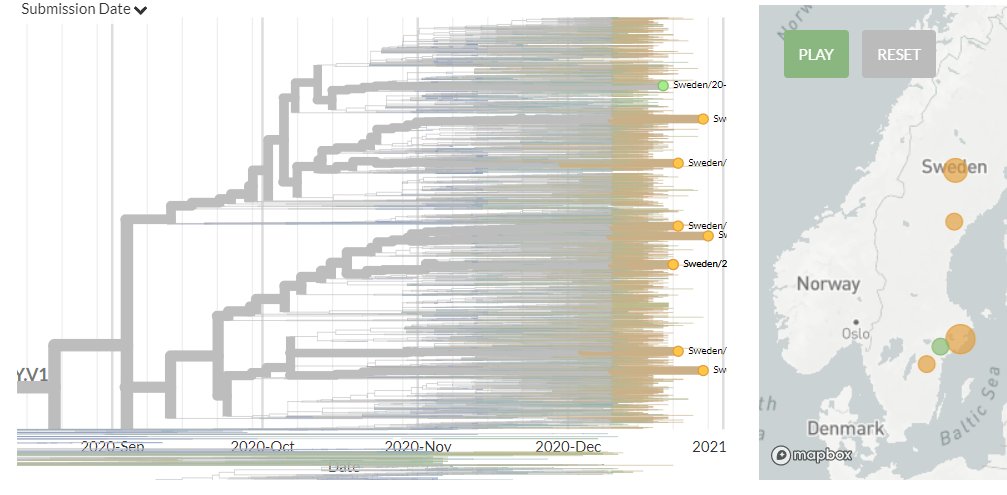
6 new sequences from Netherlands, in orange/yellow (green are older).
1 is clearly separate - zooming in (& in divergence view, coloured by country) it is harder to determine the relationship between the others.

5/23

More from Society

You May Also Like

1. Project 1742 (EcoHealth/DTRA)
Risks of bat-borne zoonotic diseases in Western Asia

Duration: 24/10/2018-23 /10/2019

Funding: $71,500
@dgaytandzhieva
https://t.co/680CdD8uug


2. Bat Virus Database
Access to the database is limited only to those scientists participating in our ‘Bats and Coronaviruses’ project
Our intention is to eventually open up this database to the larger scientific community
https://t.co/mPn7b9HM48


3. EcoHealth Alliance & DTRA Asking for Trouble
One Health research project focused on characterizing bat diversity, bat coronavirus diversity and the risk of bat-borne zoonotic disease emergence in the region.
https://t.co/u6aUeWBGEN


4. Phelps, Olival, Epstein, Karesh - EcoHealth/DTRA


5, Methods and Expected Outcomes
(Unexpected Outcome = New Coronavirus Pandemic)