
An interesting take on zombies would be a virally mediated analgesia.
This kind of zombie plague has already happened before. Leprosy-induced neuropathy has been a thing for all of human history.
You'd just need to improve upon it.
There's a reason people born with congenital analgesia don't often survive childhood, and why leprosy is so lethal.
Restaurant workers scalding their forearms down to the muscle, warehouse workers not noticing they've crushed toes, etc
Or people who'd let illnesses go ignored until far too late.
All denied medical care
Whole economic sectors dissolving as the manual labor required literally tears apart the workers
You're in the waiting room next to a guy whose foot is rotting off. On the other side is a woman with 3rd degree burns on one entire arm
They'd be given nothing, perhaps a bipartisan means-tested $300 check.
You don't need a rage virus if a perfectly normal one can cause rage.
You're gonna need a virus that specifically targets either the peripheral nervous system, or does better: retroviral mutation of the PRDM12 gene.
For this, you need to engineer a lentivirus.
HIV is the best known lentivirus, but isn't ideal
https://t.co/PdKf2SDnL3
You want airborne transmission with high r0.
Measles would work perfectly if it had lentiviral characteristics.
Bam: highly contagious, incredibly infectious, airborne analgesia with fast incubation *and* added immunological suppression.
They will get all the rage they need when US society tries its bullshit on them.
Or rice https://t.co/TRTsg6UUwh
More from Anosognosiogenesis
Look at some historical examples of mass psychogenic illnesses: dancing plagues, laughing plagues, meowing nuns,
Here's a video on them:
They are interesting, but what is more interesting to me is Culture Bound Syndrome. https://t.co/hMKaApUMZn
Basically: mass psychogenic illness, and presentation of various mental illnesses, do not occur in a vacuum. Cultures shape them.
For instance, Koro.
There have been several mass outbreaks of men completely convinced their penises are shrinking, anchoring them with string at night so they don't get sucked back inside.
Almost all in Southeast
Here's a description of one outbreak in Hainan in 1984:
Here's a video on them:
They are interesting, but what is more interesting to me is Culture Bound Syndrome. https://t.co/hMKaApUMZn
Basically: mass psychogenic illness, and presentation of various mental illnesses, do not occur in a vacuum. Cultures shape them.
For instance, Koro.
There have been several mass outbreaks of men completely convinced their penises are shrinking, anchoring them with string at night so they don't get sucked back inside.
Almost all in Southeast
Here's a description of one outbreak in Hainan in 1984:
So you want to generate interesting melodies.
1. Make a file called 1235.txt containing, one per line, all 24 unique permutations of the elements 1 2 3 5.
2. Cp 1235.txt to D.txt
3. Use sed to convert the numbers in D.txt to notes. Now you have 24 permutations of the major tetrachord in D.
4. Play them each. If it sounds like it increases tension, mark the beginning of that cell in 1235.txt with a +. If it sounds like it decreases tension, mark with a -.
Now those 24 melodic cells are divided into two groups: tension increasers and resolvers.
5. Rinse and repeat for all 12 keys.
You now have 13 plaintext files, filled with stuff like + 1 2 5 3 and - D E F# A
6. Figuratively roll dice to decide, given a +/- cell, what the next cell should be.
33% chance a + follows a +, etc.
Now you're outputting a stream of dynamic tensions: ++-+++-+-+---+ etc
1. Make a file called 1235.txt containing, one per line, all 24 unique permutations of the elements 1 2 3 5.
Claude Shannon made this machine to play the hex board game.
— Anosognosiogenesis (@pookleblinky) January 21, 2021
It is literally just a mesh of resistors and some light bulbs. No logic gates, no programming, nothing at all resembling AI.
Check it out: https://t.co/Zoyc9TmBcN pic.twitter.com/EANeMosPhT
2. Cp 1235.txt to D.txt
3. Use sed to convert the numbers in D.txt to notes. Now you have 24 permutations of the major tetrachord in D.
4. Play them each. If it sounds like it increases tension, mark the beginning of that cell in 1235.txt with a +. If it sounds like it decreases tension, mark with a -.
Now those 24 melodic cells are divided into two groups: tension increasers and resolvers.
5. Rinse and repeat for all 12 keys.
You now have 13 plaintext files, filled with stuff like + 1 2 5 3 and - D E F# A
6. Figuratively roll dice to decide, given a +/- cell, what the next cell should be.
33% chance a + follows a +, etc.
Now you're outputting a stream of dynamic tensions: ++-+++-+-+---+ etc
More from Society

Krugman is, of course, right about this. BUT, note that universities can do a lot to revitalize declining and rural regions.
See this thing that @lymanstoneky wrote:
And see this thing that I wrote:
And see this book that @JamesFallows wrote:
And see this other thing that I wrote:
One thing I've been noticing about responses to today's column is that many people still don't get how strong the forces behind regional divergence are, and how hard to reverse 1/ https://t.co/Ft2aH1NcQt
— Paul Krugman (@paulkrugman) November 20, 2018
See this thing that @lymanstoneky wrote:
And see this thing that I wrote:
And see this book that @JamesFallows wrote:
And see this other thing that I wrote:


Brief thread to debunk the repeated claims we hear about transmission not happening 'within school walls', infection in school children being 'a reflection of infection from the community', and 'primary school children less likely to get infected and contribute to transmission'.
I've heard a lot of scientists claim these three - including most recently the chief advisor to the CDC, where the claim that most transmission doesn't happen within the walls of schools. There is strong evidence to rebut this claim. Let's look at
Let's look at the trends of infection in different age groups in England first- as reported by the ONS. Being a random survey of infection in the community, this doesn't suffer from the biases of symptom-based testing, particularly important in children who are often asymptomatic
A few things to note:
1. The infection rates among primary & secondary school children closely follow school openings, closures & levels of attendance. E.g. We see a dip in infections following Oct half-term, followed by a rise after school reopening.
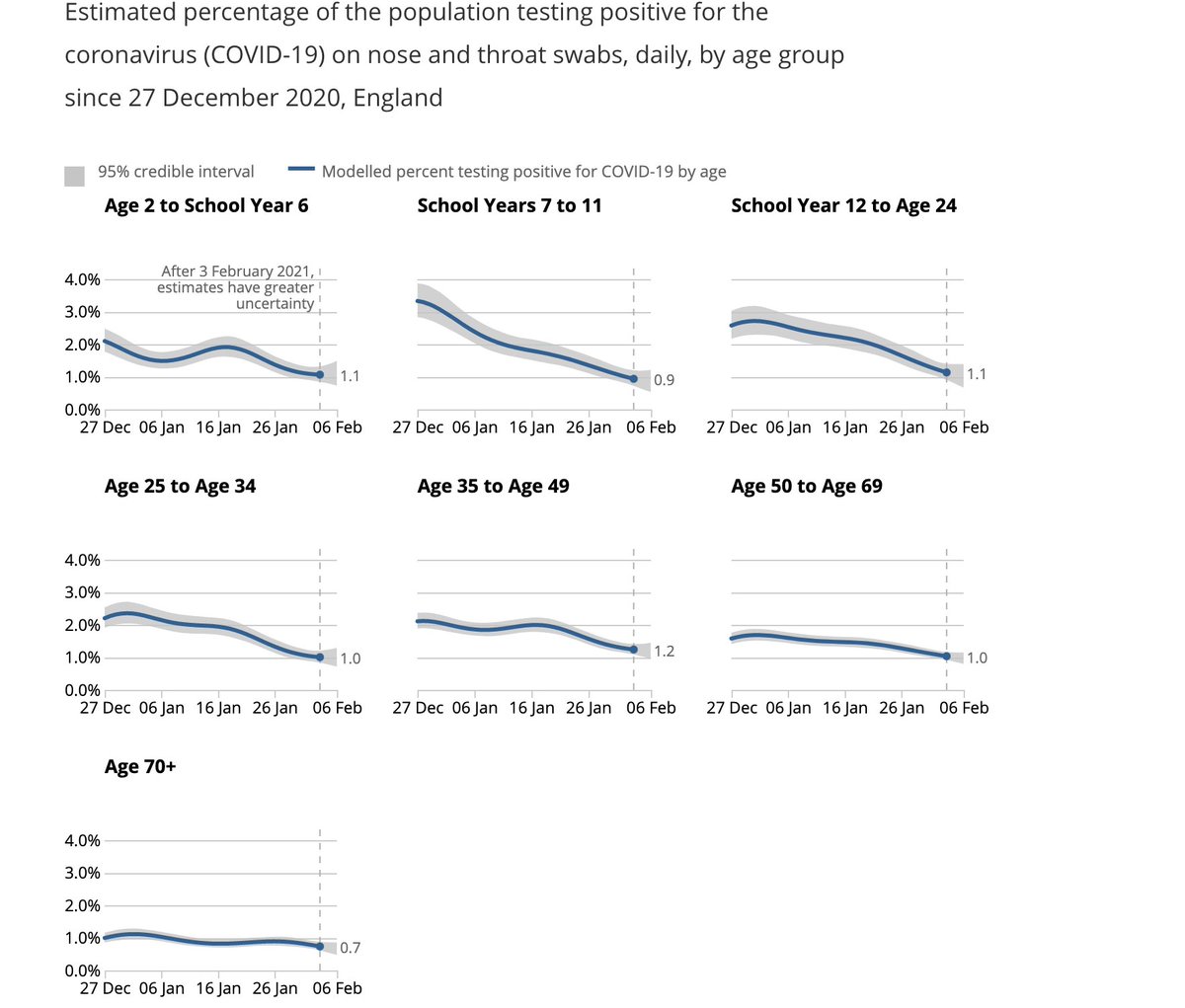
We see steep drops in both primary & secondary school groups after end of term (18th December), but these drops plateau out in primary school children, where attendance has been >20% after re-opening in January (by contrast with 2ndary schools where this is ~5%).
I've heard a lot of scientists claim these three - including most recently the chief advisor to the CDC, where the claim that most transmission doesn't happen within the walls of schools. There is strong evidence to rebut this claim. Let's look at
The science shows us that most disease transmission does not happen in the walls of the school, but it comes in from the community. So, CDC is advocating to get our K-5 students back in school at least in a hybrid mode with universal mask wearing and 6 ft of distancing. https://t.co/dfvJ2nl2s4
— Rochelle Walensky, MD, MPH (@CDCDirector) February 14, 2021
Let's look at the trends of infection in different age groups in England first- as reported by the ONS. Being a random survey of infection in the community, this doesn't suffer from the biases of symptom-based testing, particularly important in children who are often asymptomatic
A few things to note:
1. The infection rates among primary & secondary school children closely follow school openings, closures & levels of attendance. E.g. We see a dip in infections following Oct half-term, followed by a rise after school reopening.
We see steep drops in both primary & secondary school groups after end of term (18th December), but these drops plateau out in primary school children, where attendance has been >20% after re-opening in January (by contrast with 2ndary schools where this is ~5%).

We finally have the U.S. Citizenship Act Bill Text! I'm going to go through some portions of the bill right now and highlight some of the major changes and improvements that it would make to our immigration system.
Thread:
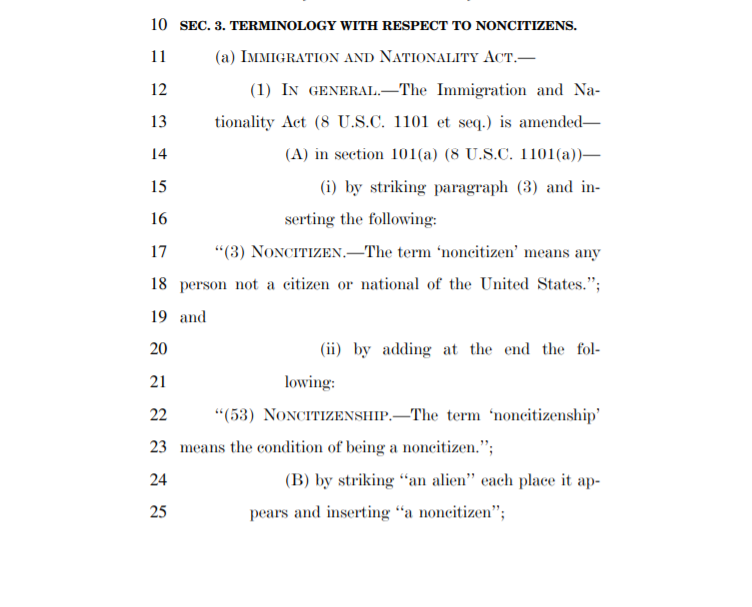
First the Bill makes a series of promises changes to the way we talk about immigrants and immigration law.
Gone would be the term "alien" and in its place is "noncitizen."
Also gone would be the term "alienage," replaced with "noncitizenship."
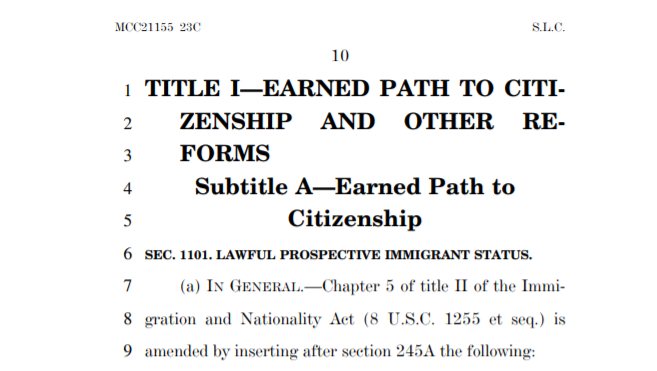
Now we get to the "earned path to citizenship" for all undocumented immigrants present in the United States on January 1, 2021.
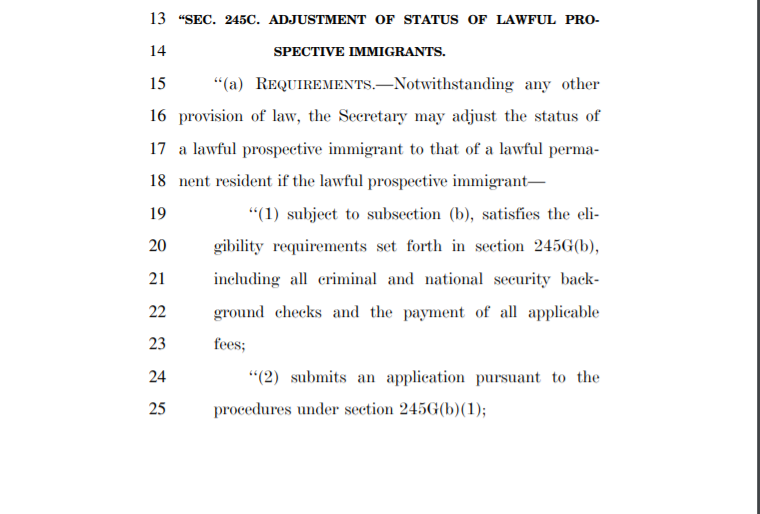
Under this bill, anyone who satisfies the eligibility criteria for a new "lawful prospective immigrant status" can come out of the shadows.
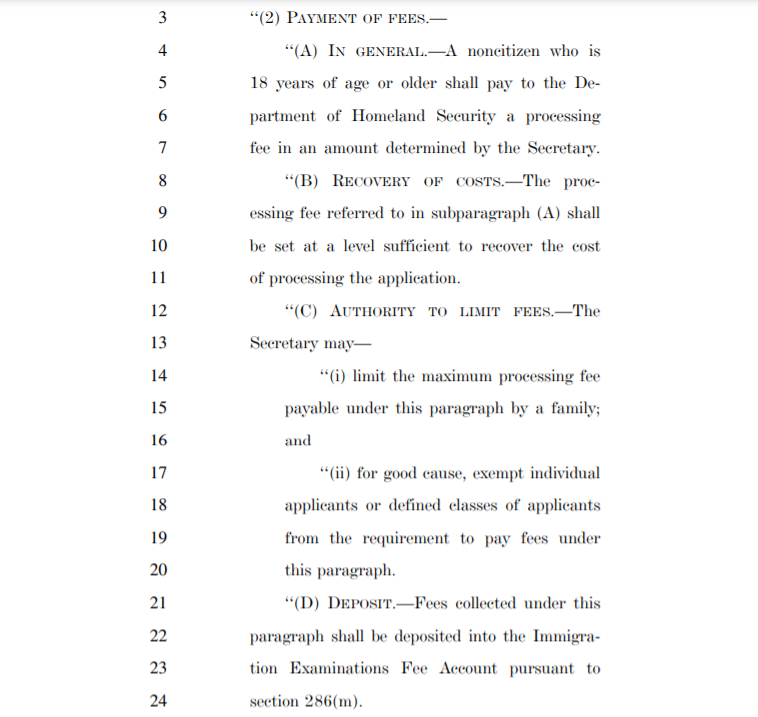
So, what are the eligibility criteria for becoming a "lawful prospective immigrant status"? Those are in a new INA 245G and include:
- Payment of the appropriate fees
- Continuous presence after January 1, 2021
- Not having certain criminal record (but there's a waiver)
After a person has been in "lawful prospective immigrant status" for at least 5 years, they can apply for a green card, so long as they still pass background checks and have paid back any taxes they are required to do so by law.
However! Some groups don't have to wait 5 years.
Thread:
The immigration bill text is out!
— Nicole Narea (@nicolenarea) February 18, 2021
Senate version: https://t.co/aJUmtVW6Ir
House version: https://t.co/JMKjQaDi04
Excuse me while I go at this with a highlighter.
First the Bill makes a series of promises changes to the way we talk about immigrants and immigration law.
Gone would be the term "alien" and in its place is "noncitizen."
Also gone would be the term "alienage," replaced with "noncitizenship."
Now we get to the "earned path to citizenship" for all undocumented immigrants present in the United States on January 1, 2021.
Under this bill, anyone who satisfies the eligibility criteria for a new "lawful prospective immigrant status" can come out of the shadows.
So, what are the eligibility criteria for becoming a "lawful prospective immigrant status"? Those are in a new INA 245G and include:
- Payment of the appropriate fees
- Continuous presence after January 1, 2021
- Not having certain criminal record (but there's a waiver)
After a person has been in "lawful prospective immigrant status" for at least 5 years, they can apply for a green card, so long as they still pass background checks and have paid back any taxes they are required to do so by law.
However! Some groups don't have to wait 5 years.
You May Also Like


I hate when I learn something new (to me) & stunning about the Jeff Epstein network (h/t MoodyKnowsNada.)
Where to begin?
So our new Secretary of State Anthony Blinken's stepfather, Samuel Pisar, was "longtime lawyer and confidant of...Robert Maxwell," Ghislaine Maxwell's Dad.
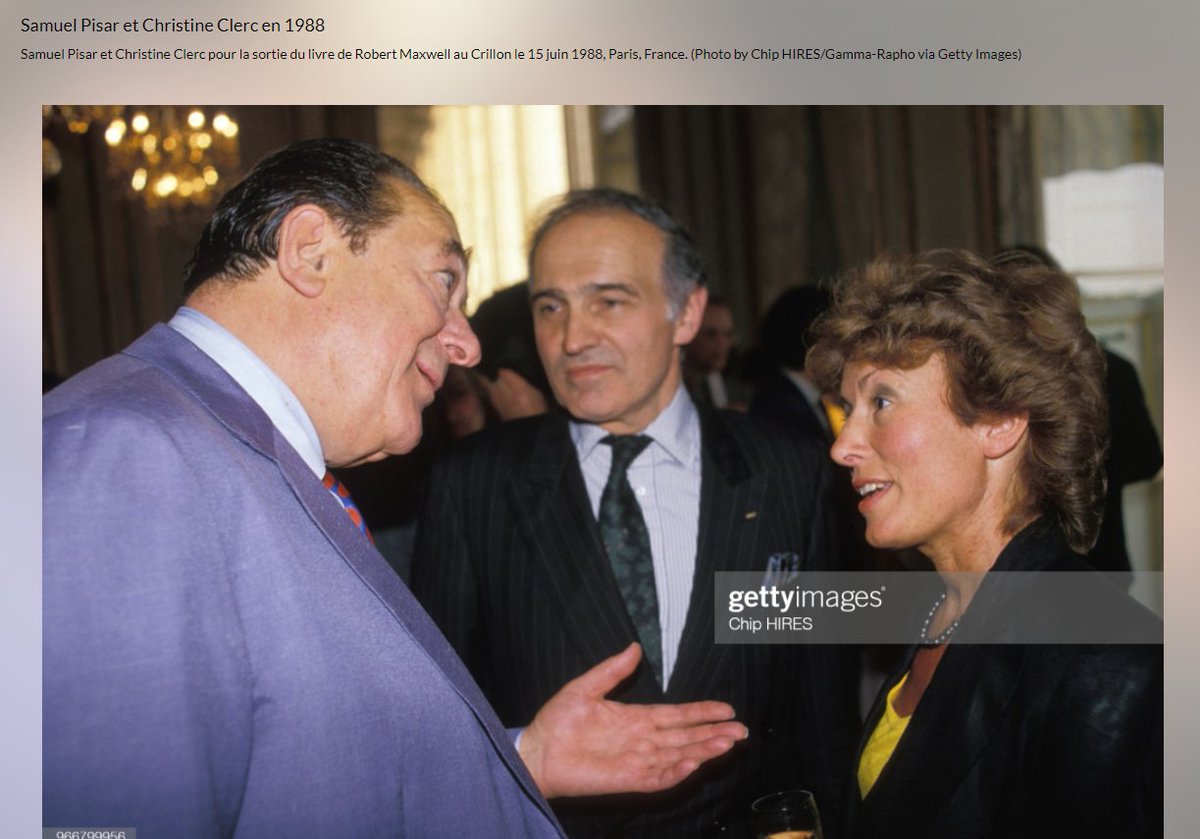
"Pisar was one of the last people to speak to Maxwell, by phone, probably an hour before the chairman of Mirror Group Newspapers fell off his luxury yacht the Lady Ghislaine on 5 November, 1991." https://t.co/DAEgchNyTP

OK, so that's just a coincidence. Moving on, Anthony Blinken "attended the prestigious Dalton School in New York City"...wait, what? https://t.co/DnE6AvHmJg
Dalton School...Dalton School...rings a
Oh that's right.
The dad of the U.S. Attorney General under both George W. Bush & Donald Trump, William Barr, was headmaster of the Dalton School.
Donald Barr was also quite a
I'm not going to even mention that Blinken's stepdad Sam Pisar's name was in Epstein's "black book."
Lots of names in that book. I mean, for example, Cuomo, Trump, Clinton, Prince Andrew, Bill Cosby, Woody Allen - all in that book, and their reputations are spotless.
Where to begin?
So our new Secretary of State Anthony Blinken's stepfather, Samuel Pisar, was "longtime lawyer and confidant of...Robert Maxwell," Ghislaine Maxwell's Dad.
"Pisar was one of the last people to speak to Maxwell, by phone, probably an hour before the chairman of Mirror Group Newspapers fell off his luxury yacht the Lady Ghislaine on 5 November, 1991." https://t.co/DAEgchNyTP
OK, so that's just a coincidence. Moving on, Anthony Blinken "attended the prestigious Dalton School in New York City"...wait, what? https://t.co/DnE6AvHmJg
Dalton School...Dalton School...rings a
Oh that's right.
The dad of the U.S. Attorney General under both George W. Bush & Donald Trump, William Barr, was headmaster of the Dalton School.
Donald Barr was also quite a
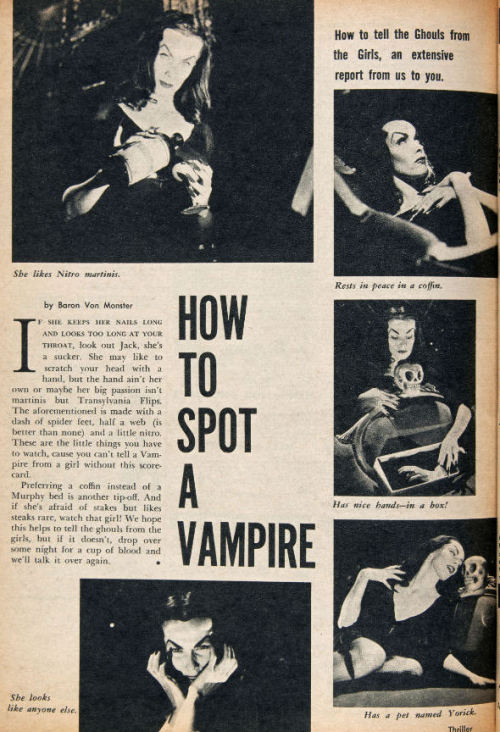
Donald Barr had a way with words. pic.twitter.com/JdRBwXPhJn
— Rudy Havenstein, listening to Nas all day. (@RudyHavenstein) September 17, 2020
I'm not going to even mention that Blinken's stepdad Sam Pisar's name was in Epstein's "black book."
Lots of names in that book. I mean, for example, Cuomo, Trump, Clinton, Prince Andrew, Bill Cosby, Woody Allen - all in that book, and their reputations are spotless.