
🤫

More from NotTheMacAnon
Localized Surface Plasmon Resonance - an overview | ScienceDirect Topics
https://t.co/mzS7vVSREJ
https://t.co/353PdAX2fa
https://t.co/3yBImjOdd4
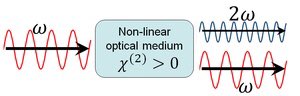
In some cases, almost 100% of the light energy can be converted to the second harmonic frequency. These cases typically involve intense pulsed laser beams passing through large crystals, and careful alignment to obtain phase matching.
https://t.co/mzS7vVSREJ
https://t.co/353PdAX2fa
https://t.co/3yBImjOdd4
In some cases, almost 100% of the light energy can be converted to the second harmonic frequency. These cases typically involve intense pulsed laser beams passing through large crystals, and careful alignment to obtain phase matching.
👍🏻
https://t.co/0ywQ1y5NDj
Pott found an association between exposure to soot and a high incidence of scrotal skin cancer in chimney sweeps. This cancer is now known as Pott's or chimney sweep cancer.
Coal contains trace amounts of naturally-occurring radioactive elements. The process of burning coal at coal-fired power plants, called combustion, creates wastes that contain small amounts of naturally-occurring radioactive material (NORM).
Fly ash particles (a major component of coal ash) can become lodged in the deepest part of your lungs, where they trigger asthma, inflammation and immunological reactions.
"When does a canary sing"
— Found&Forgiven (@AshlieMC2) December 7, 2020
See thread RT on oxidative stress and QD effects.
Thank you @NotTheMacAnon1https://t.co/XlyXyiCS2H
https://t.co/0ywQ1y5NDj
Pott found an association between exposure to soot and a high incidence of scrotal skin cancer in chimney sweeps. This cancer is now known as Pott's or chimney sweep cancer.
Coal contains trace amounts of naturally-occurring radioactive elements. The process of burning coal at coal-fired power plants, called combustion, creates wastes that contain small amounts of naturally-occurring radioactive material (NORM).
Fly ash particles (a major component of coal ash) can become lodged in the deepest part of your lungs, where they trigger asthma, inflammation and immunological reactions.

More from Science







You May Also Like








First thread of the year because I have time during MCO. As requested, a thread on the gods and spirits of Malay folk religion. Some are indigenous, some are of Indian origin, some have Islamic
Before I begin, it might be worth explaining the Malay conception of the spirit world. At its deepest level, Malay religious belief is animist. All living beings and even certain objects are said to have a soul. Natural phenomena are either controlled by or personified as spirits
Although these beings had to be respected, not all of them were powerful enough to be considered gods. Offerings would be made to the spirits that had greater influence on human life. Spells and incantations would invoke their
Two known examples of such elemental spirits that had god-like status are Raja Angin (king of the wind) and Mambang Tali Arus (spirit of river currents). There were undoubtedly many more which have been lost to time
Contact with ancient India brought the influence of Hinduism and Buddhism to SEA. What we now call Hinduism similarly developed in India out of native animism and the more formal Vedic tradition. This can be seen in the multitude of sacred animals and location-specific Hindu gods
i wonder if you can make a thread bout witchcraft in malaysia.. or list of our own local gods/deites..
— r a y a \U0001f319 (@lcvelylilith) February 20, 2020
Before I begin, it might be worth explaining the Malay conception of the spirit world. At its deepest level, Malay religious belief is animist. All living beings and even certain objects are said to have a soul. Natural phenomena are either controlled by or personified as spirits
Although these beings had to be respected, not all of them were powerful enough to be considered gods. Offerings would be made to the spirits that had greater influence on human life. Spells and incantations would invoke their
Animist ceremonies of a religious or magical nature were normally held for the purpose of divination or making a request. This would either be done at a keramat or at a shrine similar to the Thai spirit houses or Chinese roadside shrines pic.twitter.com/I1hliyi0x3
— \u2745\u1710\u170b\u1713\u170e (@uglyluhan) June 16, 2019
Two known examples of such elemental spirits that had god-like status are Raja Angin (king of the wind) and Mambang Tali Arus (spirit of river currents). There were undoubtedly many more which have been lost to time
Contact with ancient India brought the influence of Hinduism and Buddhism to SEA. What we now call Hinduism similarly developed in India out of native animism and the more formal Vedic tradition. This can be seen in the multitude of sacred animals and location-specific Hindu gods