
Pots of honey 🍯 are just pots of money 💰 https://t.co/XhS3wNM1Fj

New York Times Continues Swalwell Blackout Exposing Relationship With Chinese Spyhttps://t.co/NdkGtqLEiK
— \u200e \U00010912\u200eRabitt \u270c\ufe0f\U0001f1fa\U0001f1f8 (@CuriousRabitt) December 21, 2020
More from Werise

I saw a question asking what data and I answered him. I would gladly share the data & methodology. But I guess I am one of those lowly anons...
before accepting calculations from anonymous (or even non-anymous) sources, insist on a citation to original data so that it can be checked. I'm told (but haven't seen reference by Werise) that this comes from NYT json data https://t.co/6SD5ENF137. I'll comment on this data. pic.twitter.com/nqphPoqTa6
— Stephen McIntyre (@ClimateAudit) November 26, 2020


I think it is relatable to what we have experienced. I was working on other things as well... https://t.co/U7mS9QyjFD

I was working on something before the election that became the election...
— Werise (@We_Have_Risen) January 7, 2021
Color revolutions are real and we just witnessed one live and direct...
1. pic.twitter.com/2u4rDGvl9N
More from Politics

Breaking News: House GOP to hold investigative hearing into DOJ\u2019s handling of Clinton Foundation probe. Top prosecutor to be summoned. https://t.co/HogyXHHcvo
— John Solomon (@jsolomonReports) November 21, 2018
I'm sure Huber is coming to DC *only* to discuss Clinton Foundation things with Meadows and his committee.
He for certain, like, won't be huddling with Horowitz or that new guy, Whitaker while he's in town. That would NEVER HAPPEN. [wink wink wink!] 😉
I just spent a year and a half telling you they will SHOW YOU what they are REALLY DOING when they are READY.
Not before.
No matter how much whining is done about it.
I'm exhausted but it's worth it.
Now you know why they're f**king TERRIFIED of Whitaker, the closer tapped by Trump to come in late for the hysterical fireworks that will ensue soon.
Look who's suddenly fund raising for his legal defen- er, I mean, ha ha - his reelection campaign!
President Trump just attacked Adam on Twitter with his most profane insult yet. Will you chip in $5 to send Trump a message and show him you stand with Adam?
— Adam Schiff (@AdamSchiff) November 19, 2018
BREAKING: President Donald Trump has submitted his answers to questions from special counsel Robert Mueller
— Ryan Saavedra (@RealSaavedra) November 20, 2018
Mueller's officially end his investigation all on his own and he's gonna say he found no evidence of Trump campaign/Russian collusion during the 2016 election.
Democrats & DNC Media are going to LITERALLY have nothing coherent to say in response to that.
Mueller's team was 100% partisan.
That's why it's brilliant. NOBODY will be able to claim this team of partisan Democrats didn't go the EXTRA 20 MILES looking for ANY evidence they could find of Trump campaign/Russian collusion during the 2016 election
They looked high.
They looked low.
They looked underneath every rock, behind every tree, into every bush.
And they found...NOTHING.
Those saying Mueller will file obstruction charges against Trump: laughable.
What documents did Trump tell the Mueller team it couldn't have? What witnesses were withheld and never interviewed?
THERE WEREN'T ANY.
Mueller got full 100% cooperation as the record will show.


You May Also Like


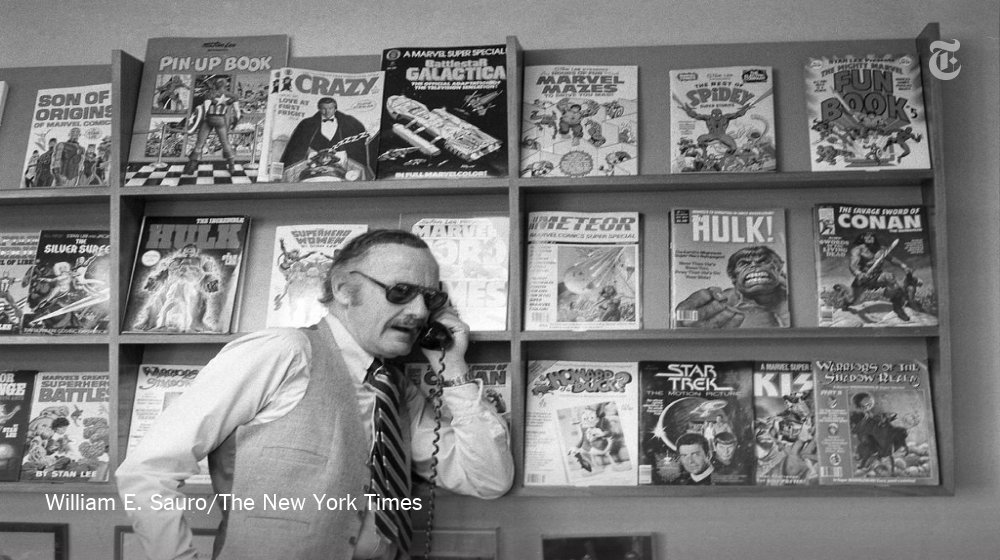
Stan Lee, who died Monday at 95, was born in Manhattan and graduated from DeWitt Clinton High School in the Bronx. His pulp-fiction heroes have come to define much of popular culture in the early 21st century.
Tying Marvel’s stable of pulp-fiction heroes to a real place — New York — served a counterbalance to the sometimes gravity-challenged action and the improbability of the stories. That was just what Stan Lee wanted. https://t.co/rDosqzpP8i

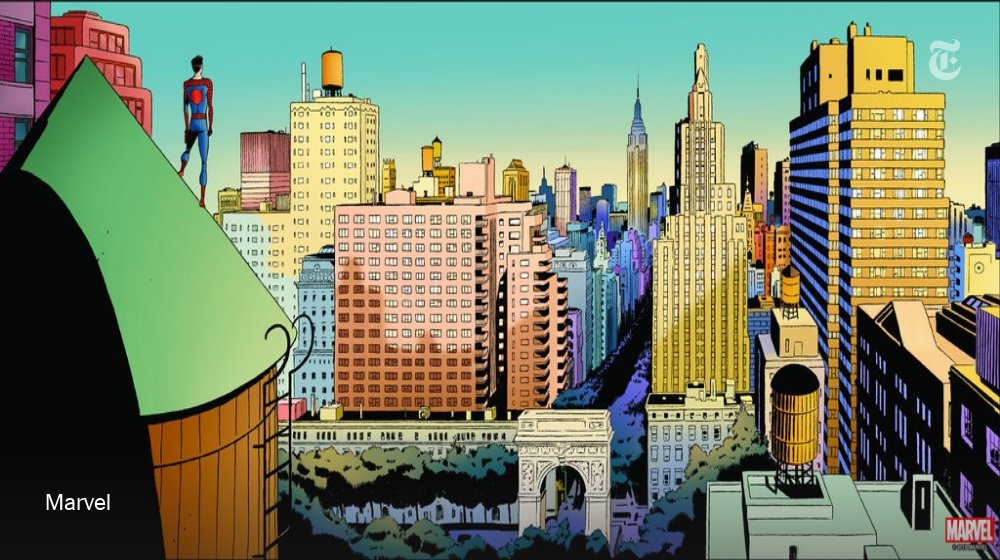
The New York universe hooked readers. And the artists drew what they were familiar with, which made the Marvel universe authentic-looking, down to the water towers atop many of the buildings. https://t.co/rDosqzpP8i
The Avengers Mansion was a Beaux-Arts palace. Fans know it as 890 Fifth Avenue. The Frick Collection, which now occupies the place, uses the address of the front door: 1 East 70th Street.
