
1) Get a cup of coffee.
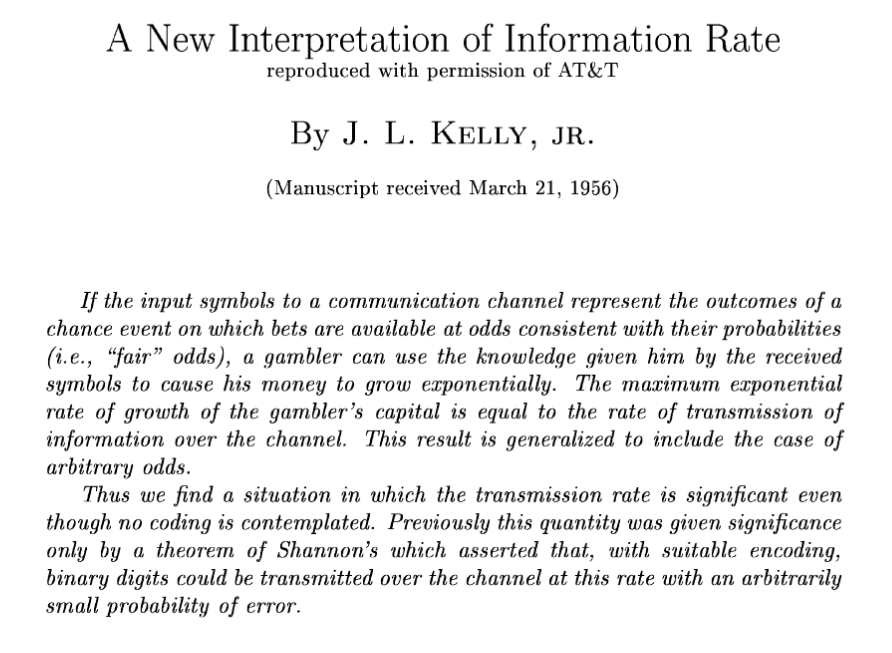
In this thread, I'm going to walk you through "The Kelly Criterion".
This is what is now known as the Kelly Criterion.
I'll keep it as realistic as possible:
Imagine that you walk into an antique store one day. Due to the persistence of the salesman there, you buy an old lamp from him.

He also enrolls you in Robinhood's fractional share trading program, but not in margin or options trading.
ALAD is a very special stock. Each month, the stock either exactly doubles or exactly halves in value. There's a 50/50 chance of either outcome, and no way to predict it in advance.

At the end of 20 years, all the stock in your account will be liquidated, the account will be closed, and its entire value will be given to you in cash.
The only thing within your control is the portfolio rebalancing at the start of each month.
So what should your rebalancing strategy be?

During this month, ALAD can either double or halve.
So, for every $1 you invest in ALAD at the beginning of the month, you'll have either $2 or $0.50 at the end.
On average, you'll have ($2 + $0.50)/2 = $1.25.
This is beginning to look like a no-brainer.
Clearly, the best way to proceed is to go "All In". Put your entire initial $1 in ALAD, and hold it for 20 yrs.
Best case: ALAD doubles every single month. That leaves you with many, many billions of dollars.
Worst case: ALAD gets halved every single month. That leaves you with an insignificant fraction of a penny.
These are like tossing a coin 240 times (once a month for 20 years) and expecting to get heads (or tails) every single time.
So what does the *average* case look like?
Remember that on average, you make 25% per month? Compounded over 20 years, that turns your $1 into many billions.
So, in all likelihood, you'll make out like a bandit, right?
Not so fast.
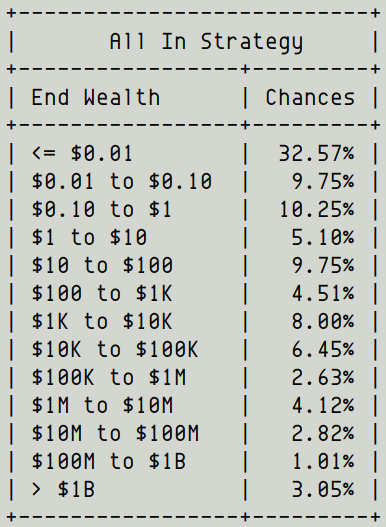
And a 67.4% chance that you'll end up with less than $100.
And only a 3% chance that you'll end up a billionaire.
It's because outliers skew the average.
The billion dollar plus outcomes are so good that they lift up the entire average.
Kind of like one winning lottery ticket compensating for thousands of duds.
These doublings and halvings cancel each other, leaving you with roughly the same $1 you started with.
*Most likely* outcomes are not swayed by outliers. *Averages* are.
In this case, you will *most likely* end up with just $1. But *on average*, you expect to end up with billions.
You need a strategy that maybe gives up some of the unlikely billions in potential upside, but buys you a very good chance of turning that $1 into $100K or $1M.
That's the genius of Kelly. He found that strategy.
At the start of each month, rebalance your portfolio so that exactly half of it is in cash and the other half is in ALAD stock.
The difference is night and day.
Just take a look at this table:
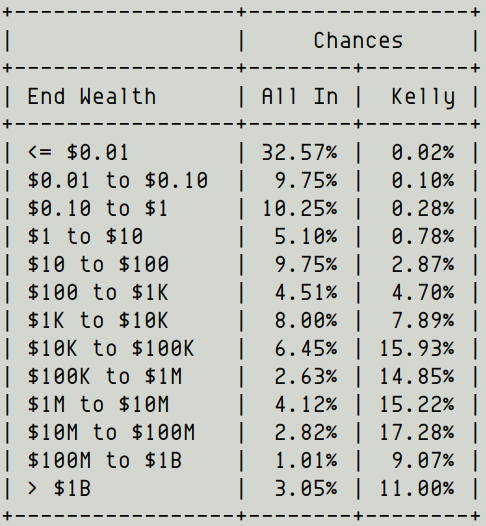
Kelly also gives you a 50+% chance of ending up a millionaire, and a 11% chance of ending up a billionaire!
The *average* outcome is still in the many billions, although Kelly does sacrifice some of the tail-end mega-billions.
When you apply the math to this particular problem, it so happens that you get 1/2 and 1/2 as the optimal strategy.
What if ALAD could quadruple, double, stay the same, or halve?
What if there was more than 1 stock: Aladdin Enterprises and Jasmine Enterprises?
Kelly's theory is applicable to all this and more.
"Fortune's Formula" by @WPoundstone is an excellent non-technical book that covers the Kelly Criterion in some detail.
https://t.co/soE2dFHDTH
https://t.co/76dL3uu0Ot
https://t.co/dagvcvorZo
https://t.co/QAypqSA5N5
https://t.co/tplsgSr2mG
1/7 Thread: Ergodicity
— Mostly Borrowed Ideas (@borrowed_ideas) May 17, 2020
Let\u2019s play a game.
Assume you have $100. We\u2019ll flip a coin 100 times. Your wealth will be +50% for each Heads, and -40% for Tails.
Wanna play?
Of course, you should! The expected value for each flip is $5.
But should you really? Let\u2019s figure out.
https://t.co/FQDocNUnL4
Turns out there’s actually some interest in the core mathematical theory behind the Kelly Criterion.
So, with a shout out to @borrowed_ideas who encouraged me to include this, here’s an appendix to the tweetstorm that gets into the math.
Instead of maximizing the wealth you expect to have at the end of each round, maximize the logarithm of this wealth.

At the start of a particular month, suppose our portfolio is worth $X. We divide this into two fractions: $f*X and $(1-f)*X.
We put $f*X in ALAD and keep $(1-f)*X in cash.
If we’re lucky, the ALAD part of our portfolio would have doubled. So the whole portfolio will be worth $f*X*2 + $(1-f)*X.
But if we’re unlucky, the ALAD part would have halved, leaving us with $f*X/2 + $(1-f)*X.
Lucky case: log(X*(1+f))
Unlucky case: log(X*(1-f/2))
0.5*log(X*(1+f)) + 0.5*log(X*(1-f/2)),
which simplifies to:
log(X) + 0.5*log(1 + f/2 - f^2/2).
That’s the same as maximizing 1 + f/2 - f^2/2, which happens to be:
9/2 - 2*(f - 1/2)^2.
Maximizing this means minimizing (f - 1/2)^2.
And that means choosing f = 1/2.
So choosing f=1/2 means we put half the portfolio in ALAD stock.
The other half, (1-f), goes to cash.
And that’s how you do the math behind the Kelly Criterion.
More from 10-K Diver





More from Investing

🔎 $RTP/@hippo_insurance: SaaS harnessing AI to revolutionize the home insurance industry 🦛🏠
- Everything you need to know
- One-stop-shop for all things smart/connected home
- Higher growth & revenue than closest public competitor $LMND/@Lemonade_Inc
Time for a thread 🧵⬇️
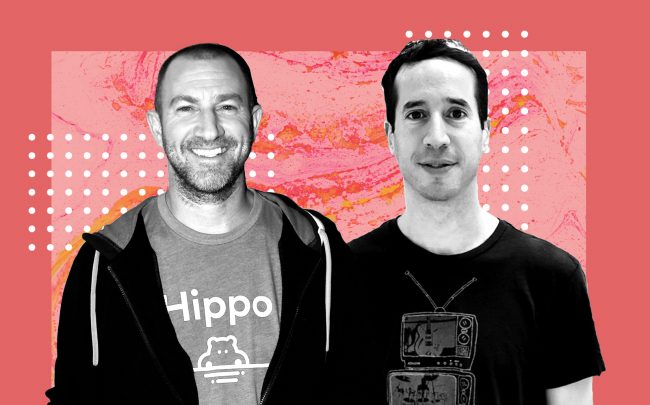
Hippo was founded in 2015 by Assaf Wand, an ex-McKinsey consultant and Eyal Navon, serial entreprenuer and software engineer.
Wand's interest in insurance was inspired by his father's lengthy career in the "antiquated" insurance industry. $RTP
After two years of R&D, fundraising, and product development, Hippo launched in April 2017 in California.
The company's marketing was centered on the delivery of a 60-sec quote for insurance policies, transparent process, and smart home integration.
https://t.co/msy9u2ZpST $RTP
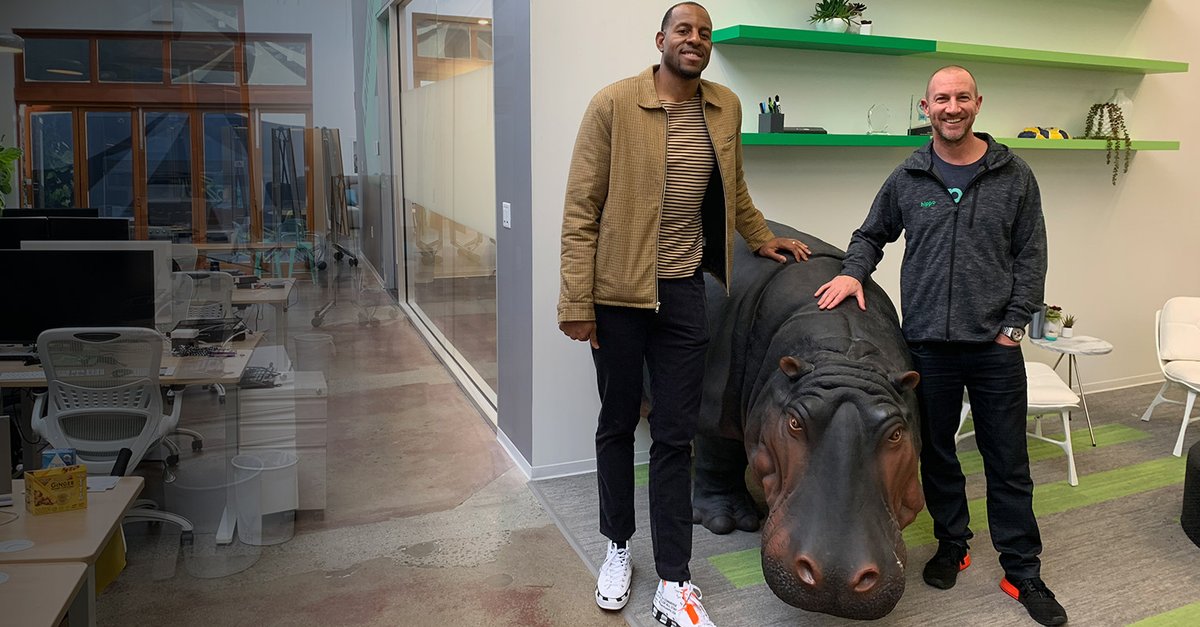
By March 2019, with Hippo insurance available to more than 50% of the homeowners in the US, the company reported a 25% month-over-month sales growth and total insured property value of more than $50 billion, with a 93% customer retention rate.
https://t.co/D5AyWgonVp $RTP
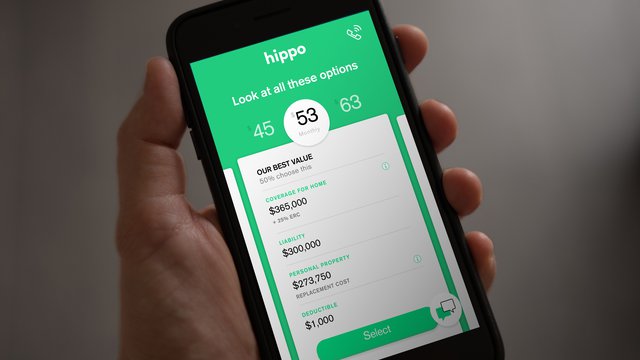
Hippo is going after a slightly different market. Most of the new insurance companies have pitched services to renters and city dwellers made up of the mostly millennial demographic, while Hippo is aiming its services squarely at homeowners. $RTP
https://t.co/MYo9HWDmdV

- Everything you need to know
- One-stop-shop for all things smart/connected home
- Higher growth & revenue than closest public competitor $LMND/@Lemonade_Inc
Time for a thread 🧵⬇️
Hippo was founded in 2015 by Assaf Wand, an ex-McKinsey consultant and Eyal Navon, serial entreprenuer and software engineer.
Wand's interest in insurance was inspired by his father's lengthy career in the "antiquated" insurance industry. $RTP
After two years of R&D, fundraising, and product development, Hippo launched in April 2017 in California.
The company's marketing was centered on the delivery of a 60-sec quote for insurance policies, transparent process, and smart home integration.
https://t.co/msy9u2ZpST $RTP
By March 2019, with Hippo insurance available to more than 50% of the homeowners in the US, the company reported a 25% month-over-month sales growth and total insured property value of more than $50 billion, with a 93% customer retention rate.
https://t.co/D5AyWgonVp $RTP
Hippo is going after a slightly different market. Most of the new insurance companies have pitched services to renters and city dwellers made up of the mostly millennial demographic, while Hippo is aiming its services squarely at homeowners. $RTP
https://t.co/MYo9HWDmdV



How to screen for stocks in the Microcap/Smallcap space?
Look for the following:
1. PE < 15
2. Low debt
3. Low Float
4. No Analyst Coverage
5. High Promoter Holding
6. Recent Promoter Buying
7. High Operating Leverage
8. Conservative Management
9. Blockbuster Earnings Release
What more you should look at?
Read this post, the quote retweets to this and the
Look for the following:
1. PE < 15
2. Low debt
3. Low Float
4. No Analyst Coverage
5. High Promoter Holding
6. Recent Promoter Buying
7. High Operating Leverage
8. Conservative Management
9. Blockbuster Earnings Release
What more you should look at?
Read this post, the quote retweets to this and the
Things I look at before Investing:
— The Disciplined Investor (@Disciplined_Inv) August 27, 2021
Profitable \u2013 Free Cash Flow
Healthy \u2013 Interest Coverage
Quality \u2013 ROCE, ROA, Margins
Valuation \u2013 EV/EBITDA, FCF Yield
Governance \u2013 Dividend, Buybacks
Efficiency \u2013 Cash Conversion Cycle
Growth \u2013 Source of Funds for CAPEX
What do you look at?
You May Also Like


1/OK, data mystery time.
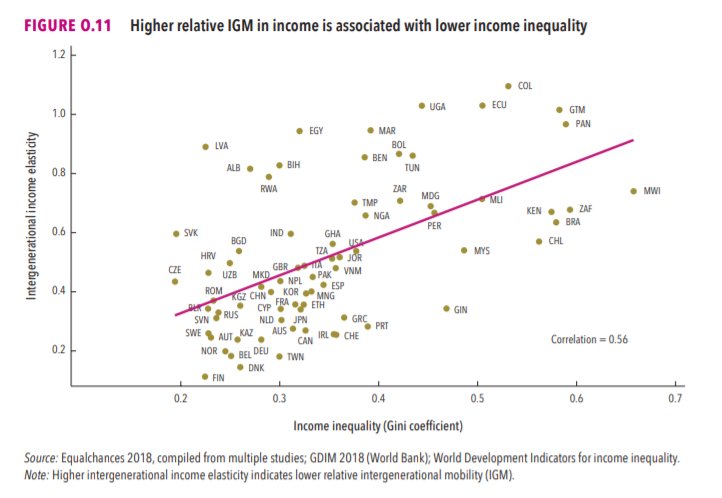
This New York Times feature shows China with a Gini Index of less than 30, which would make it more equal than Canada, France, or the Netherlands. https://t.co/g3Sv6DZTDE
That's weird. Income inequality in China is legendary.
Let's check this number.
2/The New York Times cites the World Bank's recent report, "Fair Progress? Economic Mobility across Generations Around the World".
The report is available here:
3/The World Bank report has a graph in which it appears to show the same value for China's Gini - under 0.3.
The graph cites the World Development Indicators as its source for the income inequality data.
4/The World Development Indicators are available at the World Bank's website.
Here's the Gini index: https://t.co/MvylQzpX6A
It looks as if the latest estimate for China's Gini is 42.2.
That estimate is from 2012.
5/A Gini of 42.2 would put China in the same neighborhood as the U.S., whose Gini was estimated at 41 in 2013.
I can't find the <30 number anywhere. The only other estimate in the tables for China is from 2008, when it was estimated at 42.8.
This New York Times feature shows China with a Gini Index of less than 30, which would make it more equal than Canada, France, or the Netherlands. https://t.co/g3Sv6DZTDE
That's weird. Income inequality in China is legendary.
Let's check this number.
2/The New York Times cites the World Bank's recent report, "Fair Progress? Economic Mobility across Generations Around the World".
The report is available here:
3/The World Bank report has a graph in which it appears to show the same value for China's Gini - under 0.3.
The graph cites the World Development Indicators as its source for the income inequality data.
4/The World Development Indicators are available at the World Bank's website.
Here's the Gini index: https://t.co/MvylQzpX6A
It looks as if the latest estimate for China's Gini is 42.2.
That estimate is from 2012.
5/A Gini of 42.2 would put China in the same neighborhood as the U.S., whose Gini was estimated at 41 in 2013.
I can't find the <30 number anywhere. The only other estimate in the tables for China is from 2008, when it was estimated at 42.8.

fascinated by this man, mario cortellucci, and his outsized influence on ontario and GTA politics. cortellucci, who lives in vaughan and ran as a far-right candidate for the italian senate back in 2018 - is a major ford donor...
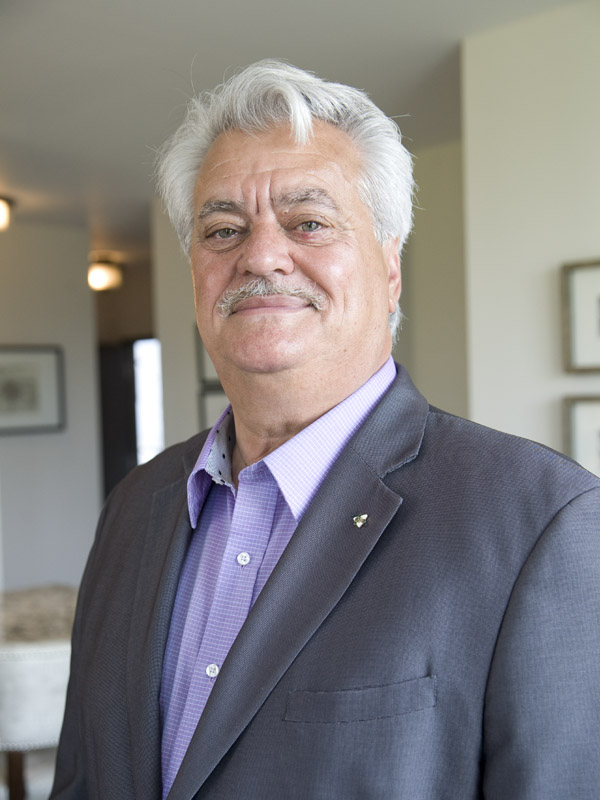
his name might sound familiar because the new cortellucci vaughan hospital at mackenzie health, the one doug ford has been touting lately as a covid-centric facility, is named after him and his family
but his name also pops up in a LOT of other ford projects. for instance - he controls the long term lease on big parts of toronto's portlands... where doug ford once proposed building an nfl stadium and monorail... https://t.co/weOMJ51bVF
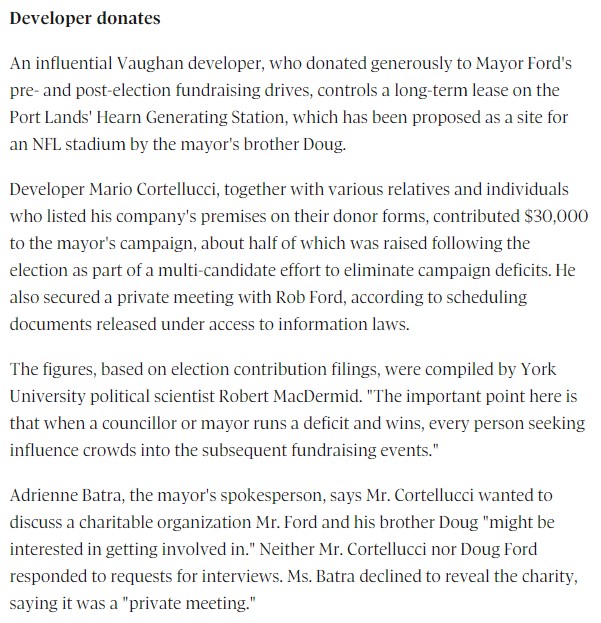
cortellucci, who is a developer, also owns a large chunk of the greenbelt. doug ford's desire to develop the greenbelt has been
and late last year he rolled back the mandate of conservation authorities there, prompting the resignations of several members of the greenbelt advisory
his name might sound familiar because the new cortellucci vaughan hospital at mackenzie health, the one doug ford has been touting lately as a covid-centric facility, is named after him and his family
but his name also pops up in a LOT of other ford projects. for instance - he controls the long term lease on big parts of toronto's portlands... where doug ford once proposed building an nfl stadium and monorail... https://t.co/weOMJ51bVF
cortellucci, who is a developer, also owns a large chunk of the greenbelt. doug ford's desire to develop the greenbelt has been
and late last year he rolled back the mandate of conservation authorities there, prompting the resignations of several members of the greenbelt advisory