The regular purchases occur regardless of price, volatility, or economic conditions.
Dollar Cost Averaging 101
Many of the brightest minds in the investing world share one common trait: they recommend dollar cost averaging as an investment strategy.
But what is dollar cost averaging and how does it work?
Here's Dollar Cost Averaging 101!
👇👇👇
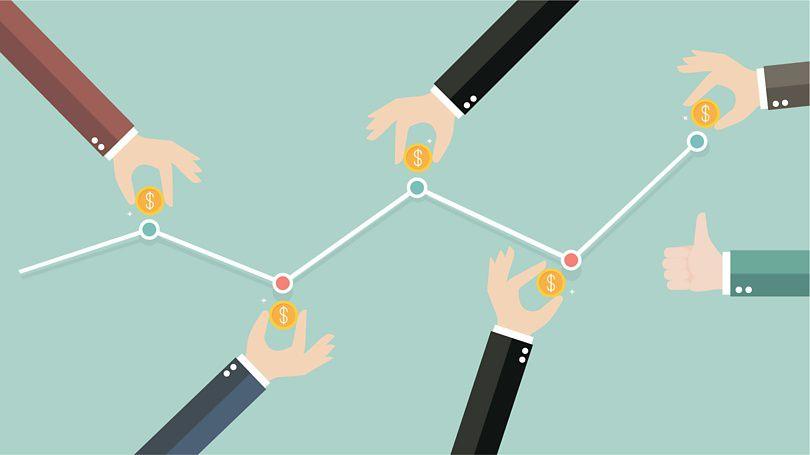
The regular purchases occur regardless of price, volatility, or economic conditions.
Its simplicity removes behavioral and psychological biases from the equation.
Let's look at an example.
You aren't sure if it will go up or down in the near-term, so you decide to dollar-cost average.
Great decision! How will you do it?
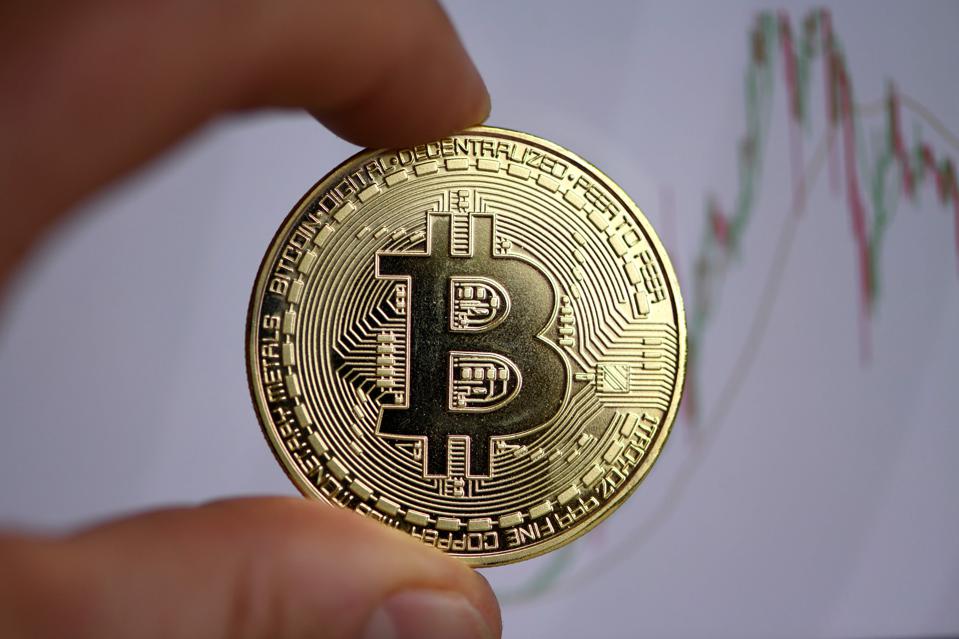
You decide on a weekly DCA, so every Monday, you buy $500 of $BTC, regardless of price. After 20 weeks, you have built your desired $10,000 cost basis position.
You know you believe in the long-term story for $BTC, but you aren't sure about near-term movements.
You are confident it's going (much) higher eventually, but with likely volatile swings between now and then.
This is an excellent approach for high-conviction, long-term investments.
(Note: Perpetual DCA is the backbone of my personal strategy.)
DCA + Compounding = All You Need
The best part? It's easy. Anyone can do it. https://t.co/CxhVg0WxsO
Compounding 101
— Sahil Bloom (@SahilBloom) September 17, 2020
Albert Einstein famously said, "Compound interest is the eighth wonder of the world. He who understands it, earns it; he who doesn't, pays it."
But what is this great wonder and how does it work?
Here's Compounding 101!
\U0001f447\U0001f447\U0001f447 pic.twitter.com/gYdCWOeNuy
For equities, robo-advisors such as @wealthfront and @betterment offer automated DCA plans. @M1_finance allows for a more user-controlled strategy and experience.
@RoundlyX allows you to invest your spare change in bitcoin. A neat, seamless way to DCA. It is the @acorns of cryptocurrencies.
In investing, as in life, keep it simple!
Dollar-cost averaging + compounding = all you need.
So that was Dollar-Cost Averaging 101! I hope you found it useful.
And for more educational threads on money, finance, and economics, check out my meta-thread below. https://t.co/Jyqunbg8uM
1/ An Allegory of Finance
— Sahil Bloom (@SahilBloom) July 18, 2020
I have been posting a lot of educational (and humorous!) threads on finance, money, and economics.
My mission is simple: to demystify these concepts and make them accessible to everyone.
All of the threads can be found below. Enjoy and please share!
More from Sahil Bloom






More from Investing


THE MONEY PRINTING GAME:
A pleb's guide to using @Keeper_DAO's hiding game to acquire $Rook below market price and arb it like a pro.
Before reading this thread, please read this one to provide a bit of context:
https://t.co/jLeUJRIjLG
Here we go!
1/
Before we really get into the meat of this... please do understand that the hiding game is currently in alpha. Hardware wallets don't work w/ it yet (they will soon).
Sometimes orders go unfilled (improving every day).
2/
A bit more context:
Limit orders on an amm aren't limit orders in the traditional sense. They are actually arbitrage opportunities for keepers. Keepers are bots that operate in the dark forest of ethereum.
3/
Now, let's say you use a service like 1inch or matcha to set your limit orders.
Let's say eth is $900 and you want to sell at $1000.
Eth pumps to $1040 rapidly, a keeper fills your limit order for $1000... everyone is happy. But wait... who gets the extra $40 here?
4/
Hint: it's not you! But what if you could?
This is where the hiding game comes in.
https://t.co/6sBlUWfw00
When you submit a limit order through the hiding game, @Keeper_DAO takes the $40 (or w/e amount) referenced above (this is MEV) and pushes it to the treasury.
5/
A pleb's guide to using @Keeper_DAO's hiding game to acquire $Rook below market price and arb it like a pro.
Before reading this thread, please read this one to provide a bit of context:
https://t.co/jLeUJRIjLG
Here we go!
1/
Ok I couldn't resist myself...
— 0x_Infinitum (@CryptoMessiah) February 3, 2021
OOOONNEEE more $Rook post.
Before i get into the REALLY cool shit i want to talk about, let me discuss the arb mining mechanics that were present during the initial distribution phase.
See this image, that's the keeperdao treasury.
1/ pic.twitter.com/Z2sMsZN9jo
Before we really get into the meat of this... please do understand that the hiding game is currently in alpha. Hardware wallets don't work w/ it yet (they will soon).
Sometimes orders go unfilled (improving every day).
2/
A bit more context:
Limit orders on an amm aren't limit orders in the traditional sense. They are actually arbitrage opportunities for keepers. Keepers are bots that operate in the dark forest of ethereum.
3/
Now, let's say you use a service like 1inch or matcha to set your limit orders.
Let's say eth is $900 and you want to sell at $1000.
Eth pumps to $1040 rapidly, a keeper fills your limit order for $1000... everyone is happy. But wait... who gets the extra $40 here?
4/
Hint: it's not you! But what if you could?
This is where the hiding game comes in.
https://t.co/6sBlUWfw00
When you submit a limit order through the hiding game, @Keeper_DAO takes the $40 (or w/e amount) referenced above (this is MEV) and pushes it to the treasury.
5/


How to screen for stocks in the Microcap/Smallcap space?
Look for the following:
1. PE < 15
2. Low debt
3. Low Float
4. No Analyst Coverage
5. High Promoter Holding
6. Recent Promoter Buying
7. High Operating Leverage
8. Conservative Management
9. Blockbuster Earnings Release
What more you should look at?
Read this post, the quote retweets to this and the
Look for the following:
1. PE < 15
2. Low debt
3. Low Float
4. No Analyst Coverage
5. High Promoter Holding
6. Recent Promoter Buying
7. High Operating Leverage
8. Conservative Management
9. Blockbuster Earnings Release
What more you should look at?
Read this post, the quote retweets to this and the
Things I look at before Investing:
— The Disciplined Investor (@Disciplined_Inv) August 27, 2021
Profitable \u2013 Free Cash Flow
Healthy \u2013 Interest Coverage
Quality \u2013 ROCE, ROA, Margins
Valuation \u2013 EV/EBITDA, FCF Yield
Governance \u2013 Dividend, Buybacks
Efficiency \u2013 Cash Conversion Cycle
Growth \u2013 Source of Funds for CAPEX
What do you look at?