🎉🎉 PHP 7.3 is here!

Here are the things I'm excited about.

🚂 Trailing commas in function/method calls!

This will certainly be a required styling choice for me. Same delightful benefits of trailing comma in multi-line PHP arrays, and JavaScript objects.
🧵 Less disgusting heredoc syntax!

Inlining heredoc strings in any way right now is grrrosssss. Now we get sensible capabilities. Everything that was wrong with it is now fixed!

(Ignore the bad syntax highlighting)
☠️ Finally, not-so-silent json_decode error detection!

This really sucked before, now it just sucks a bit less (who wants to pass a 4th param and pass 2 default params first? (helper function anybody?)
📜 Not horrible functions for getting the first and last item (or key) from an array!

Before you either strung a bunch of functions together or messed with internal array pointers. This is a much-needed improvement.
And that's all the things I care about! Check out this link more all the details in more depth: https://t.co/sXtgYRVN57

More from Tech

A brief analysis and comparison of the CSS for Twitter's PWA vs Twitter's legacy desktop website. The difference is dramatic and I'll touch on some reasons why.

Legacy site *downloads* ~630 KB CSS per theme and writing direction.

6,769 rules
9,252 selectors
16.7k declarations
3,370 unique declarations
44 media queries
36 unique colors
50 unique background colors
46 unique font sizes
39 unique z-indices

https://t.co/qyl4Bt1i5x


PWA *incrementally generates* ~30 KB CSS that handles all themes and writing directions.

735 rules
740 selectors
757 declarations
730 unique declarations
0 media queries
11 unique colors
32 unique background colors
15 unique font sizes
7 unique z-indices

https://t.co/w7oNG5KUkJ


The legacy site's CSS is what happens when hundreds of people directly write CSS over many years. Specificity wars, redundancy, a house of cards that can't be fixed. The result is extremely inefficient and error-prone styling that punishes users and developers.

The PWA's CSS is generated on-demand by a JS framework that manages styles and outputs "atomic CSS". The framework can enforce strict constraints and perform optimisations, which is why the CSS is so much smaller and safer. Style conflicts and unbounded CSS growth are avoided.
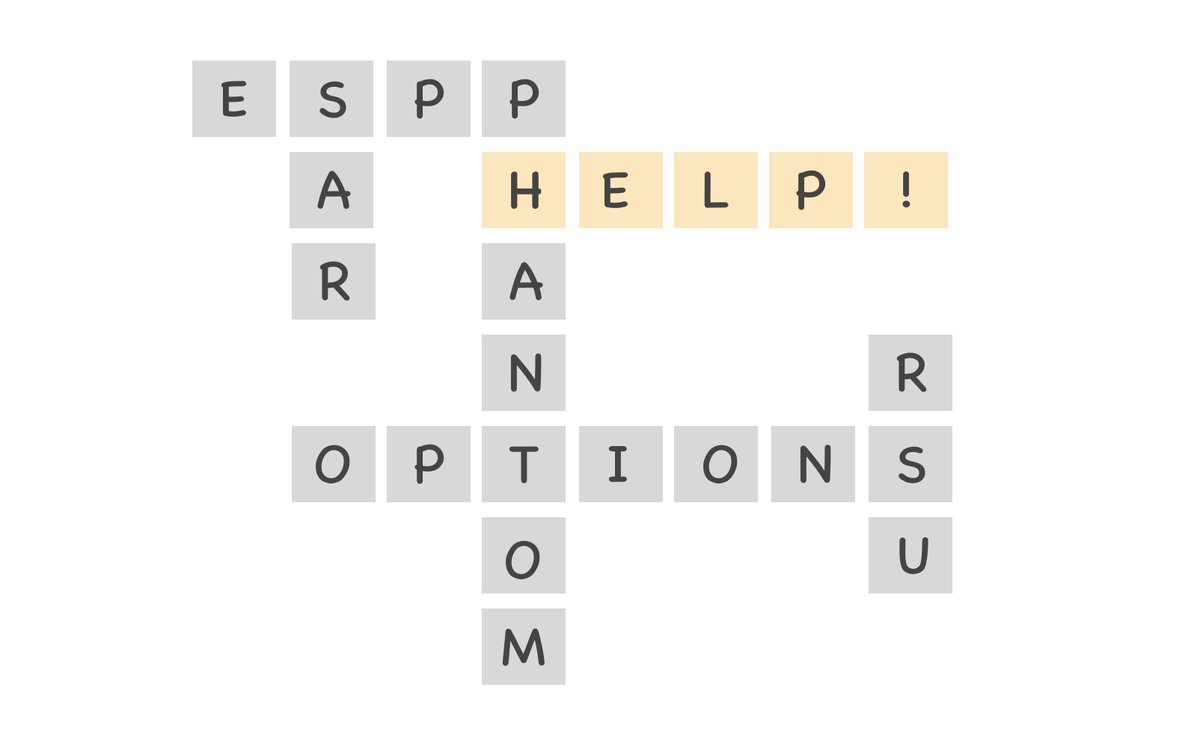
The 12 most important pieces of information and concepts I wish I knew about equity, as a software engineer.

A thread.

1. Equity is something Big Tech and high-growth companies award to software engineers at all levels. The more senior you are, the bigger the ratio can be:


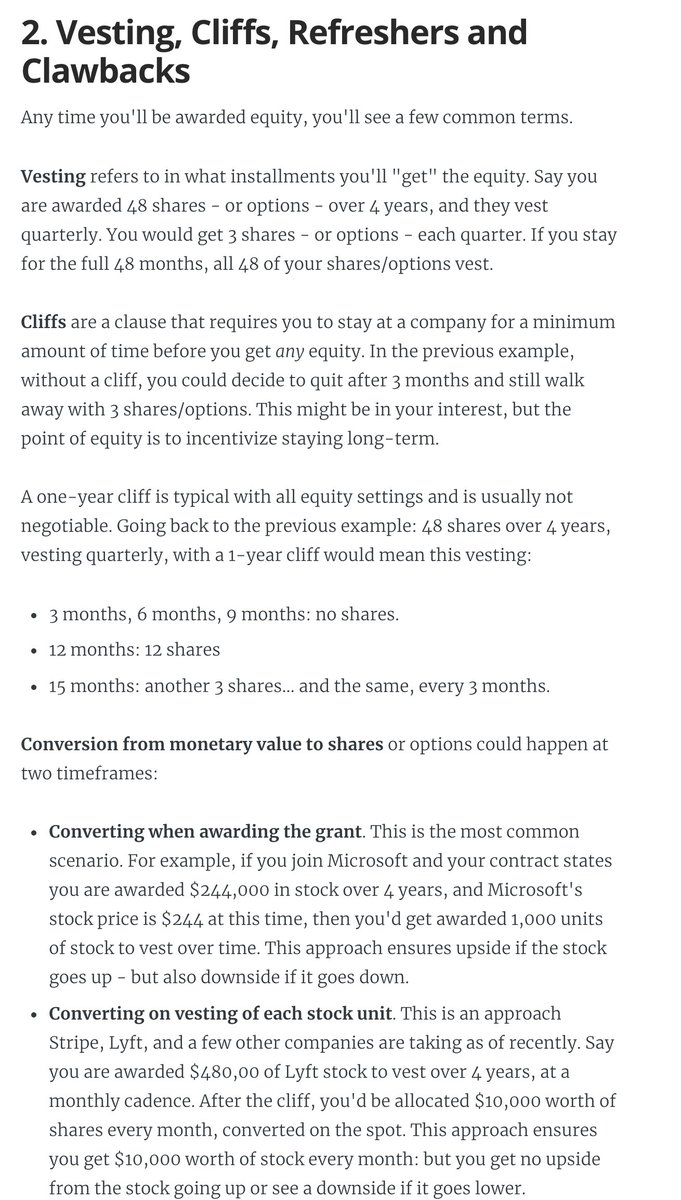
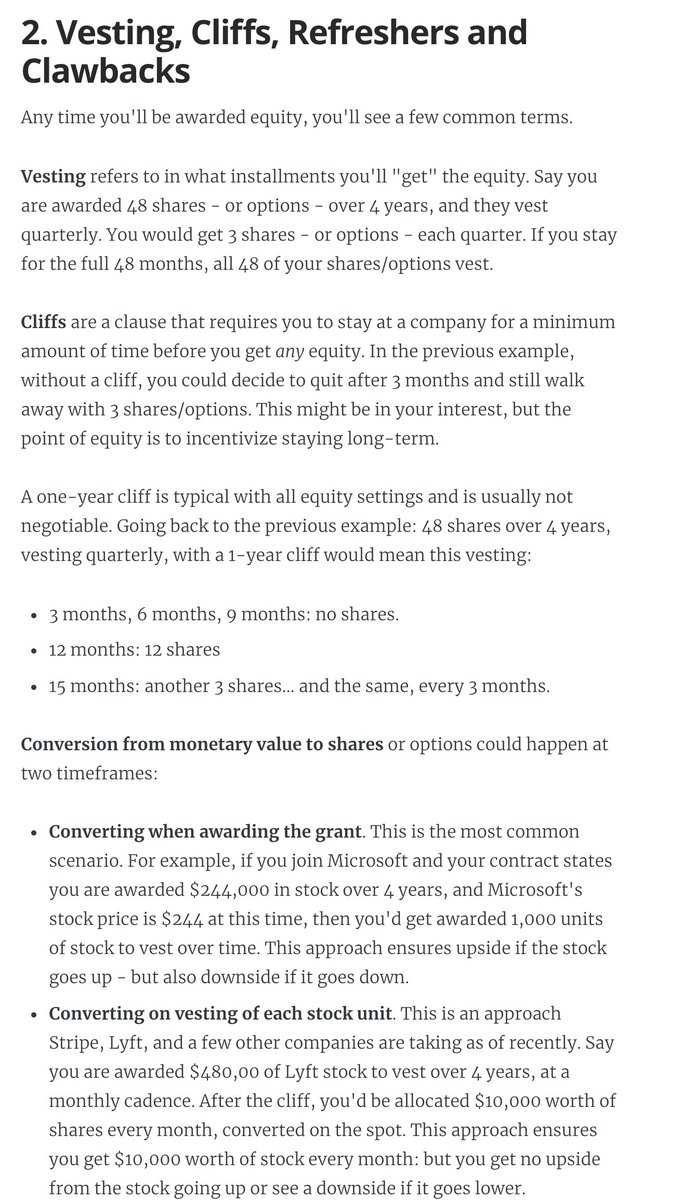
2. Vesting, cliffs, refreshers, and sign-on clawbacks.

If you get awarded equity, you'll want to understand vesting and cliffs. A 1-year cliff is pretty common in most places that award equity.

Read more in this blog post I wrote:
https://t.co/WxQ9pQh2mY


3. Stock options / ESOPs.

The most common form of equity compensation at early-stage startups that are high-growth.

And there are *so* many pitfalls you'll want to be aware of. You need to do your research on this: I can't do justice in a tweet.

https://t.co/cudLn3ngqi


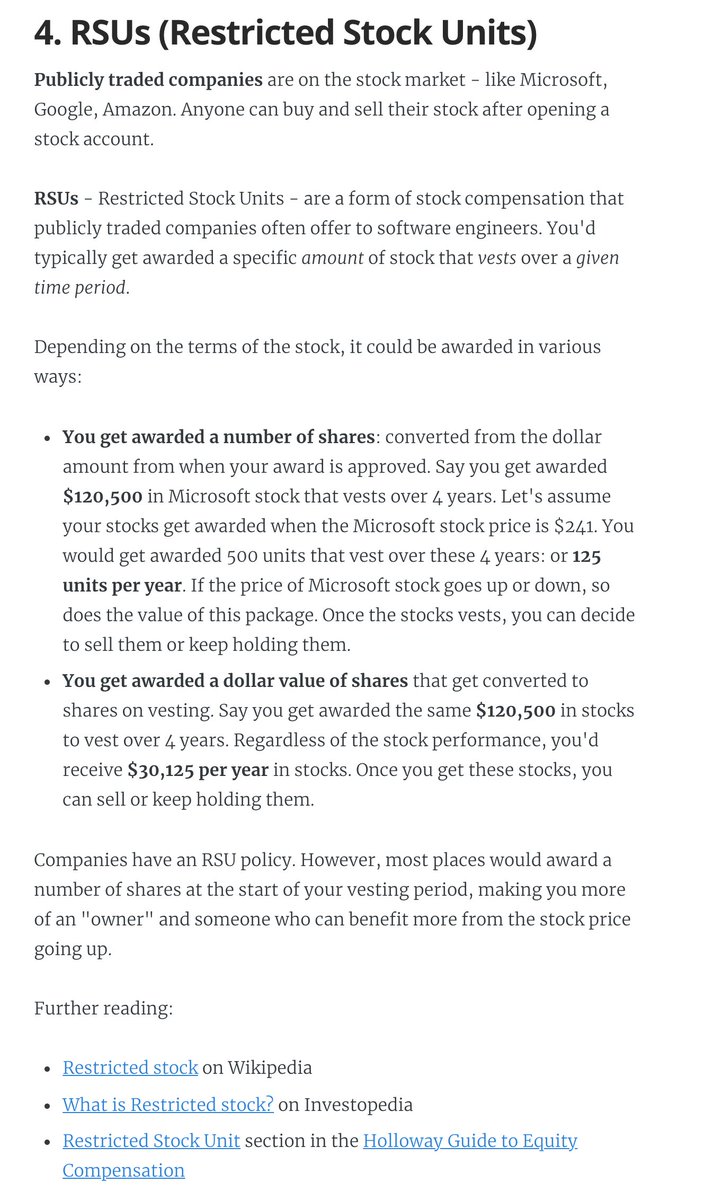
4. RSUs (Restricted Stock Units)

A common form of equity compensation for publicly traded companies and Big Tech. One of the easier types of equity to understand: https://t.co/a5xU1H9IHP

5. Double-trigger RSUs. Typically RSUs for pre-IPO companies. I got these at Uber.


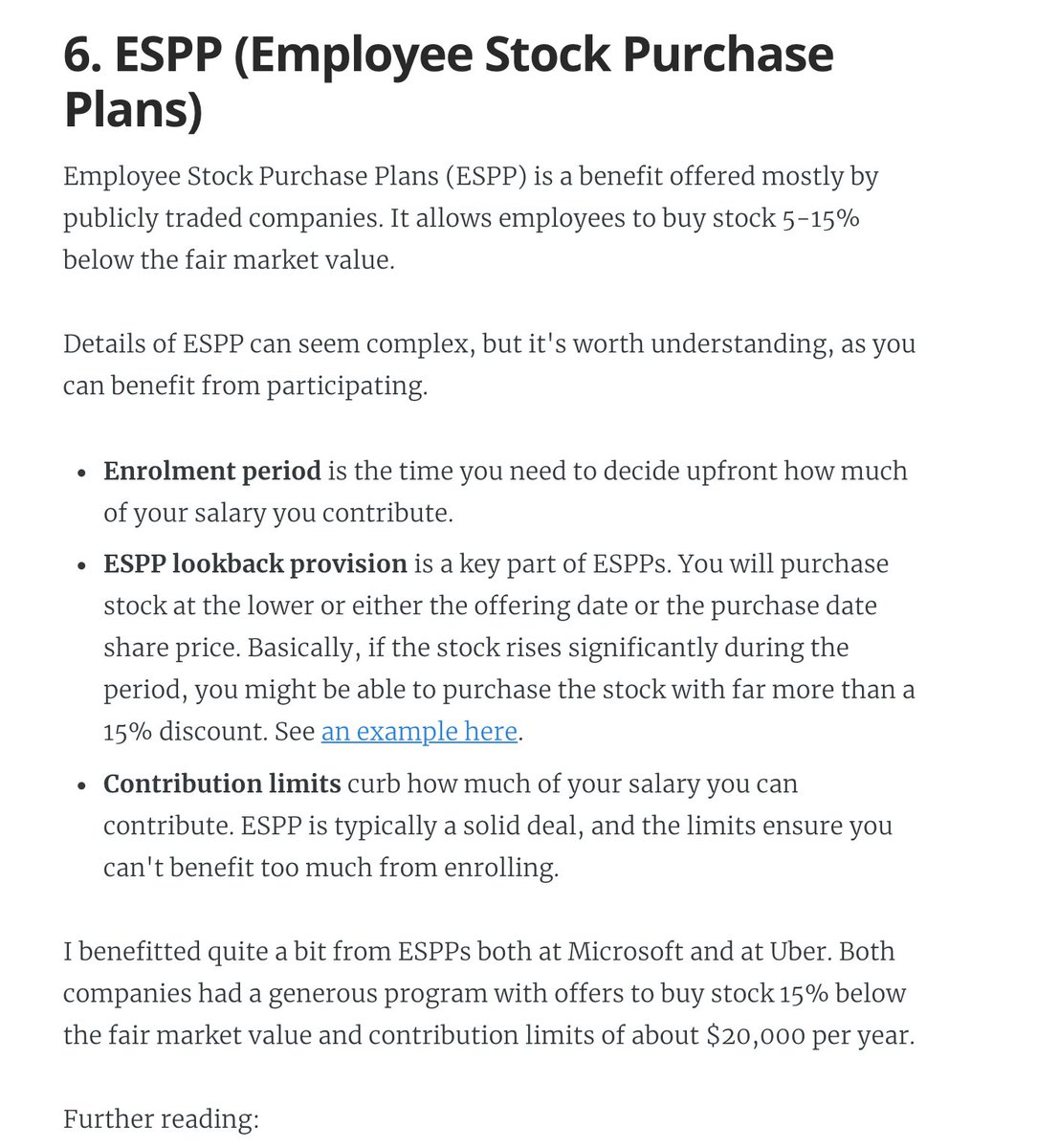
6. ESPP: a (typically) amazing employee perk at publicly traded companies. There's always risk, but this plan can typically offer good upsides.

7. Phantom shares. An interesting setup similar to RSUs... but you don't own stocks. Not frequent, but e.g. Adyen goes with this plan.

You May Also Like

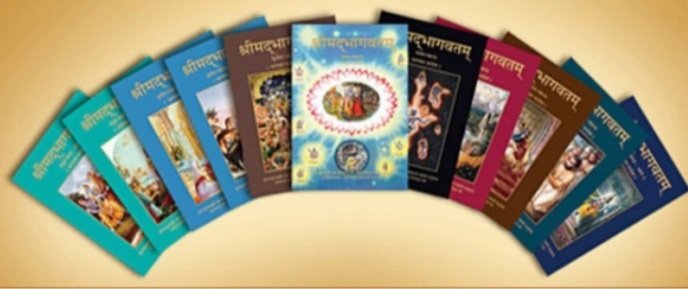
IMPORTANCE, ADVANTAGES AND CHARACTERISTICS OF BHAGWAT PURAN

It was Ved Vyas who edited the eighteen thousand shlokas of Bhagwat. This book destroys all your sins. It has twelve parts which are like kalpvraksh.

In the first skandh, the importance of Vedvyas


and characters of Pandavas are described by the dialogues between Suutji and Shaunakji. Then there is the story of Parikshit.
Next there is a Brahm Narad dialogue describing the avtaar of Bhagwan. Then the characteristics of Puraan are mentioned.

It also discusses the evolution of universe.(
https://t.co/2aK1AZSC79 )

Next is the portrayal of Vidur and his dialogue with Maitreyji. Then there is a mention of Creation of universe by Brahma and the preachings of Sankhya by Kapil Muni.


In the next section we find the portrayal of Sati, Dhruv, Pruthu, and the story of ancient King, Bahirshi.
In the next section we find the character of King Priyavrat and his sons, different types of loks in this universe, and description of Narak. ( https://t.co/gmDTkLktKS )


In the sixth part we find the portrayal of Ajaamil ( https://t.co/LdVSSNspa2 ), Daksh and the birth of Marudgans( https://t.co/tecNidVckj )

In the seventh section we find the story of Prahlad and the description of Varnashram dharma. This section is based on karma vaasna.