
3. The business is often worse than the seller will admit and can be improved more than the seller realizes.
I made my first SMB acquisition last Spring. Here are a few things I learned from the introduction until now:
1. Understanding the financial statements of a small business can be very different than what is taught in an MBA program
3. The business is often worse than the seller will admit and can be improved more than the seller realizes.
6. You'll lose sleep and won't even be able to identify the problem. It's just the pain of owning a business that keeps you up.
12. You'll get asked how many hours you work and you're never really off.
15. If you sign up to pay in net 30 then pay in net 30. Stretching payment terms isn't shrewd, it's dishonest.
More from Finance





Inflation is coming, inflation is coming!
Last month I wrote about the distinction between long-term secular inflation and shorter-term cyclical inflation
It has been clear for several months that we are in the middle of a cyclical rise in
The full thread can be reviewed here:
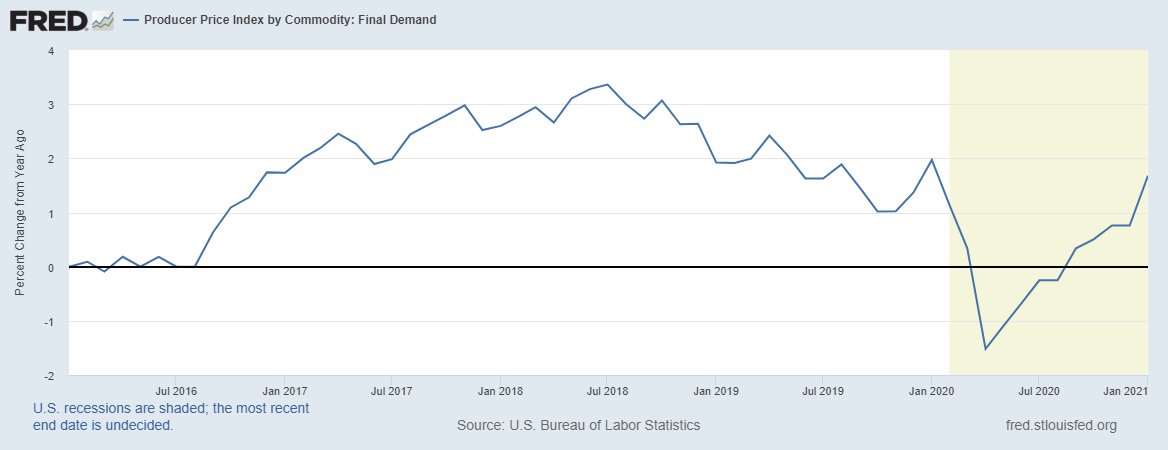
Today's PPI report should have been expected to surprise to the upside as the leading indicators of inflation have been screaming to the upside for months!
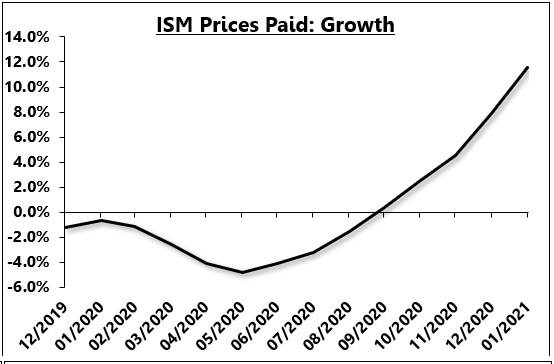
Here is the ISM prices paid index, cumulated into a growth rate
3/
Industrial commodity prices have also seen a major acceleration for months.
4/
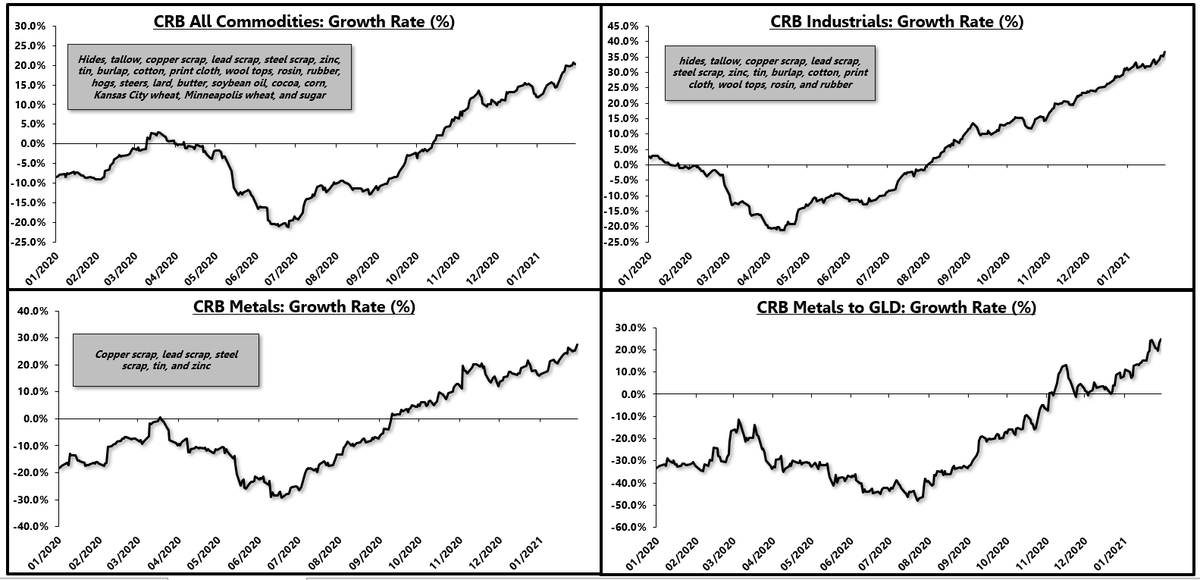
So today's PPI report was in line with the leads, suggesting that we have a cyclical upturn in inflation that is * primarily concentrated in the manufacturing sector *
This is a key point.
5/
Last month I wrote about the distinction between long-term secular inflation and shorter-term cyclical inflation
It has been clear for several months that we are in the middle of a cyclical rise in
Now, in the short-term, the manufacturing sector is red hot, driven by a pent-up demand rebound in goods consumption.
— Eric Basmajian (@EPBResearch) January 4, 2021
Commodity prices are screaming which gives legs to "goods" inflation in the short-term.
8) pic.twitter.com/rQcqHf1OD0
The full thread can be reviewed here:
Consensus continues to conflate the inflation story, mixing and matching long-term and short-term charts to fit what is generally a secular inflation narrative.
— Eric Basmajian (@EPBResearch) January 4, 2021
Here are my two cents to make the distinction clear.
1)
Today's PPI report should have been expected to surprise to the upside as the leading indicators of inflation have been screaming to the upside for months!
Here is the ISM prices paid index, cumulated into a growth rate
3/
Industrial commodity prices have also seen a major acceleration for months.
4/
So today's PPI report was in line with the leads, suggesting that we have a cyclical upturn in inflation that is * primarily concentrated in the manufacturing sector *
This is a key point.
5/


You May Also Like


✨📱 iOS 12.1 📱✨
🗓 Release date: October 30, 2018
📝 New Emojis: 158
https://t.co/bx8XjhiCiB

New in iOS 12.1: 🥰 Smiling Face With 3 Hearts https://t.co/6eajdvueip

New in iOS 12.1: 🥵 Hot Face https://t.co/jhTv1elltB

New in iOS 12.1: 🥶 Cold Face https://t.co/EIjyl6yZrF

New in iOS 12.1: 🥳 Partying Face https://t.co/p8FDNEQ3LJ

🗓 Release date: October 30, 2018
📝 New Emojis: 158
https://t.co/bx8XjhiCiB
New in iOS 12.1: 🥰 Smiling Face With 3 Hearts https://t.co/6eajdvueip
New in iOS 12.1: 🥵 Hot Face https://t.co/jhTv1elltB
New in iOS 12.1: 🥶 Cold Face https://t.co/EIjyl6yZrF
New in iOS 12.1: 🥳 Partying Face https://t.co/p8FDNEQ3LJ


1/“What would need to be true for you to….X”
Why is this the most powerful question you can ask when attempting to reach an agreement with another human being or organization?
A thread, co-written by @deanmbrody:
2/ First, “X” could be lots of things. Examples: What would need to be true for you to
- “Feel it's in our best interest for me to be CMO"
- “Feel that we’re in a good place as a company”
- “Feel that we’re on the same page”
- “Feel that we both got what we wanted from this deal
3/ Normally, we aren’t that direct. Example from startup/VC land:
Founders leave VC meetings thinking that every VC will invest, but they rarely do.
Worse over, the founders don’t know what they need to do in order to be fundable.
4/ So why should you ask the magic Q?
To get clarity.
You want to know where you stand, and what it takes to get what you want in a way that also gets them what they want.
It also holds them (mentally) accountable once the thing they need becomes true.
5/ Staying in the context of soliciting investors, the question is “what would need to be true for you to want to invest (or partner with us on this journey, etc)?”
Multiple responses to this question are likely to deliver a positive result.
Why is this the most powerful question you can ask when attempting to reach an agreement with another human being or organization?
A thread, co-written by @deanmbrody:
Next level tactic when closing a sale, candidate, or investment:
— Erik Torenberg (@eriktorenberg) February 27, 2018
Ask: \u201cWhat needs to be true for you to be all in?\u201d
You'll usually get an explicit answer that you might not get otherwise. It also holds them accountable once the thing they need becomes true.
2/ First, “X” could be lots of things. Examples: What would need to be true for you to
- “Feel it's in our best interest for me to be CMO"
- “Feel that we’re in a good place as a company”
- “Feel that we’re on the same page”
- “Feel that we both got what we wanted from this deal
3/ Normally, we aren’t that direct. Example from startup/VC land:
Founders leave VC meetings thinking that every VC will invest, but they rarely do.
Worse over, the founders don’t know what they need to do in order to be fundable.
4/ So why should you ask the magic Q?
To get clarity.
You want to know where you stand, and what it takes to get what you want in a way that also gets them what they want.
It also holds them (mentally) accountable once the thing they need becomes true.
5/ Staying in the context of soliciting investors, the question is “what would need to be true for you to want to invest (or partner with us on this journey, etc)?”
Multiple responses to this question are likely to deliver a positive result.