10 Key Takeaways from the book: The Emotionally Intelligent Investor


More from Investment Books (Dhaval)
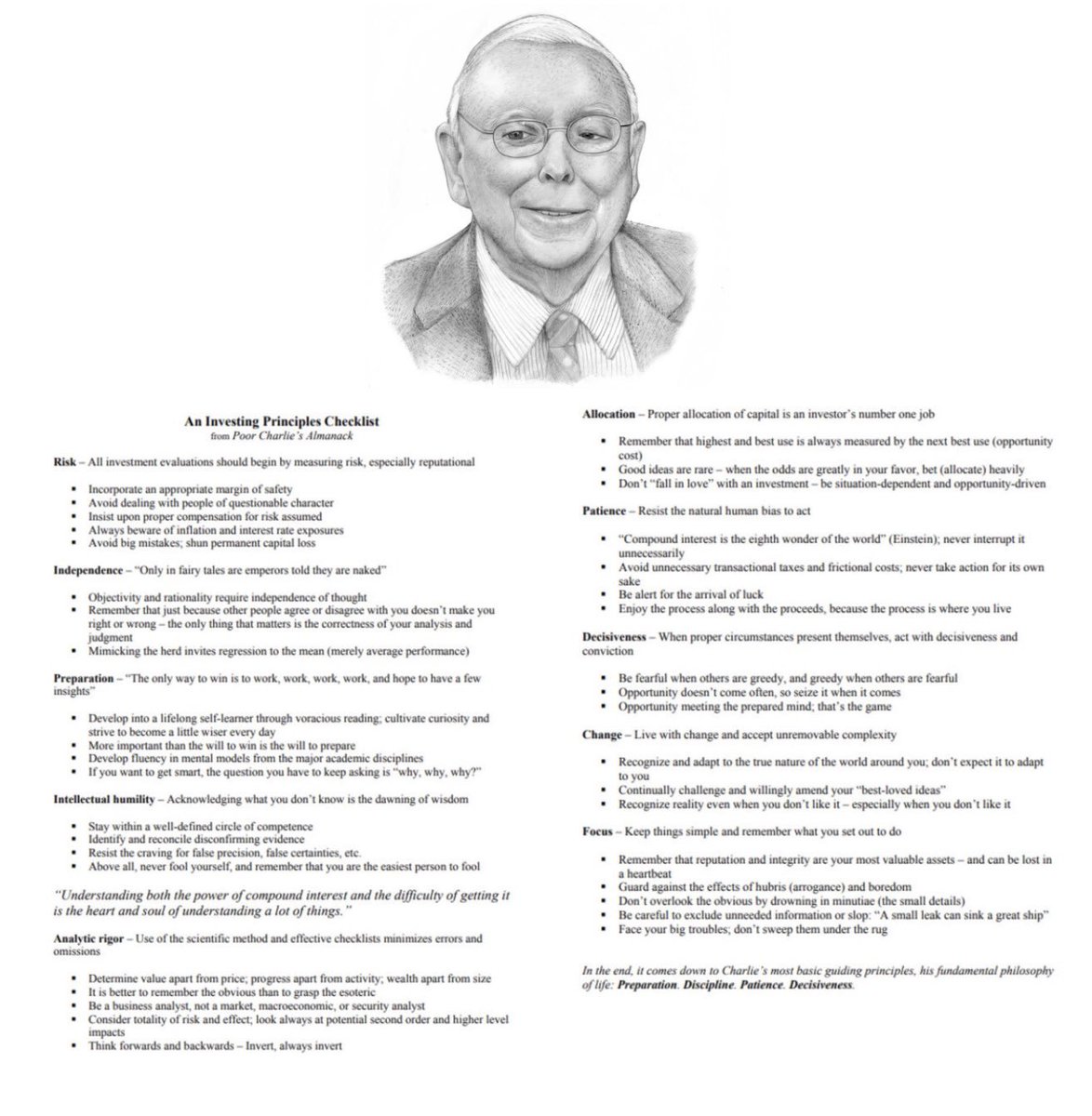


Thread Best books recommendation by one of best investor I knew @insharebazaar (Virtually)
He grab many multibagger stocks and His style also unique(1st Seen interview in @TraderHarneet's YT Channel)
He follow Simple process
Young Intelligent Investor who also appeared in ET
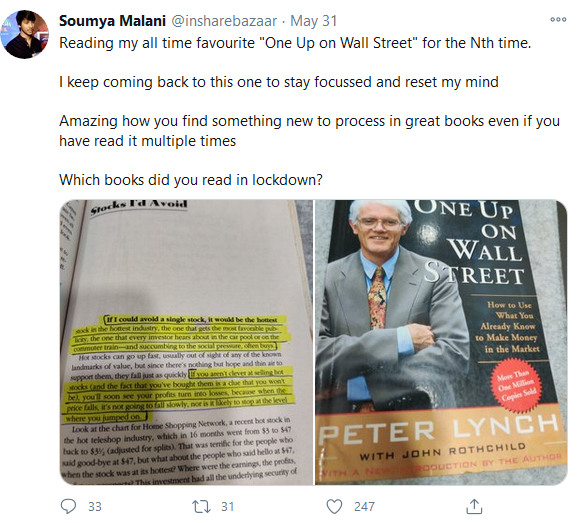
1. One Up On Wall Street
2. Rich Dad Poor Dad
Access here : https://t.co/UWOCF732z6
3. The Unusual Billionaires
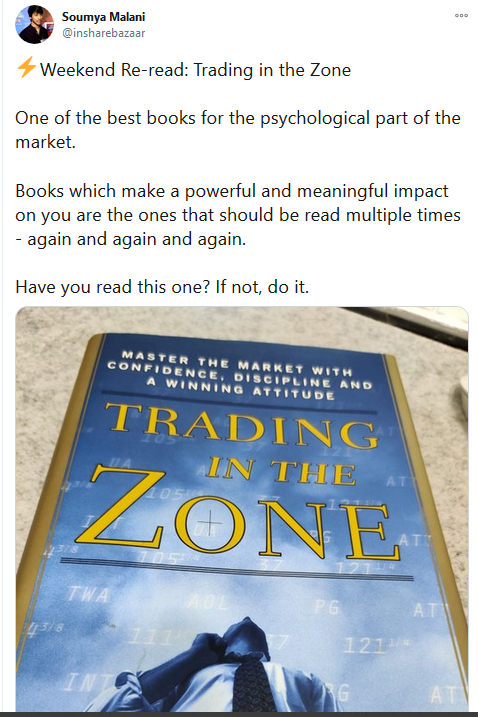
4. Trading in the Zone
https://t.co/G7mqVPtEM0
5. Market Wizards
6. The Intelligent Investor
https://t.co/yPKBzYyPAl
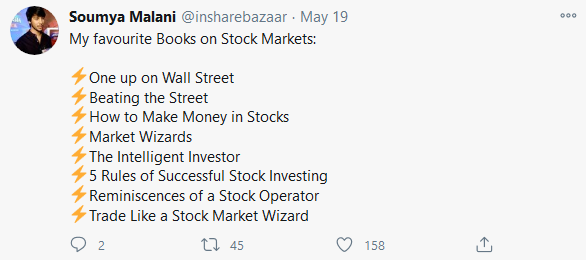
7. The Five Rules for Successful Stock Investing
8. Reminiscences of a Stock Operator
https://t.co/PiioB3hdHP
He grab many multibagger stocks and His style also unique(1st Seen interview in @TraderHarneet's YT Channel)
He follow Simple process
Young Intelligent Investor who also appeared in ET
1. One Up On Wall Street
2. Rich Dad Poor Dad
Access here : https://t.co/UWOCF732z6
3. The Unusual Billionaires
4. Trading in the Zone
https://t.co/G7mqVPtEM0
5. Market Wizards
6. The Intelligent Investor
https://t.co/yPKBzYyPAl
7. The Five Rules for Successful Stock Investing
8. Reminiscences of a Stock Operator
https://t.co/PiioB3hdHP
Learn Investing Lessons From a Top Fund Manager in India
24 Videos selected from 24000+ Video repositories (BQ Prime @_nirajshah)
1) Vijay Kedia (@VijayKedia1)
2) Kenneth Andrade
1.0 https://t.co/0JjC7bw5TW (2018)
2.0 https://t.co/2YNkFMyuJL (2017)
3.0 https://t.co/aY8ZnYSoIO (2020)
3) Basant Maheshwari (@BMTheEquityDesk)
4) Samit Vartak (Sage Investment Manager @SamitVartak )
1.0 https://t.co/CgIYR8dLuk (2017)
2.0 https://t.co/LU9KUcV5dI (2021)
3.0 https://t.co/zHrOMEE646 (2022)
24 Videos selected from 24000+ Video repositories (BQ Prime @_nirajshah)
1) Vijay Kedia (@VijayKedia1)
2) Kenneth Andrade
1.0 https://t.co/0JjC7bw5TW (2018)
2.0 https://t.co/2YNkFMyuJL (2017)
3.0 https://t.co/aY8ZnYSoIO (2020)
3) Basant Maheshwari (@BMTheEquityDesk)
4) Samit Vartak (Sage Investment Manager @SamitVartak )
1.0 https://t.co/CgIYR8dLuk (2017)
2.0 https://t.co/LU9KUcV5dI (2021)
3.0 https://t.co/zHrOMEE646 (2022)

More from Finance



I'm lucky to attain financial freedom before 30.
I credit Fintwit for my learnings.
Here's 10 key concepts every investor must know:
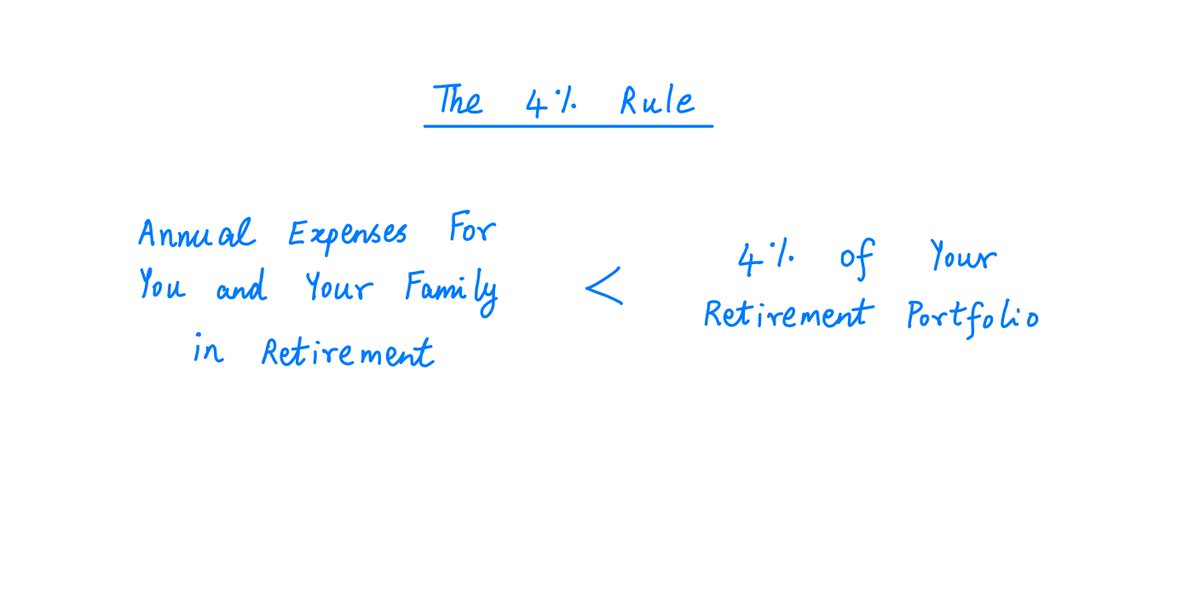
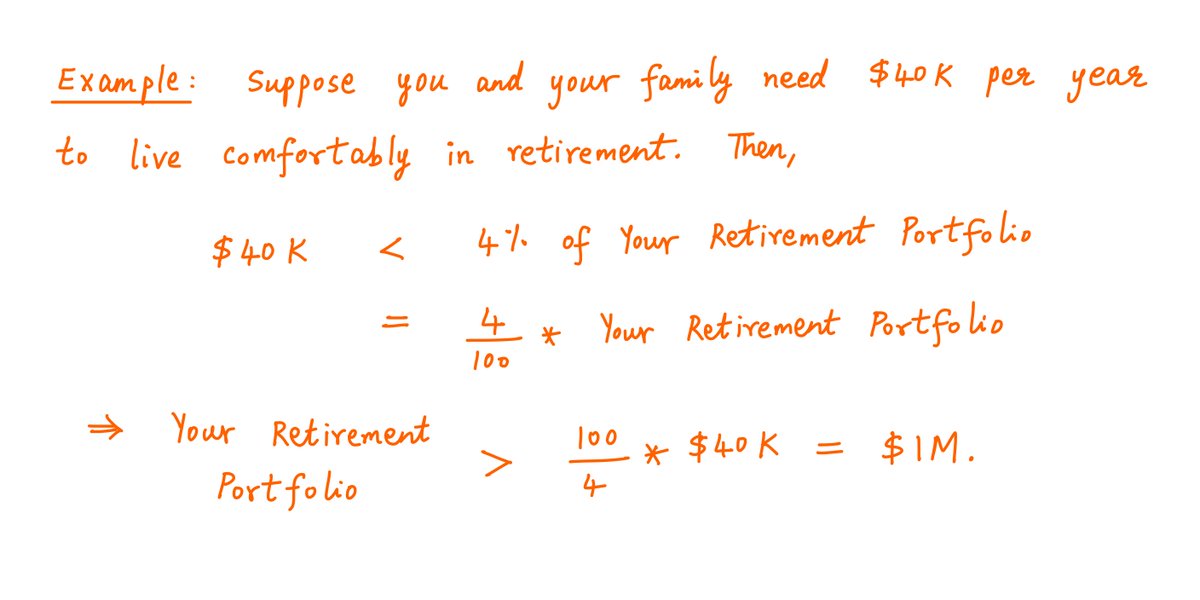
1. $$ needed to retire
2. Researching a business
3. Reading annual reports
4. Reading earnings calls
5. Criteria of a multi bagger
(Read on...)
6. Holding a multi bagger
7. Economic moats
8. When to buy a stock
9. Earnings vs cashflow
10. Traits of quality companies
Here's my 10 favourite threads on these concepts:
1. How much $$ do you need to retire
Before you start, you must know the end game.
To meet your retirement goals...
How much $$ do you need in your portfolio?
10-K Diver does a good job explaining what's a safe withdrawl rate.
Hint: It's NOT
2. Research a business
Your investment returns are a lagging indicator.
Instead, your research skills are the leading predictor of your results.
Conclusion?
To be a good investor, you must be a great business researcher.
Start with
3. Reading annual reports
This is the bread and butter of a good business analyst.
You cannot just listen to opinions from others.
You must learn to deep dive a business and make your own judgments.
Start with the 10k.
Ming Zhao explains it
I credit Fintwit for my learnings.
Here's 10 key concepts every investor must know:
1. $$ needed to retire
2. Researching a business
3. Reading annual reports
4. Reading earnings calls
5. Criteria of a multi bagger
(Read on...)
6. Holding a multi bagger
7. Economic moats
8. When to buy a stock
9. Earnings vs cashflow
10. Traits of quality companies
Here's my 10 favourite threads on these concepts:
1. How much $$ do you need to retire
Before you start, you must know the end game.
To meet your retirement goals...
How much $$ do you need in your portfolio?
10-K Diver does a good job explaining what's a safe withdrawl rate.
Hint: It's NOT
1/
— 10-K Diver (@10kdiver) July 25, 2020
Get a cup of coffee.
In this thread, I'll help you work out how much money you need to retire.
2. Research a business
Your investment returns are a lagging indicator.
Instead, your research skills are the leading predictor of your results.
Conclusion?
To be a good investor, you must be a great business researcher.
Start with
1/ Thoughts on Research Process
— Mostly Borrowed Ideas (@borrowed_ideas) September 27, 2021
I was invited to present my research process at a college in the US. I am sharing all ten slides here. pic.twitter.com/z0tjZcogfH
3. Reading annual reports
This is the bread and butter of a good business analyst.
You cannot just listen to opinions from others.
You must learn to deep dive a business and make your own judgments.
Start with the 10k.
Ming Zhao explains it
\U0001f9d0How to Read 10Ks Like a Hedge Fund\U0001f9d0
— Ming Zhao (@FabiusMercurius) May 7, 2021
\u201cFundamentals don\u2019t matter anymore!\u201d I\u2019ve heard this a lot lately on Fintwit.\U0001f644
But, for those who\u2019ve diversify beyond $GME and $DOGE, here\u2019s a primer on what metrics fundamental buy-side PMs look at and why:
(real examples outlined)
\U0001f447 pic.twitter.com/tLlNRvpnDK

You May Also Like










So friends here is the thread on the recommended pathway for new entrants in the stock market.
Here I will share what I believe are essentials for anybody who is interested in stock markets and the resources to learn them, its from my experience and by no means exhaustive..
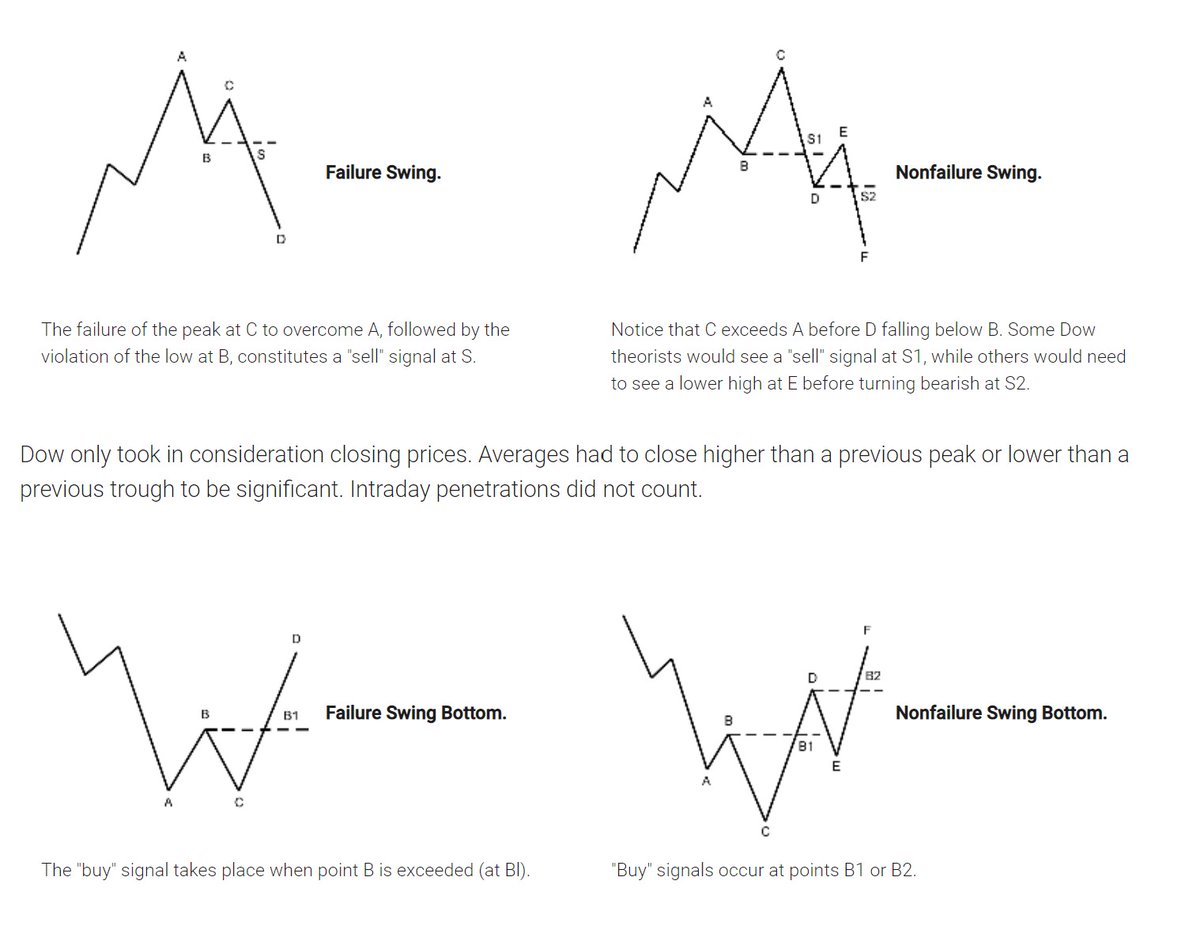
First the very basic : The Dow theory, Everybody must have basic understanding of it and must learn to observe High Highs, Higher Lows, Lower Highs and Lowers lows on charts and their
Even those who are more inclined towards fundamental side can also benefit from Dow theory, as it can hint start & end of Bull/Bear runs thereby indication entry and exits.
Next basic is Wyckoff's Theory. It tells how accumulation and distribution happens with regularity and how the market actually
Dow theory is old but
Here I will share what I believe are essentials for anybody who is interested in stock markets and the resources to learn them, its from my experience and by no means exhaustive..
First the very basic : The Dow theory, Everybody must have basic understanding of it and must learn to observe High Highs, Higher Lows, Lower Highs and Lowers lows on charts and their
Even those who are more inclined towards fundamental side can also benefit from Dow theory, as it can hint start & end of Bull/Bear runs thereby indication entry and exits.
Next basic is Wyckoff's Theory. It tells how accumulation and distribution happens with regularity and how the market actually
Dow theory is old but
Old is Gold....
— Professor (@DillikiBiili) January 23, 2020
this Bharti Airtel chart is a true copy of the Wyckoff Pattern propounded in 1931....... pic.twitter.com/tQ1PNebq7d