The current issue of #schoolclosures is so complex I am loathed to add my opinion to the twitter soup

Massive uncertainties✅
High stakes✅
Huge health trade offs✅
Opposing opinions ✅
Easy answers 🚫

I'll just add a few simple thoughts

1/9

Firstly, don't be fooled by twitter

It has the most shouty and polarised opinions only, the moderates have been largely hounded out

Both public and scientific opinion is almost certainly much more nuanced and balanced than this platform would fool you into believing

2/9
Next, advocating for widespread closure is a legitimate opinion in the current environment

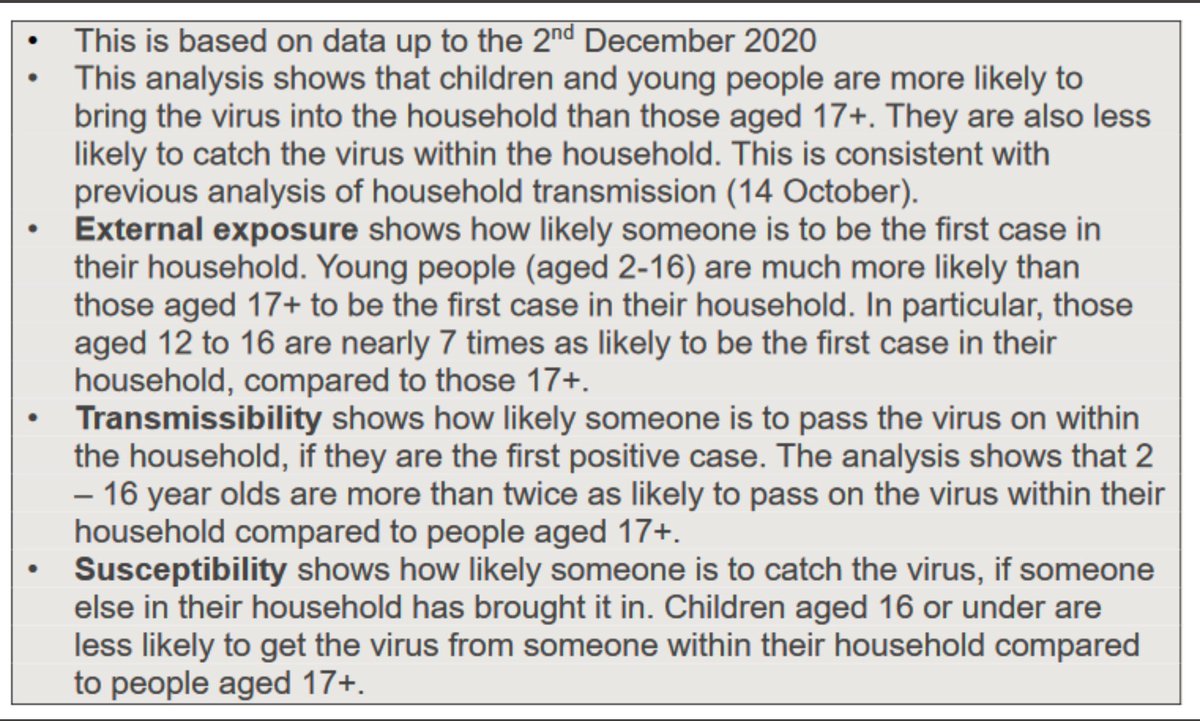
Massive, uncontrolled community transmission and looming hospital capacity issues, with high prevalence of infections among children (esp teens) are a bad mix

3/9
BUT, this would be be associated with massive, lifelong harms to children, who have already missed months of school due to the pandemic

BUT, trying to run schools with frequent, large scale closures/isolations/staff sickness may be a losing game, esp for secondary schools

4/9
I can understand the government wanting to keep them open, and I 100% believe they should be the absolute priority: Last to close, First to open

Have we reached a stage where the risks of opening now outweigh the harms of closure?

I don't know the answer

5/9
IF closures occur, it is not so simple as open/closed

We must consider many things (which sadly I hear little about); This list is vital

-If closed, for how long? Closing much easier than reopening (ask the USA)

-Can we buy back closure time from Easter/Summer holidays?

6/9
-Can we mitigate educational/social inequity for the disadvantaged? (tuition, free meals, social care support)

-Can we maximise the benefit of this harmful intervention (if schools closed, everything else should be)

-Can we stagger closure/reopening (prioritise primary)

7/9
If you hear people talking about whether open schools is "safe", or "unsafe", sadly this is basically meaningless

Children themselves have little to fear, but there are wider harms to consider

There is no safe or unsafe, only balance of risks, harms and benefits

8/9
The relative increased transmissibility of the new variant seems to impact both children and adults

At such high rates of prevalence trade offs are now more difficult

Nothing is simple, we can only shift harms from some onto others and try to minimise total damage done

9/9

More from Education

Time for some thoughts on schools given the revised SickKids document and the fact that ON decided to leave most schools closed. ON is not the only jurisdiction to do so, but important to note that many jurisdictions would not have done so -even with higher incidence rates.


As outlined in the tweet by @NishaOttawa yesterday, the situation is complex, and not a simple right or wrong https://t.co/DO0v3j9wzr. And no one needs to list all the potential risks and downsides of prolonged school closures.


On the other hand: while school closures do not directly protect our most vulnerable in long-term care at all, one cannot deny that any factor potentially increasing community transmission may have an indirect effect on the risk to these institutions, and on healthcare.

The question is: to what extend do schools contribute to transmission, and how to balance this against the risk of prolonged school closures. The leaked data from yesterday shows a mixed picture -schools are neither unicorns (ie COVID free) nor infernos.

Assuming this data is largely correct -while waiting for an official publication of the data, it shows first and foremost the known high case numbers at Thorncliff, while other schools had been doing very well -are safe- reiterating the impact of socioeconomics on the COVID risk.

You May Also Like