Categories Economy



Surprised so many smart people bought into the idea that $600/wk UI is the same as $600/wk job guarantee (or better) or that JG jobs must be inherently inessential. I\u2019ve addressed this many times & will post a thread later. Trying not to spend precious family time on Twitter.
— Pavlina R Tcherneva (@ptcherneva) December 29, 2020
Automatic stabilization: Both $600/wk UI and JG will provide counter cyclical spending. But UI will be weaker. Counter-cyclical stabilization is not just about the absence of income. It is also about the transmission and structure of economy
Firms don't like to hire the unemployed. Mass and long-term unemployment make the problem worse. JG would recover labor markets much faster than a UI of the same amount, both b/c of the higher direct, induced & tertiary employment effects & b/c of private firm hiring preferences.
JG stabilizes spending patterns better. Uncertain job prospects may mean more cautious spending from the unemployed compared to those w/ guaranteed jobs.
UI is temporary, which makes matters worse. Even if it were permanent, it still won't resolve the problem of job scarcity.
Nations who once achieved tight full employment through active labor market policies demonstrate that unemployment does NOT fluctuate the same way it does w/o them. Direct employment, ELR type policies diminish drastically/even eliminate these amplitudes (eg postwar Japan/Sweden)






"A trend factor using multiple time lengths outperforms ST reversal, momentum, and LT reversal, which are based on the three price trends separately."
https://t.co/udkvsdw2Lz
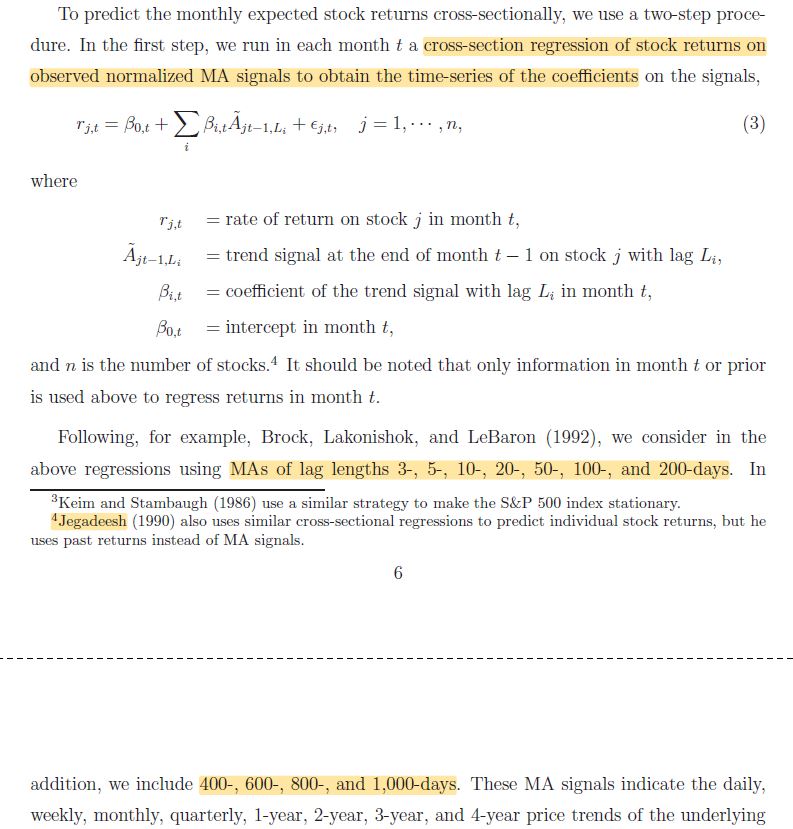
2/ This resembles combining multiple measures of ST reversal, momentum, and LT reversal (forecasts determined by walking forward rather than using signs from the full sample).
Unlike normal moving average signals, these are *cross-sectional.* More below:
https://t.co/wkIFLg9jtK
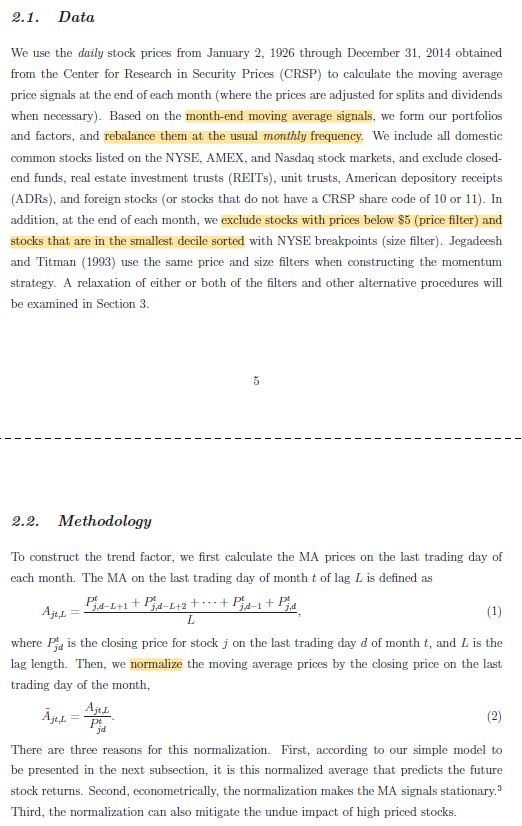
1/ Cross-Sectional and Time-Series Tests of Return Predictability: What Is the Difference? (Goyal, Jegadeesh)
— Darren \U0001f95a (@ReformedTrader) June 18, 2019
"The difference between the performances of TS and CS strategies is largely due to a time-varying net-long investment in risky assets."https://t.co/CSIn3ujN2R pic.twitter.com/XHnVmIart4
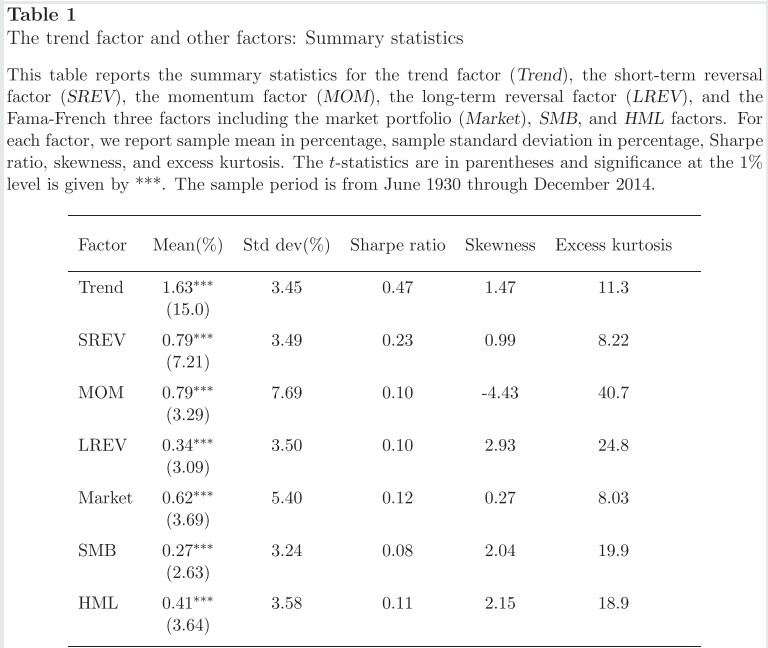
3/ Unsurprisingly, the Trend factor formed by this approach outperforms benchmarks in terms of both Sharpe ratio and tail metrics. It's combining momentum with two factors that are negatively correlated to it AND using multiple specifications.
More here:
https://t.co/x8Tloz3iyL
1/ An Executive Summary (in Tweet form) of our new paper
— Adam Butler (@GestaltU) March 27, 2019
Dual Momentum \u2013 A Craftsman\u2019s Perspective
Download here: https://t.co/Y9GlGNohBg
Everything that follows in this thread is based on HYPOTHETICAL AND SIMULATED RESULTS. pic.twitter.com/9m5YJnTdtq
4/ "Average return and volatility of the trend factor are both higher in recession periods. However, the Sharpe ratio is virtually the same.
"Interestingly, all of the factors still have positive average returns.
"Momentum experiences the greatest increase in volatility."
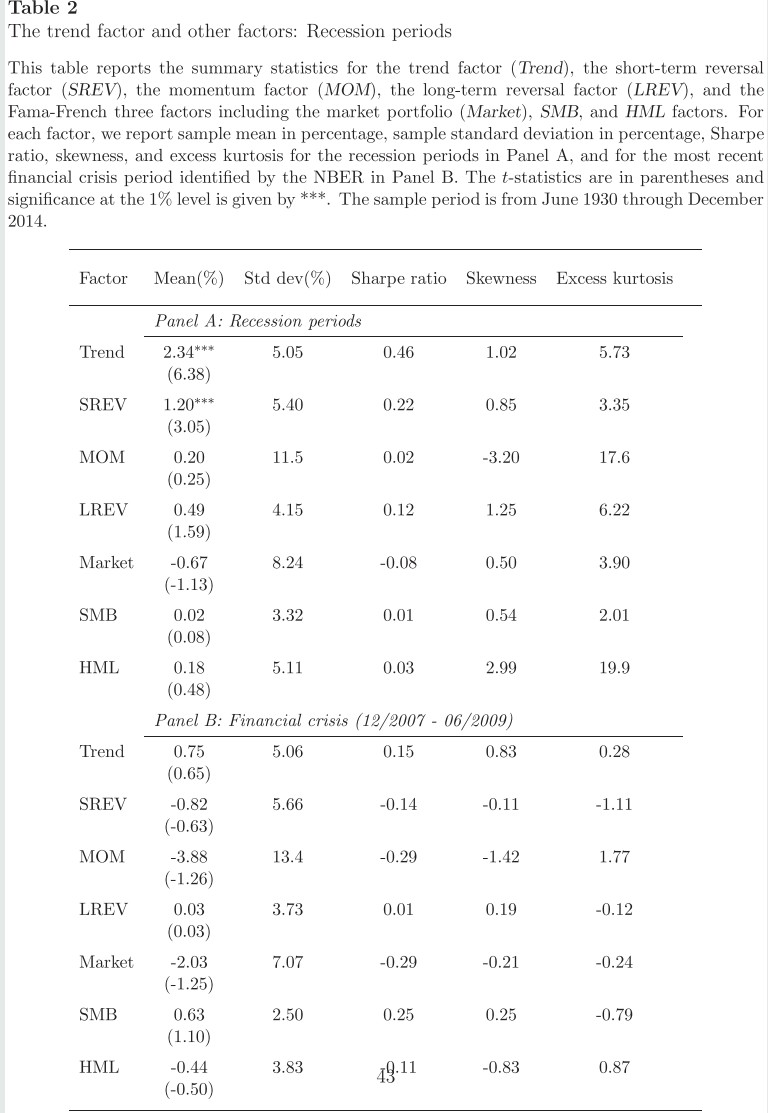
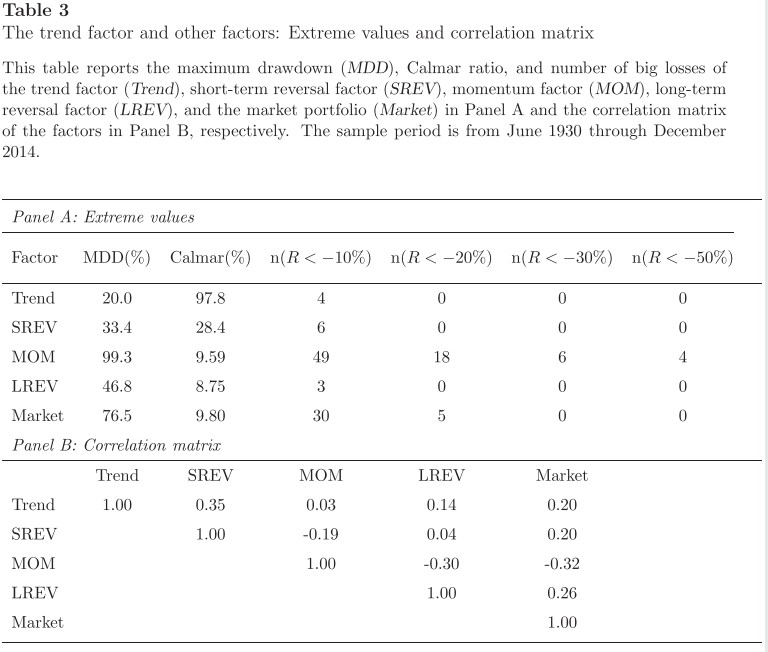
5/ "In terms of maximum drawdown and the Calmar ratio, the trend factor performs the best.
"The trend factor is correlated with the short-term reversal factor (35%), long-term reversal factor (14%), and the market (20%) but is virtually uncorrelated with the momentum factor."