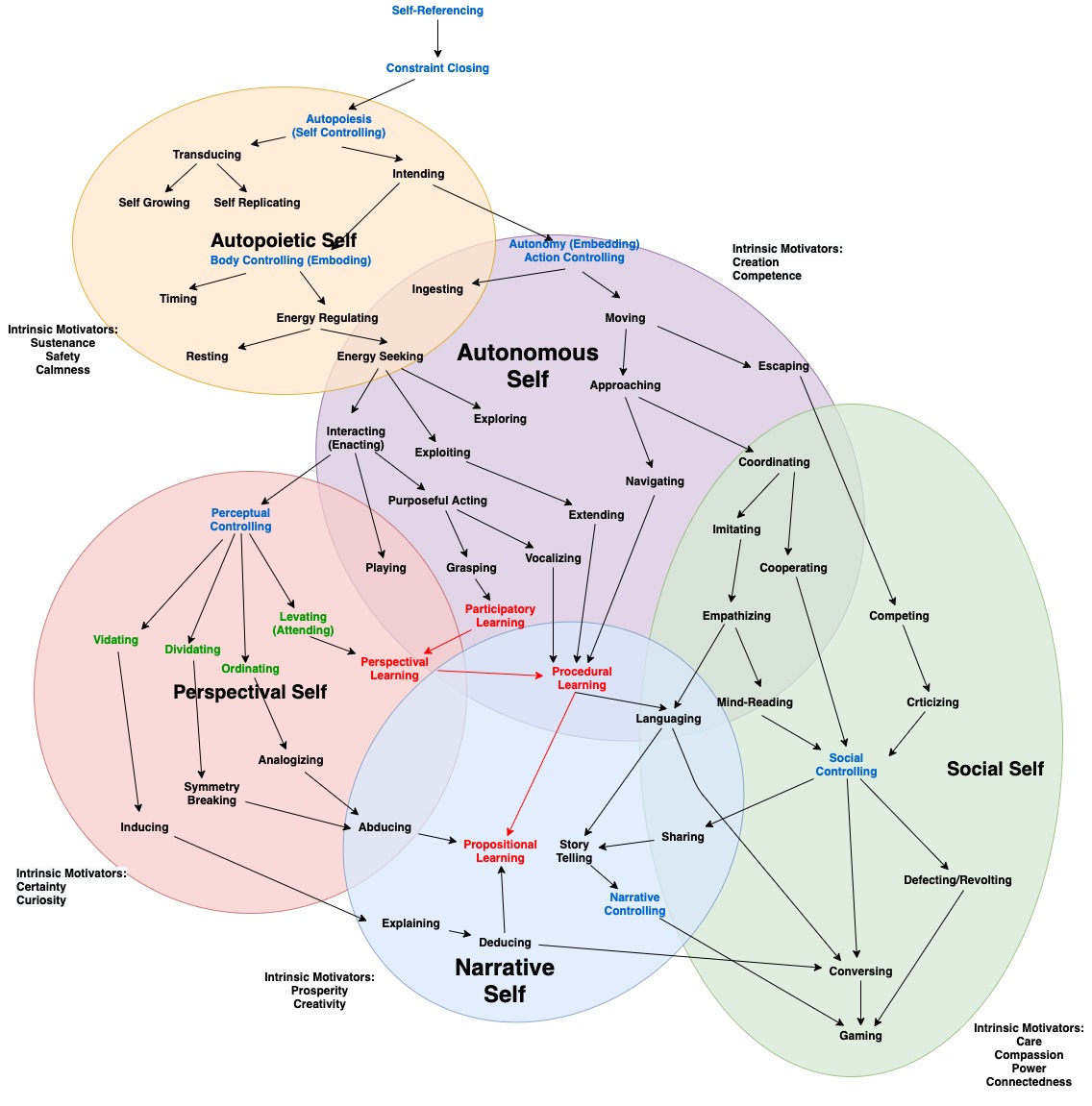
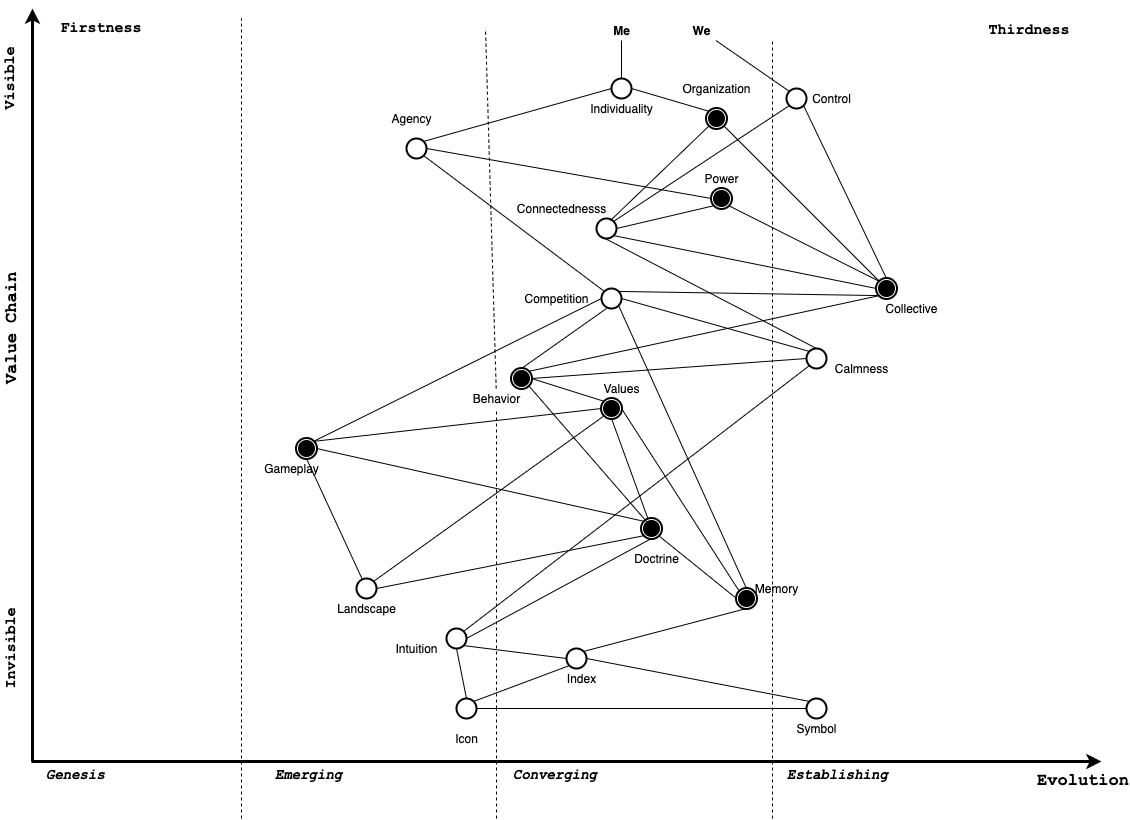
Damasio in his book 'The Strange Order of Things' argues that the core of condition lies in homeostasis. I agree with this generalization. But let me work out in a tweet storm how consciousness relates to homeostasis.
More from Carlos E. Perez
Programming in abstractions is very different from a system that is capable of its own 'abstracting'. But what does abstracting mean? We only know of its inputs and outputs, but we fail to describe its inner workings.
I like this short video about living in space. This is because it makes you realize the gaps in your knowledge when you turn off something (i.e. gravity) that you have always assumed to be present.
Perhaps we can understand 'abstracting' better if we turn of many assumptions that we unconsciously carry around. Perhaps we need to get rid of the excess baggage that is confusing our thinking about abstraction.
Turning off gravity and living in space is a perfect analogy. We somehow have to turn off a cognitive process to understand the meaning of abstraction.
The first step to divorce ourselves from our habitual cognitive processes is to realize the pervasiveness of 'noun-thinking' .
I like this short video about living in space. This is because it makes you realize the gaps in your knowledge when you turn off something (i.e. gravity) that you have always assumed to be present.
What does living in space do to the human body? pic.twitter.com/kzIlEEr7pp
— Tech Insider (@techinsider) December 20, 2020
Perhaps we can understand 'abstracting' better if we turn of many assumptions that we unconsciously carry around. Perhaps we need to get rid of the excess baggage that is confusing our thinking about abstraction.
Turning off gravity and living in space is a perfect analogy. We somehow have to turn off a cognitive process to understand the meaning of abstraction.
The first step to divorce ourselves from our habitual cognitive processes is to realize the pervasiveness of 'noun-thinking' .
More from Culture


I just finished Eric Adler's The Battle of the Classics, and wanted to say something about Joel Christiansen's review linked below. I am not sure what motivates the review (I speculate a bit below), but it gives a very misleading impression of the book. 1/x
The meat of the criticism is that the history Adler gives is insufficiently critical. Adler describes a few figures who had a great influence on how the modern US university was formed. It's certainly critical: it focuses on the social Darwinism of these figures. 2/x
Other insinuations and suggestions in the review seem wildly off the mark, distorted, or inappropriate-- for example, that the book is clickbaity (it is scholarly) or conservative (hardly) or connected to the events at the Capitol (give me a break). 3/x
The core question: in what sense is classics inherently racist? Classics is old. On Adler's account, it begins in ancient Rome and is revived in the Renaissance. Slavery (Christiansen's primary concern) is also very old. Let's say classics is an education for slaveowners. 4/x
It's worth remembering that literacy itself is elite throughout most of this history. Literacy is, then, also the education of slaveowners. We can honor oral and musical traditions without denying that literacy is, generally, good. 5/x
As someone\u2019s who\u2019s read the book, this review strikes me as tremendously unfair. It mostly faults Adler for not writing the book the reviewer wishes he had! https://t.co/pqpt5Ziivj
— Teresa M. Bejan (@tmbejan) January 12, 2021
The meat of the criticism is that the history Adler gives is insufficiently critical. Adler describes a few figures who had a great influence on how the modern US university was formed. It's certainly critical: it focuses on the social Darwinism of these figures. 2/x
Other insinuations and suggestions in the review seem wildly off the mark, distorted, or inappropriate-- for example, that the book is clickbaity (it is scholarly) or conservative (hardly) or connected to the events at the Capitol (give me a break). 3/x
The core question: in what sense is classics inherently racist? Classics is old. On Adler's account, it begins in ancient Rome and is revived in the Renaissance. Slavery (Christiansen's primary concern) is also very old. Let's say classics is an education for slaveowners. 4/x
It's worth remembering that literacy itself is elite throughout most of this history. Literacy is, then, also the education of slaveowners. We can honor oral and musical traditions without denying that literacy is, generally, good. 5/x


One of the authors of the Policy Exchange report on academic free speech thinks it is "ridiculous" to expect him to accurately portray an incident at Cardiff University in his study, both in the reporting and in a question put to a student sample.
Here is the incident Kaufmann incorporated into his study, as told by a Cardiff professor who was there. As you can see, the incident involved the university intervening to *uphold* free speech principles:
Here is the first mention of the Greer at Cardiff incident in Kaufmann's report. It refers to the "concrete case" of the "no-platforming of Germaine Greer". Any reasonable reader would assume that refers to an incident of no-platforming instead of its opposite.

Here is the next mention of Greer in the report. The text asks whether the University "should have overruled protestors" and "stepped in...and guaranteed Greer the right to speak". Again the strong implication is that this did not happen and Greer was "no platformed".
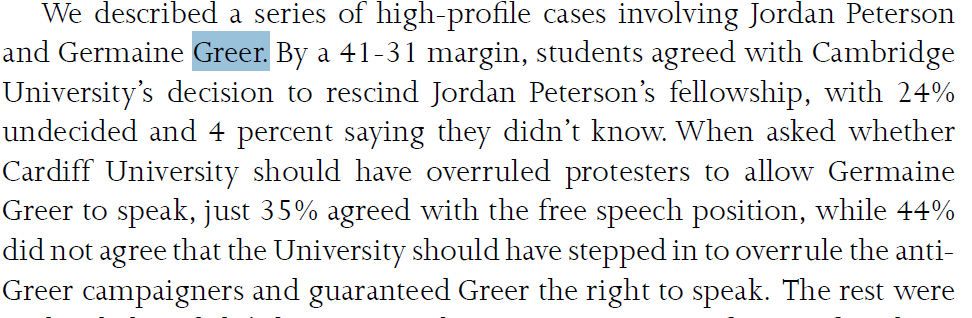
The authors could easily have added a footnote at this point explaining what actually happened in Cardiff. They did not.
This is ridiculous. Students were asked for their views on this example and several others. The study findings and conclusions were about student responses not the substance of each case. Could\u2019ve used hypotheticals. The responses not the cases were the basis of the conclusions.
— Eric Kaufmann (@epkaufm) February 17, 2021
Here is the incident Kaufmann incorporated into his study, as told by a Cardiff professor who was there. As you can see, the incident involved the university intervening to *uphold* free speech principles:
The UK govt\u2019s paper on free speech in Unis (with implications for Wales) is getting a lot of attention.
— Richard Wyn Jones (@RWynJones) February 16, 2021
Worth noting then that an important part of the evidence-base on which it rests relates to (demonstrably false) claims about my own institution
1/https://t.co/buoGE7ocG7
Here is the first mention of the Greer at Cardiff incident in Kaufmann's report. It refers to the "concrete case" of the "no-platforming of Germaine Greer". Any reasonable reader would assume that refers to an incident of no-platforming instead of its opposite.
Here is the next mention of Greer in the report. The text asks whether the University "should have overruled protestors" and "stepped in...and guaranteed Greer the right to speak". Again the strong implication is that this did not happen and Greer was "no platformed".
The authors could easily have added a footnote at this point explaining what actually happened in Cardiff. They did not.