Conscious and conscience are two words that share the same origin but mean two different things. The bias against explanations of consciousness comes from the conflation of these two words.

In addition, the question of free will is also adjacent to the notion of both consciousness and conscience. The ideas of consciousness, conscience, and free will serve as the foundation of justice in our civilization. (care to add another?)
So when we see people fail to condemn an act that is morally repugnant, we wonder if they have a conscience. But we don't wonder if they are conscious. When we incarcerate a person, we ask if they had "free will" but we inquire if they were 'conscious' during the crime.
The presence of consciousness and free will imply sentience. Which is the same as conscious and sounds just like a conscience. Our biases have muddled all the words together to likely mean the same thing.
The words that we use today continue to evolve. The same word can have a different meaning in the past. The word empathy is a recent word invented in the early 1900s. Originally it meant to place oneself from the viewpoint of a thing. Today we don't use it in this way.
Can you guess which of these 3 words conscious (to be aware), conscience (to know what is wrong), sentience (to be capable of sense) is the oldest?
The oldest is conscience (1200), then conscious (1600) and finally sentience (1800). In the reverse order of what appears more primitive in evolutionary sense.
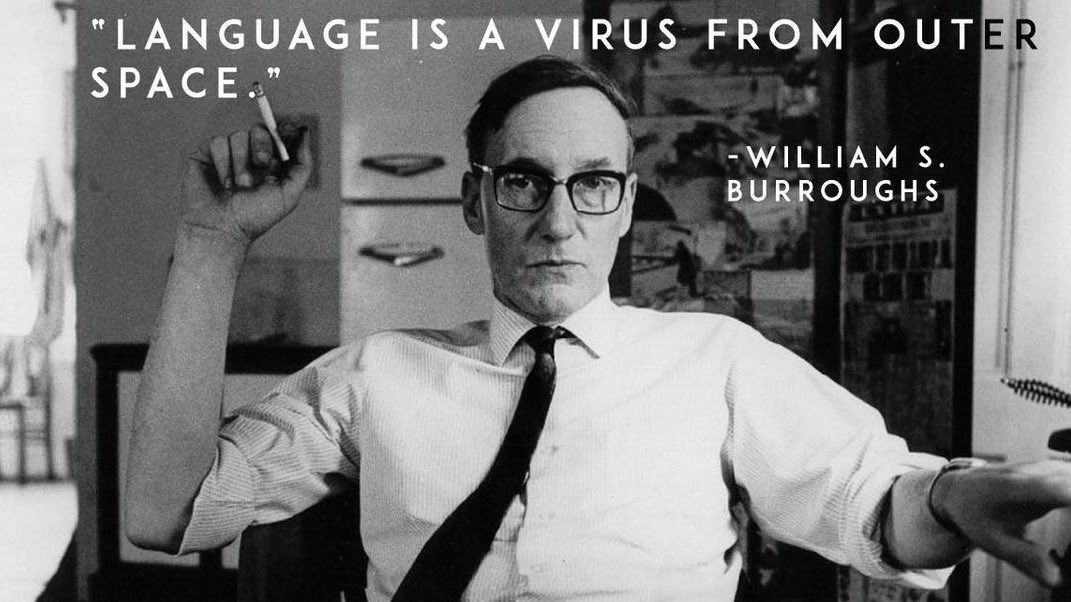
The potential for a society to scale is dependent on language. Humans dominate the world because of language. We keep order in this word because of written language. We make progress through the dissemination of new language. We evolve because our language evolves.
But with every technology, there exists an unintended detrimental consequence. Language is not all good. History tells us that the most despicable acts of humanity such as genocide is a consequence of language.
Just as it is language that binds our civilizations together, it also language that leads it to the most horrific of acts.
The flaw of language is that symbols are decoupled from experiential grounding. Mastering of language can lead to a false sense of understanding. Witness our executives who are so fond of buzz words without any true understanding of their meaning.
Witness also the reaction of GPT-3's mastering of language. Surely anything with that kind of mastering of words must itself be conscious!
The problem is, we don't understand what consciousness means and we stifle investigations as to what it means because we conflate it with other concepts that relate with morality (i.e. conscience).
Furthermore, we haven't used the right language to express cognition. We keep banking on language that was invented in the early 1900s by William James. The word empathy was still being invented in the 1900s.
But how can it possibly be that we don't have the language to express what we do at almost every instance of our existence?
Perhaps this is because the purpose of language is to bind societies. In short, the purpose of language is to control. The languages of civilizations are languages of control. They aren't languages of experience.
This long-established bias has greatly influenced the sciences. Bertrand Russell is his agenda for universal mathematics pursued this ultimate form of control. He however hit the hard wall of reality when Godel revealed the incompleteness theorem.
However in the multidisciplinary field of cognitive science, the branches of inquiry that employ the language of experience have been relegated as fringe or soft science. Semiotics, enactivism, ecological psychology all employ languages of experience.
For someone trained in the hard sciences, the language of experience seems elusive. There are many however who have come practices of intellectual rigor and eventually evolved their thinking towards the experiential kind.
Wittgenstein, Whitehead and Bohm are examples of thinkers who have evolved their thinking to adapt to the complexities of the real world.
It was Wittgenstein that understood that language is devoid of meaning in the absence of context. What is conveyed is always within the context of a language game. What is relevant is what is significant for that game.
It was David Bohm who recognized that the noun-focus of our language leads toward a fragmented understanding of the complexities of the world.
In describing cognition (and consciousness) we play a language game using vocabulary that is inadequate for the task. Inadequate because we have yet to create the vocabulary necessary to express the mechanisms of cognition.
It was only by 1955 that the word empathy was used in the manner we use it today. You have to wonder, how did the world keep it together with the absence of this word?
Perhaps, humans find meaning in this world independent of words.
@threadreaderapp unroll

More from Carlos E. Perez

More from Life

"I lied about my basic beliefs in order to keep a prestigious job. Now that it will be zero-cost to me, I have a few things to say."


We know that elite institutions like the one Flier was in (partial) charge of rely on irrelevant status markers like private school education, whiteness, legacy, and ability to charm an old white guy at an interview.

Harvard's discriminatory policies are becoming increasingly well known, across the political spectrum (see, e.g., the recent lawsuit on discrimination against East Asian applications.)

It's refreshing to hear a senior administrator admits to personally opposing policies that attempt to remedy these basic flaws. These are flaws that harm his institution's ability to do cutting-edge research and to serve the public.

Harvard is being eclipsed by institutions that have different ideas about how to run a 21st Century institution. Stanford, for one; the UC system; the "public Ivys".

You May Also Like

1/12

RT-PCR corona (test) scam

Symptomatic people are tested for one and only one respiratory virus. This means that other acute respiratory infections are reclassified as


2/12

It is tested exquisitely with a hypersensitive non-specific RT-PCR test / Ct >35 (>30 is nonsense, >35 is madness), without considering Ct and clinical context. This means that more acute respiratory infections are reclassified as


3/12

The Drosten RT-PCR test is fabricated in a way that each country and laboratory perform it differently at too high Ct and that the high rate of false positives increases massively due to cross-reaction with other (corona) viruses in the "flu


4/12

Even asymptomatic, previously called healthy, people are tested (en masse) in this way, although there is no epidemiologically relevant asymptomatic transmission. This means that even healthy people are declared as COVID


5/12

Deaths within 28 days after a positive RT-PCR test from whatever cause are designated as deaths WITH COVID. This means that other causes of death are reclassified as