
2. On the contrary, it underwrites the credibility for leadership on global issues, by seeking to strike two points:
Two excellent questions at the end of a very sensible thread summarising the post-Brexit UK FP debate. My own take at attempting to offer an answer - ahead of the IR is as follow:
Both the @ChathamHouse and @Policy_Exchange reports are excellent and leave a healthy tension to the UK foreign policy debate. I\u2019m left with two questions that won\u2019t go away. Is the first underestimating how the world has changed. Is the second overestimating Britain\u2019s capacity?
— Ben Judah (@b_judah) January 11, 2021
2. On the contrary, it underwrites the credibility for leadership on global issues, by seeking to strike two points:
B. Propelling the UK towards a more diversified set of economic, political, and security ties;
4. It is as a result a notion that stands on the ability to renew diplomacy;
6. It equally puts a premium on exploring new bilateral and multilateral formats. On former, Japan, Australia. On latter, Quad;
8. All of this based on a prosperity project drawing upon Asia’s emerging energy trade formats.
9. Because of the above, capabilities is an issue only if the UK’s tilt is seen outside of its crucially networked nature. The UK will enable and convene;
More from Brexit


You May Also Like







I hate when I learn something new (to me) & stunning about the Jeff Epstein network (h/t MoodyKnowsNada.)
Where to begin?
So our new Secretary of State Anthony Blinken's stepfather, Samuel Pisar, was "longtime lawyer and confidant of...Robert Maxwell," Ghislaine Maxwell's Dad.
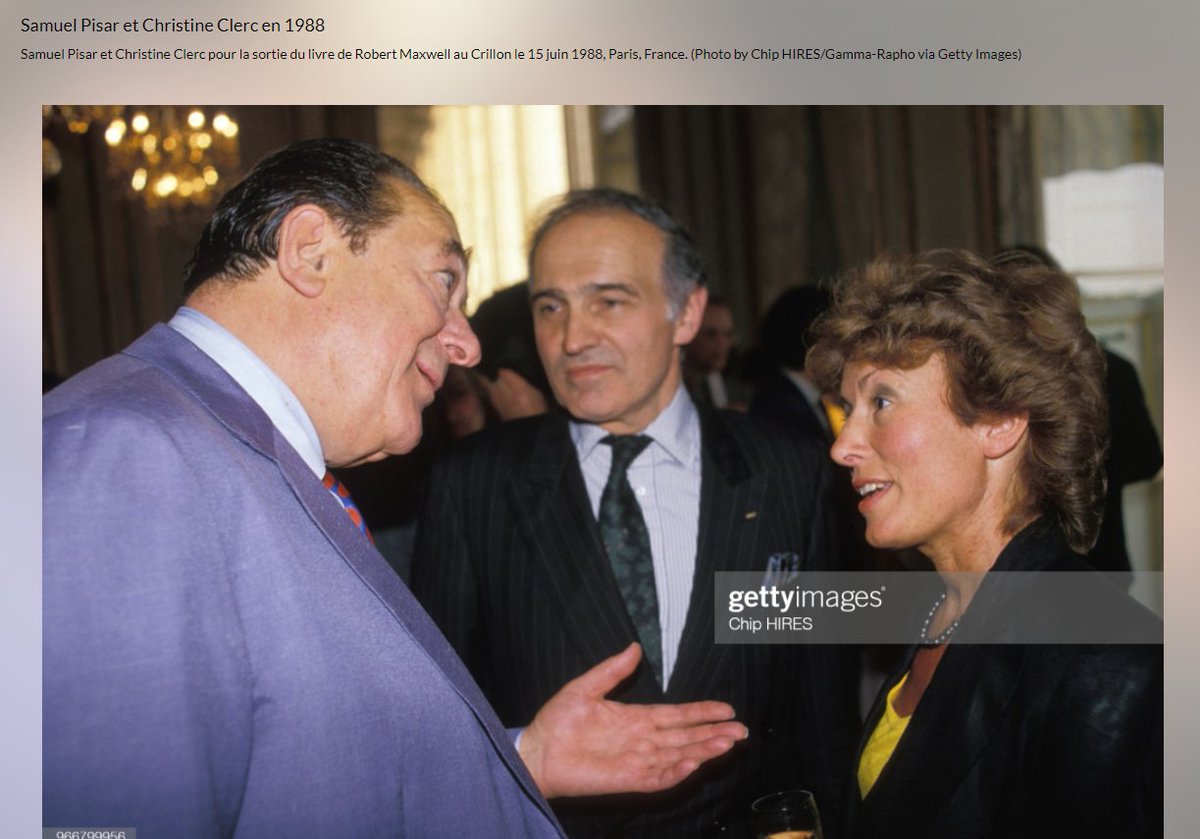
"Pisar was one of the last people to speak to Maxwell, by phone, probably an hour before the chairman of Mirror Group Newspapers fell off his luxury yacht the Lady Ghislaine on 5 November, 1991." https://t.co/DAEgchNyTP

OK, so that's just a coincidence. Moving on, Anthony Blinken "attended the prestigious Dalton School in New York City"...wait, what? https://t.co/DnE6AvHmJg
Dalton School...Dalton School...rings a
Oh that's right.
The dad of the U.S. Attorney General under both George W. Bush & Donald Trump, William Barr, was headmaster of the Dalton School.
Donald Barr was also quite a
I'm not going to even mention that Blinken's stepdad Sam Pisar's name was in Epstein's "black book."
Lots of names in that book. I mean, for example, Cuomo, Trump, Clinton, Prince Andrew, Bill Cosby, Woody Allen - all in that book, and their reputations are spotless.
Where to begin?
So our new Secretary of State Anthony Blinken's stepfather, Samuel Pisar, was "longtime lawyer and confidant of...Robert Maxwell," Ghislaine Maxwell's Dad.
"Pisar was one of the last people to speak to Maxwell, by phone, probably an hour before the chairman of Mirror Group Newspapers fell off his luxury yacht the Lady Ghislaine on 5 November, 1991." https://t.co/DAEgchNyTP
OK, so that's just a coincidence. Moving on, Anthony Blinken "attended the prestigious Dalton School in New York City"...wait, what? https://t.co/DnE6AvHmJg
Dalton School...Dalton School...rings a
Oh that's right.
The dad of the U.S. Attorney General under both George W. Bush & Donald Trump, William Barr, was headmaster of the Dalton School.
Donald Barr was also quite a
Donald Barr had a way with words. pic.twitter.com/JdRBwXPhJn
— Rudy Havenstein, listening to Nas all day. (@RudyHavenstein) September 17, 2020
I'm not going to even mention that Blinken's stepdad Sam Pisar's name was in Epstein's "black book."
Lots of names in that book. I mean, for example, Cuomo, Trump, Clinton, Prince Andrew, Bill Cosby, Woody Allen - all in that book, and their reputations are spotless.