
The first working day of the new UK-EU relationship. We're going to hear a lot this year from all sides (remain and Brexit in UK, EU, etc) using any possible scrap of evidence. But what we need to look for is trends, over time, so a few to think about in this thread... 1/
More from David Henig
Not the easiest to follow, but for those interested in the big picture of trade relations between US, EU and China this exchange between @alanbeattie and @IanaDreyer is an essential read. Real debate on key issues, and good points on both sides.
Also reading this from @gideonrachman on EU-China. My view (cynically?) - that EU-China is a deal that makes a lot of sense given a probably unresolvable trade policy superpower triangle with the US, and best for the EU to move while China will.
The US and EU roughly agree on China that it should do some things differently, but not really the details of what those are. Meanwhile the EU and US have long standing trade policy differences, which neither (or their key stakeholders) prioritise resolving.
For the EU, the China deal has sent a message to the new US administration, you can't just tell us what to do. And delivered some (probably marginal in reality) benefits to business. For China, this is the 3rd deal with EU or US in 12 months. Pretty clear strategy there.
The key assumption that lies at the heart of too much writing on EU-US relations is that the two should cooperate on trade. After 25 years of largely failing to do so, I'd suggest we might want to question that a bit more deeply.
V good points but overall I stick with the conclusion that this is a v risky deal.
— Alan Beattie (@alanbeattie) January 5, 2021
1. It\u2019s overstating it to say that COM now has final say over investment. FDI screening remains a MS competency. COM has had to take a v secondary supporting role over Huawei and 5G.
1/n https://t.co/RVg2jnoFgK
Also reading this from @gideonrachman on EU-China. My view (cynically?) - that EU-China is a deal that makes a lot of sense given a probably unresolvable trade policy superpower triangle with the US, and best for the EU to move while China will.
The US and EU roughly agree on China that it should do some things differently, but not really the details of what those are. Meanwhile the EU and US have long standing trade policy differences, which neither (or their key stakeholders) prioritise resolving.
For the EU, the China deal has sent a message to the new US administration, you can't just tell us what to do. And delivered some (probably marginal in reality) benefits to business. For China, this is the 3rd deal with EU or US in 12 months. Pretty clear strategy there.
The key assumption that lies at the heart of too much writing on EU-US relations is that the two should cooperate on trade. After 25 years of largely failing to do so, I'd suggest we might want to question that a bit more deeply.
So many stories of new barriers to trade between UK and EU, but you might be thinking at some point these will run out. The government is certainly hoping so. Well they may slow down, but trade relations and regulations are not static, and changes will lead to further problems.
The likelihood of continued trade problems for a £650 bn trade relationship is why there should be a huge cross-government effort led by the Foreign Office and Department for International Trade to put in place the necessary resources to seek best results.
There isn't.
So the UK's relationship with the EU currently consists of two not particularly good deals and no consistent effort to manage current problems or prevent future ones. Joint committees are a second order problem to putting in place the right internal structures.
But that's been the consistent UK problem in relations with the EU since 2016. Lack of focus on getting the right internal structures, people, asks, strategy, too much attention on being tough and a single leader.
News just in. This doesn't necessarily mean the right structure being put into UK-EU relations. I suspect Frost's main role is to ensure no renegotiations with the EU.
Also, wonder what this says about the PM's trust in Michael Gove?
The likelihood of continued trade problems for a £650 bn trade relationship is why there should be a huge cross-government effort led by the Foreign Office and Department for International Trade to put in place the necessary resources to seek best results.
There isn't.
So the UK's relationship with the EU currently consists of two not particularly good deals and no consistent effort to manage current problems or prevent future ones. Joint committees are a second order problem to putting in place the right internal structures.
But that's been the consistent UK problem in relations with the EU since 2016. Lack of focus on getting the right internal structures, people, asks, strategy, too much attention on being tough and a single leader.
News just in. This doesn't necessarily mean the right structure being put into UK-EU relations. I suspect Frost's main role is to ensure no renegotiations with the EU.
Also, wonder what this says about the PM's trust in Michael Gove?
NEW: David Frost is joining Boris Johnson\u2019s Cabinet! The peer has been appointed a minister at the Cabinet Office, effective March 1.
— Sebastian Payne (@SebastianEPayne) February 17, 2021
Frost will also chair the partnership council overseeing the UK-EU trade deal and oversee reform to "maximise on the opportunities of Brexit"
More from Brexit


You May Also Like


THREAD PART 1.
On Sunday 21st June, 14 year old Noah Donohoe left his home to meet his friends at Cave Hill Belfast to study for school. #RememberMyNoah💙

He was on his black Apollo mountain bike, fully dressed, wearing a helmet and carrying a backpack containing his laptop and 2 books with his name on them. He also had his mobile phone with him.
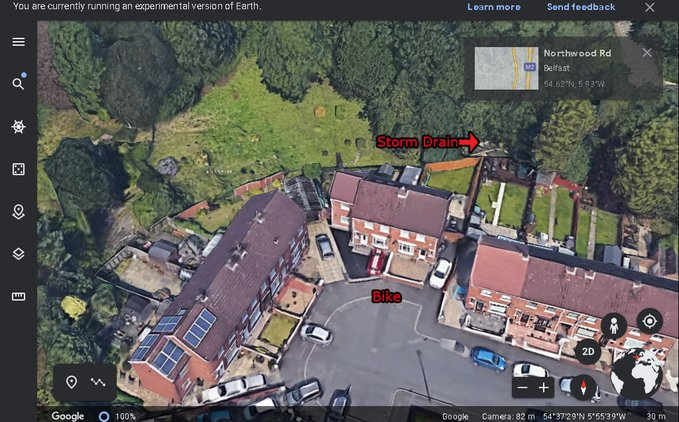
On the 27th of June. Noah's naked body was sadly discovered 950m inside a storm drain, between access points. This storm drain was accessible through an area completely unfamiliar to him, behind houses at Northwood Road. https://t.co/bpz3Rmc0wq
"Noah's body was found by specially trained police officers between two drain access points within a section of the tunnel running under the Translink access road," said Mr McCrisken."
Noah's bike was also found near a house, behind a car, in the same area. It had been there for more than 24 hours before a member of public who lived in the street said she read reports of a missing child and checked the bike and phoned the police.
On Sunday 21st June, 14 year old Noah Donohoe left his home to meet his friends at Cave Hill Belfast to study for school. #RememberMyNoah💙
He was on his black Apollo mountain bike, fully dressed, wearing a helmet and carrying a backpack containing his laptop and 2 books with his name on them. He also had his mobile phone with him.
On the 27th of June. Noah's naked body was sadly discovered 950m inside a storm drain, between access points. This storm drain was accessible through an area completely unfamiliar to him, behind houses at Northwood Road. https://t.co/bpz3Rmc0wq
"Noah's body was found by specially trained police officers between two drain access points within a section of the tunnel running under the Translink access road," said Mr McCrisken."
Noah's bike was also found near a house, behind a car, in the same area. It had been there for more than 24 hours before a member of public who lived in the street said she read reports of a missing child and checked the bike and phoned the police.


