
https://t.co/aFzelRLlEX
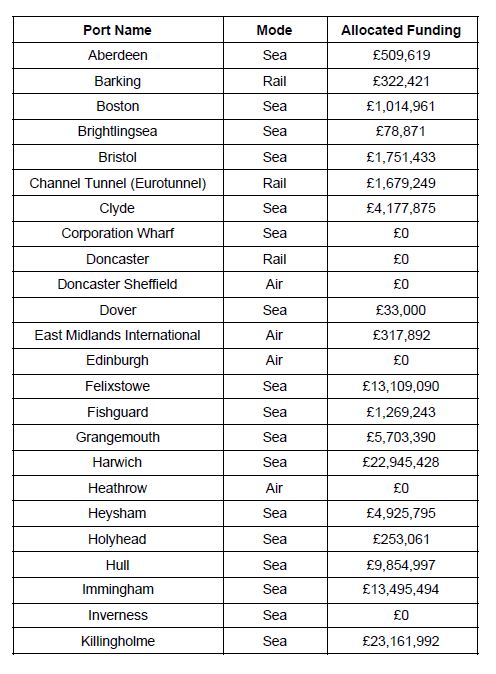
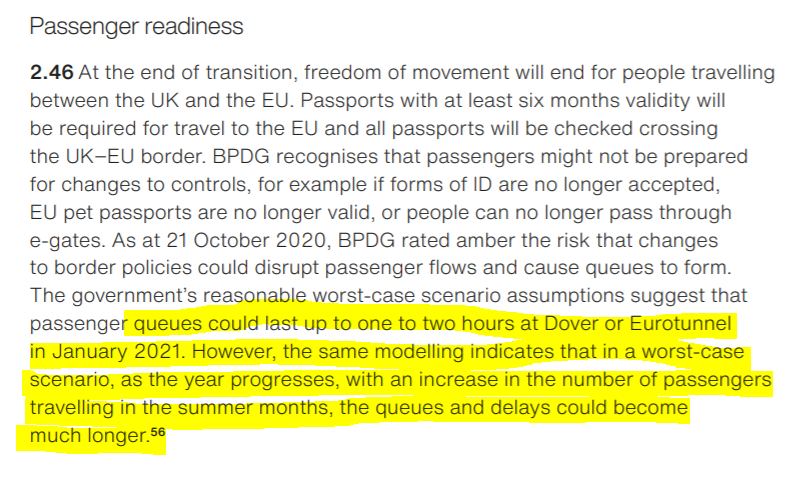
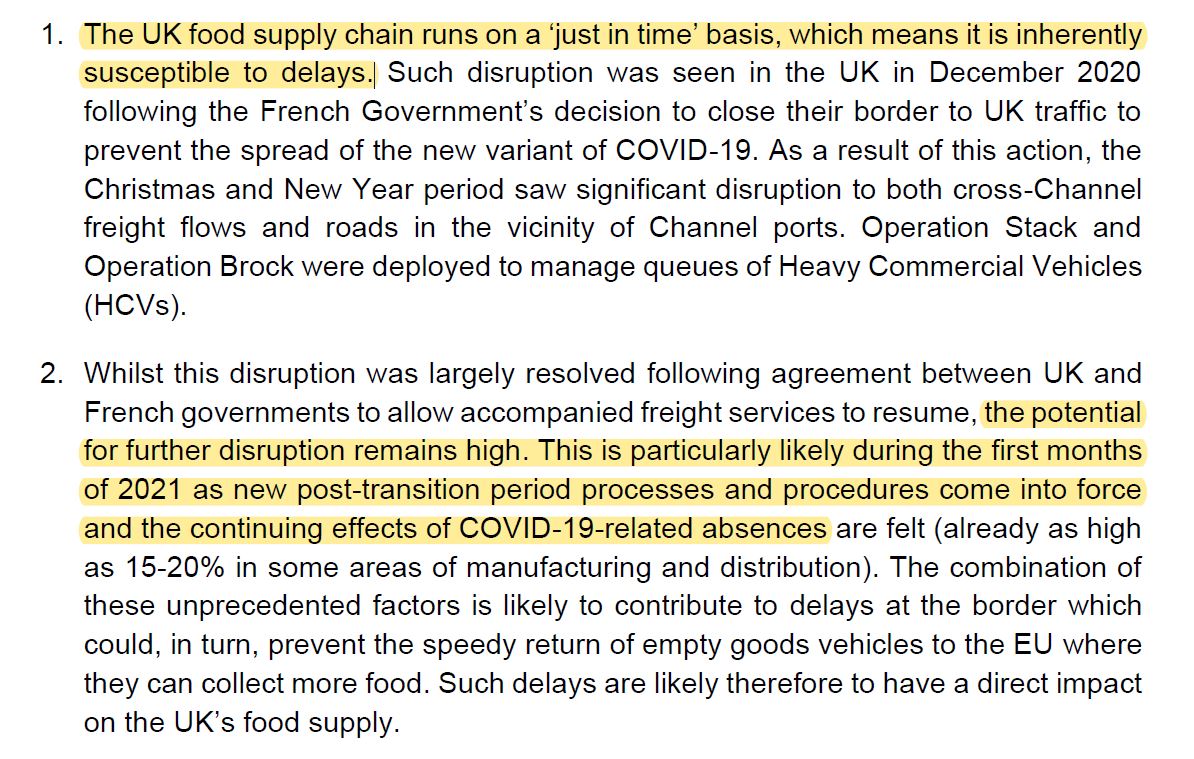
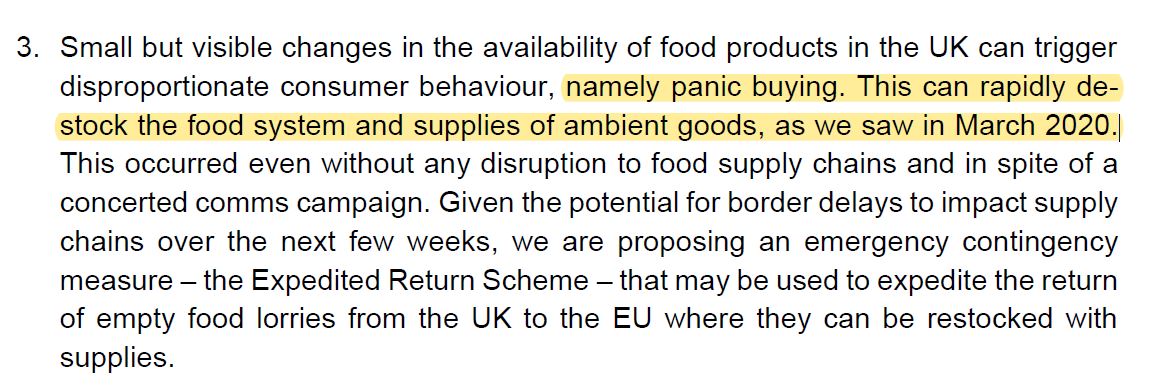
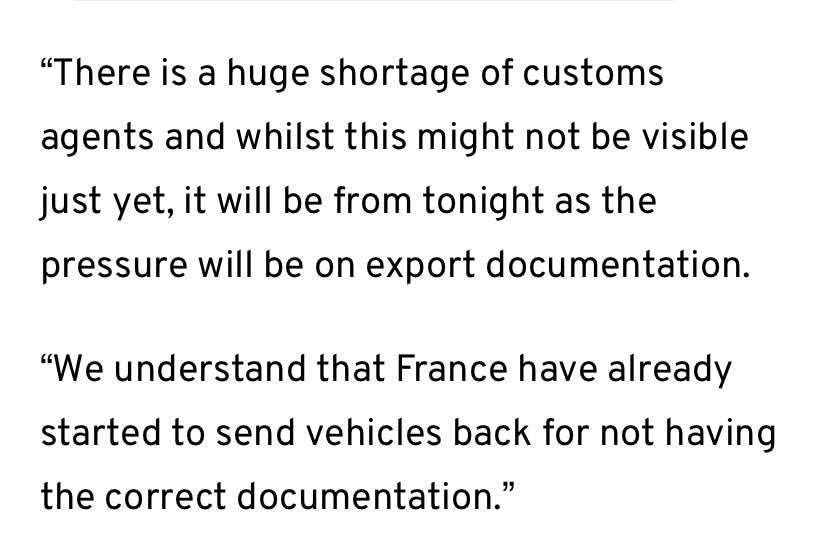
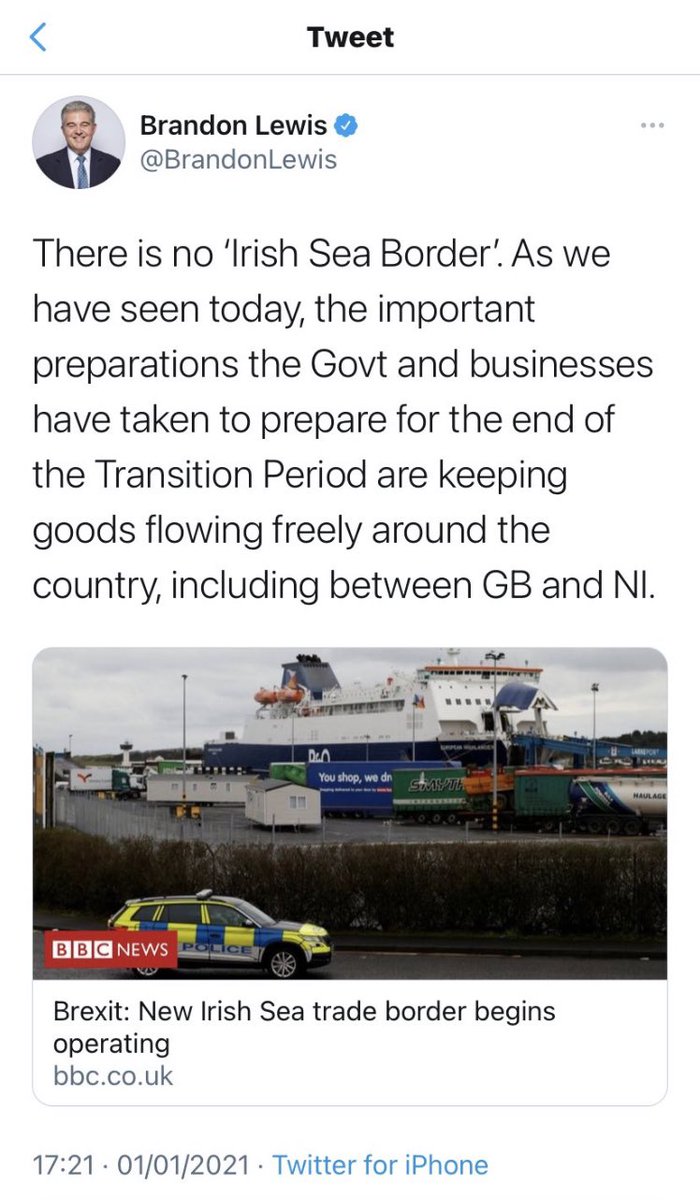
BREAK: 🚨🚨🇫🇷🇬🇧🚗🚙🚗🚙🚗🚙🚗🚙🚗🚙🚗🇫🇷🇬🇧🚢🚢🚢🚨🚨 The UK rejects Dover funding bid to double French passport booths via @FT - long queues ahead...as other ports also don’t get money they asked for to build #brexit border. Stay with me/1 thread
https://t.co/aFzelRLlEX
https://t.co/K77Is5tfxk
https://t.co/6989KZPHqQ
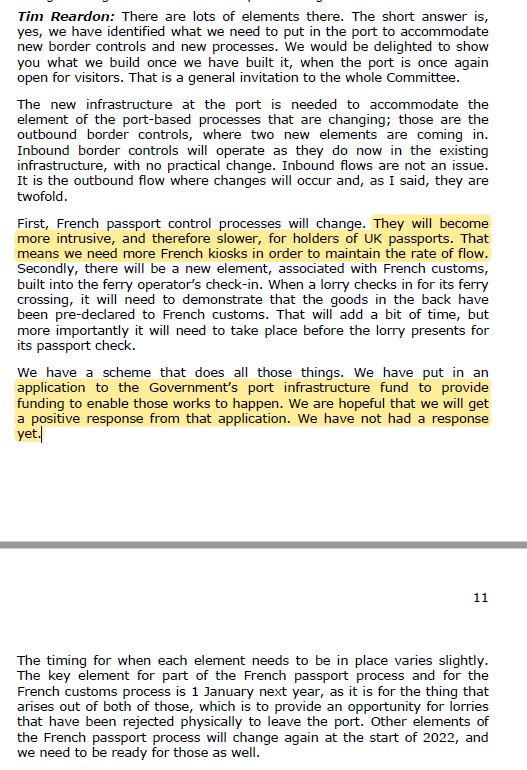
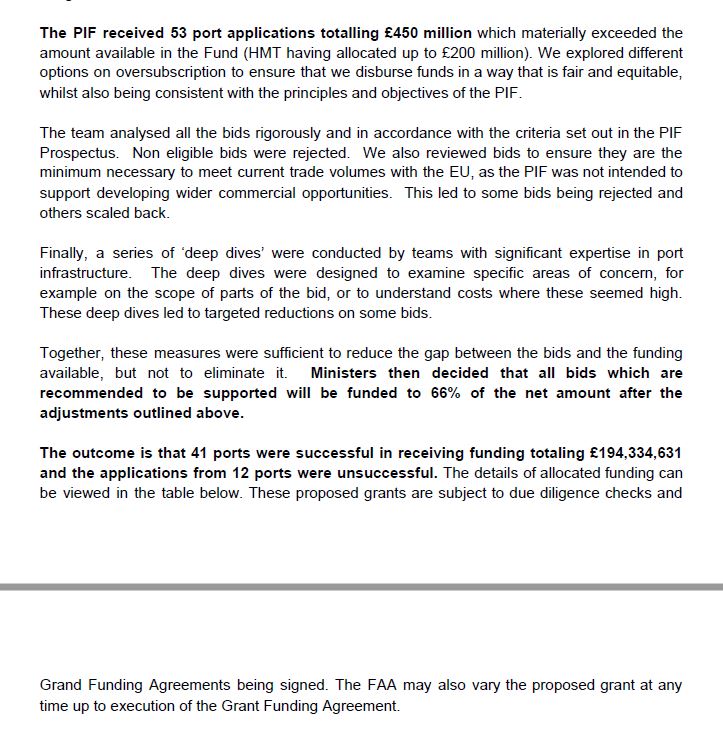
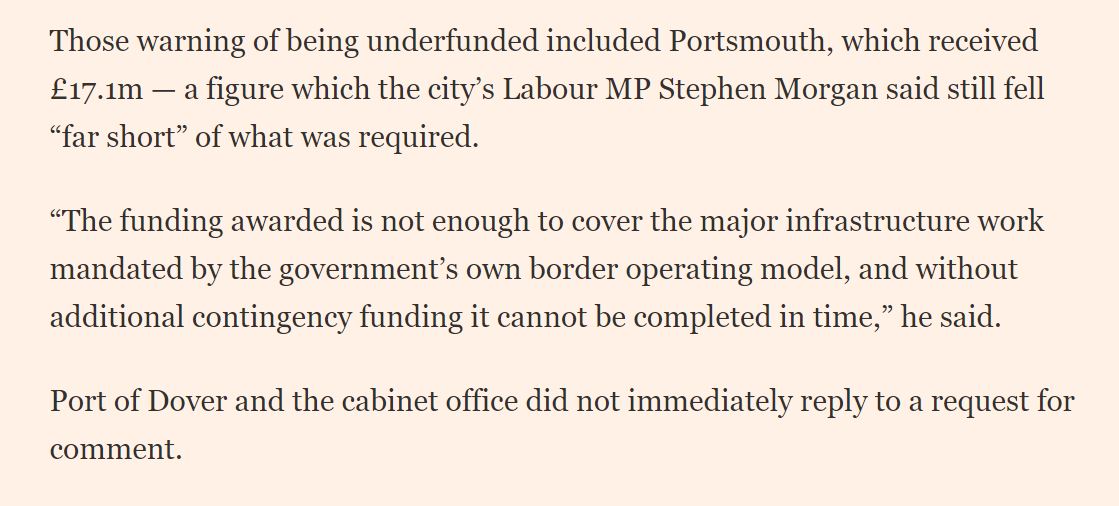
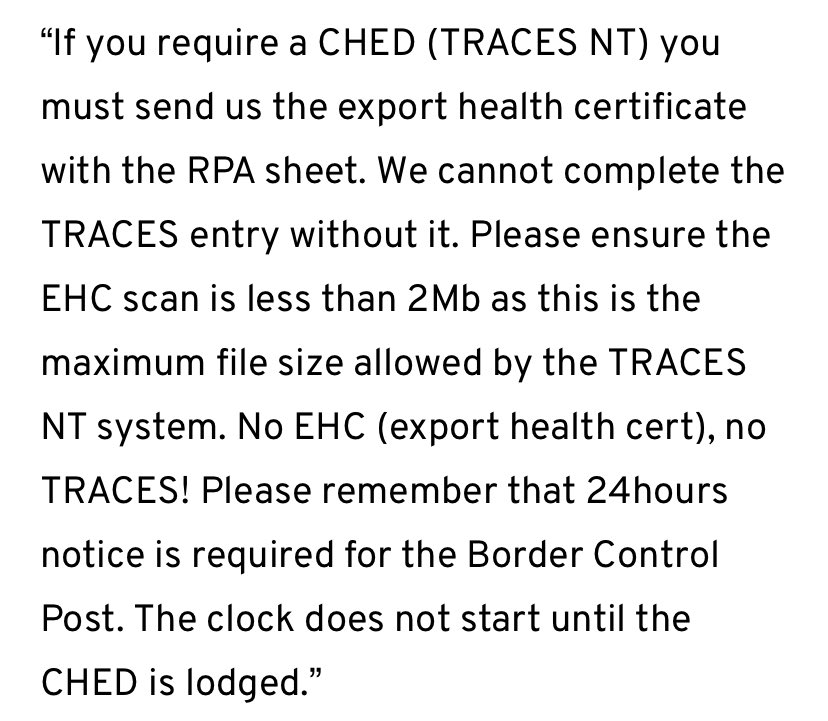
Portsmouth got £17.1m - which is about £8m short of what they asked for, I am told. /10
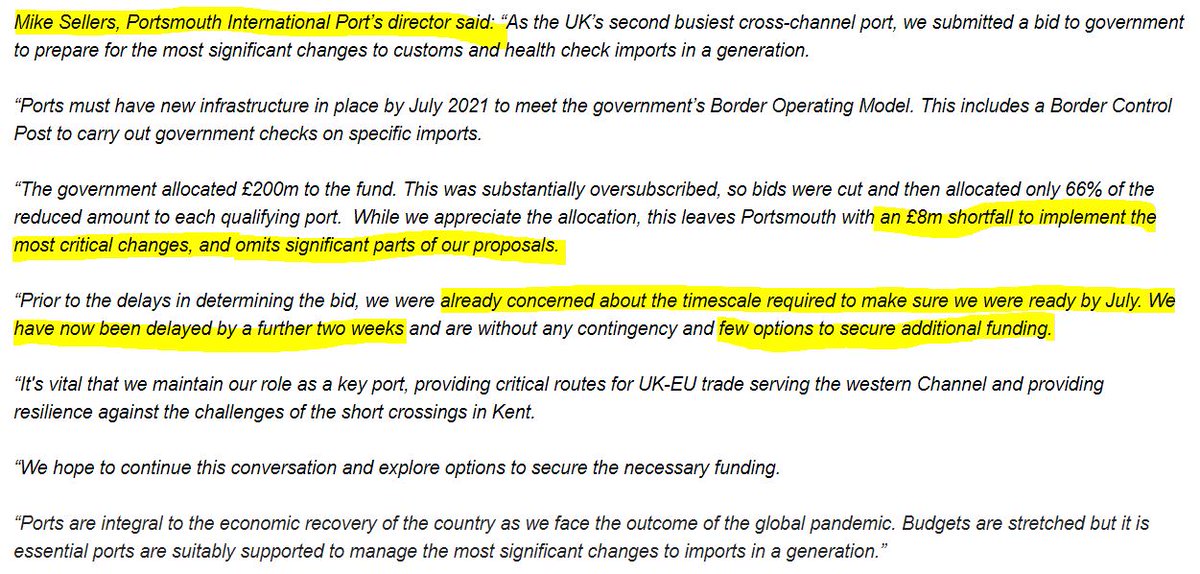
Humber ports like Purfleet & Killinghome that deal with 'trailer' freight from the EU on short-sea crossings also have lots to do. Holyhead must deal with huge new Irish freight issues etc. /13
@timgmorris Chief Exec UK Major Ports Group says they're "very disappointed that the allocations of funding are so late in the day and significantly short of what many ports require."/14
More from Peter Foster

Remember the government wanting to "follow the science"? It is remarkable how far it is ignoring scientific advice on this new ultra-infectious variant of #Covid-19 by keeping schools open... both SAGE and @imperialcollege issuing warnings on school closures. Stay with me. /1
First the @imperialcollege paper, which finds that the new variant is still being ultra-infectious despite November lockdowns - link here, but cases of new variant trebled in SEast, even under lockdown /2
https://t.co/fdvuVX3OkW
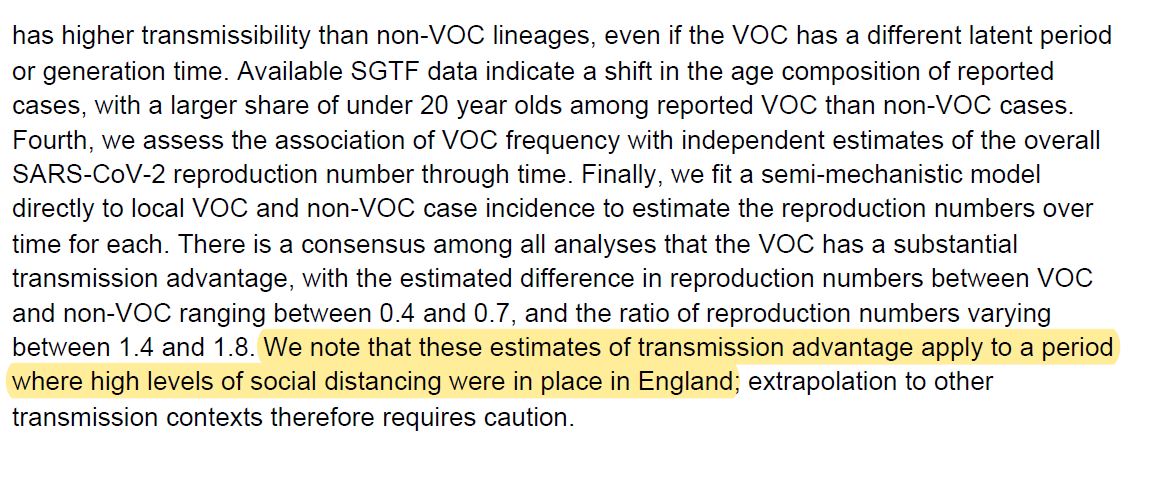
The paper then notes (given schools were open and under 20s are most infected): "A particular concern is whether it will be possible to maintain control over transmission while allowing schools to reopen in January 2021." /3
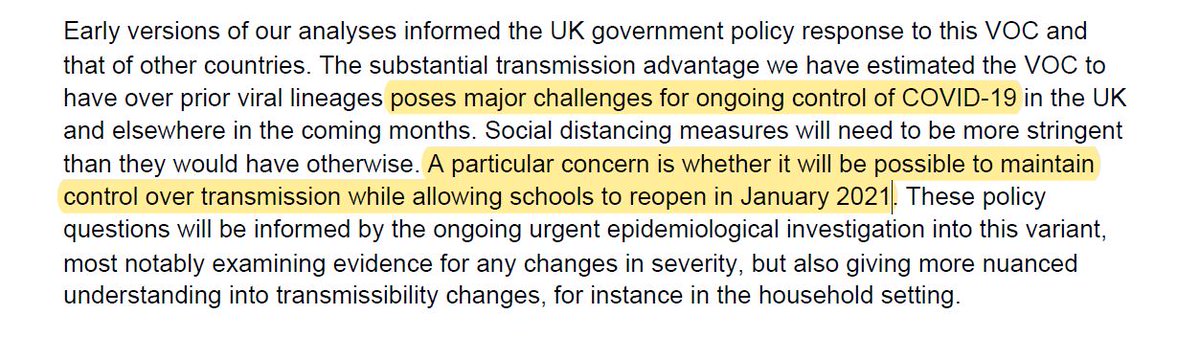
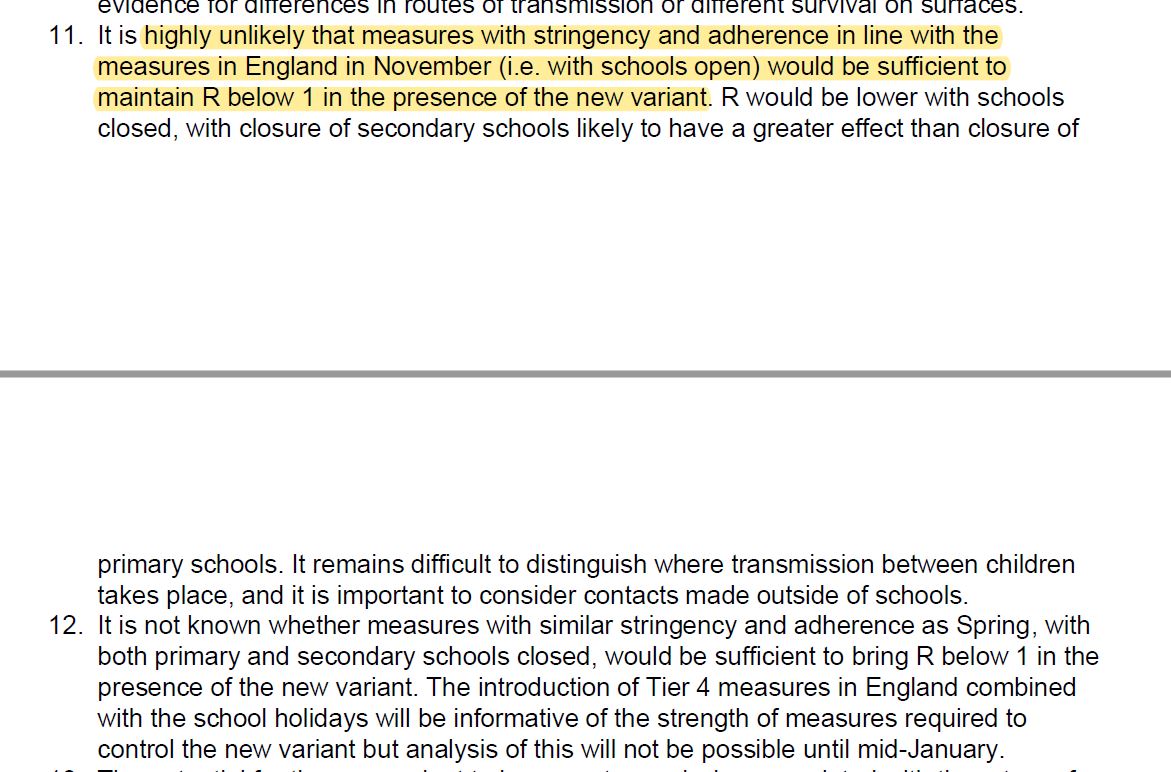
This echoes what govt science advisory SAGE cmme told ministers on Dec 22...that it was "highly unlikely" the R number can be kept below 1 (cases falling, it is currently 1.1-1.3) with schools open /4
https://t.co/yV5qcSkErJ
But on Dec 30 Gavin Williamson announce primaries would go back, and secondary schools would have staggered return while testing regime (lateral flow, not that sensitive) was set up - see statement here
First the @imperialcollege paper, which finds that the new variant is still being ultra-infectious despite November lockdowns - link here, but cases of new variant trebled in SEast, even under lockdown /2
https://t.co/fdvuVX3OkW
The paper then notes (given schools were open and under 20s are most infected): "A particular concern is whether it will be possible to maintain control over transmission while allowing schools to reopen in January 2021." /3
This echoes what govt science advisory SAGE cmme told ministers on Dec 22...that it was "highly unlikely" the R number can be kept below 1 (cases falling, it is currently 1.1-1.3) with schools open /4
https://t.co/yV5qcSkErJ
But on Dec 30 Gavin Williamson announce primaries would go back, and secondary schools would have staggered return while testing regime (lateral flow, not that sensitive) was set up - see statement here

More from Brexit




You May Also Like


IMPORTANCE, ADVANTAGES AND CHARACTERISTICS OF BHAGWAT PURAN
It was Ved Vyas who edited the eighteen thousand shlokas of Bhagwat. This book destroys all your sins. It has twelve parts which are like kalpvraksh.
In the first skandh, the importance of Vedvyas
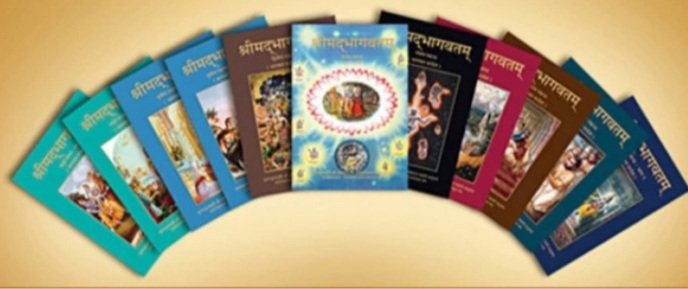
and characters of Pandavas are described by the dialogues between Suutji and Shaunakji. Then there is the story of Parikshit.
Next there is a Brahm Narad dialogue describing the avtaar of Bhagwan. Then the characteristics of Puraan are mentioned.
It also discusses the evolution of universe.( https://t.co/2aK1AZSC79 )
Next is the portrayal of Vidur and his dialogue with Maitreyji. Then there is a mention of Creation of universe by Brahma and the preachings of Sankhya by Kapil Muni.
In the next section we find the portrayal of Sati, Dhruv, Pruthu, and the story of ancient King, Bahirshi.
In the next section we find the character of King Priyavrat and his sons, different types of loks in this universe, and description of Narak. ( https://t.co/gmDTkLktKS )
In the sixth part we find the portrayal of Ajaamil ( https://t.co/LdVSSNspa2 ), Daksh and the birth of Marudgans( https://t.co/tecNidVckj )
In the seventh section we find the story of Prahlad and the description of Varnashram dharma. This section is based on karma vaasna.
It was Ved Vyas who edited the eighteen thousand shlokas of Bhagwat. This book destroys all your sins. It has twelve parts which are like kalpvraksh.
In the first skandh, the importance of Vedvyas
and characters of Pandavas are described by the dialogues between Suutji and Shaunakji. Then there is the story of Parikshit.
Next there is a Brahm Narad dialogue describing the avtaar of Bhagwan. Then the characteristics of Puraan are mentioned.
It also discusses the evolution of universe.( https://t.co/2aK1AZSC79 )
Next is the portrayal of Vidur and his dialogue with Maitreyji. Then there is a mention of Creation of universe by Brahma and the preachings of Sankhya by Kapil Muni.
HOW LIFE EVOLVED IN THIS UNIVERSE AS PER OUR SCRIPTURES.
— Anshul Pandey (@Anshulspiritual) August 29, 2020
Well maximum of Living being are the Vansaj of Rishi Kashyap. I have tried to give stories from different-different Puran. So lets start.... pic.twitter.com/MrrTS4xORk
In the next section we find the portrayal of Sati, Dhruv, Pruthu, and the story of ancient King, Bahirshi.
In the next section we find the character of King Priyavrat and his sons, different types of loks in this universe, and description of Narak. ( https://t.co/gmDTkLktKS )
Thread on NARK(HELL) / \u0928\u0930\u094d\u0915
— Anshul Pandey (@Anshulspiritual) August 11, 2020
Well today i will take you to a journey where nobody wants to go i.e Nark. Hence beware of doing Adharma/Evil things. There are various mentions in Puranas about Nark, But my Thread is only as per Bhagwat puran(SS attached in below Thread)
1/8 pic.twitter.com/raHYWtB53Q
In the sixth part we find the portrayal of Ajaamil ( https://t.co/LdVSSNspa2 ), Daksh and the birth of Marudgans( https://t.co/tecNidVckj )
In the seventh section we find the story of Prahlad and the description of Varnashram dharma. This section is based on karma vaasna.
#THREAD
— Anshul Pandey (@Anshulspiritual) August 12, 2020
WHY PARENTS CHOOSE RELIGIOUS OR PARAMATMA'S NAMES FOR THEIR CHILDREN AND WHICH ARE THE EASIEST WAY TO WASH AWAY YOUR SINS.
Yesterday I had described the types of Naraka's and the Sin or Adharma for a person to be there.
1/8 pic.twitter.com/XjPB2hfnUC


