(1/3)

I am using only one indicator in the chart.
i.e DC(20) = Donchain Channel
I use 3 min chart and the DC period is 20, so DC high is basically the last 1 hour high & DC low is the last 1 hour low.
The middle line is the median of high and low.

(2/3)

Donchian channels are mainly used to identify the breakout of nifty/BNF.
We can take directional bias based on the indicator.
If nifty is breaking DC high, can take bullish view.
if it is breaking DC down, can take bearish view.
if it is in between, can trade range-bound.
(3/3)

We can monitor nifty/banknifty futures with volume along with DC.
If the volume is 1.5 to 2 times the average volume and if DC high/low is taken out then it can be a strong bullish/bearish signal.

More from yashstocks

1/5
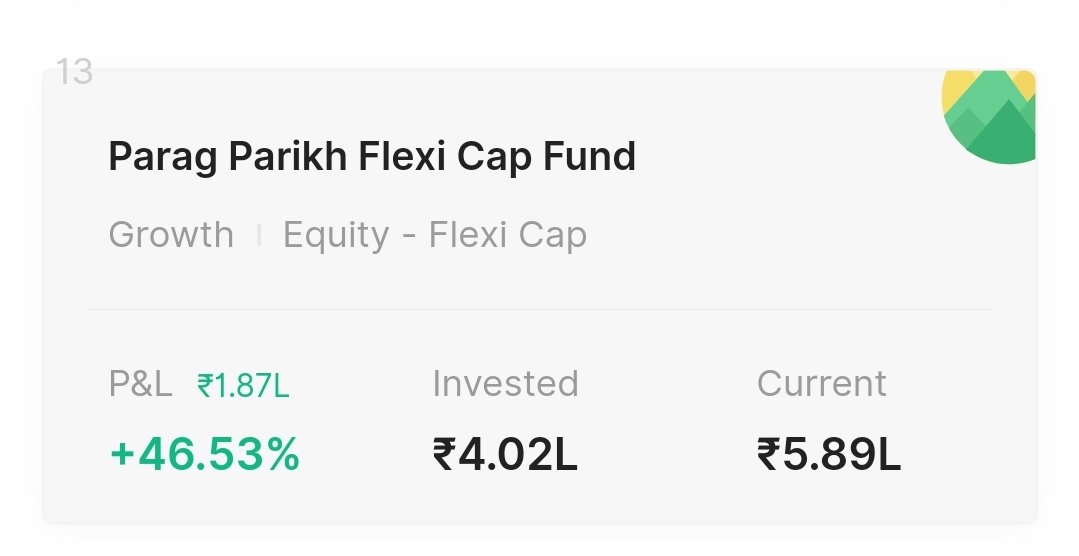
In equity funds, parag parikh flexi cap fund and mirae asset emerging bluechip funds are best. They have given superb returns in last 5 years.
Parag parikh flexi cap fund is diversified as it will invest in US stocks like Google, Facebook, Microsoft, Amazon along with Indian. https://t.co/RmoDMgXoRM


2/5

But one issue with this is if you exit before 2 years, there is an exit load of 2% in 1st year and 1% in 2nd year.

Mirae asset emerging bluechip funds stopped taking lump sum amounts and only can do SIP of Rs. 2500 currently.

3/5

But there is catch, you can do multiple SIPs in it, you can SIP on every day and still invest 75k in a month. I am doing this way only.

Coming to debt funds, ICICI prudential all seasons bond fund and hdfc corporate bond fund are good if consider 5 years performance.

4/5

In zerodha, all above 4 MFs can be pledged and haircut also very less just 7.5%. But you can use only 50% for positional margin, other 50% should come in cash or equivalent funds like gilt, liquid etc. For intraday, 100% can be used.

5/5

Nippon india gilt fund is also good, considering it will be cash component and only 10% haircut.

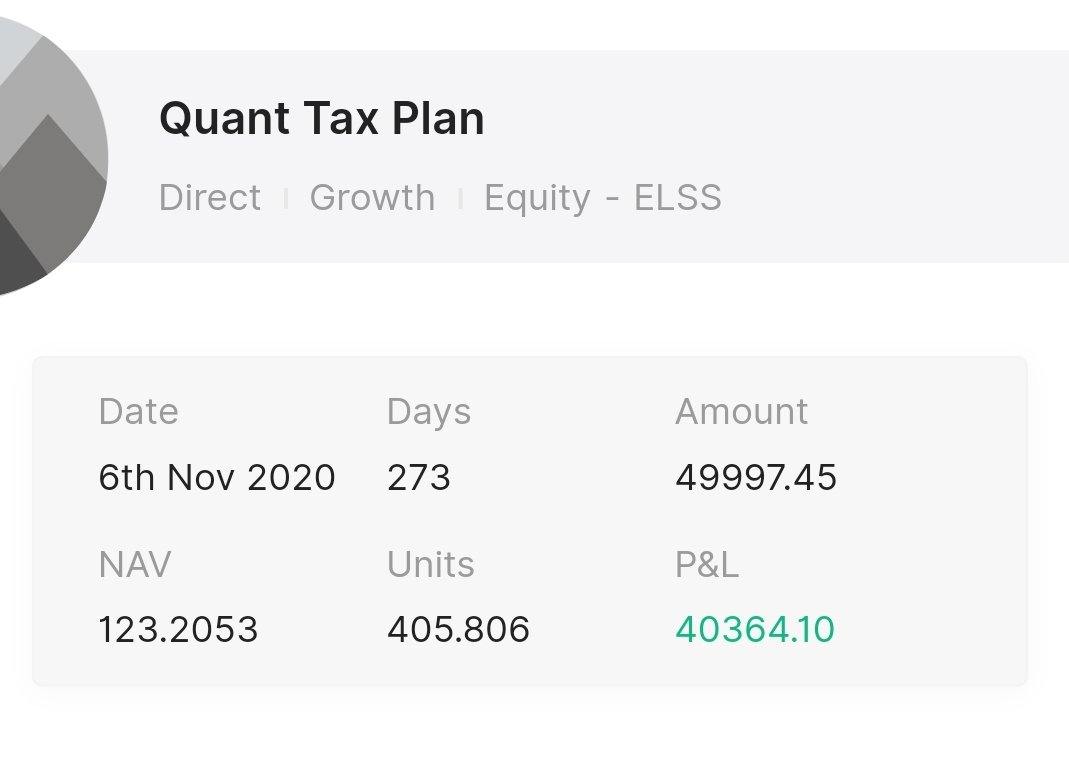
For tax saving, you need to invest in ELSS funds.
I invested in Quant Tax Plan and it gave 80% returns in just 273 days.

More from Screeners

TradingView isn't just charts

It's much more powerful than you think

9 things TradingView can do, you'll wish you knew yesterday: 🧵

Collaborated with @niki_poojary

1/ Free Multi Timeframe Analysis

Step 1. Download Vivaldi Browser

Step 2. Login to trading view

Step 3. Open bank nifty chart in 4 separate windows

Step 4. Click on the first tab and shift + click by mouse on the last tab.

Step 5. Select "Tile all 4 tabs"


What happens is you get 4 charts joint on one screen.

Refer to the attached picture.

The best part about this is this is absolutely free to do.

Also, do note:

I do not have the paid version of trading view.


2/ Free Multiple Watchlists

Go through this informative thread where @sarosijghosh teaches you how to create multiple free watchlists in the free


3/ Free Segregation into different headers/sectors

You can create multiple sections sector-wise for free.

1. Long tap on any index/stock and click on "Add section above."
2. Secgregate the stocks/indices based on where they belong.

Kinda like how I did in the picture below.

You May Also Like

1/ Some initial thoughts on personal moats:

Like company moats, your personal moat should be a competitive advantage that is not only durable—it should also compound over time.

Characteristics of a personal moat below:


2/ Like a company moat, you want to build career capital while you sleep.

As Andrew Chen noted:


3/ You don’t want to build a competitive advantage that is fleeting or that will get commoditized

Things that might get commoditized over time (some longer than


4/ Before the arrival of recorded music, what used to be scarce was the actual music itself — required an in-person artist.

After recorded music, the music itself became abundant and what became scarce was curation, distribution, and self space.

5/ Similarly, in careers, what used to be (more) scarce were things like ideas, money, and exclusive relationships.

In the internet economy, what has become scarce are things like specific knowledge, rare & valuable skills, and great reputations.
I’m torn on how to approach the idea of luck. I’m the first to admit that I am one of the luckiest people on the planet. To be born into a prosperous American family in 1960 with smart parents is to start life on third base. The odds against my very existence are astronomical.


I’ve always felt that the luckiest people I know had a talent for recognizing circumstances, not of their own making, that were conducive to a favorable outcome and their ability to quickly take advantage of them.

In other words, dumb luck was just that, it required no awareness on the person’s part, whereas “smart” luck involved awareness followed by action before the circumstances changed.

So, was I “lucky” to be born when I was—nothing I had any control over—and that I came of age just as huge databases and computers were advancing to the point where I could use those tools to write “What Works on Wall Street?” Absolutely.

Was I lucky to start my stock market investments near the peak of interest rates which allowed me to spend the majority of my adult life in a falling rate environment? Yup.