1/Lately I've been reading a ton of books about immigration and diversity. The most recent one is "Americanism in the Twenty-First Century", by https://t.co/neqzyYVaYS
What" target="_blank">@debbiejsr.
https://t.co/neqzyYVaYS
What did I learn?
It also asks them about what they think being an "American" entails.
1. Feeling like an American
2. Believing traditional American values like freedom
3. Civic participation (voting, etc.)
4. Multiculturalism vs. blending in
5. Being white and/or Christian
The upshot is that except for being white/Christian, most of these definitions of "American" get broad endorsement from all groups of people surveyed.
In comparison, 96.9% said respecting other people's cultural differences was important for being an American.
whites - 89.4%
blacks - 52.3%
Latinos - 53.6%
Asians - 47.3%
For Latinos and Asians, national-origin identification (e.g. "Mexican", "Chinese", etc.) was common (28.2% for Latinos, 36% for Asians). Many of the people choosing national-origin identity were foreign-born.
Letting other people do what they want - 87.8%
Carrying on the cultural traditions of one's ancestors - 72.7%
Blending into the larger society - 73.4%
Pursuing economic success through hard work - 90.7%
The % of people who said "carrying on the cultural traditions of one's ancestors" is crucial for being an American was FOUR TIMES as large as the % who said "having European ancestors" was important!
That should quiet the fears of the Huntingtonian nativists...
This means that at least in 2004, most Americans thought of themselves as "Americans", and most agreed about what that meant.
This approach has at least two big methodological problems...
The second problem, of course, is telling correlation from causation. This is just a survey.
For both Latinos and Asians, national-origin identity disappears across the generations, and American identity increases.
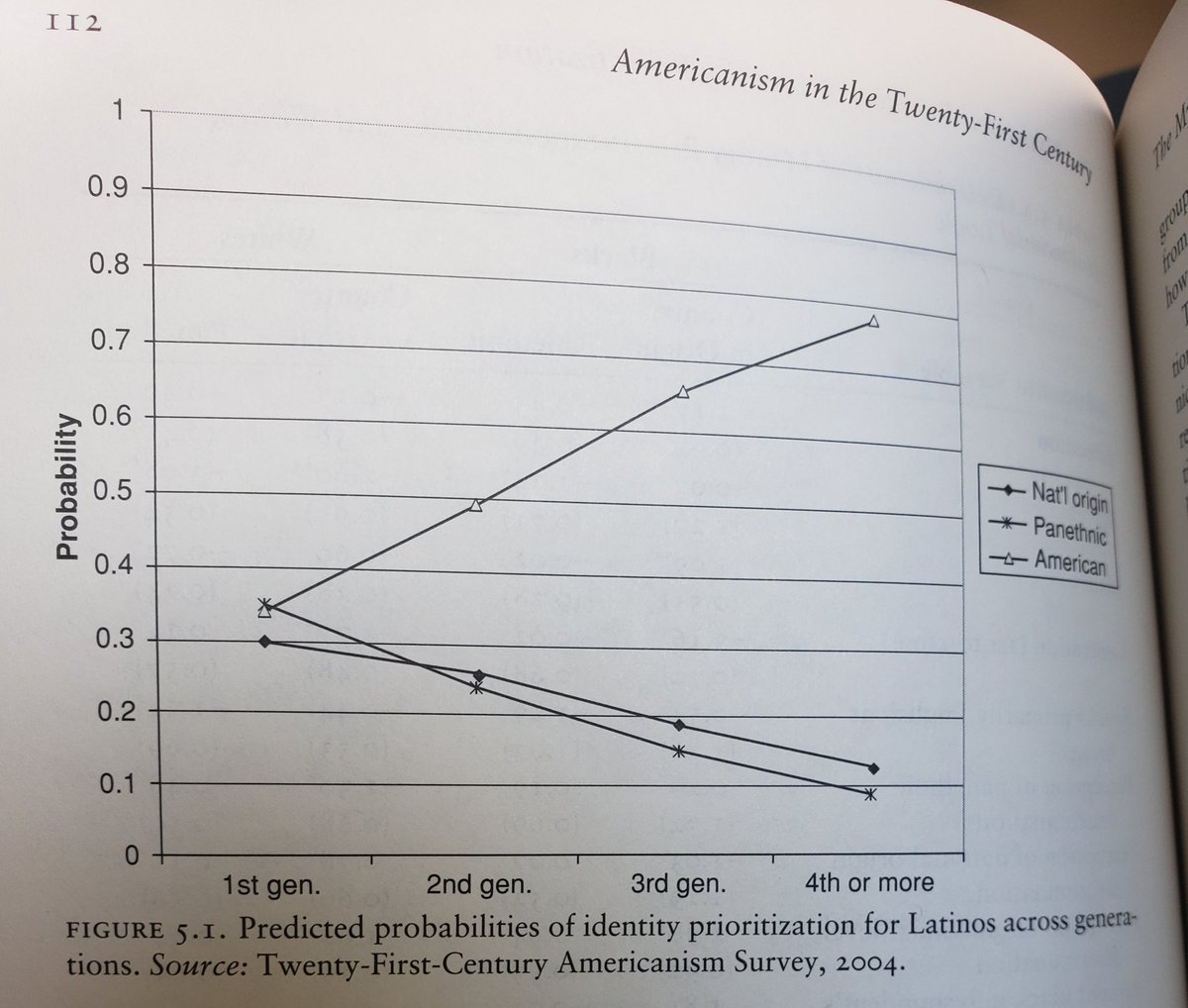
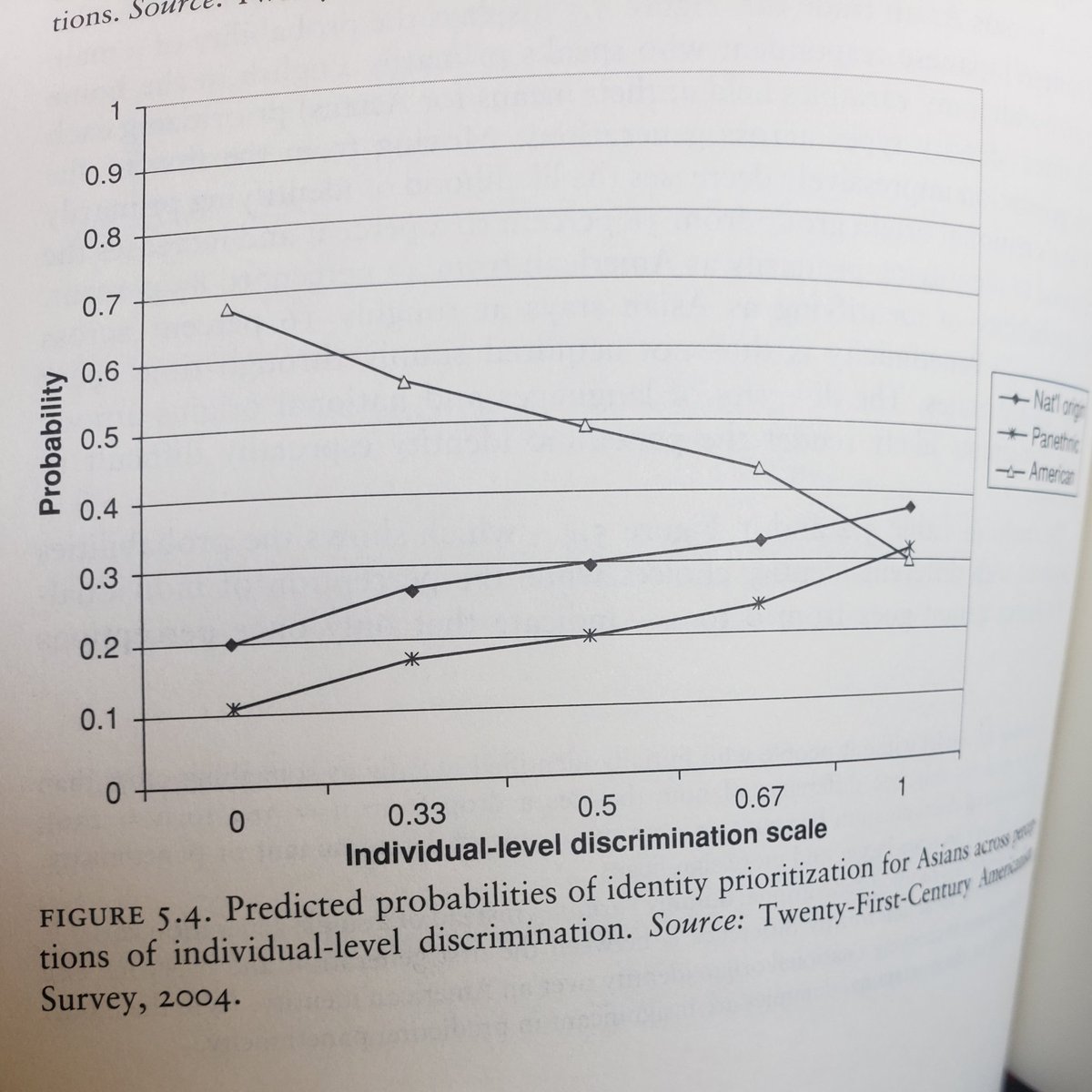
It's only INDIVIDUAL-level discrimination that correlates with feeling less American.
In other words, we need less of this crap: https://t.co/jrB8vKexwR
More from Noah Smith
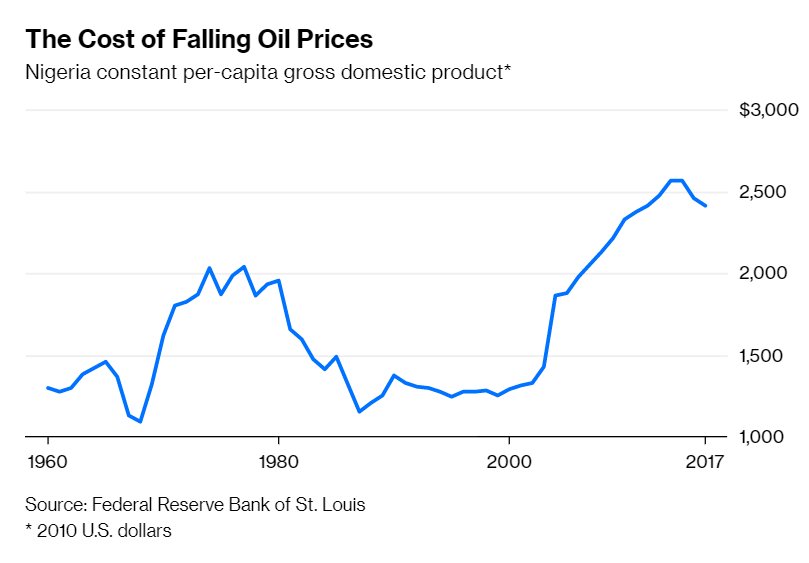


Today's @bopinion post is about how poor countries started catching up to rich ones.
It looks like decolonization just took a few decades to start
Basic econ theory says poor countries should grow faster than rich ones.
But for much of the Industrial Revolution, the opposite happened.
https://t.co/JjjVtWzz5c
Why? Probably because the first countries to discover industrial technologies used them to conquer the others!
But then colonial empires went away. And yet still, for the next 30 years or so, poor countries fell further behind rich ones.
https://t.co/hilDvv0IQV
Why??
Possible reasons:
1. Bad institutions (dictators, communism, autarkic trade regimes)
2. Civil wars
3. Lack of education
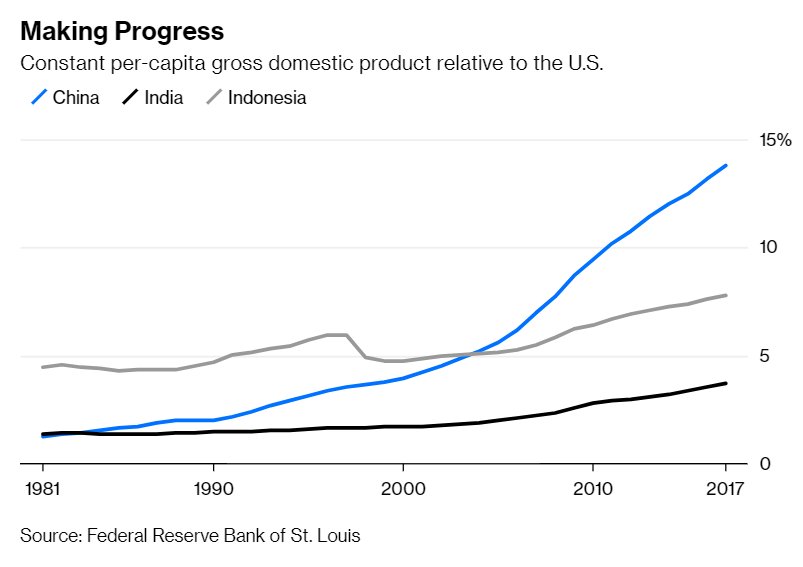
But then, starting in the 80s (for China) and the 90s (for India and Indonesia), some of the biggest poor countries got their acts together and started to catch up!
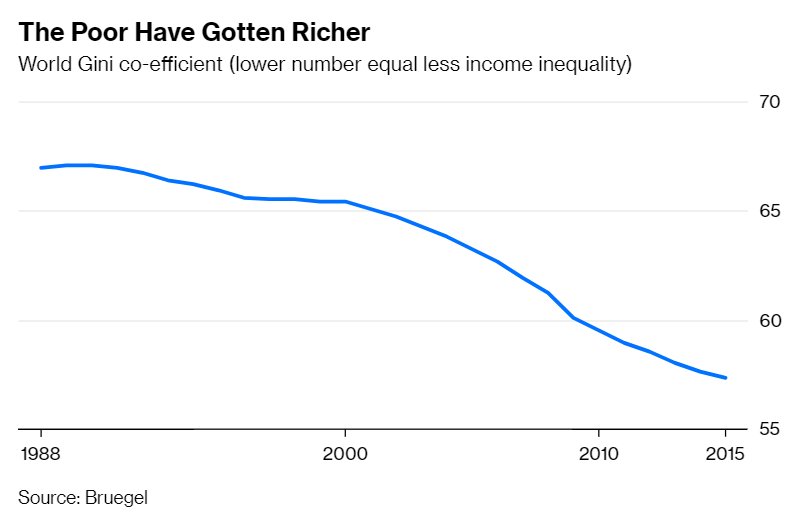
Global inequality began to fall.
It looks like decolonization just took a few decades to start
Basic econ theory says poor countries should grow faster than rich ones.
But for much of the Industrial Revolution, the opposite happened.
https://t.co/JjjVtWzz5c
Why? Probably because the first countries to discover industrial technologies used them to conquer the others!
But then colonial empires went away. And yet still, for the next 30 years or so, poor countries fell further behind rich ones.
https://t.co/hilDvv0IQV
Why??
Possible reasons:
1. Bad institutions (dictators, communism, autarkic trade regimes)
2. Civil wars
3. Lack of education
But then, starting in the 80s (for China) and the 90s (for India and Indonesia), some of the biggest poor countries got their acts together and started to catch up!
Global inequality began to fall.
1/OK, let's take a little break from Coup Twitter, and think about an economic issue:
How can we build up the wealth of the middle class?
2/The typical American has surprisingly little wealth compared to the typical resident of many other developed countries.
This is a fact that is not widely known or appreciated.
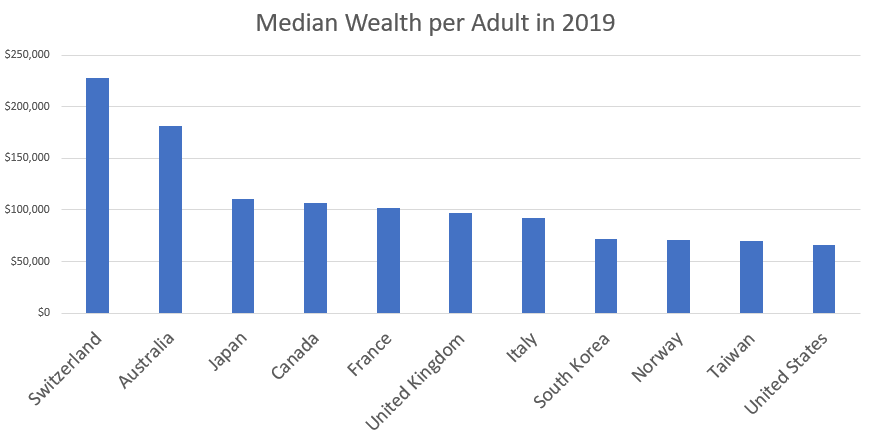
3/Now, some people argue that stuff like Social Security or social insurance programs should be included in wealth. But I chose to focus on private wealth because I think having assets you can sell whenever you want is important to
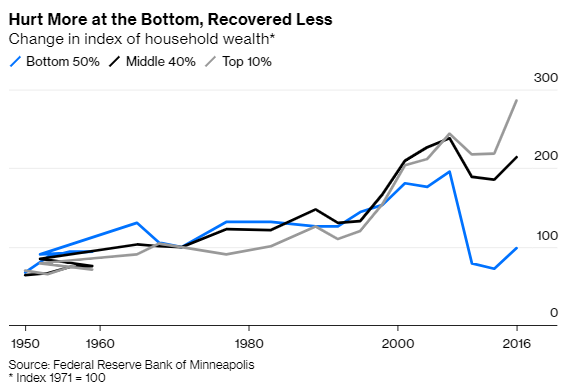
4/For many decades after World War 2, middle-class wealth in America was on a smooth upward trajectory.
Then the housing crash came, and all that changed. Suddenly the rich were still doing well but everyone else was seeing the end of their American Dream.
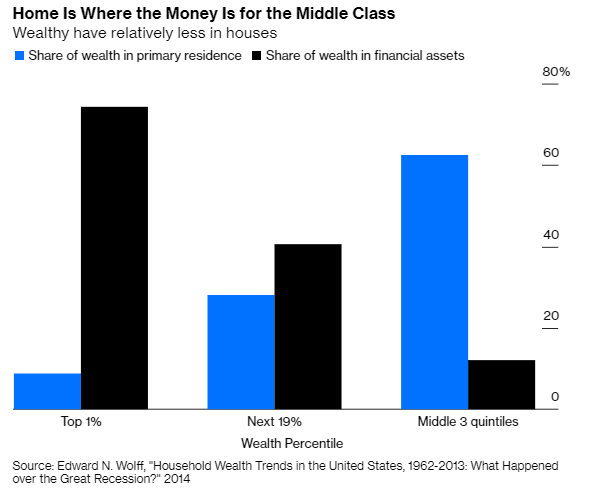
5/Why the divergence?
Because the American middle class has its wealth in houses -- specifically, in the houses they live in.
It's the rich who own stocks.
How can we build up the wealth of the middle class?
2/The typical American has surprisingly little wealth compared to the typical resident of many other developed countries.
This is a fact that is not widely known or appreciated.
3/Now, some people argue that stuff like Social Security or social insurance programs should be included in wealth. But I chose to focus on private wealth because I think having assets you can sell whenever you want is important to
Yes, these numbers don't include things like Social Security, just privately held wealth. They're not an attempt to capitalize every possible future income stream.
— Noahtogolpe \U0001f407 (@Noahpinion) January 10, 2021
4/For many decades after World War 2, middle-class wealth in America was on a smooth upward trajectory.
Then the housing crash came, and all that changed. Suddenly the rich were still doing well but everyone else was seeing the end of their American Dream.
5/Why the divergence?
Because the American middle class has its wealth in houses -- specifically, in the houses they live in.
It's the rich who own stocks.
More from All








You May Also Like



Master Thread of all my threads!
Hello!! 👋
• I have curated some of the best tweets from the best traders we know of.
• Making one master thread and will keep posting all my threads under this.
• Go through this for super learning/value totally free of cost! 😃
1. 7 FREE OPTION TRADING COURSES FOR
2. THE ABSOLUTE BEST 15 SCANNERS EXPERTS ARE USING
Got these scanners from the following accounts:
1. @Pathik_Trader
2. @sanjufunda
3. @sanstocktrader
4. @SouravSenguptaI
5. @Rishikesh_ADX
3. 12 TRADING SETUPS which experts are using.
These setups I found from the following 4 accounts:
1. @Pathik_Trader
2. @sourabhsiso19
3. @ITRADE191
4.
4. Curated tweets on HOW TO SELL STRADDLES.
Everything covered in this thread.
1. Management
2. How to initiate
3. When to exit straddles
4. Examples
5. Videos on
Hello!! 👋
• I have curated some of the best tweets from the best traders we know of.
• Making one master thread and will keep posting all my threads under this.
• Go through this for super learning/value totally free of cost! 😃
1. 7 FREE OPTION TRADING COURSES FOR
A THREAD:
— Aditya Todmal (@AdityaTodmal) November 28, 2020
7 FREE OPTION TRADING COURSES FOR BEGINNERS.
Been getting lot of dm's from people telling me they want to learn option trading and need some recommendations.
Here I'm listing the resources every beginner should go through to shorten their learning curve.
(1/10)
2. THE ABSOLUTE BEST 15 SCANNERS EXPERTS ARE USING
Got these scanners from the following accounts:
1. @Pathik_Trader
2. @sanjufunda
3. @sanstocktrader
4. @SouravSenguptaI
5. @Rishikesh_ADX
The absolute best 15 scanners which experts are using.
— Aditya Todmal (@AdityaTodmal) January 29, 2021
Got these scanners from the following accounts:
1. @Pathik_Trader
2. @sanjufunda
3. @sanstocktrader
4. @SouravSenguptaI
5. @Rishikesh_ADX
Share for the benefit of everyone.
3. 12 TRADING SETUPS which experts are using.
These setups I found from the following 4 accounts:
1. @Pathik_Trader
2. @sourabhsiso19
3. @ITRADE191
4.
12 TRADING SETUPS which experts are using.
— Aditya Todmal (@AdityaTodmal) February 7, 2021
These setups I found from the following 4 accounts:
1. @Pathik_Trader
2. @sourabhsiso19
3. @ITRADE191
4. @DillikiBiili
Share for the benefit of everyone.
4. Curated tweets on HOW TO SELL STRADDLES.
Everything covered in this thread.
1. Management
2. How to initiate
3. When to exit straddles
4. Examples
5. Videos on
Curated tweets on How to Sell Straddles
— Aditya Todmal (@AdityaTodmal) February 21, 2021
Everything covered in this thread.
1. Management
2. How to initiate
3. When to exit straddles
4. Examples
5. Videos on Straddles
Share if you find this knowledgeable for the benefit of others.