1. WIV Research groups (archived pages) for Reference
dsRNA viruses molecular biology

https://t.co/lwrQoo6ygG

2. Emerging Viruses Group

https://t.co/ND56gVGOAn
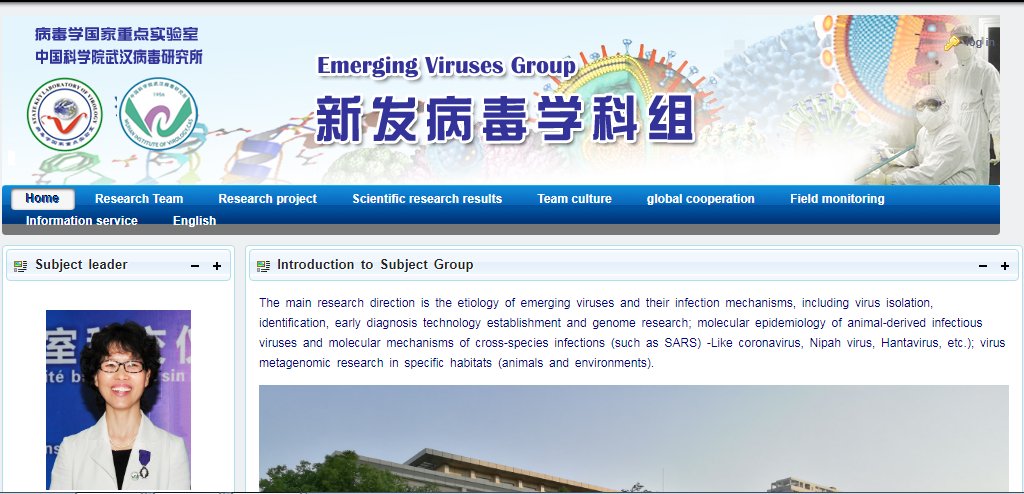
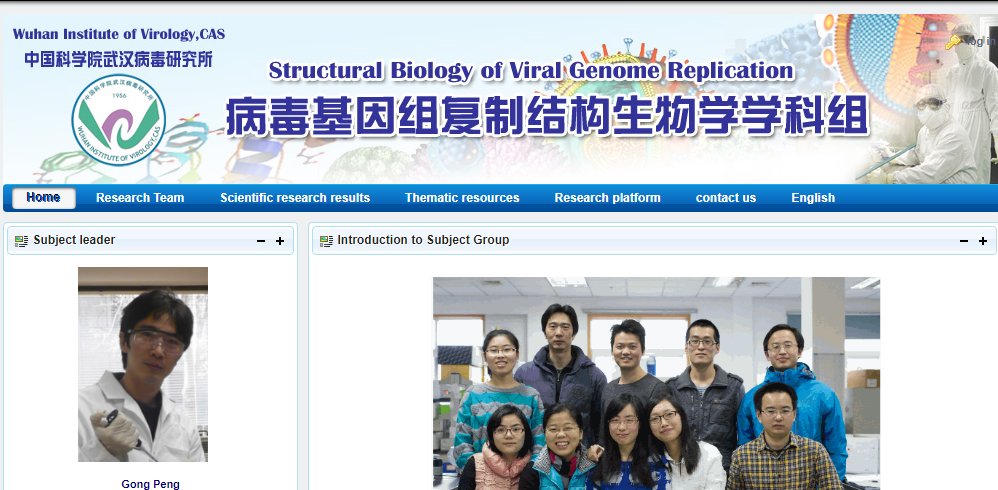
3. Structural Biology of Viral Genome Replication
https://t.co/wUqc0YIP3X
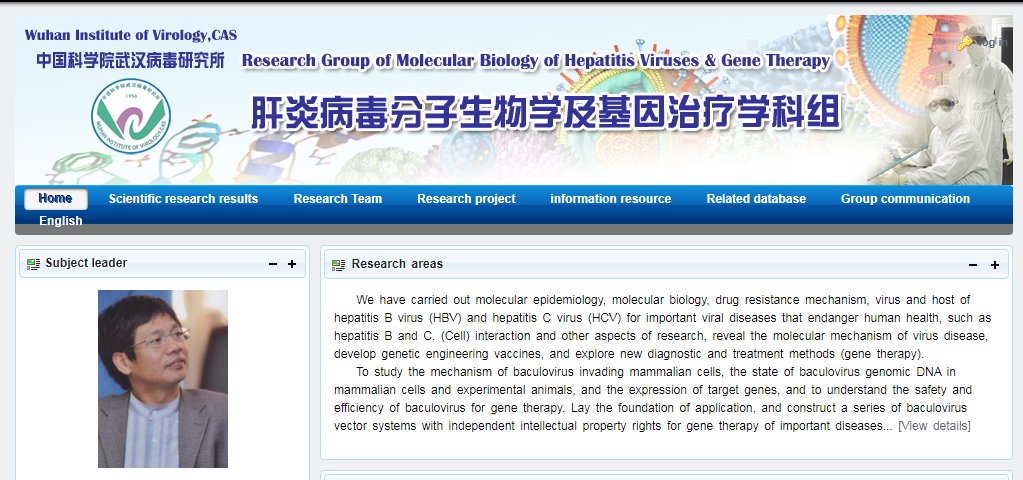
4. Molecular Biology of hepatitis Viruses & Gene Therapy
https://t.co/snBbxkhNsC
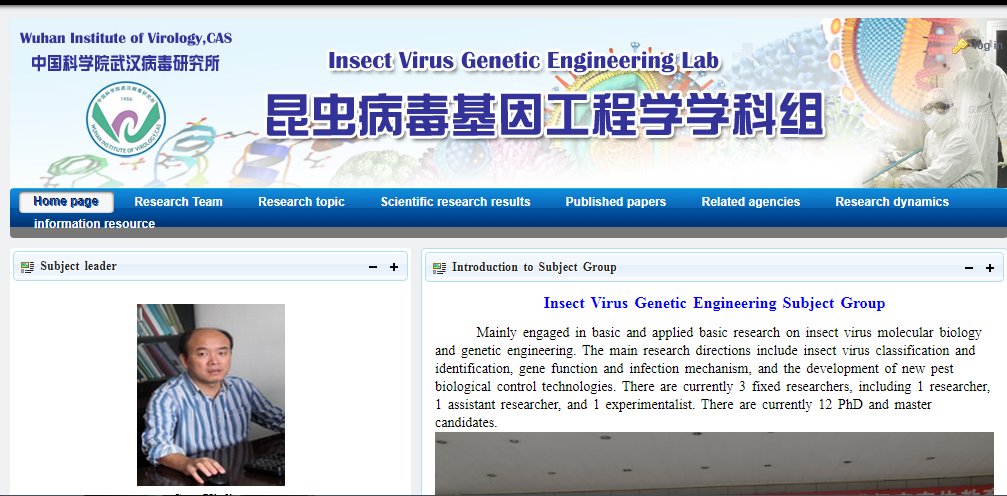
5. Insect Virus Genetic Engineering Lab
https://t.co/S68mVOA2Ob
6. HIV Molecular Epidemiology and Virology
https://t.co/ZF5xZ9g5VO
7. Molecular Immunology

https://t.co/Qo1Lo1Qkiy
8. Biological Control of Arbovirus Vectors
https://t.co/FKG95bCfDn
9. HIV Viral Biochemistry
https://t.co/xshpTe90ao
10. Laboratory of Infection and Immunity
https://t.co/O3bQWTSJdh
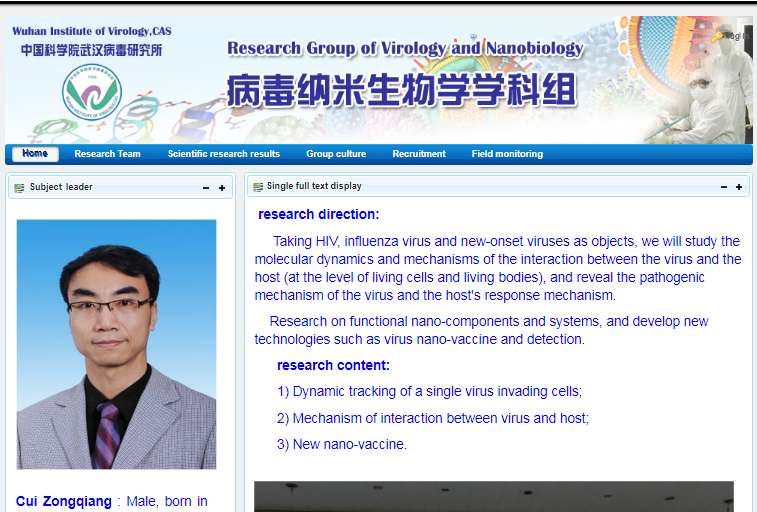
11. Virology and Nanobiology
https://t.co/fgBJsJMQfg
12. Neurovirology Research Group
https://t.co/2G7NVbDiLl
13. Lab of Diagnostic Microbiology
https://t.co/s3seStzngI
14. List of Doctoral Supervisors with links to profiles
(if you see any that are not archived, please archive them with https://t.co/mA4co7ioje or https://t.co/ix3lTqChM0 or wayback machine)
Page 1: https://t.co/mqLwUCtN9U
Page 2: https://t.co/ssW1jfRaop
15. Who is 159.226.126.127 ?
Image search and expand, all archived now
https://t.co/8iM16tIVlg
16. Who is 159.226.126.127 ?
Image search and expand, all archived now (2)
https://t.co/8iM16tIVlg
17. Brief introductions of WIV master's instructors - 1 Page
https://t.co/fUlH8jE2KH
18. Introduction of WIV Doctoral Supervisors - 1 Page
https://t.co/kuLGuzNVJG
Archived: https://t.co/HrcpXmh2RV
19. Which groups are of most interest to our investigation?
Probably Number 1 will be the Emerging Viruses Group directed by Shi Zhengli, and specifically its research aims and projects
https://t.co/pgwifkCDCW
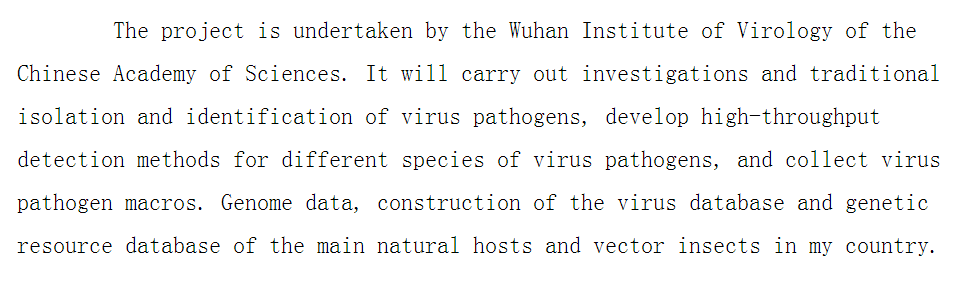
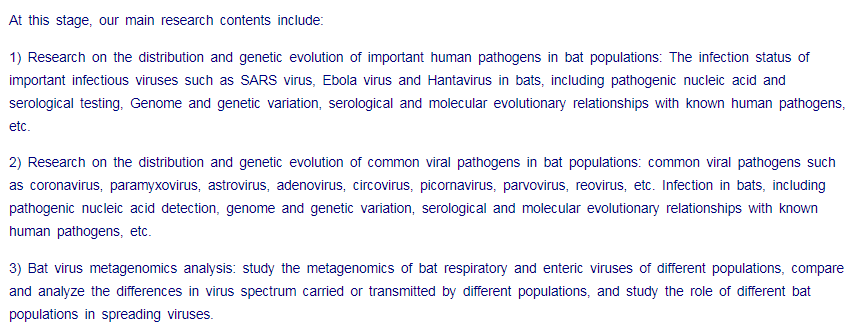
20. Research Aims 1-6
Mainly 4 and 6 below
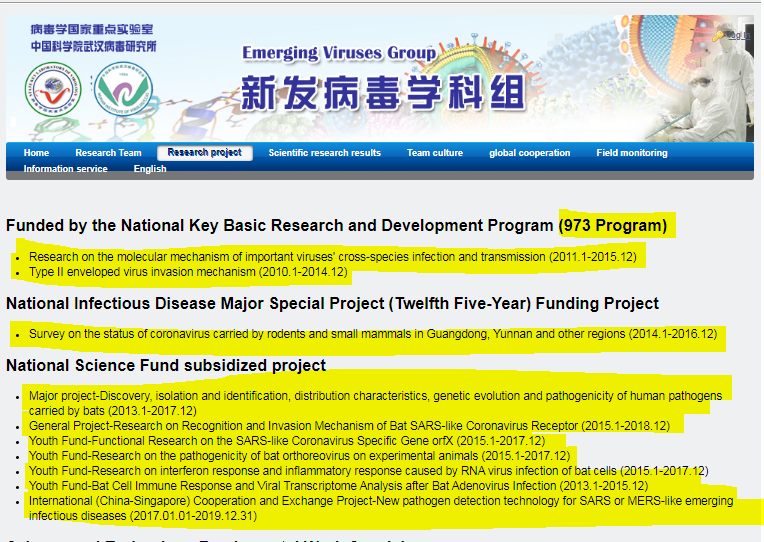
21. Research Projects, Programmes & State Funding
https://t.co/wEJOE9jmfv Tks @TheSeeker268
973 Program
Research on molecular mechanism of important viruses' cross-species infection and transmission
(2011.1-2015.12)
Type II enveloped virus invasion mechanism
(2010.1-2014.12)
22. National Infectious Disease Major Special Project
(12th 5-Year) Funding Project
Survey on the status of coronavirus carried by rodents and small mammals in Guangdong, Yunnan and other regions (2014.1-2016.12)
23. National Science Fund subsidized project
Major project-Discovery, isolation and identification, distribution characteristics, genetic evolution and pathogenicity of human pathogens carried by bats
(2013.1-2017.12)
24. General Project-Research on Recognition and Invasion Mechanism of Bat SARS-like Coronavirus Receptor (2015.1-2018.12)
Youth Fund-Functional Research on the SARS-like Coronavirus Specific Gene orfX (2015.1-2017.12)
25. Youth Fund-Research on the pathogenicity of bat orthoreovirus on experimental animals (2015.1-2017.12)
Youth Fund-Research on interferon response and inflammatory response caused by RNA virus infection of bat cells (2015.1-2017.12)
26. Youth Fund-Bat Cell Immune Response & Viral Transcriptome Analysis after Bat Adenovirus Infection (2013-2016)
International (China-Singapore) Cooperation & Exchange Project-New pathogen detection technology for SARS or MERS-like emerging infectious diseases (2017-2019.12.31)
27. Science and Technology Fundamental Work Special
Investigation of main natural hosts and vector insect virus pathogens in Yunnan (2013.6.1-2018.5.31)
Knowledge Innovation Project of the CAS
Infectious Diseases and Biosafety Network Center
(2011.1-2014.6)
28. Construction Technology of Artificial Phage-3
(2011.1-2013.12)
Project funded by China-Africa Joint Research Center of Chinese Academy of Sciences
Prevention and control of pathogenic microorganisms and epidemics in Africa
(2016.1-2018.12)
29. Papers emerging from Projects & other WIV output (2000 up to 2016)
Published papers-SCI included (47)
https://t.co/3WvyWZBlrH
Published papers-non-SCI indexed (37) Same page
https://t.co/3WvyWZBlrH
(1992 - 2014)
30. Research Team Profiles
https://t.co/kQb2sk5kft
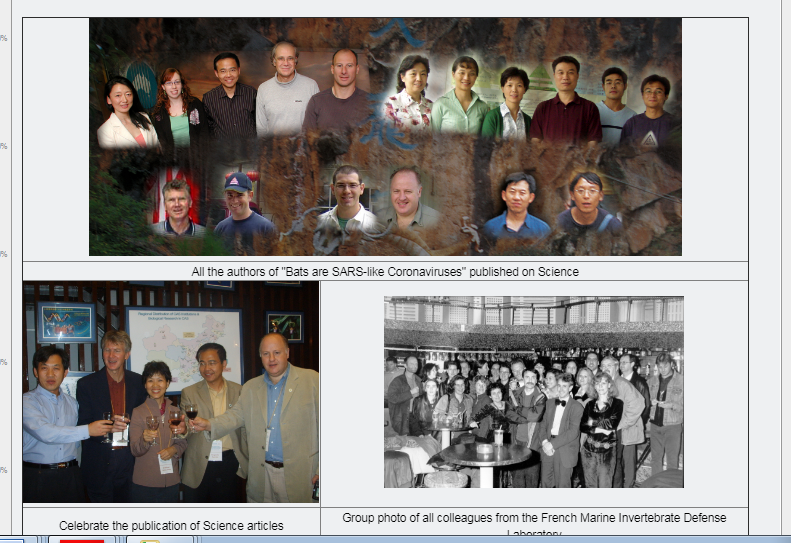
31. The Famous Field Sampling Photographs
(What is PPE)
https://t.co/FJeRzUruL1
Senior Officers
https://t.co/kQb2sk5kft
PhD Students
https://t.co/l1iYnkBPr4
Doctoral students (16 people) and masters (14)
https://t.co/9NVHby2IVo
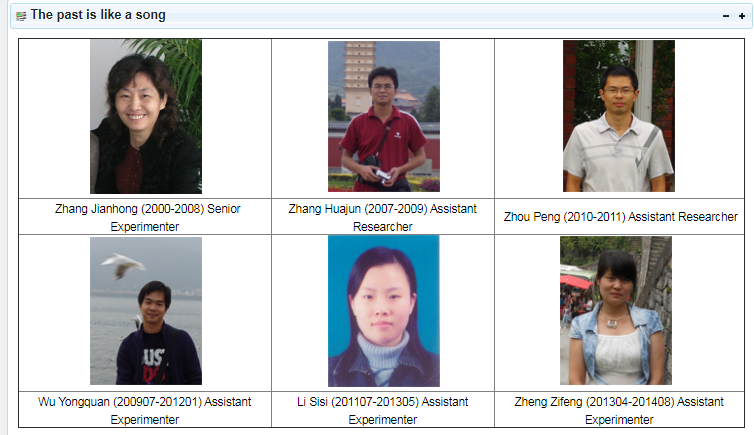
The Past is like a Song
https://t.co/bAeEqiY0Ai
32. The Lab Families
https://t.co/ujBgIoTL1u
Global Cooperation
https://t.co/w6IJIHSzRI
33. Results of their Research
https://t.co/07wwILo0py
34. Where it started?
Investigation of important natural hosts and vector insect virus pathogens in my country" launched
Central government portal https://t.co/eGoCuNbgrg at 09:07 on June 24, 2013
https://t.co/eo3aEb1J4S
35. Useful Background Article
Beginning & end of U.S. virus transformation monitoring
Alex Cui, Ph.D. US Computational Biology scientist
"The most dangerous man-made virus"
Virologists scramble to transform virus research and raise public safety concerns
https://t.co/CzY6edTj5g
36. Next Step, further research into the projects by:
@BillyBostickson @TheSeeker268 @interne41914499 Likely we are just going over well trodden ground but you never know what you may find when doing that, especially with the wisdom of hindsight.

More from Billy Bostickson 🏴👁&👁 🆓

November 3 - 9, 2019 -Wuhan Institute of Virology
International Training Course on Biosafety Laboratory Management and Technology
1. Daniel Feakes, head of UN Biological Weapons Convention implementation support agency
2. René Courcol, quality control system expert, France's BSL


List of Lecturers with short bios at
November 3 - 9, WIV Training Course:
https://t.co/Bsd9yO40JP
YUAN Zhiming Professor, Wuhan Institute of Virology, CAS (Deputy Director)
SONG Donglin, Professor, Wuhan Institute of Virology, CAS ( Deputy Director of Wuhan BSL-4 Laboratory.)

Dr. TONG Xiao Senior Engineer at WIV (Molecular Virology & (HIV) infection, mechanical & vaccine immunology) On-site Manager & Chief engineer for WIV BSL-4 Lab construction, maintenance & biosafety equipment R&D.

Zhengli Shi, Director of WIV Center for Emerging Infectious Diseases, now in charge of scientific activity in BSL3 & BSL4. Viral pathogen discovery through sequencing techniques, wildlife-borne viral pathogens, particularly bat-borne viruses since 2004.

DENG Fei, Principle Investigator in Research Group on Viruses Resources & Biotechnology in WIV, also Director of Microorganisms & Viruses Resource Center.
Graduate of ECUST, went to Great Lakes Forestry Center, Canada in 2001 & Wageningen University, NL to study baculovirus.
@jimmy_wales Thanks for replying!
1/. I will make a thread here with some details so you can see for yourself how a small clique of pro Chinese gatekeeping editors and admins have bullied editors, throttled dissent and gamed the system to impose their POV.

2/. I am a supporter of


3/. This is what I ended up feeling about WP after


4/. Some disturbing


5./ Some members of the gatekeeping
1. Some useful, albeit not fully developed, critiques of:

“The Origins of SARS-CoV-2: A Critical Review"

https://t.co/C9TyRyqHUr

have just been published here:
https://t.co/qCmzGCzRxn
by members of DRASTIC & others
@angoffinet @BahulikarRahul @MonaRahalkar @gdemaneuf

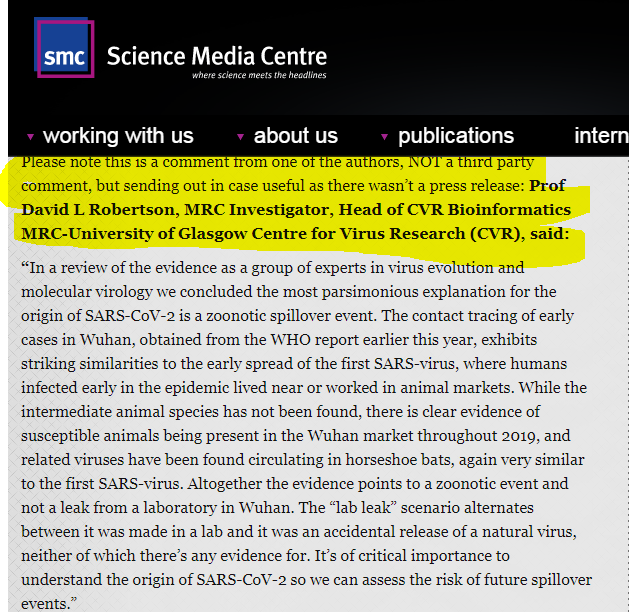
2. A refreshing contrast to the so-called "expert reactions" found here, including from one of the authors of the review (Prof David Robertson)!

"expert reaction to a preprint reviewing the evidence on the origins of SARS-CoV-2"

https://t.co/6kG6rstweP


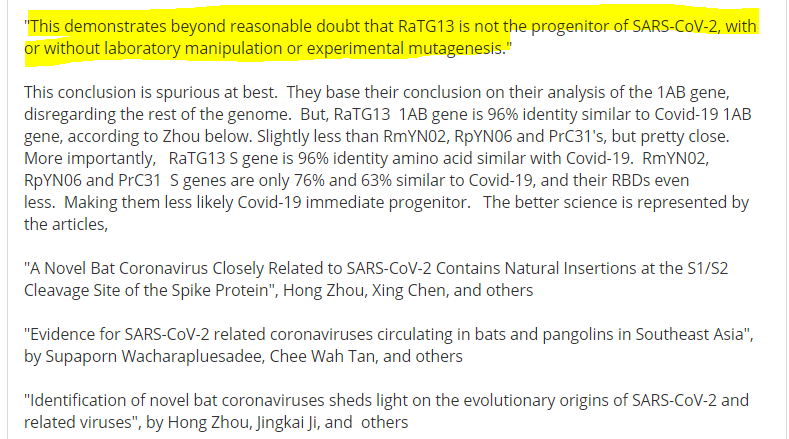
3. Peter Gutierrez points out in his response that 4 of the authors of “The Origins of SARS-CoV-2: A Critical Review”, also wrote “Proximal Origin of SARS-COV-2”.

His critique focuses on:

1. RaTG13

2. Enhanced adaptation to the human host

https://t.co/eW8b2iK5xe


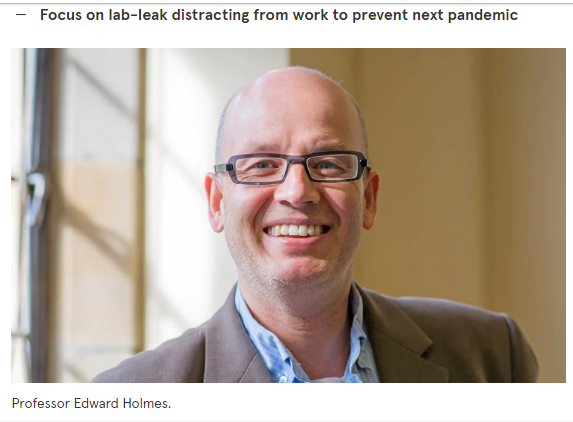
4. As to be expected, Sydney University and its iconic virologist, Eddie Holmes, who is "not available for interview", are crowing over this biased review
https://t.co/xrjpN1NxpO


This review contains elementary errors as exposed here:
1. https://t.co/YJ50huifly
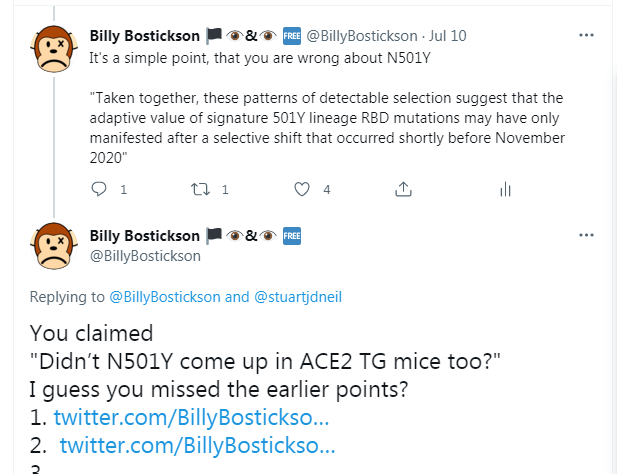
one of the authors (Stuart Neil) then claimed
"Didn’t N501Y come up in ACE2 TG mice too?
https://t.co/HscNSEKdrZ
1/10 What's all this then?
Biotech or biohazard?
A proposed federal lab in Butner would study the world's deadliest diseases
https://t.co/krnmueAd80
is it being built there or elsewhere, at Kansas University?


2/10 Shades of Plum Island?
New Proposal:
https://t.co/Lv3FgBgyas
GAO reports on security and safety lapses at Plum Island Animal Disease Research Center
Plum Island 1: https://t.co/pXSHgg1KKN
Plum Island 2:
https://t.co/O9oS0WXYOz


3/10 National Bio and Agro-Defense Facility
By memo dated December 4, 2008, the Department of Homeland Security named the Kansas site as the preferred location for the NBAF. On January 16, 2009, the record of decision was published in the Federal

4/10 Lucky ole Kansas!
The $1.25 billion facility is a biosafety level-4 laboratory and will replace the aging Plum Island Animal Disease Center.
NBAF is expected to be operational by 2022-2023.
Manhattan, Kansas, was selected as the location for NBAF.
https://t.co/kiokkFsT6v


5/10 The facility continues forward - Apr 19, 2020
https://t.co/JlstInKIRS
https://t.co/DtbLD9Tvxb
The 500,000 square foot building will have a $3.5 billion impact on the Kansas economy and many lab

More from All

You May Also Like

"I lied about my basic beliefs in order to keep a prestigious job. Now that it will be zero-cost to me, I have a few things to say."


We know that elite institutions like the one Flier was in (partial) charge of rely on irrelevant status markers like private school education, whiteness, legacy, and ability to charm an old white guy at an interview.

Harvard's discriminatory policies are becoming increasingly well known, across the political spectrum (see, e.g., the recent lawsuit on discrimination against East Asian applications.)

It's refreshing to hear a senior administrator admits to personally opposing policies that attempt to remedy these basic flaws. These are flaws that harm his institution's ability to do cutting-edge research and to serve the public.

Harvard is being eclipsed by institutions that have different ideas about how to run a 21st Century institution. Stanford, for one; the UC system; the "public Ivys".