AI Job Interviews - another good example of bias in ML πŸ€¦β€β™‚οΈ

Two journalists tested some AI tools for assessing job candidates. Even when the candidate read a Wiki article in German instead of answering questions in English, the AI systems gave them good scores πŸ€·β€β™‚οΈ

Let's unpack πŸ‘‡

The Setup πŸ”¬

The journalists created a fake job posting on two AI interview platforms. They specified the traits of the ideal candidate and provided the questions that need to be answered during the interview.

Then they started experimenting... πŸ‘‡
The Positive Test βœ…

One of them did a fake interview giving all the right answers and predictably got very high scores - 8.5 out of 9 πŸ‘

Then she tried something different... πŸ‘‡
The Negative Test ❌

In a second interview, instead of answering the questions in English, she just read the article on psychometrics from the German Wikipedia 😁

One system gave her a score of 6 out of 9, while the other determined she is a 73% match for the job.

Oops... πŸ‘‡
What happened? πŸ”

Interestingly, one of the systems generated a transcript which was obviously meaningless.

This means that the machine learning model behind the tool likely captured nuances of the intonation of the speaker instead of the meaning of the actual words.

πŸ‘‡
Bias βš–οΈ

These tools are biased - they incorrectly put more weight on the intonation instead of the actual meaning of what is being said.

This is shown when one of the components is artificially removed - in this case, the meaning (German instead of English).

More examples πŸ‘‡
Bias again βš–οΈ

Another AI interview tool was reported to give candidates different ratings when they used different backgrounds or accessories during the interviews.

Why does this happen? πŸ‘‡
The Dataset πŸ’½

One likely reason is the dataset used to train the machine learning models. It may not contain enough data for the model to correctly learn to discriminate important features. It overfits on some non-essential features, like the background.

πŸ‘‡
Black-Box Models ⬛

Another common problem is the use of black-box models where it is difficult to interpret why the algorithm makes a certain decision (for example in the case of neural networks).

More work is needed to inspect what the model is paying attention to.

πŸ‘‡
Lack of Testing πŸ§ͺ

Furthermore, it seems that the systems weren't tested in scenarios like this one and weren't prepared to meaningfully handle these cases. The question is then, what other cases will not be handled correctly?

πŸ‘‡
Bias in Human Interviews πŸ‘€

Interestingly, human interviews are also subject to many biases and this is a known problem. The hope is that AI systems will help reduce those biases, but one needs to be careful to not just replace them with different ones.
More Details πŸ—’οΈ

For more details, you can read the full article by @HilkeSchellmann and @sheridanlwall on MIT Technology Review here:

https://t.co/uHAlrA2vKw
I regularly post similar threads on machine learning, computer vision, and self-driving.

Follow me @haltakov for more!
Yes, this is the exact goal of most of these AI tools - to provide another data point for interviewers to help them make a better decision.

https://t.co/Vy73ydcp61
Here is a very detailed article about the influence of different backgrounds and accessories on the scores

https://t.co/7hBveNTpHb https://t.co/gZkJ6zol9W

More from Vladimir Haltakov

Let's talk about a common problem in ML - imbalanced data βš–οΈ

Imagine we want to detect all pixels belonging to a traffic light from a self-driving car's camera. We train a model with 99.88% performance. Pretty cool, right?

Actually, this model is useless ❌

Let me explain πŸ‘‡


The problem is the data is severely imbalanced - the ratio between traffic light pixels and background pixels is 800:1.

If we don't take any measures, our model will learn to classify each pixel as background giving us 99.88% accuracy. But it's useless!

What can we do? πŸ‘‡

Let me tell you about 3 ways of dealing with imbalanced data:

β–ͺ️ Choose the right evaluation metric
β–ͺ️ Undersampling your dataset
β–ͺ️ Oversampling your dataset
β–ͺ️ Adapting the loss

Let's dive in πŸ‘‡

1️⃣ Evaluation metrics

Looking at the overall accuracy is a very bad idea when dealing with imbalanced data. There are other measures that are much better suited:
β–ͺ️ Precision
β–ͺ️ Recall
β–ͺ️ F1 score

I wrote a whole thread on


2️⃣ Undersampling

The idea is to throw away samples of the overrepresented classes.

One way to do this is to randomly throw away samples. However, ideally, we want to make sure we are only throwing away samples that look similar.

Here is a strategy to achieve that πŸ‘‡
Machine Learning Paper Reviews πŸ”ŽπŸ“œ

Check out this thread for short reviews of some interesting Machine Learning and Computer Vision papers. I explain the basic ideas and main takeaways of each paper in a Twitter thread.

πŸ‘‡ I'm adding new reviews all the time! πŸ‘‡

AlexNet - the paper that started the deep learning revolution in Computer Vision!


DenseNet - reducing the size and complexity of CNNs by adding dense connections between layers.


Playing for data - generating synthetic GT from a video game (GTA V) and using it to improving semantic segmentation models.


Transformers for image recognition - a new paper with the potential to replace convolutions with a transformer.
Machine Learning in the Real World 🧠 πŸ€–

ML for real-world applications is much more than designing fancy networks and fine-tuning parameters.

In fact, you will spend most of your time curating a good dataset.

Let's go through the process together πŸ‘‡

#RepostFriday


Collect Data πŸ’½

We need to represent the real world as accurately as possible. If some situations are underrepresented we are introducing Sampling Bias.

Sampling Bias is nasty because we'll have high test accuracy, but our model will perform badly when deployed.

πŸ‘‡

Traffic Lights 🚦

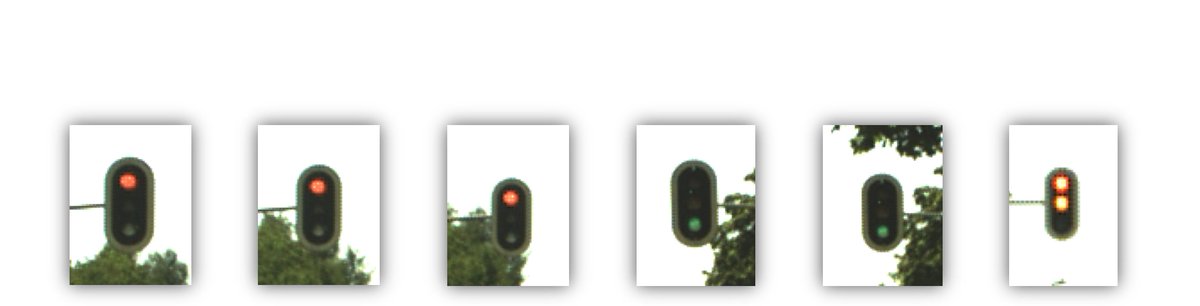
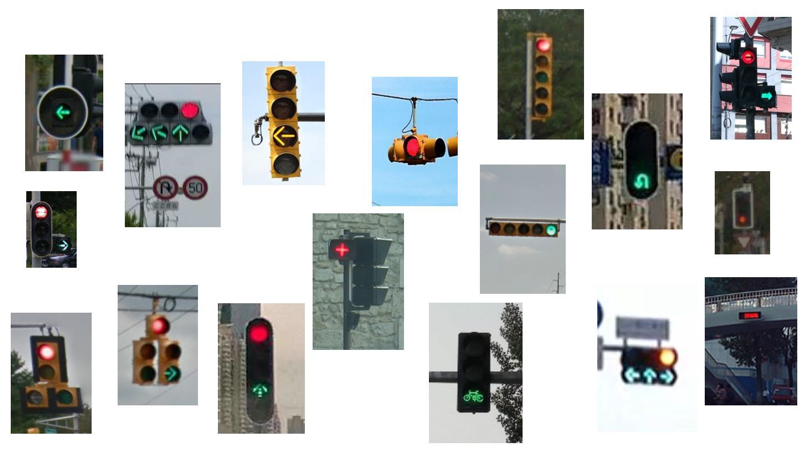
Let's build a model to recognize traffic lights for a self-driving car. We need to collect data for different:

β–ͺ️ Lighting conditions
β–ͺ️ Weather conditions
β–ͺ️ Distances and viewpoints
β–ͺ️ Strange variants

And if we sample only 🚦 we won't detect πŸš₯ πŸ€·β€β™‚οΈ

πŸ‘‡


Data Cleaning 🧹

Now we need to clean all corrupted and irrelevant samples. We need to remove:

β–ͺ️ Overexposed or underexposed images
β–ͺ️ Images in irrelevant situations
β–ͺ️ Faulty images

Leaving them in the dataset will hurt our model's performance!

πŸ‘‡


Preprocess Data βš™οΈ

Most ML models like their data nicely normalized and properly scaled. Bad normalization can also lead to worse performance (I have a nice story for another time...)

β–ͺ️ Crop and resize all images
β–ͺ️ Normalize all values (usually 0 mean and 1 std. dev.)

πŸ‘‡

More from All

You May Also Like

First thread of the year because I have time during MCO. As requested, a thread on the gods and spirits of Malay folk religion. Some are indigenous, some are of Indian origin, some have Islamic


Before I begin, it might be worth explaining the Malay conception of the spirit world. At its deepest level, Malay religious belief is animist. All living beings and even certain objects are said to have a soul. Natural phenomena are either controlled by or personified as spirits

Although these beings had to be respected, not all of them were powerful enough to be considered gods. Offerings would be made to the spirits that had greater influence on human life. Spells and incantations would invoke their


Two known examples of such elemental spirits that had god-like status are Raja Angin (king of the wind) and Mambang Tali Arus (spirit of river currents). There were undoubtedly many more which have been lost to time

Contact with ancient India brought the influence of Hinduism and Buddhism to SEA. What we now call Hinduism similarly developed in India out of native animism and the more formal Vedic tradition. This can be seen in the multitude of sacred animals and location-specific Hindu gods