Let's talk about a common problem in ML - imbalanced data ⚖️

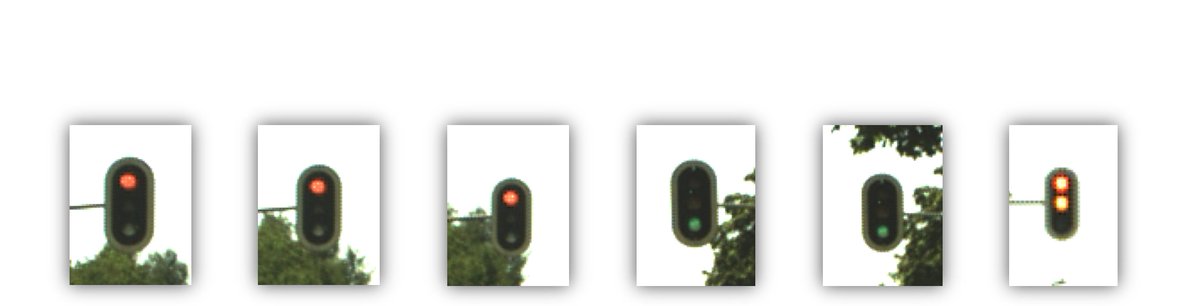
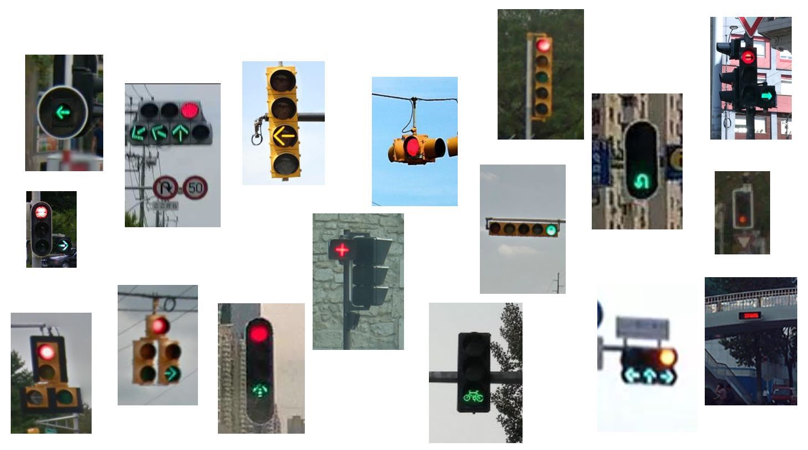
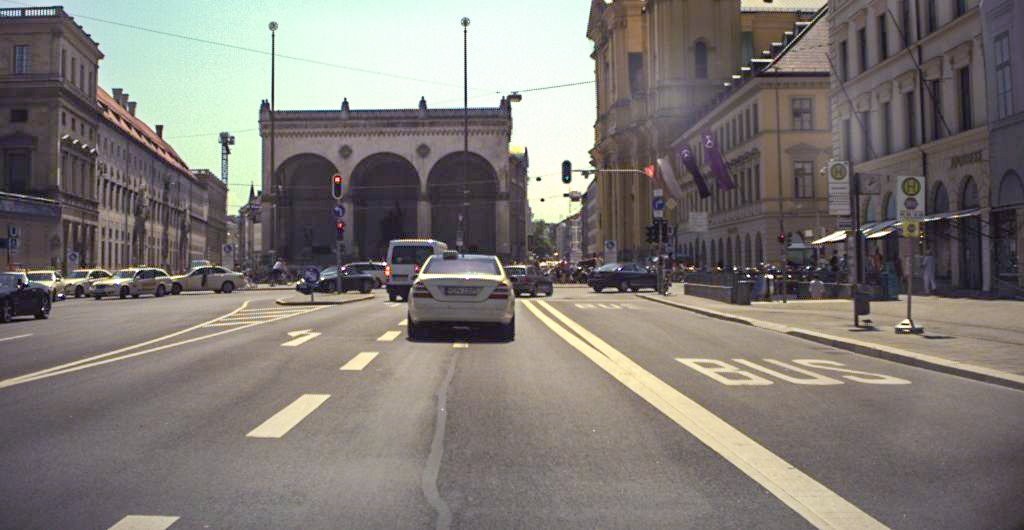
Imagine we want to detect all pixels belonging to a traffic light from a self-driving car's camera. We train a model with 99.88% performance. Pretty cool, right?

Actually, this model is useless ❌

Let me explain 👇

The problem is the data is severely imbalanced - the ratio between traffic light pixels and background pixels is 800:1.

If we don't take any measures, our model will learn to classify each pixel as background giving us 99.88% accuracy. But it's useless!

What can we do? 👇
Let me tell you about 3 ways of dealing with imbalanced data:

▪️ Choose the right evaluation metric
▪️ Undersampling your dataset
▪️ Oversampling your dataset
▪️ Adapting the loss

Let's dive in 👇
1️⃣ Evaluation metrics

Looking at the overall accuracy is a very bad idea when dealing with imbalanced data. There are other measures that are much better suited:
▪️ Precision
▪️ Recall
▪️ F1 score

I wrote a whole thread on that

https://t.co/MORy3Wehlu
2️⃣ Undersampling

The idea is to throw away samples of the overrepresented classes.

One way to do this is to randomly throw away samples. However, ideally, we want to make sure we are only throwing away samples that look similar.

Here is a strategy to achieve that 👇
Clever Undersampling

▪️ Compute image features for each sample using a pre-trained CNN
▪️ Cluster images by visual appearance using k-means, DBSCAN etc.
▪️ Remove similar samples from the clusters (check out for example the Near-Miss or the Tomek Links strategies)

👇
3️⃣ Oversampling

The idea here is to generate new samples from underrepresented classes. The easiest way to do this is of course to repeat the samples. However, we are not gaining any new information with this.

Some better strategies 👇
Data Augmentation

Create new samples by modifying the existing ones. You can apply many different transformations like for example:

▪️ Rotation
▪️ Flipping
▪️ Zooming
▪️ Skewing
▪️ Color changing

We can do some even more advanced stuff 👇
SMOTE

The idea is to create new samples by combining two existing ones.

This technique is more common when working with tabular data, but can be used for images as well. For that, we can combine the images in feature space and reconstruct them using an autoencoder.
Synthetic Data

Another option is to generate synthetic data to add to our dataset. This can be done either using a GAN or using a realistic simulation to render new images.

There are even companies that specialize in this, like https://t.co/nOGdc0cNBb (not affiliated)

👇
4️⃣ Adapting the loss function

Finally, an easy way to improve the balance is directly in your loss function. We can specify that samples of the underrepresented class to have more weight and contribute more to the loss function.

Here is an example of how to do it in the code.
So, let's recap the main ideas when dealing with imbalanced data:

▪️ Make sure you are using the right evaluation metric
▪️ Use undersampling and oversampling techniques to improve your dataset
▪️ Use class weights in your loss function
This week I'm reposting some of my best threads from the past months, so I can focus on creating my machine learning course.

Next week I'm back with some new content on machine learning and web3, so make sure you follow me @haltakov.

More from Vladimir Haltakov

Machine Learning Paper Reviews 🔎📜

Check out this thread for short reviews of some interesting Machine Learning and Computer Vision papers. I explain the basic ideas and main takeaways of each paper in a Twitter thread.

👇 I'm adding new reviews all the time! 👇

AlexNet - the paper that started the deep learning revolution in Computer Vision!


DenseNet - reducing the size and complexity of CNNs by adding dense connections between layers.


Playing for data - generating synthetic GT from a video game (GTA V) and using it to improving semantic segmentation models.


Transformers for image recognition - a new paper with the potential to replace convolutions with a transformer.

More from All

The best morning routine?

Starts the night before.

9 evening habits that make all the difference:

1. Write down tomorrow's 3:3:3 plan

• 3 hours on your most important project
• 3 shorter tasks
• 3 maintenance activities

Defining a "productive day" is crucial.

Or else you'll never be at peace (even with excellent output).

Learn more


2. End the workday with a shutdown ritual

Create a short shutdown ritual (hat-tip to Cal Newport). Close your laptop, plug in the charger, spend 2 minutes tidying your desk. Then say, "shutdown."

Separating your life and work is key.

3. Journal 1 beautiful life moment

Delicious tacos, presentation you crushed, a moment of inner peace. Write it down.

Gratitude programs a mindset of abundance.

4. Lay out clothes

Get exercise clothes ready for tomorrow. Upon waking up, jump rope for 2 mins. It will activate your mind + body.

You May Also Like