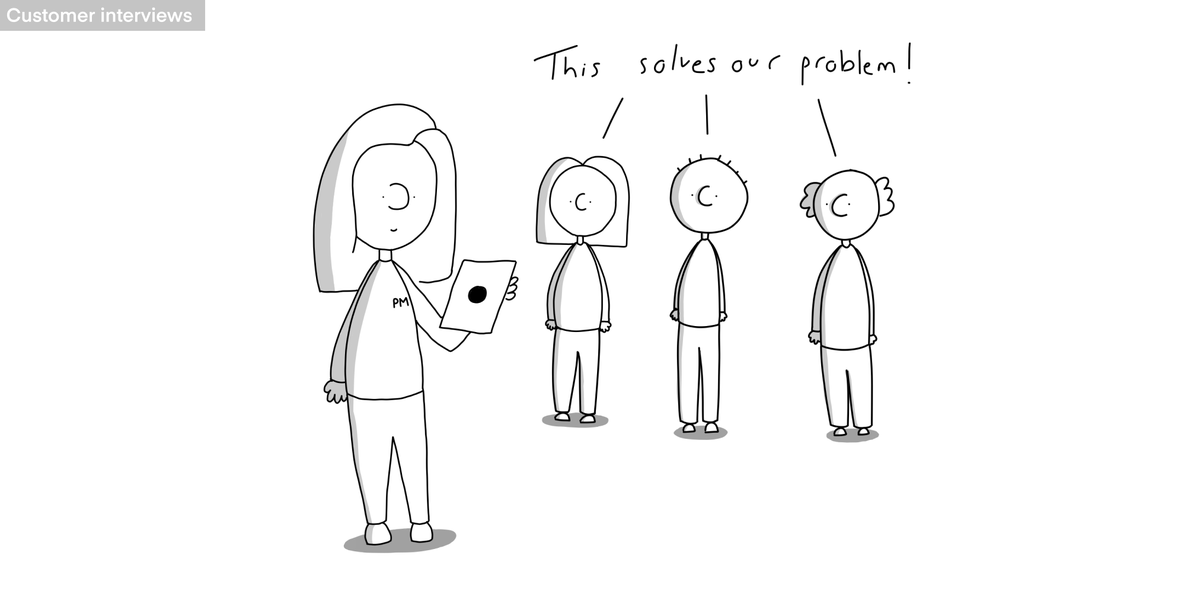
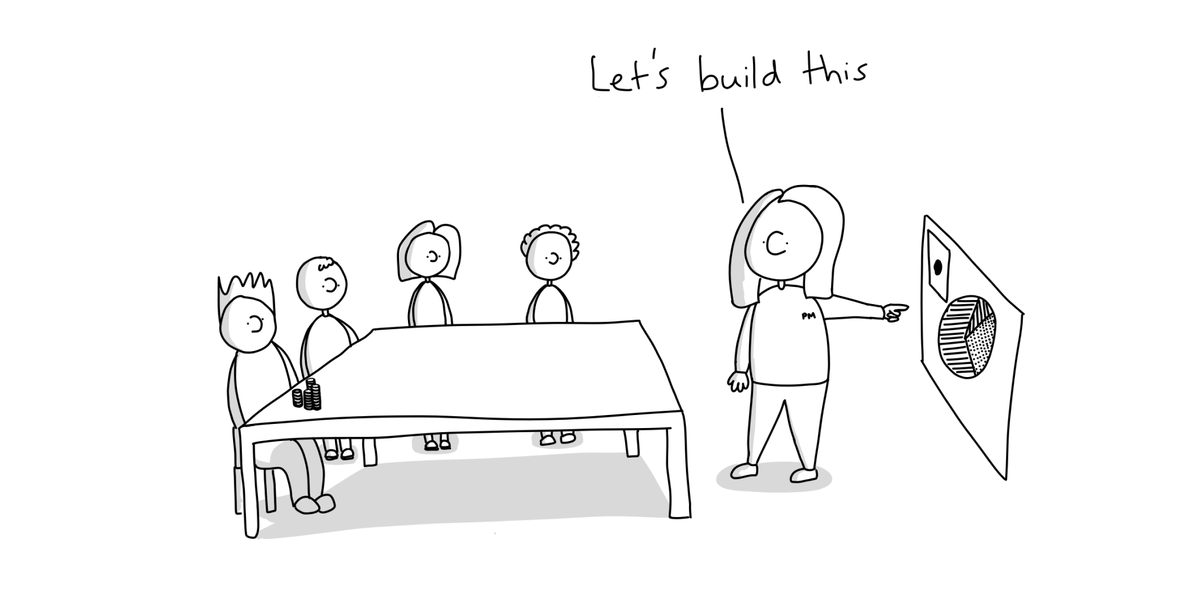
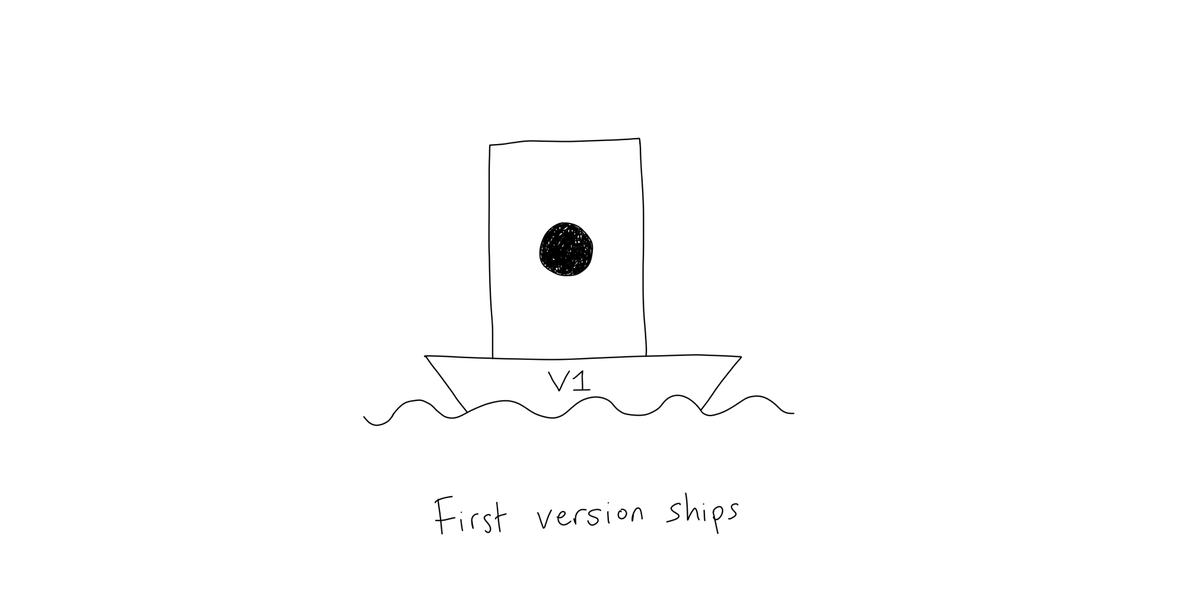
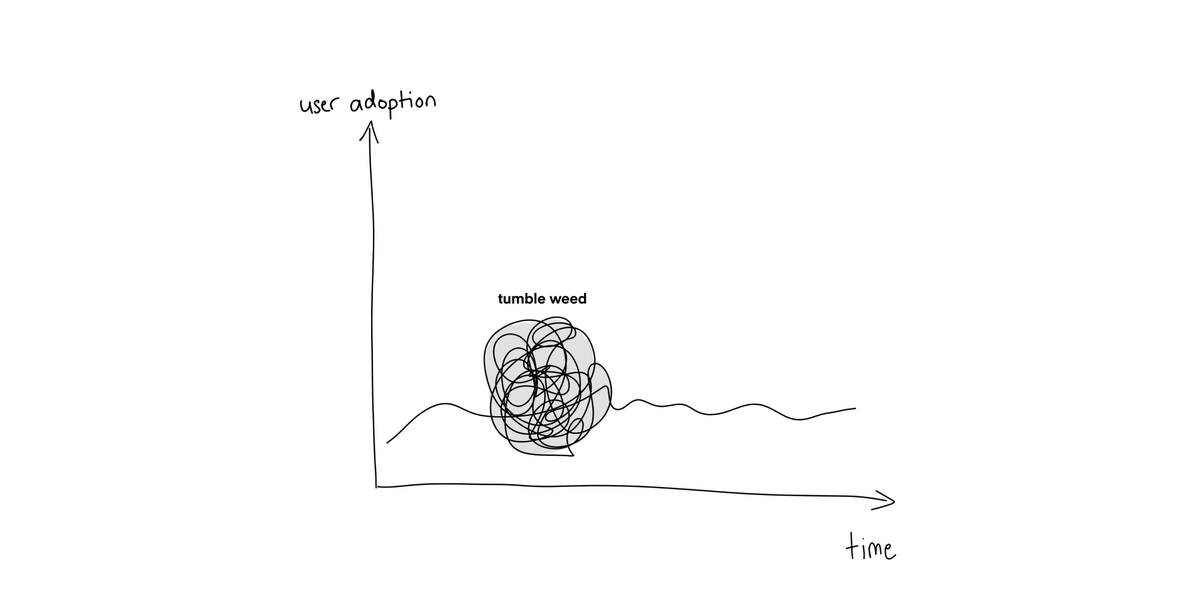
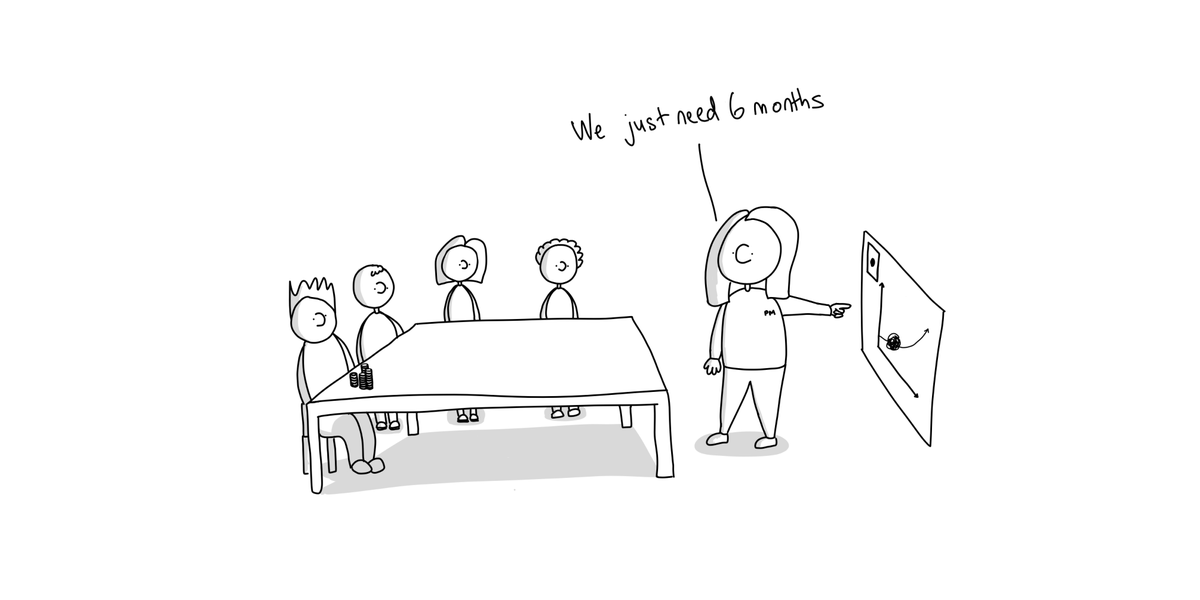
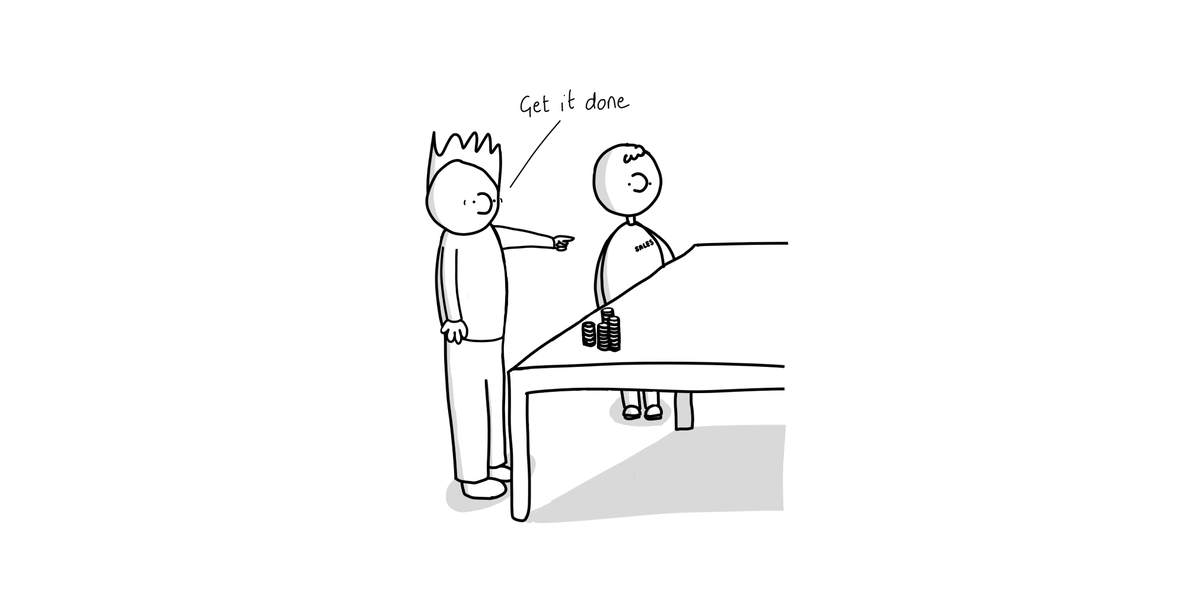
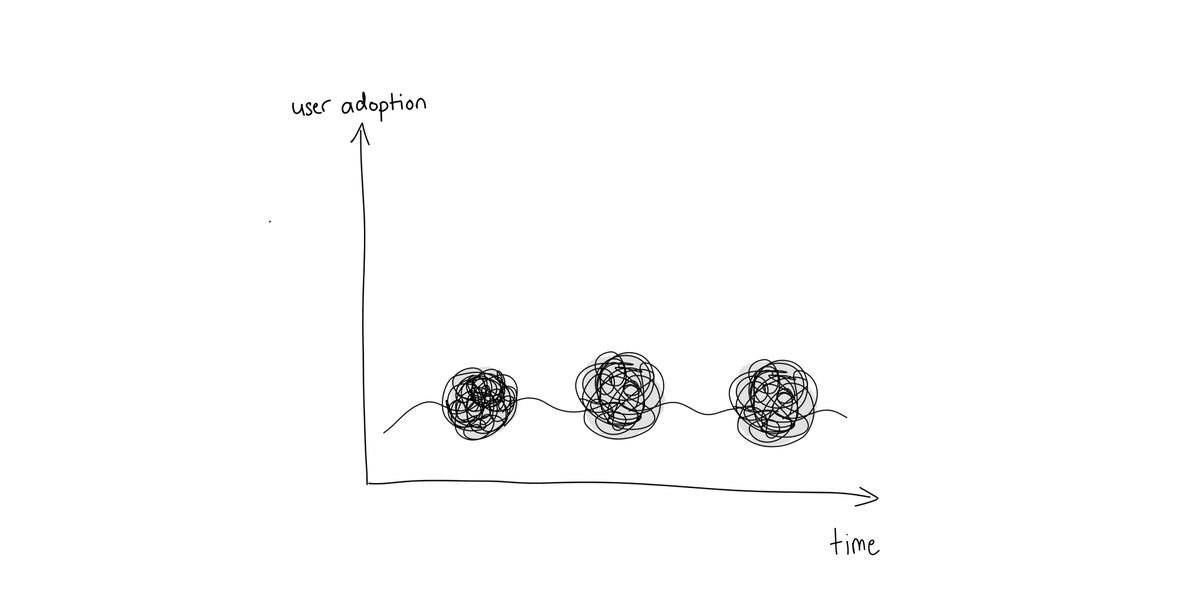
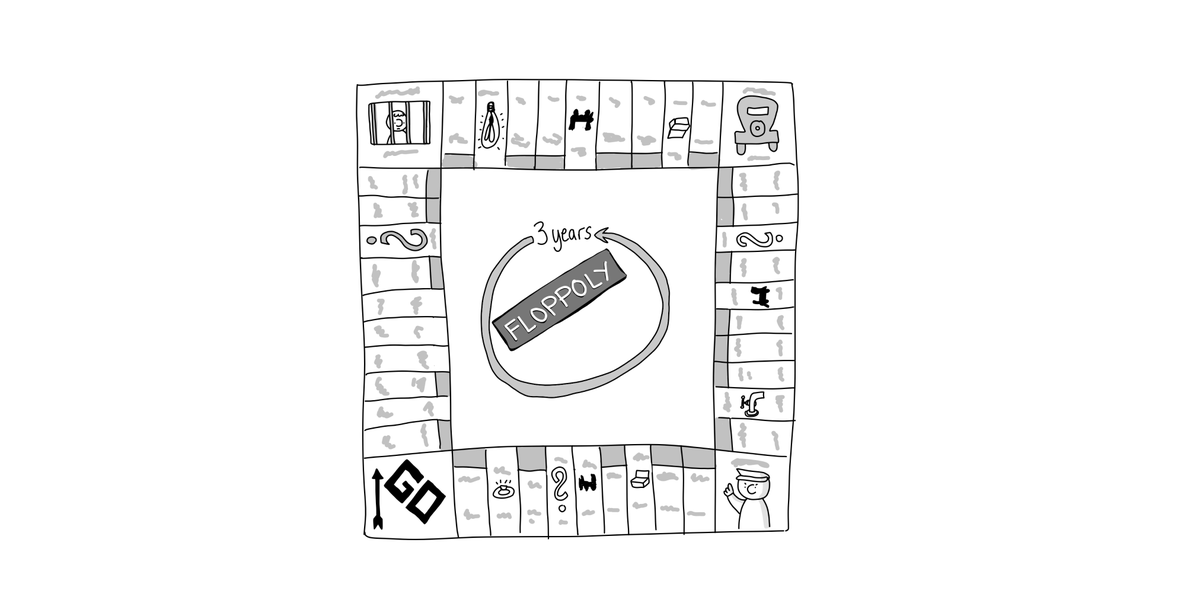
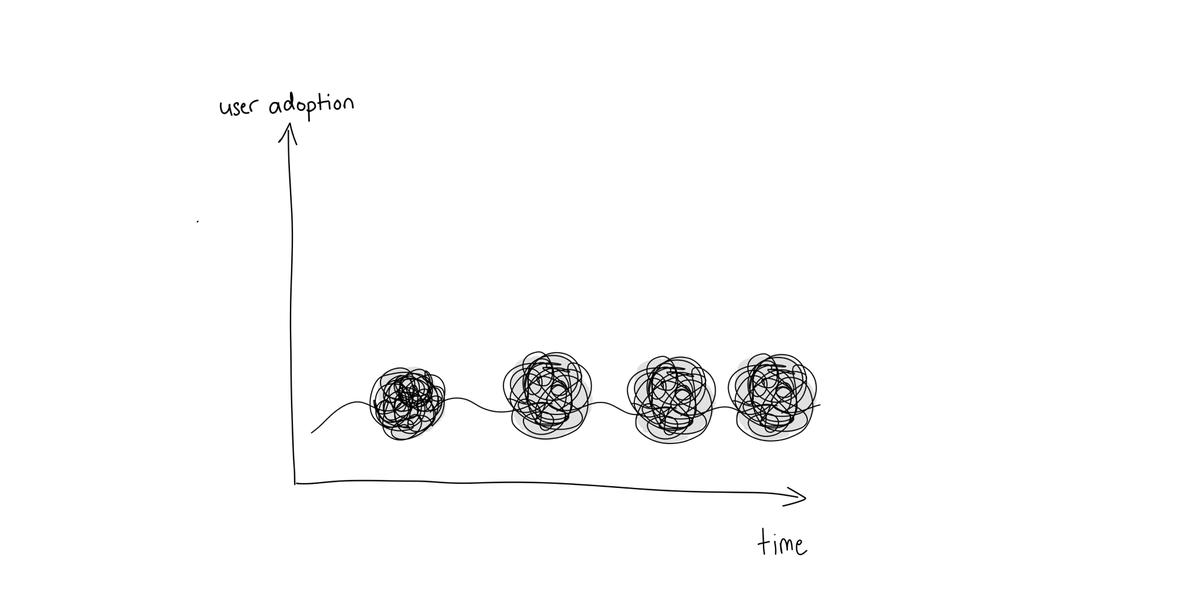
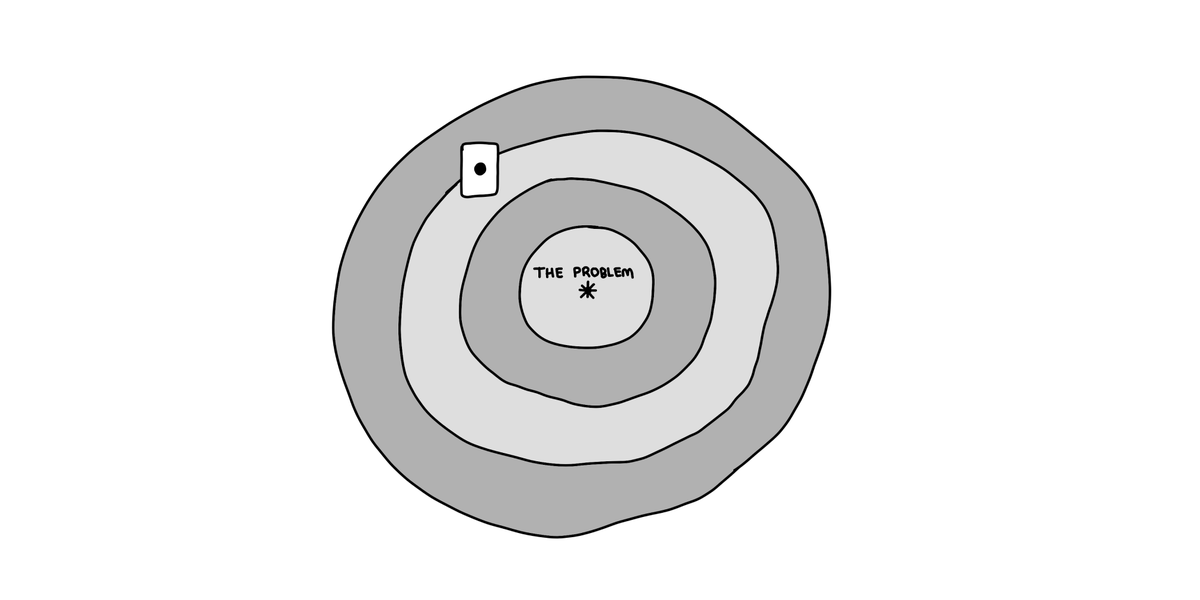
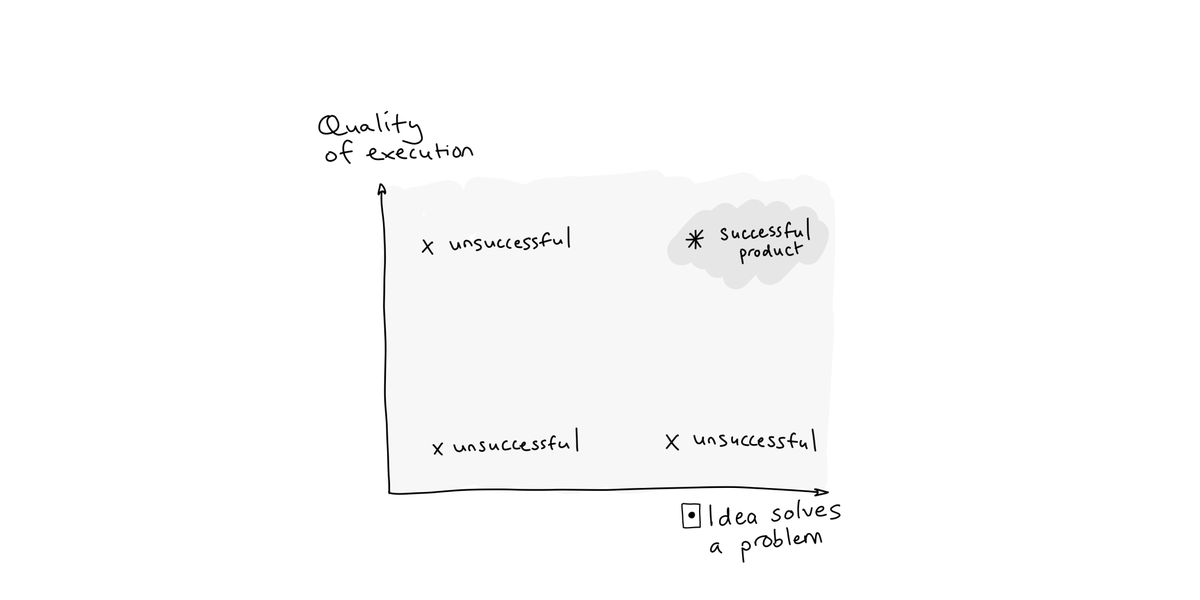
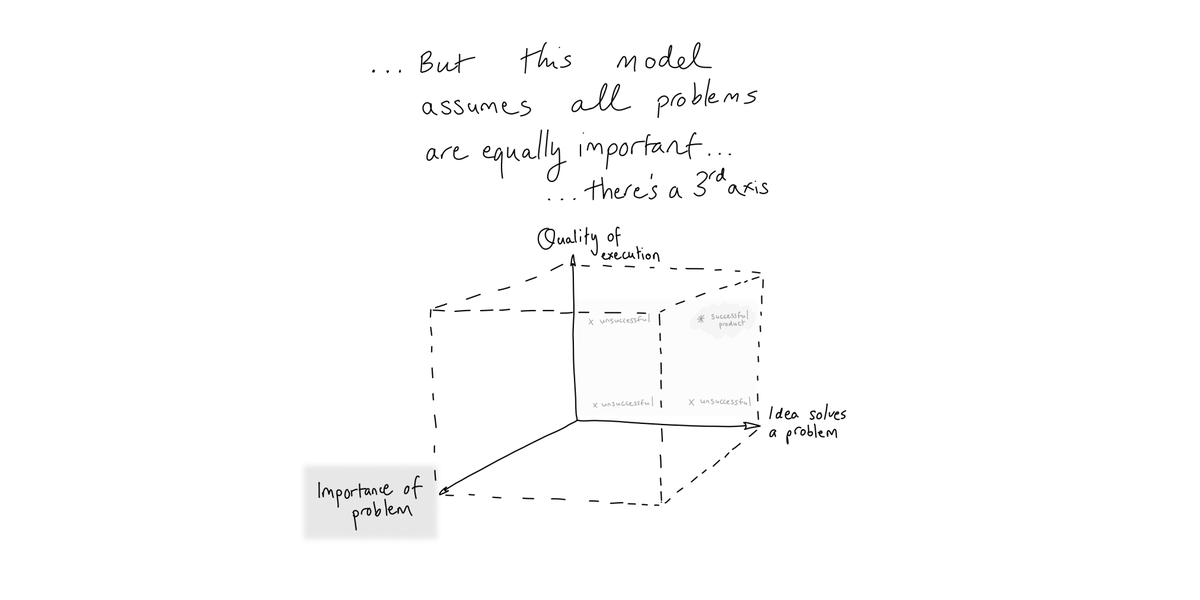
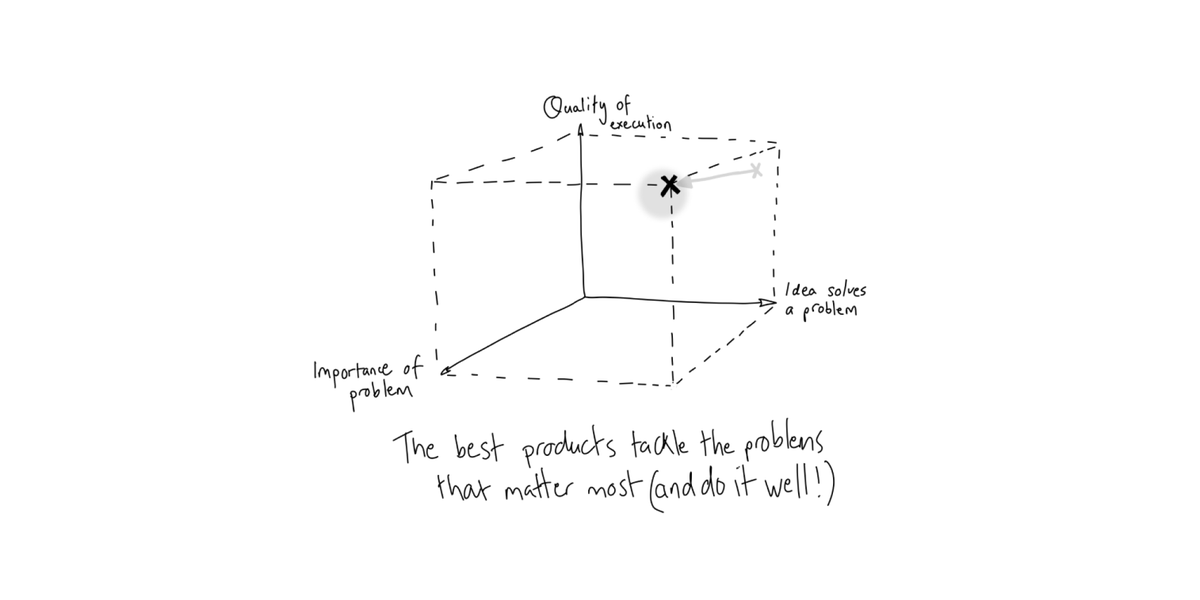
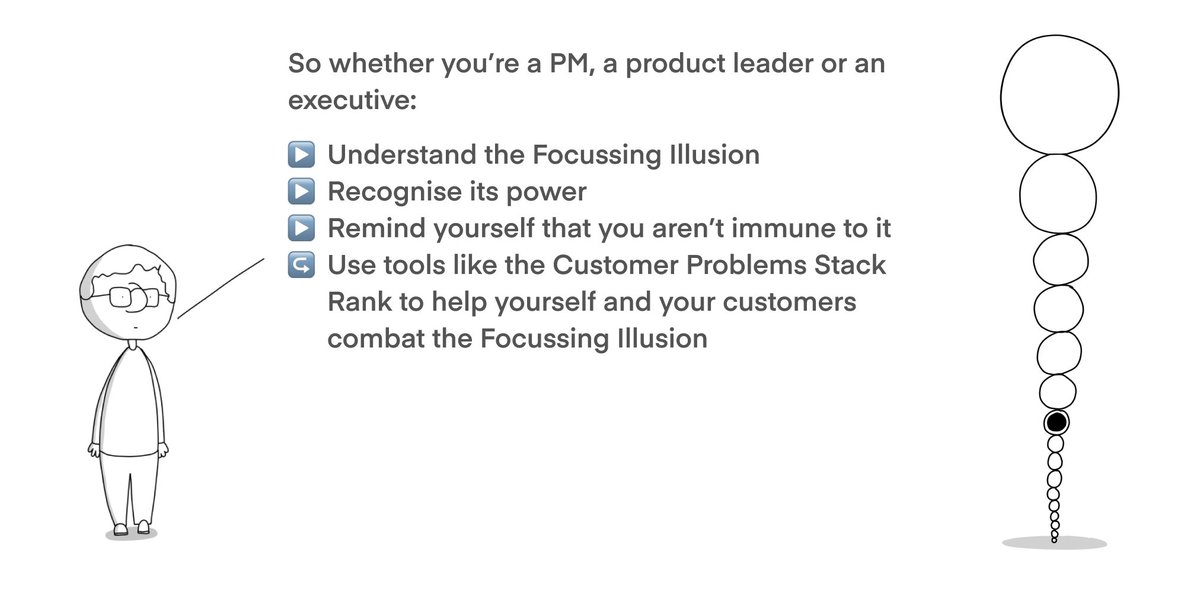
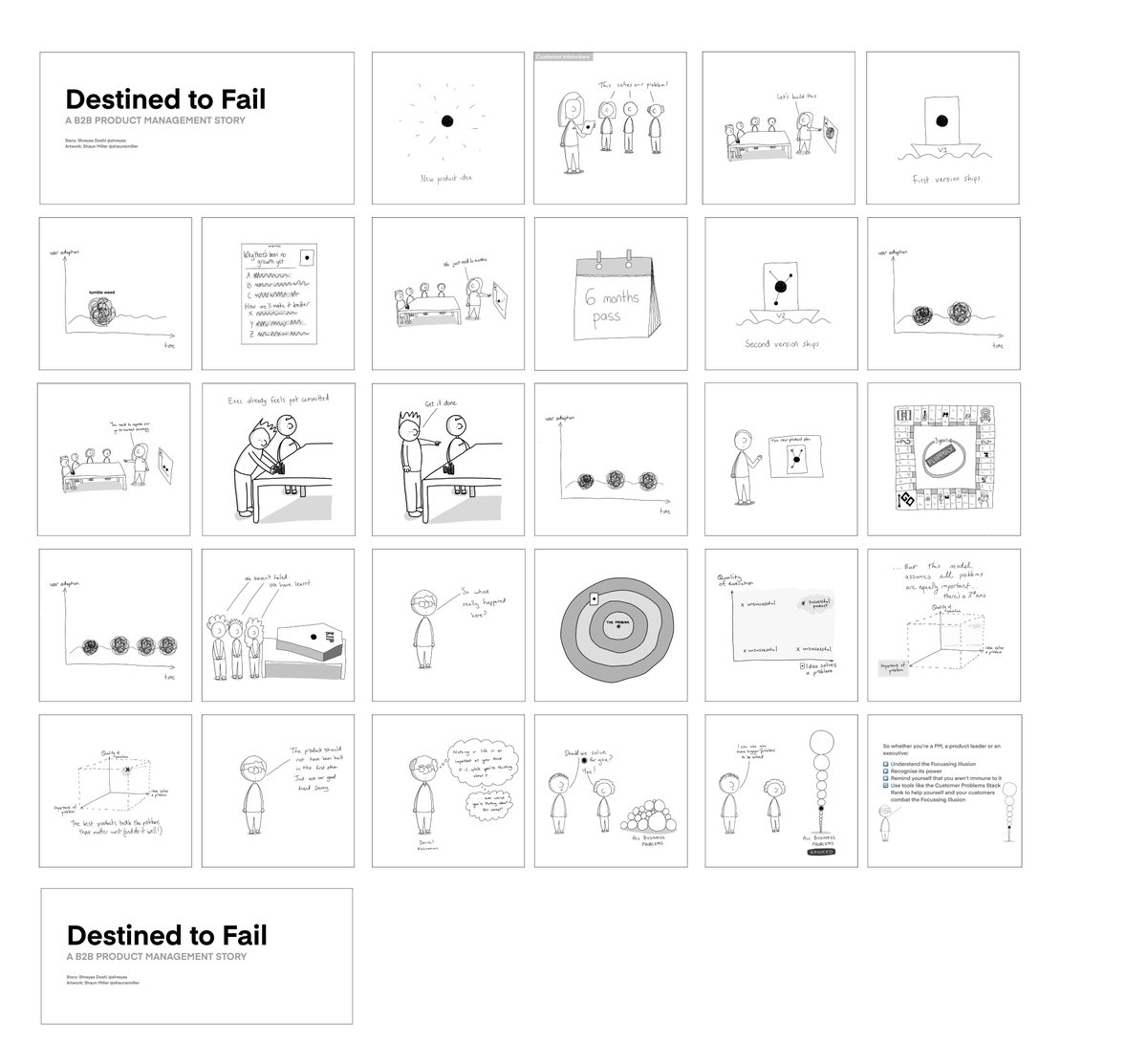
PM diligently talks to customers about whether this product will solve their problems
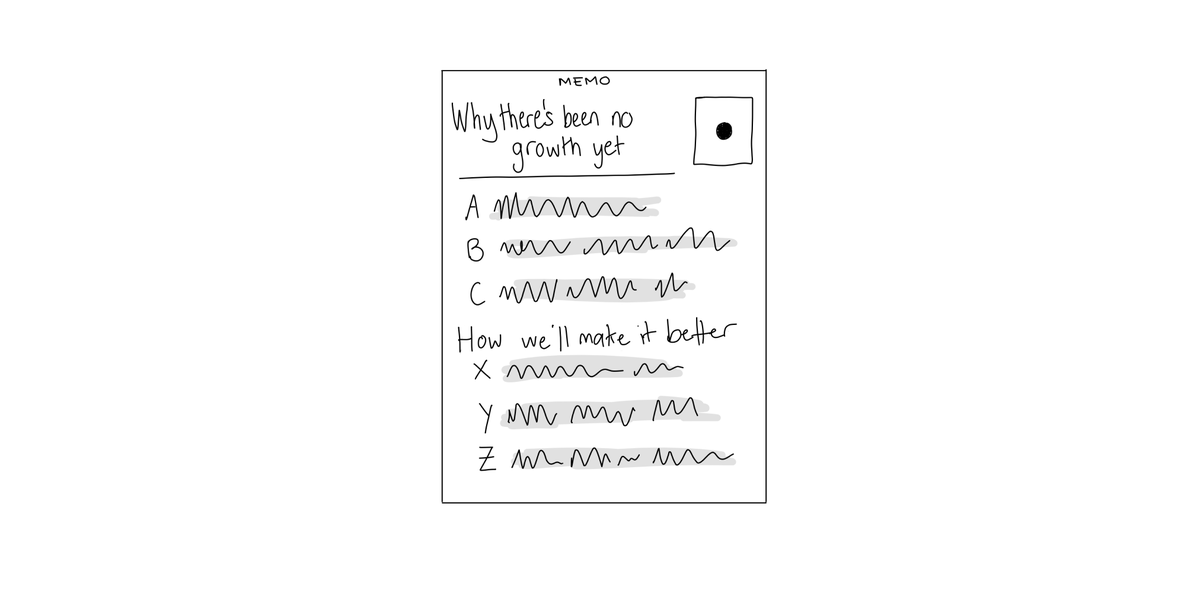
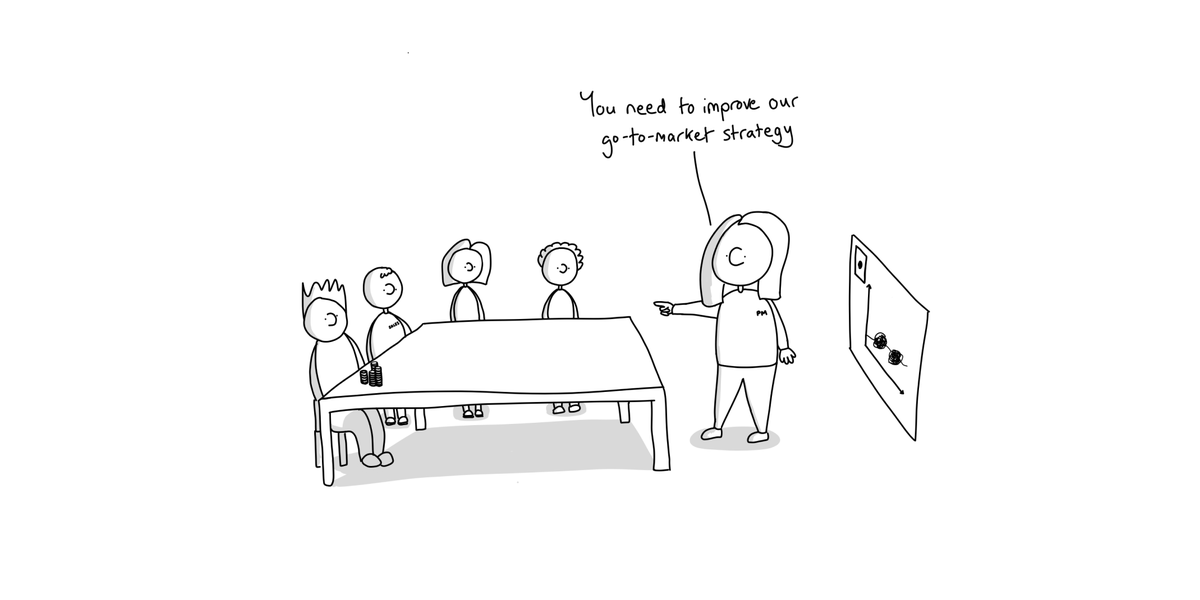
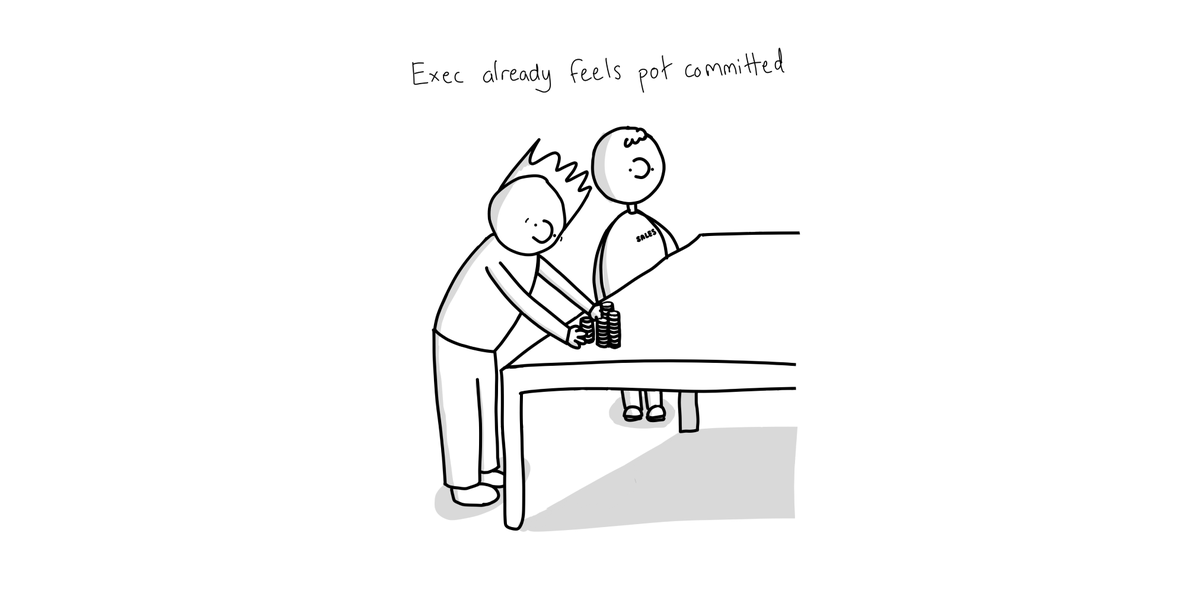
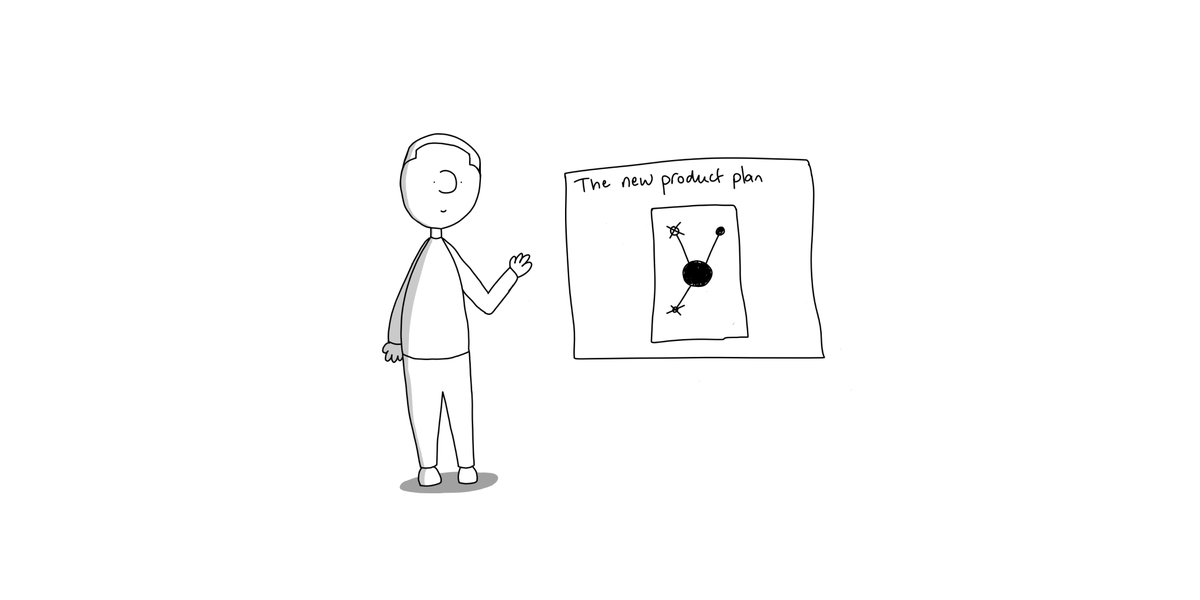
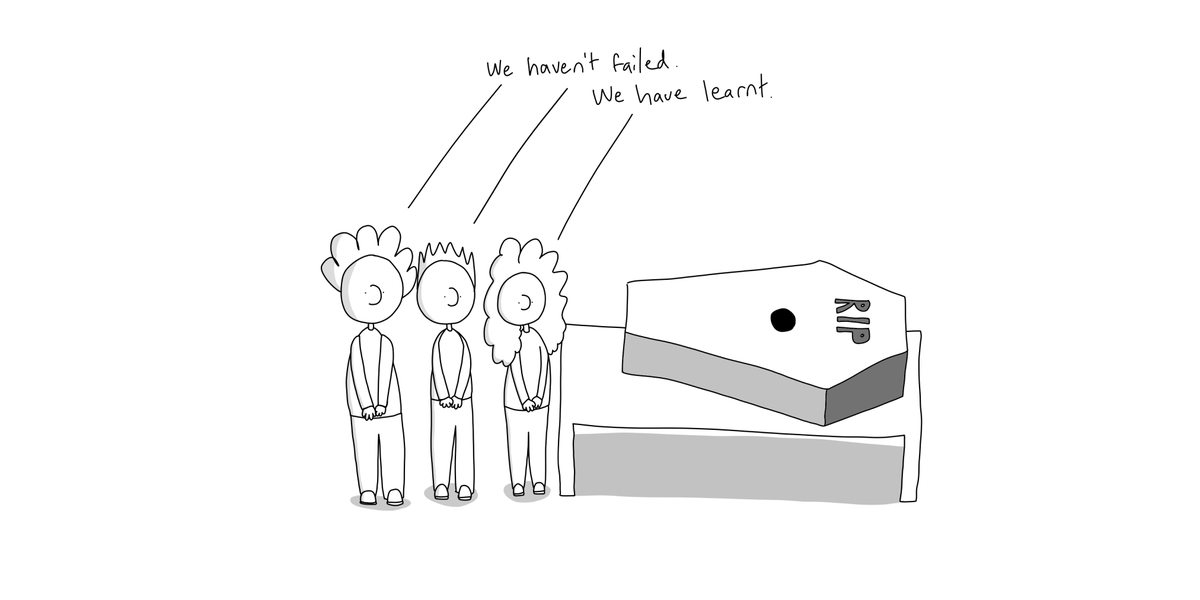
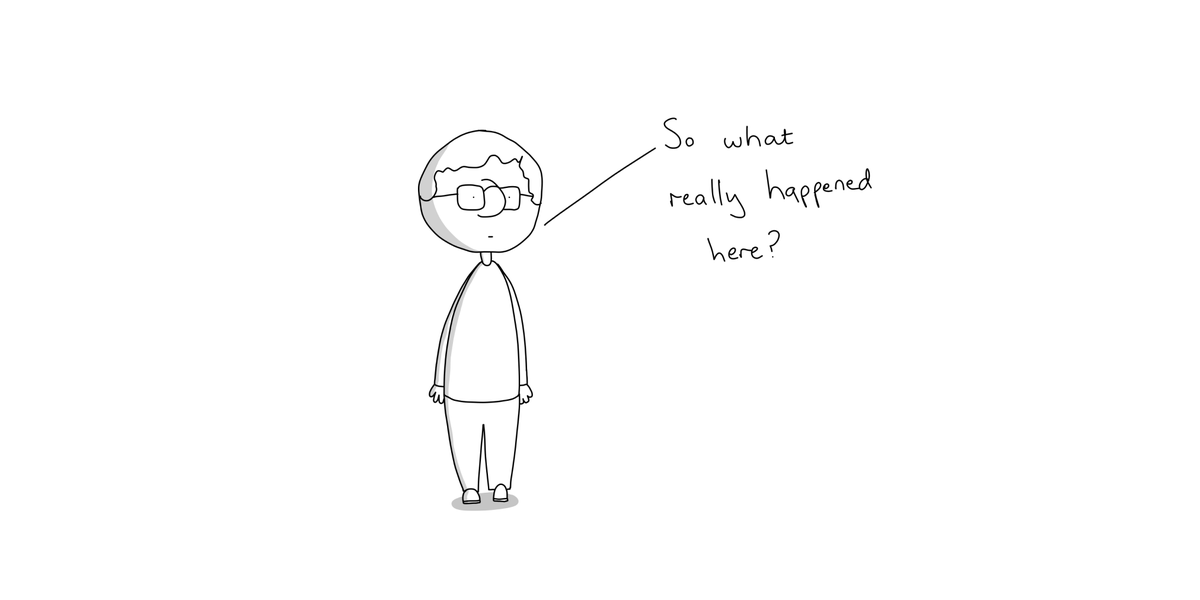
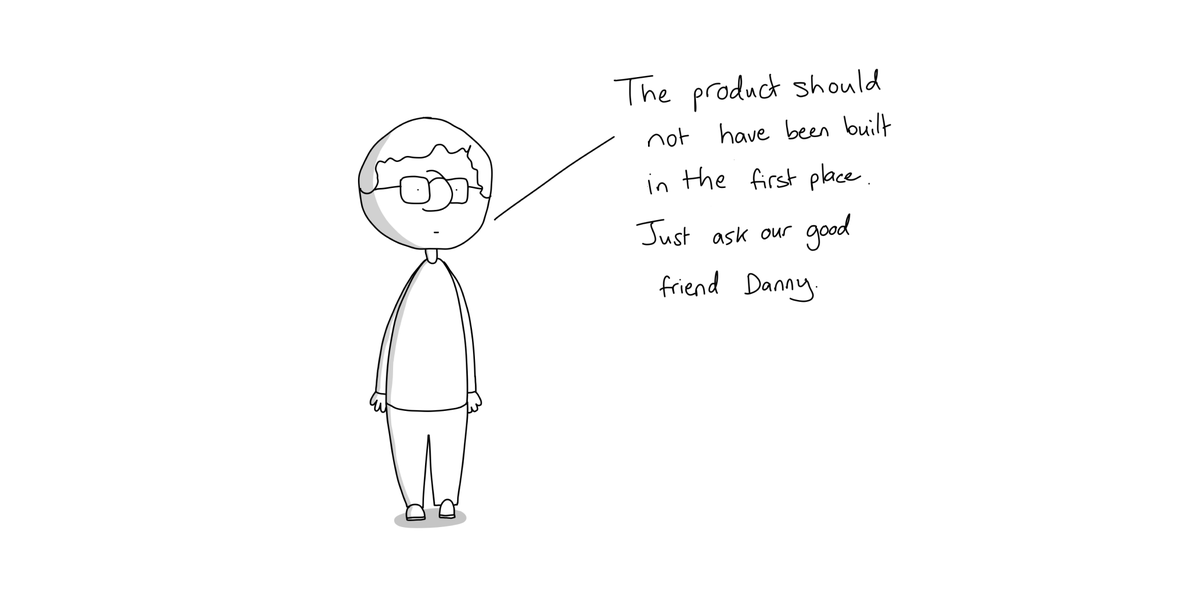
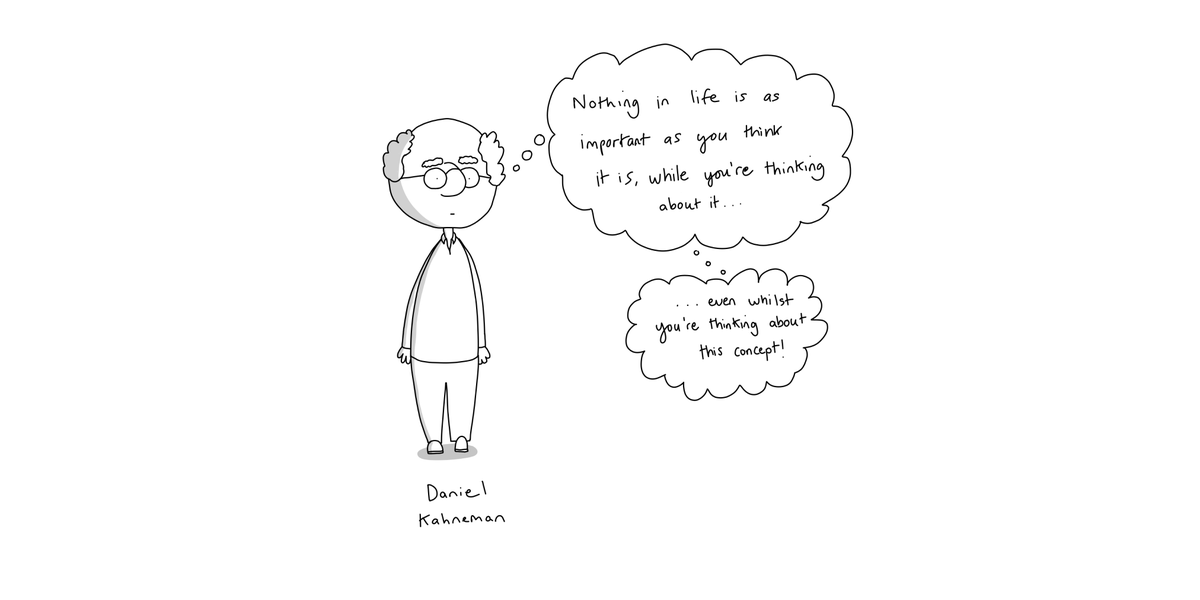
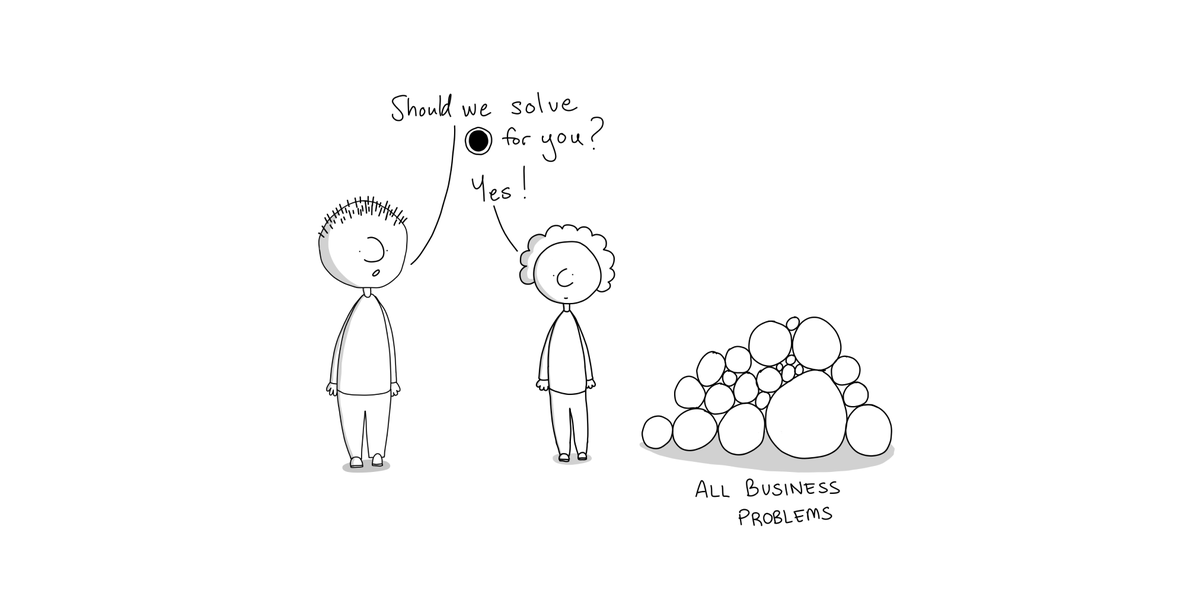
A B2B Product Management Story: on discovering problems that customers actually care about
— Shreyas Doshi (@shreyas) March 28, 2021
Very visual story thread\U0001f447\U0001f3fe pic.twitter.com/SQKpmLtBGC
12/22
— Shreyas Doshi (@shreyas) May 22, 2020
The focus of your early discussion was on the problem, solution space, & willingness to buy
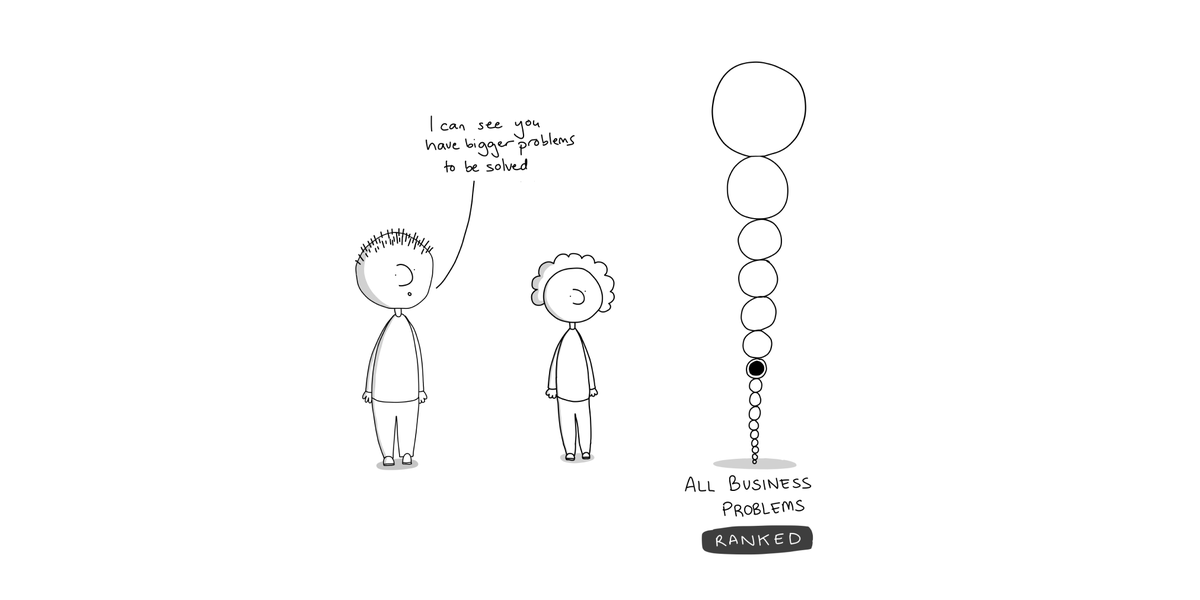
But when the customer is FORCED to prioritize the implementation of your product vs. every other problem they are facing it is no longer a theoretical \u201cwould you use this?\u201d exercise
In B2B product management, always ask:
— Shreyas Doshi (@shreyas) May 7, 2020
"How can my product help the buyer get promoted in their job?"
There will seldom be a bullseye answer to that question, but it will often inspire more creativity and better feature prioritization. https://t.co/CZ5zVbLKAu
A sensible null hypothesis for B2B products is that the customer doesn\u2019t really need your product, will not pay for it, and will not deploy or use it.
— Shreyas Doshi (@shreyas) June 11, 2020
One secret to becoming a world-class B2B product manager is to learn product marketing principles.
— Shreyas Doshi (@shreyas) September 23, 2020
Think like a marketer *upfront* while defining the product & its target audience.
And if possible, get a strong product marketer who can partner with you on your product.
This is going to sound too obvious, but just hear me out:
— Shreyas Doshi (@shreyas) July 17, 2020
B2B startups & product teams should take the time to understand their competitors.
Too many product folks don\u2019t do this & as a result go through \U0001d63a\U0001d626\U0001d622\U0001d633\U0001d634 of pain.
Why does this happen & how to get this right?
\U0001f447\U0001f3fe
A good customer segmentation is worth a thousand strategy meetings.
— Shreyas Doshi (@shreyas) March 7, 2021
A few notes for B2B product ppl
— Shreyas Doshi (@shreyas) August 4, 2020
1. The line btwn prod mgmt & prod mktg is blurring
2. Very impt for B2B PMs to understand positioning (to devise prod strategy)
3. Thread\U0001f447\U0001f3fea great perspective on positioning vs narrative
4. If u r a B2B PM, I'd recommend following @aprildunford https://t.co/ZC5WHvjYhE
Last but not least, remember this about B2B products:
— Shreyas Doshi (@shreyas) June 11, 2020
For your customer, the chief alternative to your product is \U0001d62f\U0001d630\U0001d635 your most formidable competitor's product.
The default alternative is simply inaction.
And a close second is often a spreadsheet.
\U0001f642
As a product person, almost nothing can match the fun of working on a B2B Product at a Product-Focused Company
— Shreyas Doshi (@shreyas) October 3, 2020
B2B \u21d2 Much higher likelihood of success than Consumer
Product-Focused \u21d2 Everyone cares deeply about user experience \u21d2 You get to build a product you can be proud of
Why do smart product people & teams often build products with mediocre or no impact?
— Shreyas Doshi (@shreyas) July 12, 2020
A cautionary thread of biases and fallacies we encounter when building products\U0001f447\U0001f3fe
1/10 pic.twitter.com/G32kWjE2EZ
Convenient illusion:
— Shreyas Doshi (@shreyas) August 10, 2020
Inputs + Outputs = Outcomes
Inconvenient reality:
(Inputs + Outputs) \xd7 Market = Outcomes
Product Strategy\u2014in 1 tweet.
— Shreyas Doshi (@shreyas) May 17, 2020
What:
Rigorous treatment of where to play & how to win
Why:
Drastically improve odds of product success
Create org-wide clarity
Outlook:
3-5 years
Components:
Situation assessment
Target customers
Differentiation pillars
Roadmap
Brief action plan
Breaking into PMing - a \U0001f9f5 // A question folks from eng/design/other functions often have how to become a PM in a tech co.
— Sriram Krishnan (@sriramk) April 14, 2020
It can seem non-obvious and differs with each company but here are some patterns I've seen work. All the below assumes you have no PMing on your resume.
There is no One Correct Way\u2122 to learn
— Shreyas Doshi (@shreyas) August 15, 2020
Don\u2019t feel pressured to read 70 books/year just becos Super-Successful Person X does that
Videos, Podcasts, Audiobooks, Discussions\u2014all are fine
What to do:
Understand your preferred learning style
Don't resist it, embrace it
Commit to it