#Thread

Rajasthani Folk Dances -

Rajasthan is a colorful state popular for ancient customs & traditions. This is showcased in the colorful folk music & dance performances which can captivates anyone.

Each dance form in this state has a significance to history & culture.

1/9

Ghoomar

It originated from Bhil community and mainly performed as entertainment for ancient Kings. The recently became an internationally recognized folk dance form from Rajasthan
The dance involves graceful moves like clapping & swaying the hands and twirling around

2/9
Kalbeliya

Popularly called the Sapera dance & is accredited by UNESCO as an Intangible Heritage.
Tribal Women dressed in ethnic ‘angrakhi’ & odhani on a long skirt that turns around gracefully to dance on folk music that men play Been, Khanjari, Dholak.

3/9
Bhavai

Women balancing a number of pots on their head and dancing around.

It is a fascinating stunt that these traditional artistes perform & balance up to eight clay/brass pots on top of their head. While balancing the pots they turn around within a plate or a glass.

4/9
Kathputli

This cultural dance is done by puppets (Kath ki Gudiya). held by the strings that the artists control. Many hundreds of centuries back the Bhat tribes created this dance form.

Artists narrates mythological stories & social awareness of tribes using kathputli.

5/9
Kachchhi Ghodi

This is a famous folklore genre showcasing tales of local bandits in the region from the dance form.

It is performed by artists in traditional costumes – Kurta-dhoti, turbans & sword, ride on a puppet horse that signifies bravery & chivalry.

6/9
Gair

This Bhil com. dance performed on major festivals like Janmashtami & Holi. Artists including men & women are decked up in attractive vibrant and colorful costumes. Women wear ghagra choli while men wear lengthy traditional attire with a stick, arrow and sword.

7/9
Chari
This Saini & Gujjar com. dance performed by females for special happy occasions like weddings, festivals or when a male child is born.

Traditional artistes perform a stunt balancing on top of their head brass pots (Chari) with a burning lamp inside.

8/9
Chang
Referred to as ‘Dhamal’ where dancers perform fast-paced steps to the rhythm of Chang. This is a unique instrument like a tambourine. This is an enthusiastic folk dance performance in Shekhawati region in celebrations of Holi Festival.

9/9

More from All

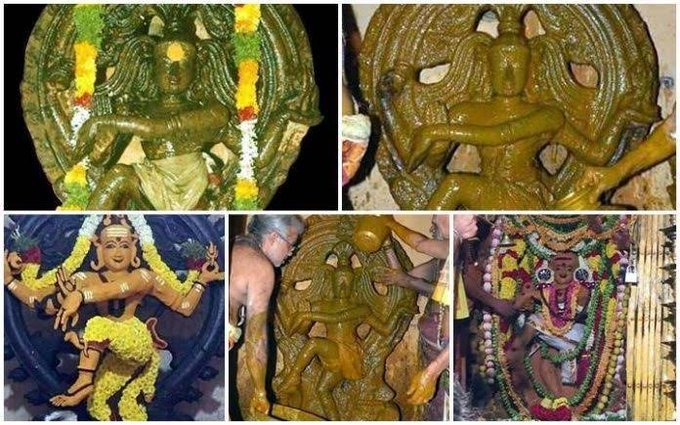
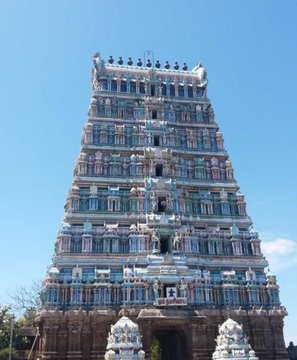
Margatha Natarajar murthi - Uthirakosamangai temple near Ramanathapuram,TN
#ArudraDarisanam
Unique Natarajar made of emerlad is abt 6 feet tall.
It is always covered with sandal paste.Only on Thriuvadhirai Star in month Margazhi-Nataraja can be worshipped without sandal paste.


After removing the sandal paste,day long rituals & various abhishekam will be
https://t.co/e1Ye8DrNWb day Maragatha Nataraja sannandhi will be closed after anointing the murthi with fresh sandal paste.Maragatha Natarajar is covered with sandal paste throughout the year


as Emerald has scientific property of its molecules getting disturbed when exposed to light/water/sound.This is an ancient Shiva temple considered to be 3000 years old -believed to be where Bhagwan Shiva gave Veda gyaana to Parvati Devi.This temple has some stunning sculptures.

You May Also Like

First thread of the year because I have time during MCO. As requested, a thread on the gods and spirits of Malay folk religion. Some are indigenous, some are of Indian origin, some have Islamic


Before I begin, it might be worth explaining the Malay conception of the spirit world. At its deepest level, Malay religious belief is animist. All living beings and even certain objects are said to have a soul. Natural phenomena are either controlled by or personified as spirits

Although these beings had to be respected, not all of them were powerful enough to be considered gods. Offerings would be made to the spirits that had greater influence on human life. Spells and incantations would invoke their


Two known examples of such elemental spirits that had god-like status are Raja Angin (king of the wind) and Mambang Tali Arus (spirit of river currents). There were undoubtedly many more which have been lost to time

Contact with ancient India brought the influence of Hinduism and Buddhism to SEA. What we now call Hinduism similarly developed in India out of native animism and the more formal Vedic tradition. This can be seen in the multitude of sacred animals and location-specific Hindu gods