Sick & Tired of Being Sick & Tired

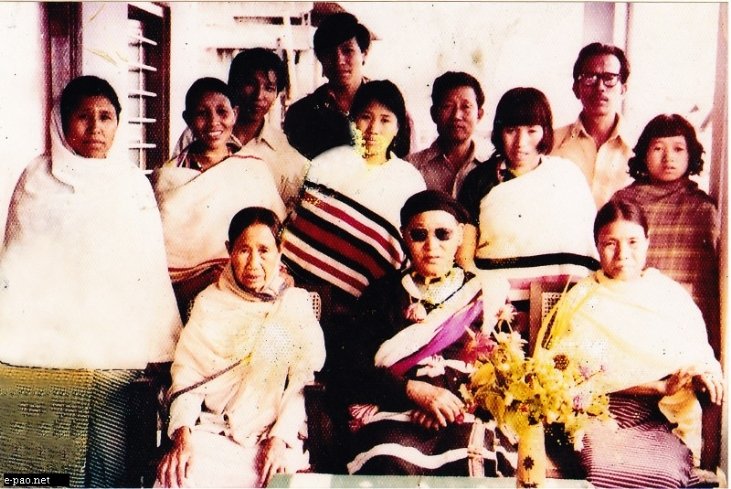
Fannie Lou Hamer was born in Mississippi in 1917. Her family’s livestock was poisoned by local white farmers because it was profitable. They became sharecroppers & at age 13, she attended school & picked 200-300 lbs of cotton per day. 1/

In 1945 she married & was planning for a family, but her doctor performed a hysterectomy without her consent. This program of forced sterilization of Black women was so common it was called a “Mississippi appendectomy.” Unable to conceive, they would later adopt 2 girls. 2/
At age 45 she attended a SNCC meeting & learned the power of her vote. So Hamer volunteered to register others in the Black community on their rights & how overcome the tools created to disenfranchise them such as registration tests & poll taxes. 3/
Upon hearing that she attempted to register to vote, the white farmer her and her husband worked for fired them both. She rejoiced at the opportunity to be part of the solution.
4/
In 1963, at age 55, Hamer led a voter registration drive. On the way home, she & others were arrested by police then taken to her cell where they forced 2 black inmates to beat her exposed body. She was left w/ a blood clot in her left eye & permanent kidney damage. 5/
Remarkably, she kept going saying “I feel sorry for anybody that could let hate wrap them up. Ain't no such thing as I can hate anybody and hope to see God's face.”

But she soon realized real change would take more than voting rights but challenging the system. 6/
The Southern Leadership of the Democratic Party were segregationists who refused to recognize Black voters in their delegation. So Hamer founded the Mississippi Freedom Democratic Party in 1964. She arrived @ the Democratic Convention as the head of the MFDP for Black voters. 7/
As she shared about her harrowing experiences of brutality, the President, Lyndon B. Johnson, who was also the Democratic nominee, interrupted broadcast of her testimony because of the embarrassment it would be to the party. 8/
The standoff ended with the Hamer refusing to accept less seats then they were entitled to saying: “We didn't come all the way up here to compromise for no more than we'd gotten here. We didn't come all this way for no two seats when all of us is tired." 9/
4 years later her Freedom Party was eventually recognized & in 1972, she was selected a delegate. She was revered though some looked down on her because she was a short, stocky, poor Black woman w/ a deep Southern accent lacking in formal education. But that didn’t stop her. 10/
Her powerful speeches were inspired by her deep faith & oratory tradition of the Black Church. She once said: “I’m sick and tired of being sick and tired.” A quote still used today. She later launched the Freedom Farm Cooperative to help empower poor farmers. 11/
Since the 14th Amendment passed, voter suppression has been used to silence Black voters. In Georgia btwn 2012-2018, 1.4 million voters were removed from the rolls in what was called by the Atlanta Journal Constitution, the “largest mass disenfranchisement in US history.” 12/
Efforts by people like Stacey Abrams who is credited with helping register over 800,000 voters over the last year in Georgia is a continuation of the legacy of Fannie Lou Hamer who famously said, “Nobody’s free until everybody’s free.” #BlackHistoryMonth

More from All

https://t.co/6cRR2B3jBE
Viruses and other pathogens are often studied as stand-alone entities, despite that, in nature, they mostly live in multispecies associations called biofilms—both externally and within the host.

https://t.co/FBfXhUrH5d


Microorganisms in biofilms are enclosed by an extracellular matrix that confers protection and improves survival. Previous studies have shown that viruses can secondarily colonize preexisting biofilms, and viral biofilms have also been described.


...we raise the perspective that CoVs can persistently infect bats due to their association with biofilm structures. This phenomenon potentially provides an optimal environment for nonpathogenic & well-adapted viruses to interact with the host, as well as for viral recombination.


Biofilms can also enhance virion viability in extracellular environments, such as on fomites and in aquatic sediments, allowing viral persistence and dissemination.

You May Also Like