The most valuable Twitter feature you aren't using:

Advanced search.

Knowing how to use it will help you find the hidden gems of the Twitter archives and 10x your Twitter experience.

Here's the step-by-step guide:

Most Twitter users know nothing about advanced search.

And the few that do think you have to access it this way: by clicking the three dots in the search bar, then clicking advanced search, then using these fields.

This is painfully inefficient.

Luckily, there is a better way.
You can leverage the power of advanced search right in the search bar using text.

And there are six different things you can create filters for:

• Date
• Keywords
• Number of likes
• Number of replies
• Number of retweets

Let's dive into how to use each.
Before we do that, you might be thinking, what does this do for me?

Twitter is a real-time platform.

But the Twitter archives are full of gems.

Especially from some of the most prominent people on Twitter, you can learn a lot by combing through popular things they've said.
The foundation of advanced search is the "from" query.

Every query will start like this:

from:handlename

An *important* note: do not include the @ before the user's handle.
Want to see someone's tweets during a certain period of time?

Easy. Just use the "until" and "since" query

from:dickiebush since:2021-01-01 until:2021-02-01

An *important* note: dates must be formatted in "YYYY-MM-DD" format with no space between them and the colon.
Want to see someone's tweets with a specific keyword?

Just put it in quotes after your from:handlename

For example: from:dickiebush "Twitter"

And if you like to get fancy, you can combine them with an "OR" to look for multiple words.

from:dickiebush "Twitter" OR "writing"
What if you want to see someone's most popular tweets?

You can do that too.

Filter by number of likes, replies, or retweets using any of the following:

• min_faves:100
• min_replies:100
• min_retweets:100

Example: from:dickiebush min_faves:1000 min_retweets:1000
Advanced search gets fun when you start to combine queries.

For example, what if I wanted to see what @APompliano was saying about Bitcoin during 2018's crash:

from:apompliano "bitcoin" since:2018-01-06 until:2018-02-06 min_faves:2000

The man practices what he preaches! 💎🤲
And that's it!

Twitter is notorious for having hidden gem features like this!

If you enjoyed this thread:

1. Follow me @dickiebush for more like this

2. Quote tweet the top tweet with your biggest takeaway (it helps other people find it too)
And 10 more of the best little-known Twitter tips, check out this thread:

https://t.co/g9F31rZa7W
You can combine each query in as many ways as you'd like.

The TL;DR of what you can filter:

• "keyword"
• min_faves:1000
• min_replies:1000
• min_retweets:1000
• from:handlename
• until:YYYY-MM-DD
• since:YYYY-MM-DD

More from Dickie Bush 🚢

Atomic Habits from @jamesclear changed my life.

In Atomic Habits, James lays out the Four Laws of Behavior Change.

1. Make it obvious
2. Make it attractive
3. Make it easy
4. Make it satisfying

Here's how to leverage them to build a daily writing habit (🧵✍🏼):

Habits are made up of a four-part feedback loop:

1. Cue
2. Craving
3. Response
4. Reward

Building a habit means intentionally designing each part of this feedback loop.

1. Make it obvious
2. Make it attractive
3. Make it easy
4. Make it


Before you start to build a writing habit, it's important to understand the real goal.

Your goal isn't to start writing.

Your goal is to become a writer.

Why the subtle difference?

Because behavior change is identity change.

We don't stick to habits that aren't aligned with our identity.

Luckily, habits that align with your identity are easy to stick to.

Every action you take is a vote for the type of person you want to become.

So to become a writer, we have to consistently cast "writer votes."

Step 1: Make it obvious

Time and location are the most important habit cues.

You MUST leverage them to build your writing habit.

Every great writer has their sacred hours.

This thread can help you find

More from All

You May Also Like

THREAD: 12 Things Everyone Should Know About IQ

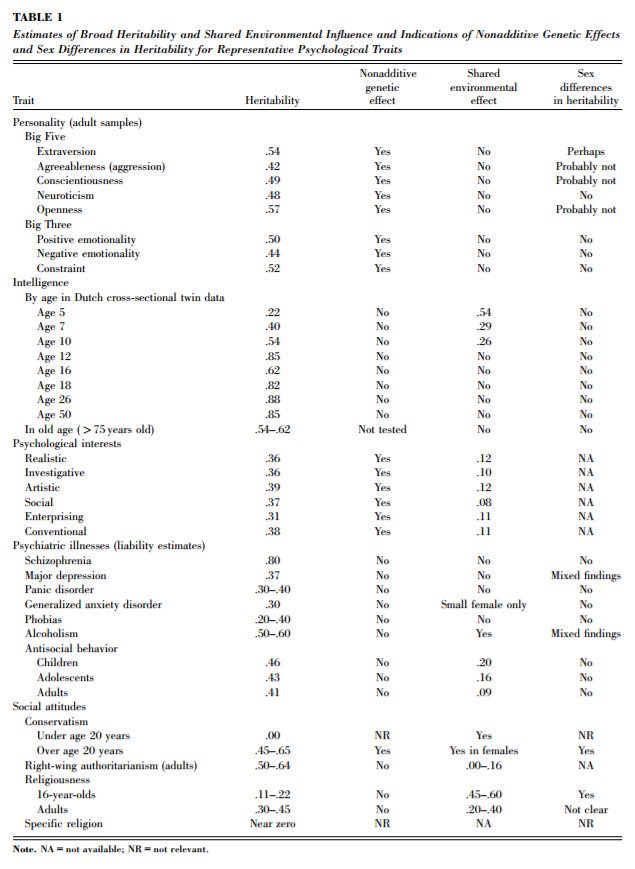
1. IQ is one of the most heritable psychological traits – that is, individual differences in IQ are strongly associated with individual differences in genes (at least in fairly typical modern environments). https://t.co/3XxzW9bxLE


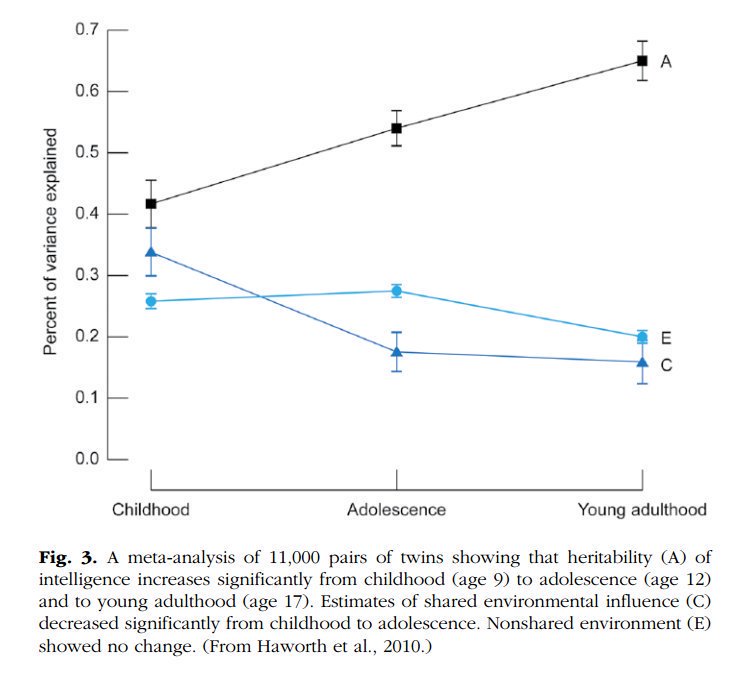
2. The heritability of IQ *increases* from childhood to adulthood. Meanwhile, the effect of the shared environment largely fades away. In other words, when it comes to IQ, nature becomes more important as we get older, nurture less.
https://t.co/UqtS1lpw3n


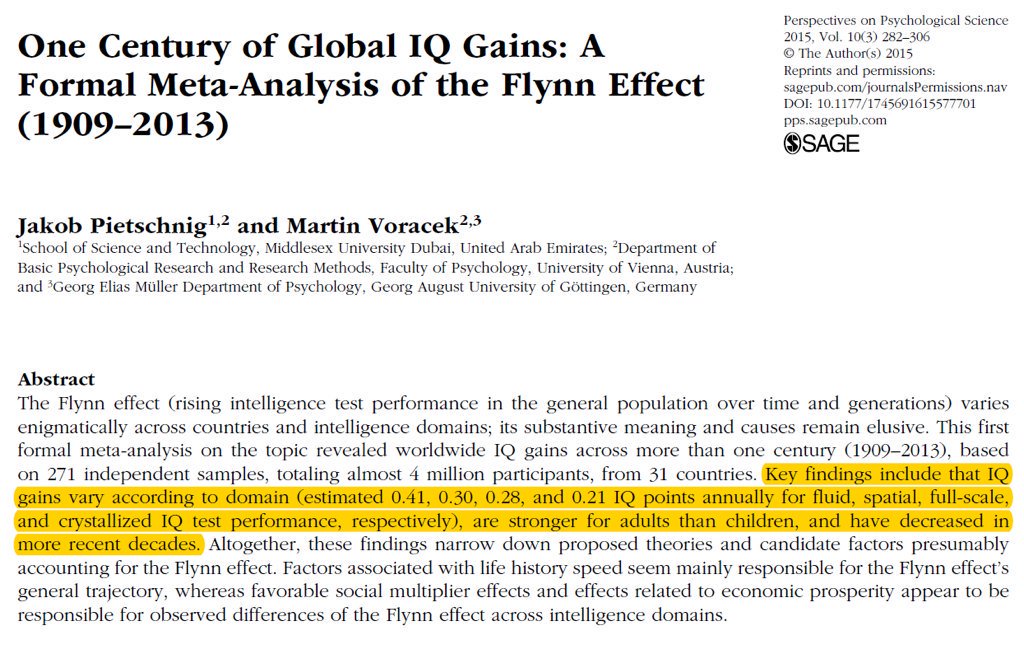
3. IQ scores have been increasing for the last century or so, a phenomenon known as the Flynn effect. https://t.co/sCZvCst3hw (N ≈ 4 million)

(Note that the Flynn effect shows that IQ isn't 100% genetic; it doesn't show that it's 100% environmental.)


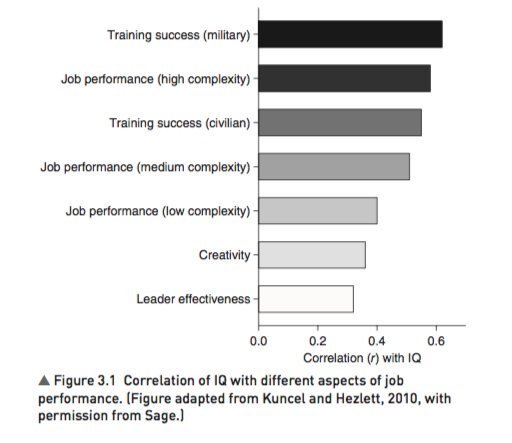
4. IQ predicts many important real world outcomes.

For example, though far from perfect, IQ is the single-best predictor of job performance we have – much better than Emotional Intelligence, the Big Five, Grit, etc. https://t.co/rKUgKDAAVx https://t.co/DWbVI8QSU3


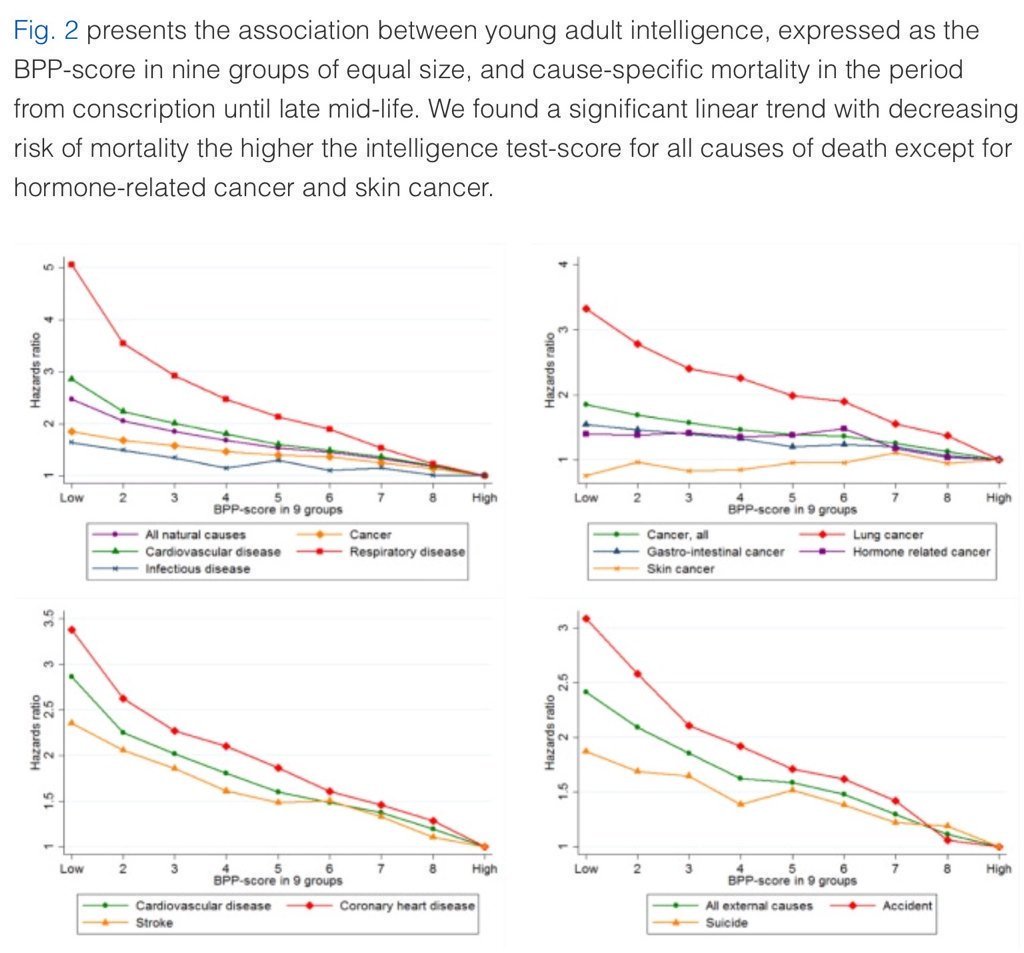
5. Higher IQ is associated with a lower risk of death from most causes, including cardiovascular disease, respiratory disease, most forms of cancer, homicide, suicide, and accident. https://t.co/PJjGNyeQRA (N = 728,160)