
Des dizaines d\u2019opposants arr\xeat\xe9s \xe0 Hong Kong. La d\xe9mocratie HK meurt sous nos yeux. Et la priorit\xe9 de nos chers dirigeants europ\xe9ens est de nous vendre leur accord d\u2019investissement avec P\xe9kin... Comment peut-on \xeatre \xe0 ce point \xe0 contre-temps? https://t.co/zy1xaqIYdB
— Raphael Glucksmann (@rglucks1) January 6, 2021
From 🇪🇺: One of the three German politicians vying to lead Merkel’s CDU party became the first major European voice to link today’s mass arrests in Hong Kong with the EU-China investment deal.
Mehr als 50 Oppositionelle wurden in #HongKong festgenommen. Grundlage ist das neue #Sicherheitsgesetz, das #China als Waffe gegen die Demokratie dient. Wenn \U0001f1ea\U0001f1fa ein Abkommen mit \U0001f1e8\U0001f1f3 schlie\xdft, dann darf es dessen Methoden, inklusive Vertragsbruch & Unterdr\xfcckung, nicht ignorieren. https://t.co/VEXeVm1w2Z
— Norbert R\xf6ttgen (@n_roettgen) January 6, 2021
2) Also shows that BJ doesn't have a clue about how EU works or simply doesn't care if the CAI-deal really goes through. What BJ is doing in HK will make it even less probable that the EU parliament will ratify CAI.
— Dana Heide (@Dana_Heide) January 6, 2021

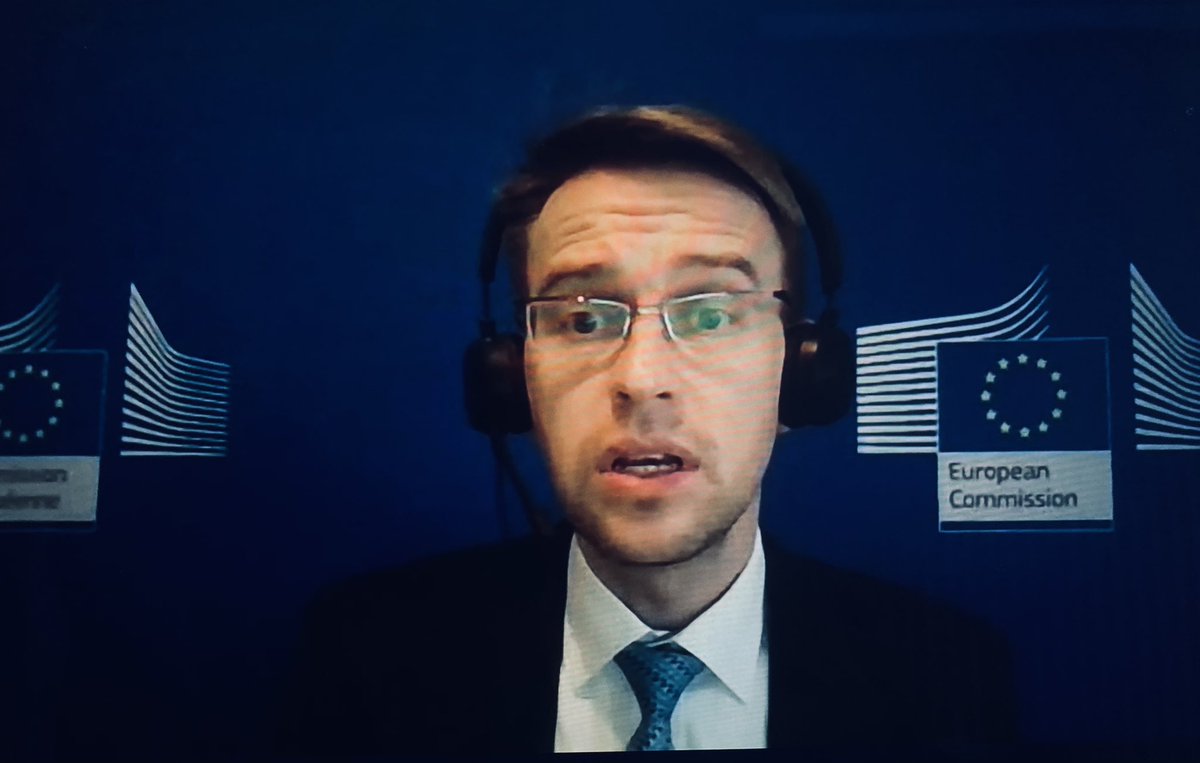
Very concerned about mass arrests of pro-democracy politicians and activists among other worrying developments in Hong Kong. The exercise of the human rights and freedoms guaranteed under Hong Kong\u2019s Basic Law must be ensured.
— Ann Linde (@AnnLinde) January 6, 2021
Trade does not take place in a vacuum - these actions mark a violation of the spirit of the #EU-#China investment deal sustainability commitments. This is clearly not a basis for constructive cooperation. https://t.co/TZo1MwarbS
— Bernd Lange (@berndlange) January 6, 2021
➡️ EU Parliament “will never ratify” deal without “proof that the human rights of Hong Kongers, Uyghurs & Tibetans improve”. https://t.co/fXdaQgPhHx
Arrests again show that China is not becoming more open & democratic as a result of international agreements.
— Guy Verhofstadt (@guyverhofstadt) January 6, 2021
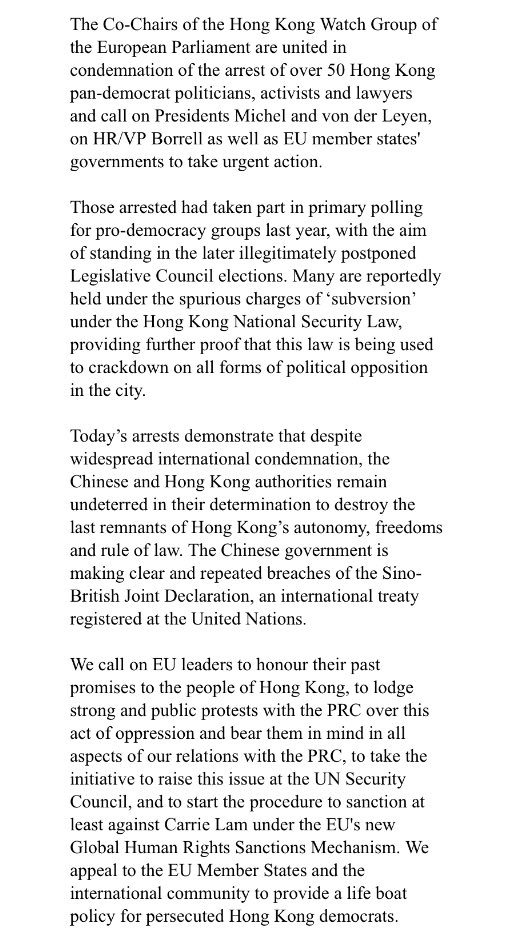
EP will never ratify the China Comprehensive Agreement on Investment without commitments & proof that the human rights of Hong Kongers, Uyghurs & Tibetans improve https://t.co/ninBU23bNM
• raising issue at UN Security Council
• sanctioning “at least” Carrie Lam
• providing lifeboat to persecuted democrats on member-state level
#ReportingNotEndorsing
The mass arrest of politicians & activists in Hong Kong is a grievous attack on rights and freedoms.
— Dominic Raab (@DominicRaab) January 6, 2021
These arrests demonstrate the intended use of the National Security law is to clamp down on dissent and opposing political views.https://t.co/geroW3SENO
More from World


Good question: what proofs has BDA provided of his authenticity?
Let's go through some of them.
- BDA predicted the Saudis would assassinate Suleimani. They did.
- He said the dog that got Badghadi's arm deserved a Medal Of Honor. The next day the President posted a joke image showing him giving the dog a MoH.
- He said one of his ops in Syria would severely disrupt a CIA drug trafficking operation. This was proved true within a few days:
https://t.co/Hranupwcxj
- He sent gold to Brazil to help pay for an anti-trafficking operation there. That op became public soon afterwards.
- On May 31 this year, he predicted the President would be giving a speech the next day. June 1, the President gives a surprise address at the Rose Garden.
- He predicted the US would be making diplomatic moves on Greenland. True.
- He said the US would be pulling all troops out of Afghanistan. This was confirmed within the month.
- He claimed earthquakes would be hitting Iran's nuclear facilities in December. Yep.
- There were FOUR facilities hit, not the three made public. Also true.
Let's go through some of them.
Do you really believe this? And you believe BDA is a time traveler too? You say BDA has accurately predicted things. Please point me to the proof. I have not seen any proof so far.
— I am Justice. God's Kingdom is coming. Wake up. (@GlynAlyn) October 13, 2020
- BDA predicted the Saudis would assassinate Suleimani. They did.
- He said the dog that got Badghadi's arm deserved a Medal Of Honor. The next day the President posted a joke image showing him giving the dog a MoH.
- He said one of his ops in Syria would severely disrupt a CIA drug trafficking operation. This was proved true within a few days:
https://t.co/Hranupwcxj
- He sent gold to Brazil to help pay for an anti-trafficking operation there. That op became public soon afterwards.
- On May 31 this year, he predicted the President would be giving a speech the next day. June 1, the President gives a surprise address at the Rose Garden.
- He predicted the US would be making diplomatic moves on Greenland. True.
- He said the US would be pulling all troops out of Afghanistan. This was confirmed within the month.
- He claimed earthquakes would be hitting Iran's nuclear facilities in December. Yep.
- There were FOUR facilities hit, not the three made public. Also true.




You May Also Like


"I really want to break into Product Management"
make products.
"If only someone would tell me how I can get a startup to notice me."
Make Products.
"I guess it's impossible and I'll never break into the industry."
MAKE PRODUCTS.
Courtesy of @edbrisson's wonderful thread on breaking into comics – https://t.co/TgNblNSCBj – here is why the same applies to Product Management, too.
There is no better way of learning the craft of product, or proving your potential to employers, than just doing it.
You do not need anybody's permission. We don't have diplomas, nor doctorates. We can barely agree on a single standard of what a Product Manager is supposed to do.
But – there is at least one blindingly obvious industry consensus – a Product Manager makes Products.
And they don't need to be kept at the exact right temperature, given endless resource, or carefully protected in order to do this.
They find their own way.
make products.
"If only someone would tell me how I can get a startup to notice me."
Make Products.
"I guess it's impossible and I'll never break into the industry."
MAKE PRODUCTS.
Courtesy of @edbrisson's wonderful thread on breaking into comics – https://t.co/TgNblNSCBj – here is why the same applies to Product Management, too.
"I really want to break into comics"
— Ed Brisson (@edbrisson) December 4, 2018
make comics.
"If only someone would tell me how I can get an editor to notice me."
Make Comics.
"I guess it's impossible and I'll never break into the industry."
MAKE COMICS.
There is no better way of learning the craft of product, or proving your potential to employers, than just doing it.
You do not need anybody's permission. We don't have diplomas, nor doctorates. We can barely agree on a single standard of what a Product Manager is supposed to do.
But – there is at least one blindingly obvious industry consensus – a Product Manager makes Products.
And they don't need to be kept at the exact right temperature, given endless resource, or carefully protected in order to do this.
They find their own way.

"I lied about my basic beliefs in order to keep a prestigious job. Now that it will be zero-cost to me, I have a few things to say."
We know that elite institutions like the one Flier was in (partial) charge of rely on irrelevant status markers like private school education, whiteness, legacy, and ability to charm an old white guy at an interview.
Harvard's discriminatory policies are becoming increasingly well known, across the political spectrum (see, e.g., the recent lawsuit on discrimination against East Asian applications.)
It's refreshing to hear a senior administrator admits to personally opposing policies that attempt to remedy these basic flaws. These are flaws that harm his institution's ability to do cutting-edge research and to serve the public.
Harvard is being eclipsed by institutions that have different ideas about how to run a 21st Century institution. Stanford, for one; the UC system; the "public Ivys".
As a dean of a major academic institution, I could not have said this. But I will now. Requiring such statements in applications for appointments and promotions is an affront to academic freedom, and diminishes the true value of diversity, equity of inclusion by trivializing it. https://t.co/NfcI5VLODi
— Jeffrey Flier (@jflier) November 10, 2018
We know that elite institutions like the one Flier was in (partial) charge of rely on irrelevant status markers like private school education, whiteness, legacy, and ability to charm an old white guy at an interview.
Harvard's discriminatory policies are becoming increasingly well known, across the political spectrum (see, e.g., the recent lawsuit on discrimination against East Asian applications.)
It's refreshing to hear a senior administrator admits to personally opposing policies that attempt to remedy these basic flaws. These are flaws that harm his institution's ability to do cutting-edge research and to serve the public.
Harvard is being eclipsed by institutions that have different ideas about how to run a 21st Century institution. Stanford, for one; the UC system; the "public Ivys".


Facebook originally a CIA program called "LifeLog".
LifeLog, via DARPA, terminated on Feb 4th, 2004.
Facebook was launched on Feb 4th, 2004.
Many of the LifeLog team became execs at FB.
Zuckerberg is a figurehead.
CIA allowed Cambridge to help Trump win
https://t.co/enzOXDCogV

Pentagon Kills LifeLog
LifeLog, via DARPA, terminated on Feb 4th, 2004.
Facebook was launched on Feb 4th, 2004.
Many of the LifeLog team became execs at FB.
Zuckerberg is a figurehead.
CIA allowed Cambridge to help Trump win
https://t.co/enzOXDCogV
Project: Lifelog
— Robert Horan (@Robby12692) December 13, 2018
Started by DARPA in 1999, the goal of Lifelog was to create a database on civilians without their knowledge, and track everything they do.
The project "ended" on Feb 4th, 2004.
Facebook began the exact same day.
The CIA funneled tens of millions into Facebook. pic.twitter.com/r7hwF0v9kh
Pentagon Kills LifeLog