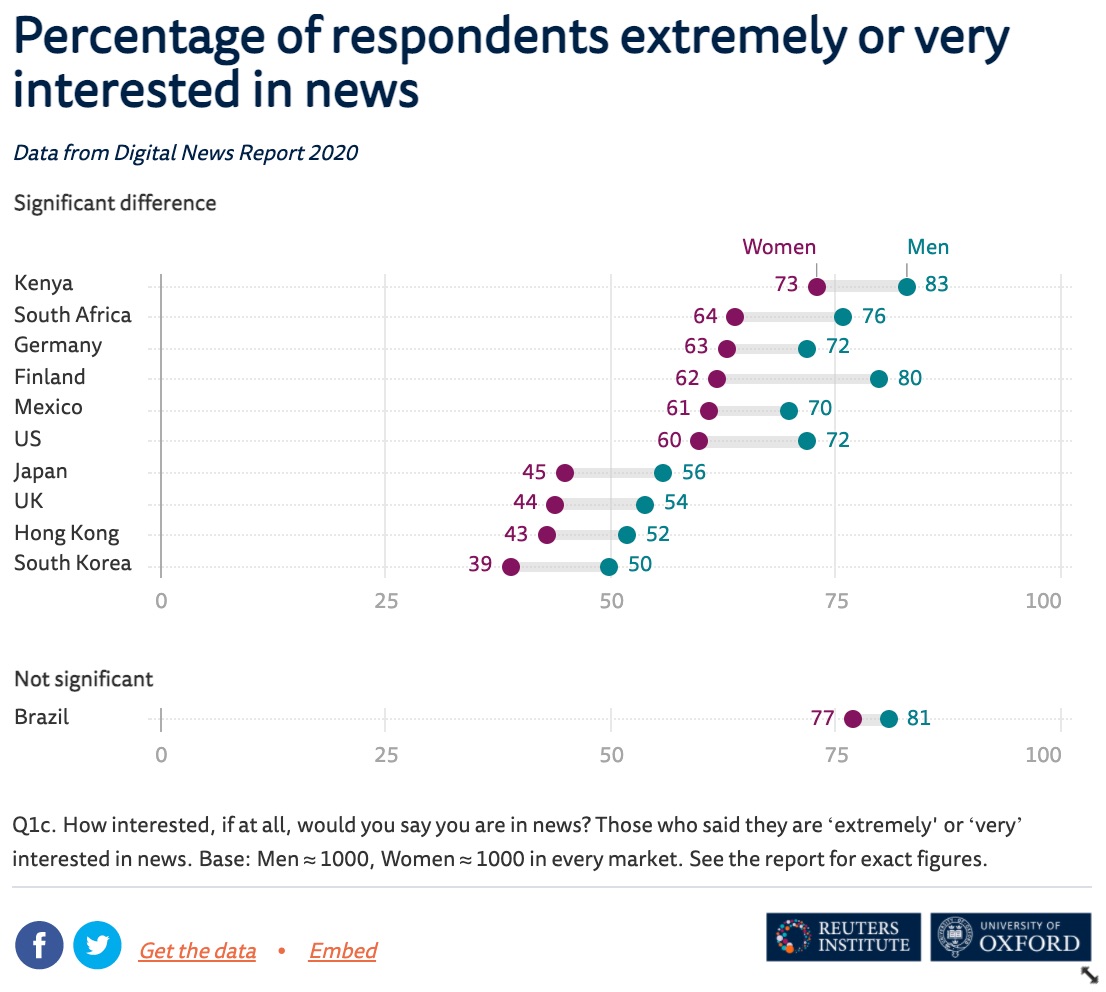
A reading for the winter solstice: a look at the relationships between women and news in Kenya. South Africa, Mexico, Brazil. Hong Kong, Japan, UK, Finland, Germany, US, and South Korea
My report with @simgandi for https://t.co/UnpeR4BBwg." target="_blank">@risj_oxford
https://t.co/UnpeR4BBwg. Some thoughts below.


https://t.co/R96wuInv6p
More from World



Watch the entire discussion if you have the time to do so. But if not, please make sure to watch Edhem Eldem summarizing ~150 years of democracy in Turkey in 6 minutes (starting on 57'). And if you can't watch it, fear not; I've transcribed it for you (as public service). Thread:
"Let me start by saying that I am a historian, I see dead people. But more seriously, I am constantly torn between the temptation to see patterns developing over time, and the fear of hasty generalizations and anachronistic comparisons. 1/n
"Nevertheless, the present situation forces me to explore the possible historical dimensions of the problem we're facing today. 2/n
"(...)I intend to go further back in time and widen the angle in order to focus on the confusion I believe exists between the notions of 'state', 'government', and 'public institutions' in Turkey. 3/n
"In the summer of 1876, that's a historical quote, as Midhat Pasa was trying to draft a constitution, Edhem Pasa wrote to Saffet Pasa, and I quote in Turkish, 'Bize Konstitusyon degil enstitusyon lazim' ('It is not a constitution we need but institutions'). 4/n
https://t.co/1GtPJaxi1H - Ka\xe7\u0131rmay\u0131n bu muhte\u015fem Bo\u011fazi\xe7i hocalar\u0131 ge\xe7idini !
— dilek cinar (@dlkcinar) February 16, 2021
"Let me start by saying that I am a historian, I see dead people. But more seriously, I am constantly torn between the temptation to see patterns developing over time, and the fear of hasty generalizations and anachronistic comparisons. 1/n
"Nevertheless, the present situation forces me to explore the possible historical dimensions of the problem we're facing today. 2/n
"(...)I intend to go further back in time and widen the angle in order to focus on the confusion I believe exists between the notions of 'state', 'government', and 'public institutions' in Turkey. 3/n
"In the summer of 1876, that's a historical quote, as Midhat Pasa was trying to draft a constitution, Edhem Pasa wrote to Saffet Pasa, and I quote in Turkish, 'Bize Konstitusyon degil enstitusyon lazim' ('It is not a constitution we need but institutions'). 4/n

Niger state shares borders with Zamfara, kebbi, Kaduna & Benin Republic. Terrorists from Niger republic and Burkina faso easily move money and arms across the borders of Kebbi, Zamfara and Benin R into Niger state. According to UN over 900,000 people have been displaced in B'Faso https://t.co/65YEMJhqDp
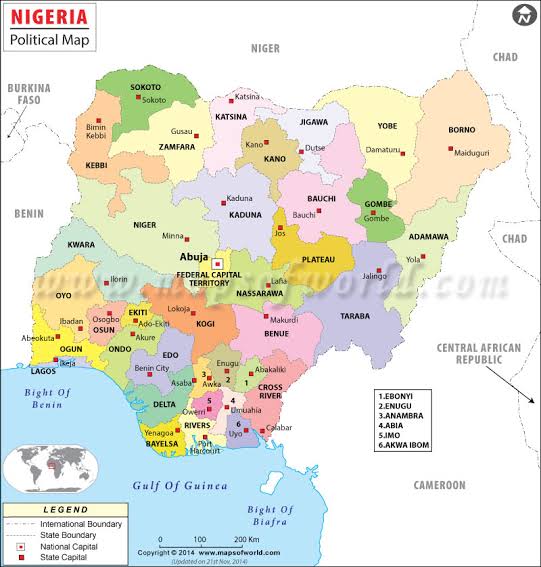
Niger, Mali and Burkina faso are weak countries populated by Shell terrorists who have now found a safe haven in the forests in Kaduna and Niger state. Birin Gwari, Mokwa forest, Nanati forests, Kanji lake areas.
No decent human resides permanently in forests.
We are facing both external and internal threats from these weak and failed countries we are surrounded with. As a senator you know that a FG police system with less than 300k officers can't actively police the landmass and borders in the North.
Form your state police now!
You and other senators should scrap the FG police system and devote the unaudited security votes and constituency allowance to policing your corridors and forests. Let the airforce bomb them and put your rangers in the forests. Issue an ultimatum for those in the forests to leave
You are all living in a dream if you think the current police structure will become efficient overnight.
Budget, Personnel, Technology, Equipment, Surveillance..It's impossible.
Form your state and community police and flush out the terrorists.
I am shocked and saddened by the attack on GSS, Kagara in Rafi LGA that led to the abduction of innocent schoolboys in Niger East. It is appalling that acts of violence against our educational institutions are becoming a norm & perpetrated on defenseless children.
— Senator Moh\u2019d Sani Musa (@MohdSaniMusa) February 17, 2021
Niger, Mali and Burkina faso are weak countries populated by Shell terrorists who have now found a safe haven in the forests in Kaduna and Niger state. Birin Gwari, Mokwa forest, Nanati forests, Kanji lake areas.
No decent human resides permanently in forests.
We are facing both external and internal threats from these weak and failed countries we are surrounded with. As a senator you know that a FG police system with less than 300k officers can't actively police the landmass and borders in the North.
Form your state police now!
You and other senators should scrap the FG police system and devote the unaudited security votes and constituency allowance to policing your corridors and forests. Let the airforce bomb them and put your rangers in the forests. Issue an ultimatum for those in the forests to leave
You are all living in a dream if you think the current police structure will become efficient overnight.
Budget, Personnel, Technology, Equipment, Surveillance..It's impossible.
Form your state and community police and flush out the terrorists.