THREAD.
In analysing the Afghan political spectrum something becomes obvious: Kabul's base is far more diverse than the Taliban's. For simplicity's sake, I'll count stronger opposition toward the Taliban than Kabul as 'pro Kabul'.
Let's assess these generally. Exceptions apply.
1) ethnonationalists of all ethnicities. Whilst the non-Pashtuns amongst them aren't pro-Ghani, they're pro-Kabul as an institution; they see it as far more representative and amenable to their interests than the Taliban.
a) The Taliban/Pakistan relationship
b) their overt Islam, which many Pashtun nationalists are hostile toward.
Liberals/seculars. Not much intro needed: progress, freedom, spectacular gains of the last 19 years, women's rights et cetera. You generally notice quite an anti-Islam, wholesale adoption of War on Terror rhetoric in their rationale.
Again, not much intro needed: the Taliban are Pakistani proxies just like the Mujahideen were. Pakistan is to blame, Islam is bad/needs to be de-emphasised as it is exploited.
Noticeable that whilst distinct, they share a large overlap with groups 1) and 2).
Generally pro-Mujahideen who consider Kabul a legitimate Islamic authority, strongly condemn the Taliban on Islamic grounds, consider their jihad void and focus on perceived unIslamic nature of the Taliban's method of war.
Massive tension between 4) and 1/2/3.
Nominally pro-Kabul but not from a moral/ideological perspective, but because their favourite politicians/warlords are currently represented in Kabul's team. Willing to cut separate deals with the Taliban as long as their party's interests are upheld.
Many across all groups see peace as a sham. Almost all ethnicities in 1) see their existence as mortally threatened in the event of a peace deal.
How do you reconcile these?
Worth noting groups 1,2&3 comprise fringe elements, yet enjoy healthy representation, for whichever reason.
For them, how much worse can it get? They haven't seen 'gains' Kabul boasts of, so their preservation is unimportant.
https://t.co/JFnMO99iFP
More from World

THREAD
1)
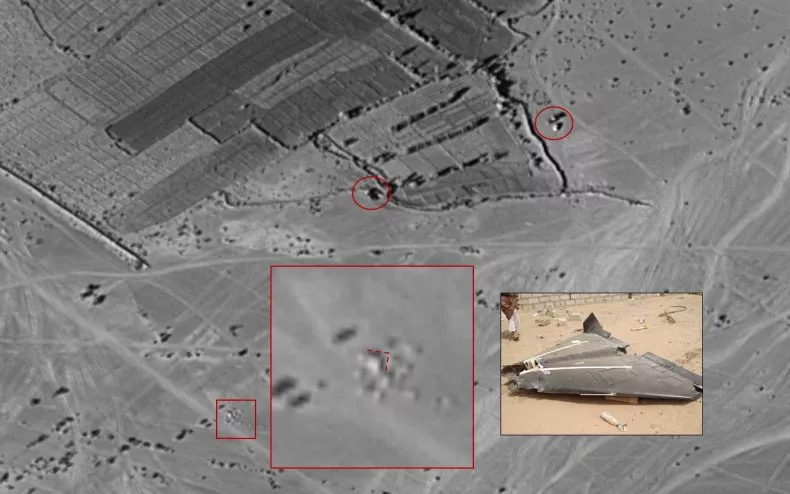
Newsweek — #Iran has sent deadly "Shahed-136 suicide/kamikaze drones" to the Houthis in #Yemen. These advanced UAVs are deployed to the Houthi-controlled northern Yemeni province of Al-Jawf.
More reason why the West should not appease Tehran.
https://t.co/gtNDCGbtQs
2)
#Iran has long provided drones to the Houthis
March 22, 2017
“… seven Houthi Qasef-1 drones and one drone engine recovered by forces from the UAE. Six of the drones were captured in October on a known Iranian smuggling route that runs through
3)
US to designate #Iran-backed Houthis in #Yemen as a foreign terrorist org (FTO)
https://t.co/ILBCg3Pfvs
Iran’s IRGC long funded/armed/trained/provided for the Houthis.
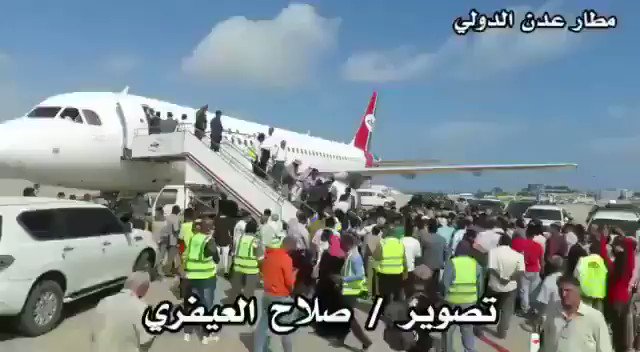
Dec 30—Missile attack on Aden airport. Yemen gov holds Houthis
4)
#Iran provides at least $360 million, ballistic missiles, other ordnance, technology and training to the Houthis in
5)
The Houthis recently claimed responsibility for a missile attack targeting Saudi Arabia’s Aramco oil

1)
Newsweek — #Iran has sent deadly "Shahed-136 suicide/kamikaze drones" to the Houthis in #Yemen. These advanced UAVs are deployed to the Houthi-controlled northern Yemeni province of Al-Jawf.
More reason why the West should not appease Tehran.
https://t.co/gtNDCGbtQs
2)
#Iran has long provided drones to the Houthis
March 22, 2017
“… seven Houthi Qasef-1 drones and one drone engine recovered by forces from the UAE. Six of the drones were captured in October on a known Iranian smuggling route that runs through
3)
US to designate #Iran-backed Houthis in #Yemen as a foreign terrorist org (FTO)
https://t.co/ILBCg3Pfvs
Iran’s IRGC long funded/armed/trained/provided for the Houthis.
Dec 30—Missile attack on Aden airport. Yemen gov holds Houthis
4)
#Iran provides at least $360 million, ballistic missiles, other ordnance, technology and training to the Houthis in
5)
The Houthis recently claimed responsibility for a missile attack targeting Saudi Arabia’s Aramco oil

@Ayjchan @K_G_Andersen @stgoldst @RozSofia @Ayjchan @K_G_Andersen please note that there were 11 infections in the Beijing 2004 leaks, not 8.
The 8 you are mentioning are for the main chain of infection with 3 levels from one primary case in April.
But there were 3 more primary cases for a total of 11 cases.
@K_G_Andersen @stgoldst @RozSofia All were linked to the heavily contaminated CDC P3 lab (the top P3 in China at the time).
The cases are typically separated between:
- The February ones (Cui and Ren) which seem to have been covered up by the CDC Institute of Virology. Also we only have pseudonyms for these 2.
@K_G_Andersen @stgoldst @RozSofia - The April ones-9 infections (1+8, officially the 'Beijing-Anhui Apr-2004 breakout'.
The official Chinese report only focussed on the April infections - keeping very quiet about the February ones. Here is the main April chain of infection.
Here is are the 9 from Apr 2004:
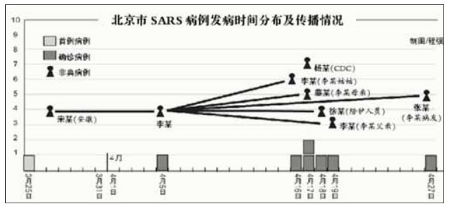
@K_G_Andersen @stgoldst @RozSofia And here are the 9 people infected in Apr 2004:
(4-22 in the title -> April chain with alarm raised on the 22nd):
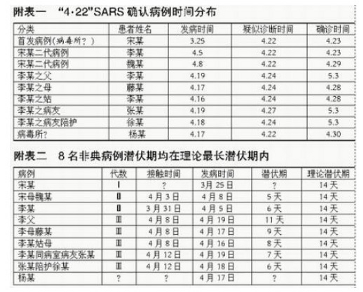
@K_G_Andersen @stgoldst @RozSofia The WHO eventually correctly mentioned 11 cases:
https://t.co/a1HvuT0C8z

The 8 you are mentioning are for the main chain of infection with 3 levels from one primary case in April.
But there were 3 more primary cases for a total of 11 cases.
@K_G_Andersen @stgoldst @RozSofia All were linked to the heavily contaminated CDC P3 lab (the top P3 in China at the time).
The cases are typically separated between:
- The February ones (Cui and Ren) which seem to have been covered up by the CDC Institute of Virology. Also we only have pseudonyms for these 2.
@K_G_Andersen @stgoldst @RozSofia - The April ones-9 infections (1+8, officially the 'Beijing-Anhui Apr-2004 breakout'.
The official Chinese report only focussed on the April infections - keeping very quiet about the February ones. Here is the main April chain of infection.
Here is are the 9 from Apr 2004:
@K_G_Andersen @stgoldst @RozSofia And here are the 9 people infected in Apr 2004:
(4-22 in the title -> April chain with alarm raised on the 22nd):
@K_G_Andersen @stgoldst @RozSofia The WHO eventually correctly mentioned 11 cases:
https://t.co/a1HvuT0C8z