Just finished reading an article by Iain MacWhirter that is so full of demonstrable falsehoods & logical fallacies that it requires a firm response: So seeing as I’ve done one nuclear thread this week already, I might as well do another... 🧵☢️🏴🇺🇳
Firstly, the easy part: our submission states @theSNP position clearly and unequivocally. It looks pretty unilateral to me \U0001f9d0 https://t.co/03btr7UBVh
— Martin Docherty-Hughes \U0001f3f4\U000e0067\U000e0062\U000e0073\U000e0063\U000e0074\U000e007f\U0001f3f3\ufe0f\u200d\U0001f308 (@MartinJDocherty) November 23, 2020
More from Uk


A short thread on why I am dubious that the government can lawfully impose charges on travellers entering the UK for quarantine and testing (proposed at £1,750 and £210)
1/
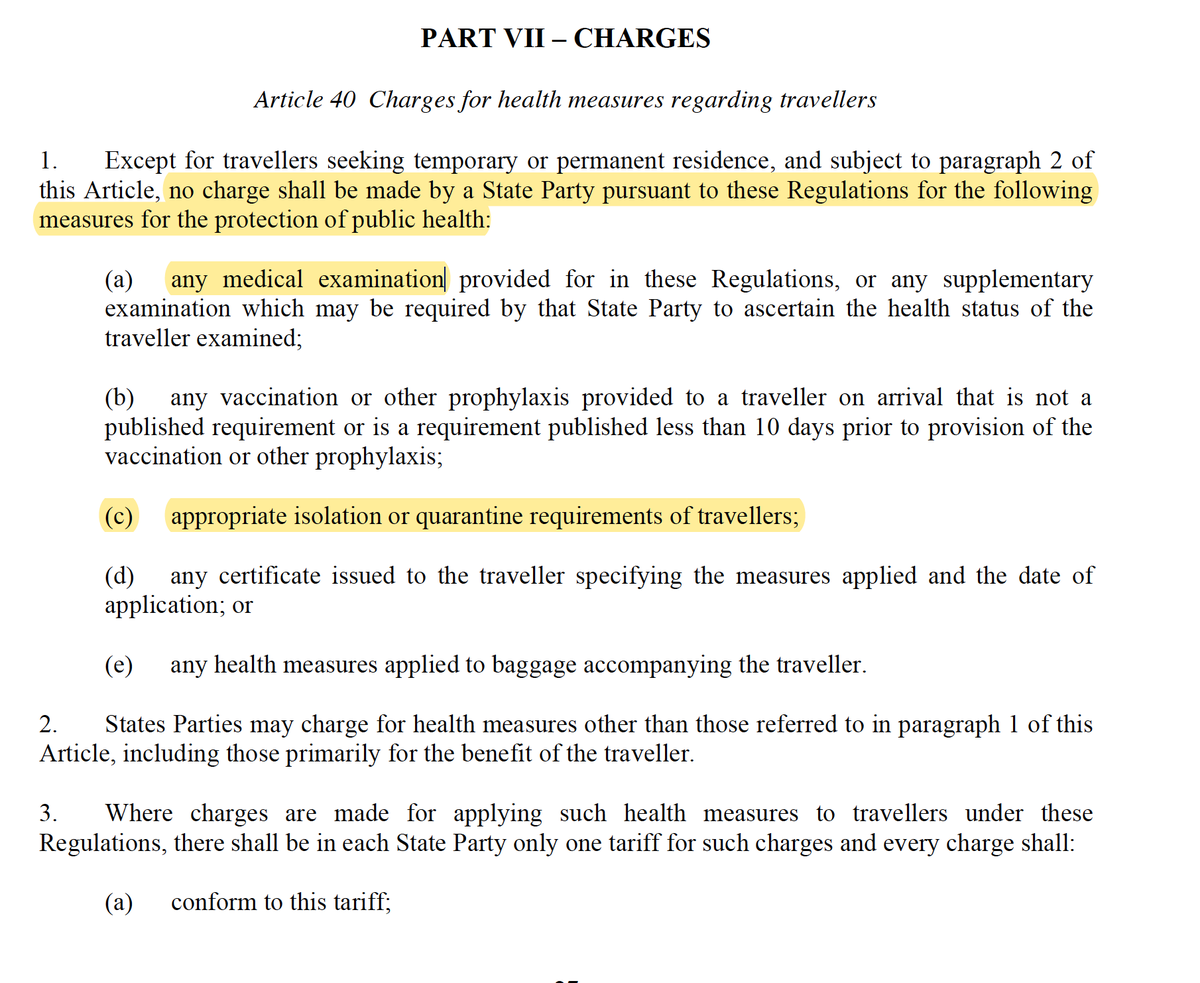
The UK has signed up to the International Health Regulations (IHA) 2005. These therefore create binding international legal obligations on the UK.
The IHA explicitly prevent charging for travellers' quarantine or medical examinations.
https://t.co/n4oWE8x5Vg /2
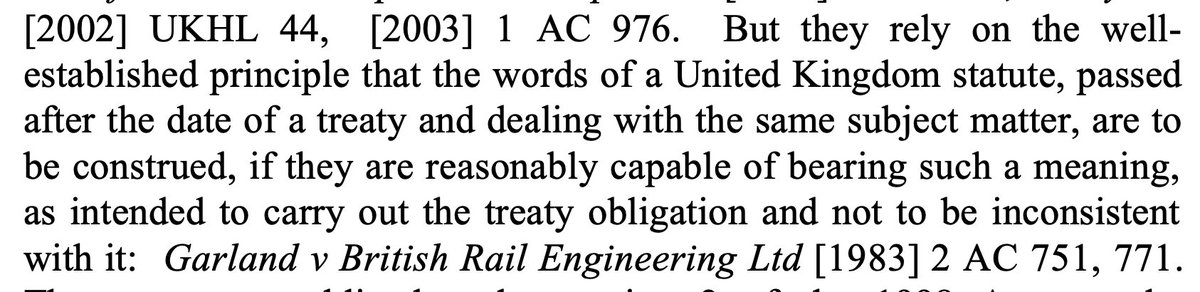
International law is not actionable in a UK court unless it has been implemented in law.
But it can be used as an aide to interpretation where a statute isn't clear as to what powers it grants.
See e.g. Lord Bingham in A v SSHD https://t.co/RXmib1qGYD
/3
The Quarantine regulations will, I assume, be made under section 45B of the Public Health (Control of Disease) Act 1984
https://t.co/54L4lHGMEr
/4
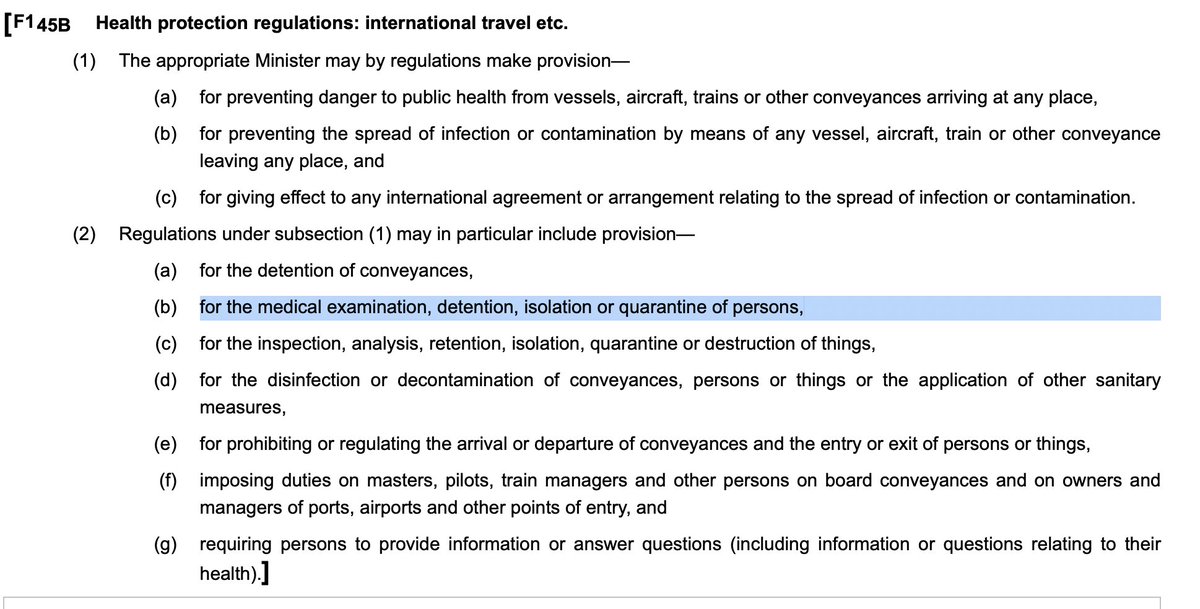
That gives pretty broad powers but I can't see any power to charge for quarantine. Perhaps it will be inferred from somewhere else in Part 2A?
But...
1/
The UK has signed up to the International Health Regulations (IHA) 2005. These therefore create binding international legal obligations on the UK.
The IHA explicitly prevent charging for travellers' quarantine or medical examinations.
https://t.co/n4oWE8x5Vg /2
International law is not actionable in a UK court unless it has been implemented in law.
But it can be used as an aide to interpretation where a statute isn't clear as to what powers it grants.
See e.g. Lord Bingham in A v SSHD https://t.co/RXmib1qGYD
/3
The Quarantine regulations will, I assume, be made under section 45B of the Public Health (Control of Disease) Act 1984
https://t.co/54L4lHGMEr
/4
That gives pretty broad powers but I can't see any power to charge for quarantine. Perhaps it will be inferred from somewhere else in Part 2A?
But...