BC UK

SNP thread

1. Scotland's independence rested on the UK staying in the single market - that is why we saw repeated Brexit related litigation in the Scottish courts.

2. If an independent Scotland wished to join the EU, a hard border between Scotland & England would be required to protect the single market & prevent migrants using Scotland as a route into England.
3. Then there are the issues re currency & debt which would need to be settled before EU membership became a serious proposal.

Many in the SNP realise this, hence the divisions we're witnessing.
4. Just as the Brexit Party popularity waned after mission accomplished, the SNP's popularity rests on campaigning, rather than achieving what they're campaigning for.

Polls show that a hard border isn't popular in a country that relies heavily on tourism.
5. The SNP would have been better placed to set their sights lower & supported an Efta/EEA Brexit, but they went all out to stop the UK exiting the EU and ultimately lost.

A hollowed out cause is all that remains for the SNP, with no realistic prospect of success.
6. Repeatedly skirting the issues re eligibility to join EU won't cut the mustard - people deserve a clear plan, to know how long the process would take & how the hurdles will be overcome.
7. A decade spent in the wilderness, independent, trying to reduce existing debt, to settle debts to UK, sort out a currency, border, UK/Scotland trade deal, before accession process to the EU can commence would be painful.

The SNP know this,
We know this, &
The EU know this.
8. But most of all, it's the damage a 2nd indyref would cause the SNP if independence was rejected again. They've placed so much emphasis on it, a 2nd indy failure would reduce the Party to tatters.

The realistic politicians in the Party know this.

More from Uk

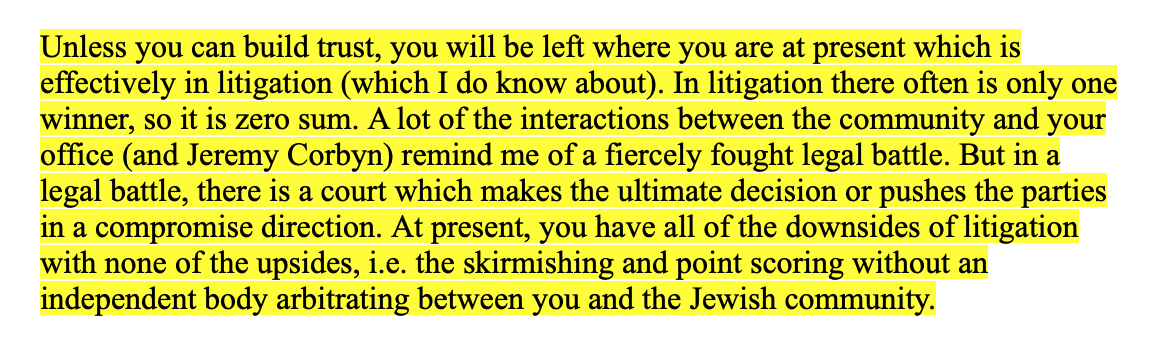
Yesterday, of course, Jeremy Corbyn launched his Peace and Justice Project, to much excitement on here. Laudable goals too:

Take on Murdoch ✅
Green New Deal ✅
Support for food banks ✅
Speed up vaccine delivery in developing countries ✅

That's all excellent.

I'm not sure if anyone can argue with those four aims: they're irrefutable and all massively important. You bet I'd like to see Labour doing likewise; you bet I'm frustrated that it's so quiet on all of it.

HOWEVER...

Contained within the announcement was exactly the same selective blindness which makes the entire thing all too easy to shoot down - and again, means Corbyn is pretty unlikely to persuade anyone who's not already persuaded.

The sort of blindness which makes me tear my hair out.

Peace and Justice - sounds great, doesn't it? So why did the Peace and Justice project proudly announce the support of a corrupt criminal not remotely interested in either of those


Rafael Correa, former President of Ecuador. Let's run through his record, starting with the positives.

Slashed poverty from 36.7% to 22.5% ✅

Reduced inequality from 0.55 to 0.47 on the Gini index ✅

So far, so good. Except, um...
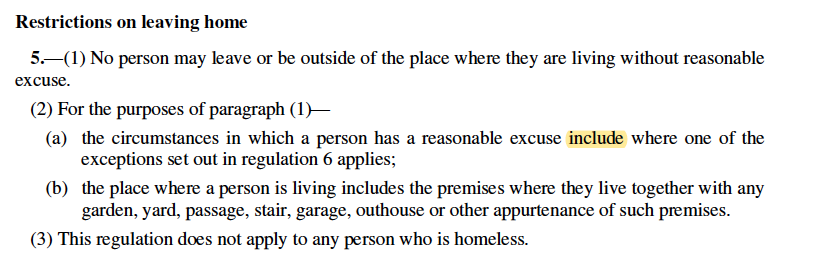
A short thread on why I am dubious that the government can lawfully impose charges on travellers entering the UK for quarantine and testing (proposed at £1,750 and £210)

1/

The UK has signed up to the International Health Regulations (IHA) 2005. These therefore create binding international legal obligations on the UK.

The IHA explicitly prevent charging for travellers' quarantine or medical examinations.

https://t.co/n4oWE8x5Vg /2


International law is not actionable in a UK court unless it has been implemented in law.

But it can be used as an aide to interpretation where a statute isn't clear as to what powers it grants.

See e.g. Lord Bingham in A v SSHD https://t.co/RXmib1qGYD

/3


The Quarantine regulations will, I assume, be made under section 45B of the Public Health (Control of Disease) Act 1984

https://t.co/54L4lHGMEr

/4


That gives pretty broad powers but I can't see any power to charge for quarantine. Perhaps it will be inferred from somewhere else in Part 2A?

But...

You May Also Like

First thread of the year because I have time during MCO. As requested, a thread on the gods and spirits of Malay folk religion. Some are indigenous, some are of Indian origin, some have Islamic


Before I begin, it might be worth explaining the Malay conception of the spirit world. At its deepest level, Malay religious belief is animist. All living beings and even certain objects are said to have a soul. Natural phenomena are either controlled by or personified as spirits

Although these beings had to be respected, not all of them were powerful enough to be considered gods. Offerings would be made to the spirits that had greater influence on human life. Spells and incantations would invoke their


Two known examples of such elemental spirits that had god-like status are Raja Angin (king of the wind) and Mambang Tali Arus (spirit of river currents). There were undoubtedly many more which have been lost to time

Contact with ancient India brought the influence of Hinduism and Buddhism to SEA. What we now call Hinduism similarly developed in India out of native animism and the more formal Vedic tradition. This can be seen in the multitude of sacred animals and location-specific Hindu gods
प्राचीन काल में गाधि नामक एक राजा थे।उनकी सत्यवती नाम की एक पुत्री थी।राजा गाधि ने अपनी पुत्री का विवाह महर्षि भृगु के पुत्र से करवा दिया।महर्षि भृगु इस विवाह से बहुत प्रसन्न हुए और उन्होने अपनी पुत्रवधु को आशीर्वाद देकर उसे कोई भी वर मांगने को कहा।


सत्यवती ने महर्षि भृगु से अपने तथा अपनी माता के लिए पुत्र का वरदान मांगा।ये जानकर महर्षि भृगु ने यज्ञ किया और तत्पश्चात सत्यवती और उसकी माता को अलग-अलग प्रकार के दो चरू (यज्ञ के लिए पकाया हुआ अन्न) दिए और कहा कि ऋतु स्नान के बाद तुम्हारी माता पुत्र की इच्छा लेकर पीपल का आलिंगन...

...करें और तुम भी पुत्र की इच्छा लेकर गूलर वृक्ष का आलिंगन करना। आलिंगन करने के बाद चरू का सेवन करना, इससे तुम दोनो को पुत्र प्राप्ति होगी।परंतु मां बेटी के चरू आपस में बदल जाते हैं और ये महर्षि भृगु अपनी दिव्य दृष्टि से देख लेते हैं।

भृगु ऋषि सत्यवती से कहते हैं,"पुत्री तुम्हारा और तुम्हारी माता ने एक दुसरे के चरू खा लिए हैं।इस कारण तुम्हारा पुत्र ब्राह्मण होते हुए भी क्षत्रिय सा आचरण करेगा और तुम्हारी माता का पुत्र क्षत्रिय होकर भी ब्राह्मण सा आचरण करेगा।"
इस पर सत्यवती ने भृगु ऋषि से बड़ी विनती की।


सत्यवती ने कहा,"मुझे आशीर्वाद दें कि मेरा पुत्र ब्राह्मण सा ही आचरण करे।"तब महर्षि ने उसे ये आशीर्वाद दे दिया कि उसका पुत्र ब्राह्मण सा ही आचरण करेगा किन्तु उसका पौत्र क्षत्रियों सा व्यवहार करेगा। सत्यवती का एक पुत्र हुआ जिसका नाम जम्दाग्नि था जो सप्त ऋषियों में से एक हैं।
I just finished Eric Adler's The Battle of the Classics, and wanted to say something about Joel Christiansen's review linked below. I am not sure what motivates the review (I speculate a bit below), but it gives a very misleading impression of the book. 1/x


The meat of the criticism is that the history Adler gives is insufficiently critical. Adler describes a few figures who had a great influence on how the modern US university was formed. It's certainly critical: it focuses on the social Darwinism of these figures. 2/x

Other insinuations and suggestions in the review seem wildly off the mark, distorted, or inappropriate-- for example, that the book is clickbaity (it is scholarly) or conservative (hardly) or connected to the events at the Capitol (give me a break). 3/x

The core question: in what sense is classics inherently racist? Classics is old. On Adler's account, it begins in ancient Rome and is revived in the Renaissance. Slavery (Christiansen's primary concern) is also very old. Let's say classics is an education for slaveowners. 4/x

It's worth remembering that literacy itself is elite throughout most of this history. Literacy is, then, also the education of slaveowners. We can honor oral and musical traditions without denying that literacy is, generally, good. 5/x