
1/ Some EU frustration at UK griping over trade problems and suggestions Brussels needs to improve its attitude to make the relationship work better. There's a feeling of déjà vu, that the UK never really accepted the practical reality of the deal it wanted and still doesn't.
More from Uk


Better late than never. Here we go. What does this deal mean for borders, border formalities, customs & trade facilitation?
Long one. TL:DR very little at the moment but has potential
/1
Borders
When compared to no deal the deal changes very little in terms of border procedures. All formalities and checks will still be required.
Reminder - we're not starting from 0 here – both our container ports and our ro-ro ports are already congested
/2
On top of that, all the issues related to border readiness: lack of capacity and space, IT systems not ready, shortages of customs agents, treader readiness – have not been solved.
The deal doesn’t help with that.
/3
Here is where we are:
☑️The UK will phase-in border formalities over 6 months (customs and SPS)
☑️The EU will introduce full formalities in 3 days (customs + SPS)
☑️Irish Sea border also fully operational in 3 days with some short-term SPS easements
/4
Pre-notifications (safety & security declarations) not initially required on the UK side, needed for imports into the EU.
So what's in the deal?
/5
Long one. TL:DR very little at the moment but has potential
/1
Lots of stuff on technical barriers and customs cooperation. See @AnnaJerzewska for more on the latter. pic.twitter.com/3sC5xHD3Z8
— Steve Peers (@StevePeers) December 26, 2020
Borders
When compared to no deal the deal changes very little in terms of border procedures. All formalities and checks will still be required.
Reminder - we're not starting from 0 here – both our container ports and our ro-ro ports are already congested
/2
On top of that, all the issues related to border readiness: lack of capacity and space, IT systems not ready, shortages of customs agents, treader readiness – have not been solved.
The deal doesn’t help with that.
/3
Here is where we are:
☑️The UK will phase-in border formalities over 6 months (customs and SPS)
☑️The EU will introduce full formalities in 3 days (customs + SPS)
☑️Irish Sea border also fully operational in 3 days with some short-term SPS easements
/4
Pre-notifications (safety & security declarations) not initially required on the UK side, needed for imports into the EU.
So what's in the deal?
/5



You May Also Like



So friends here is the thread on the recommended pathway for new entrants in the stock market.
Here I will share what I believe are essentials for anybody who is interested in stock markets and the resources to learn them, its from my experience and by no means exhaustive..
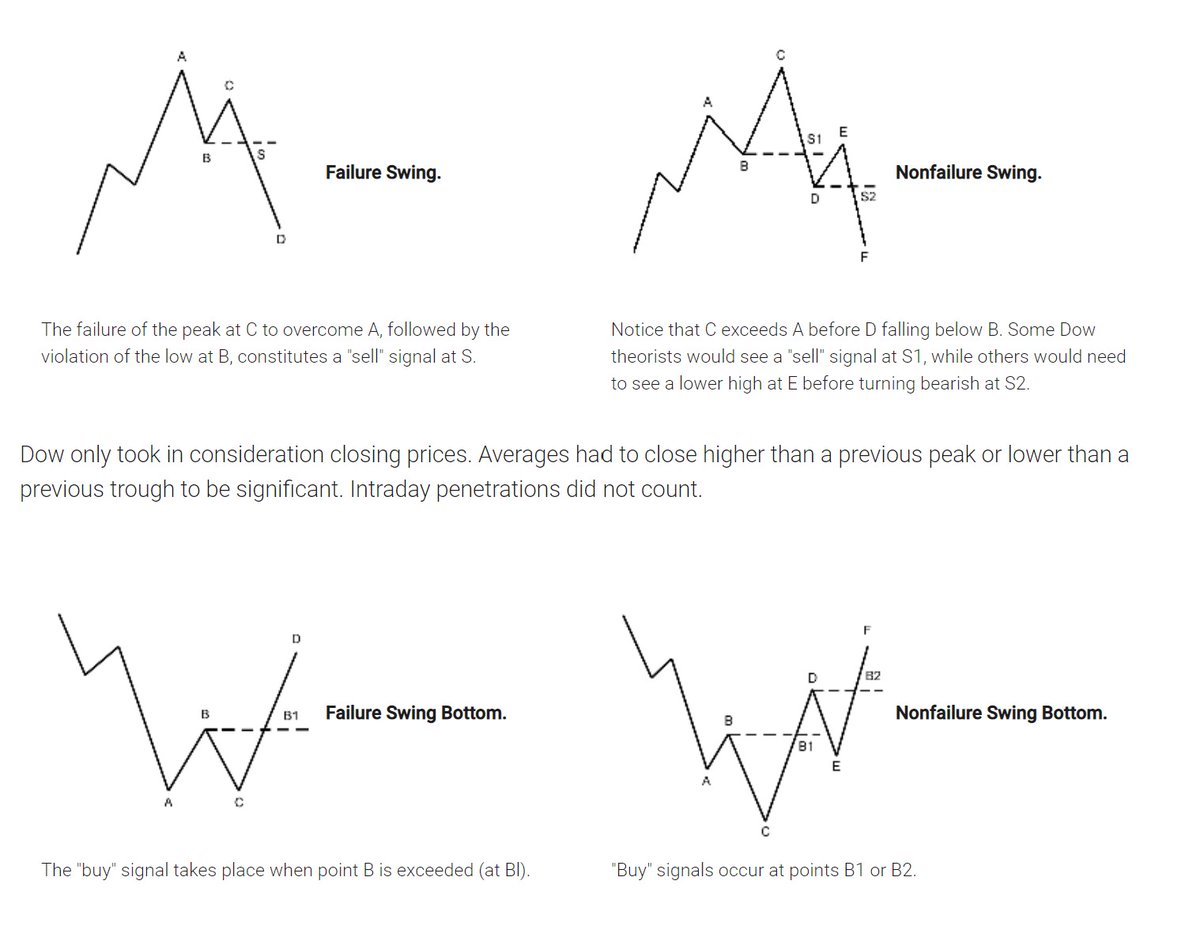
First the very basic : The Dow theory, Everybody must have basic understanding of it and must learn to observe High Highs, Higher Lows, Lower Highs and Lowers lows on charts and their
Even those who are more inclined towards fundamental side can also benefit from Dow theory, as it can hint start & end of Bull/Bear runs thereby indication entry and exits.
Next basic is Wyckoff's Theory. It tells how accumulation and distribution happens with regularity and how the market actually
Dow theory is old but
Here I will share what I believe are essentials for anybody who is interested in stock markets and the resources to learn them, its from my experience and by no means exhaustive..
First the very basic : The Dow theory, Everybody must have basic understanding of it and must learn to observe High Highs, Higher Lows, Lower Highs and Lowers lows on charts and their
Even those who are more inclined towards fundamental side can also benefit from Dow theory, as it can hint start & end of Bull/Bear runs thereby indication entry and exits.
Next basic is Wyckoff's Theory. It tells how accumulation and distribution happens with regularity and how the market actually
Dow theory is old but
Old is Gold....
— Professor (@DillikiBiili) January 23, 2020
this Bharti Airtel chart is a true copy of the Wyckoff Pattern propounded in 1931....... pic.twitter.com/tQ1PNebq7d