Categories Trading




A thread simplifying the underlying mechanics of this drama and explaining why our archaic T+2 settlement system is to blame...
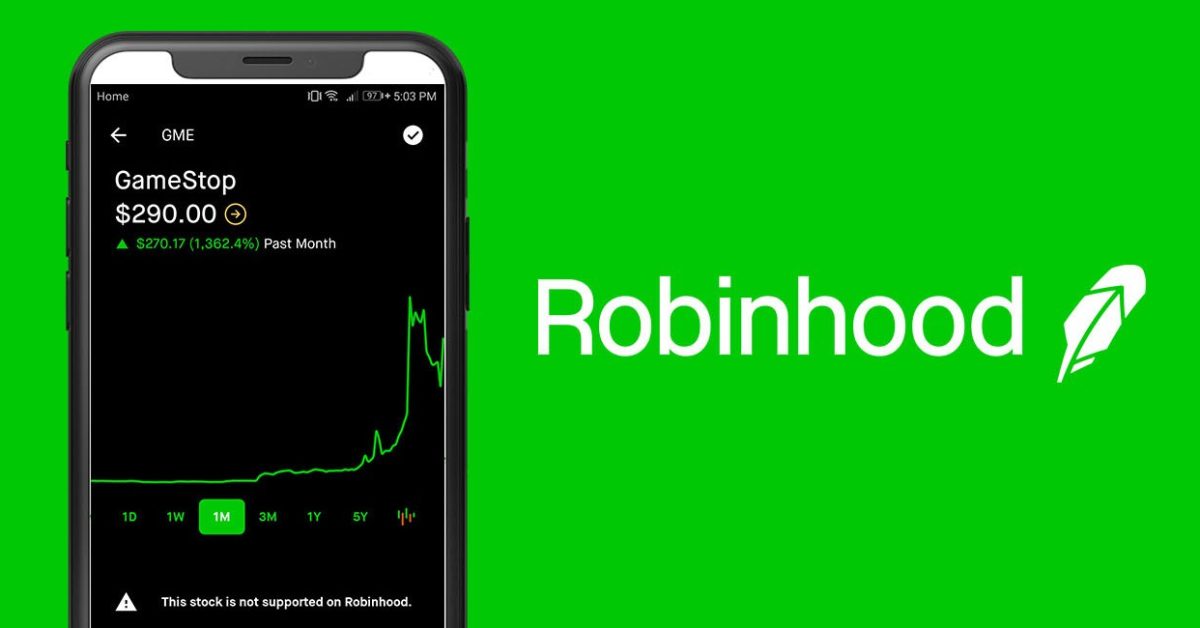
1/ First, if you're unfamiliar with the backdrop to this story, here are the basics.
GameStop (and other "meme stocks") saw a massive price spike last week.
There were fundamental and technical reasons for the rise.
My thread below is a helpful primer.
THREAD: The story of the week in finance is how a group of retail traders at @wallstreetbets, with assists from @ElonMusk and @Chamath, took down the establishment short sellers at GameStop.
— Sahil Bloom (@SahilBloom) January 27, 2021
A thread on the underlying mechanics of the $GME saga... pic.twitter.com/0TP9rst17A
2/ On Thursday, several brokerages, including the popular @RobinhoodApp, halted or restricted trading in many of these stocks.
The public outcry was immediate (and very loud).
Amazingly, it even had @AOC and @TedCruz agreeing on something.
Fully agree. \U0001f447 https://t.co/rW38zfLYGh
— Ted Cruz (@tedcruz) January 28, 2021
3/ There was speculation suggesting that Robinhood was involved in something nefarious.
Many pointed to their relationship with Citadel - a buyer of Robinhood order flow and a part-owner of infamous $GME short Melvin Capital - as a potential driver of the trading halts.
4/ But while this story made for headline-grabbing news, the real driver of the trading halts was much more mundane.
It has to do with our financial system's archaic "T+2 settlement" infrastructure.
It can get a bit complex, so let's simplify it here for everyone to understand.






Here are the best resources.
A thread 🧵👇
Collaborated with @niki_poojary
1. Best book of knowledge for a beginner?
Zerodha Varsity from @Nithin0dha's team is the best book for a newcomer to read and increase his basic knowledge about options, especially for the Indian markets.
Link:
2. Best Youtube channel on Options Trading?
The @tastytrade financial network. It's a foreign channel that focuses mostly on selling options.
They teach all strategies for free with their backtests.
Big on Straddle/Strangles selling.
Links:
3. Top Indian YouTube Channel for Options?
Power of Stocks - Subhasish Pani
What you'll learn:
1. How to form a trading plan.
2. How to scale an account with risk-reward in option selling.
3. Technical analysis logics you can use daily.
15
15 Learnings from Power of Stocks: \U0001f9f5
— Aditya Todmal (@AdityaTodmal) January 23, 2022
Collaborated with @niki_poojary
4. What are the preconditions to start option Selling:
You should know technical Analysis basics like:
- Support/Resistance
- Chart Patterns
- Candle Patterns
- Dow Theory (HH, LL)
This will help you start taking high-probability trades.




Here is a master thread related that will help a beginner to understand about Options Trading.
A complete course worth Rs 50K for free.
1/ A detailed thread on basics of Option Greeks and how it impacts Options
There are various Options Greeks like: Delta, Gamma, Vega, Rho, Theta.
— Yash Mehta (@YMehta_) September 4, 2022
A complete guide on how these #Option Greeks impact option price.
2/ Basic Option Trading Strategies:
There are many option strategies to trade. But keeping your strategy simple is the key.
In this thread, all the basic option trading strategies are being
Option trading is tough but here\u2019s what can make it easier for you
— The Chartians (@chartians) September 17, 2022
8 option strategies that you can use in any market (sold as a \u20b9 50,000 course !)
3/ What are the things that you should look at before taking any Option
They say options trading can make YOU BANKRUPT - is it true ?
— The Chartians (@chartians) September 23, 2022
If yes then why ?
A thread on Risk management and Position sizing in options trading (worth 50k\u20b9 course)\U0001f9f5
4/ Is Option Selling Possible with Rs 1 Lakh Capital?
Even a beginner can start trading in option selling with capital as low as Rs 1 Lakh.
What are the techniques one can use and how to mitigate the infinite loss risk is shared in this
101 guide on how you can start option selling to generate active returns with less capital (Rs 1 Lakh) \U0001f9f5:
— Yash Mehta (@YMehta_) August 19, 2022
A course on option selling available for free.





Will attempt to deep dives on each to build on some of my musings from earlier in the year on this topic 🤗 https://t.co/Amlnje1Qiq
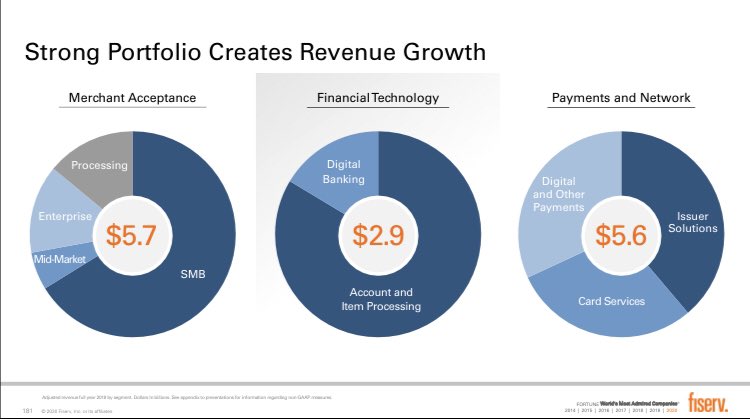
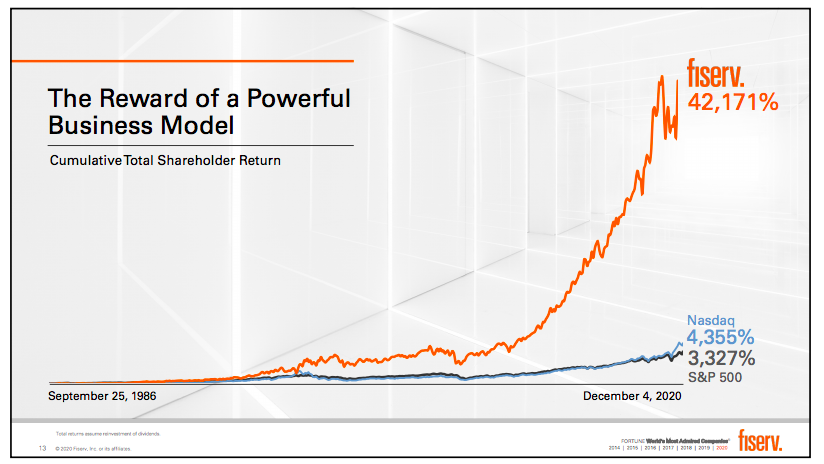
3) The revenue mix of $FISV today (post FDC merger) is roughly ~40% merchant acquiring, ~45% issuer processing and other payments related services, and ~15% core bank processing. Will take these in turn, then highlight growth levers I\u2019m most excited to watch in the coming years pic.twitter.com/yhvkCQrsF8
— BlueToothDDS (@BlueToothDDS) March 6, 2020
Will also try to bridge to an earlier thread laying out the $FISV growth algorithm and the operational/financial levers that support its medium-term outlook of 15-20% FCF/share growth
Here we focus on the top line, most notably the impressive acceleration across all 3 segments https://t.co/8HzMhEC5Bj
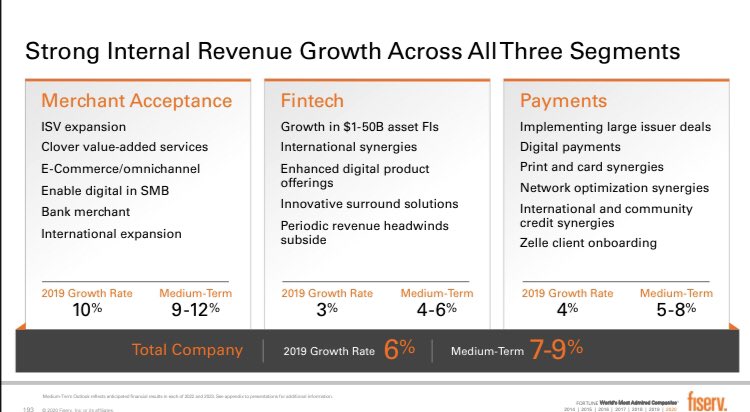
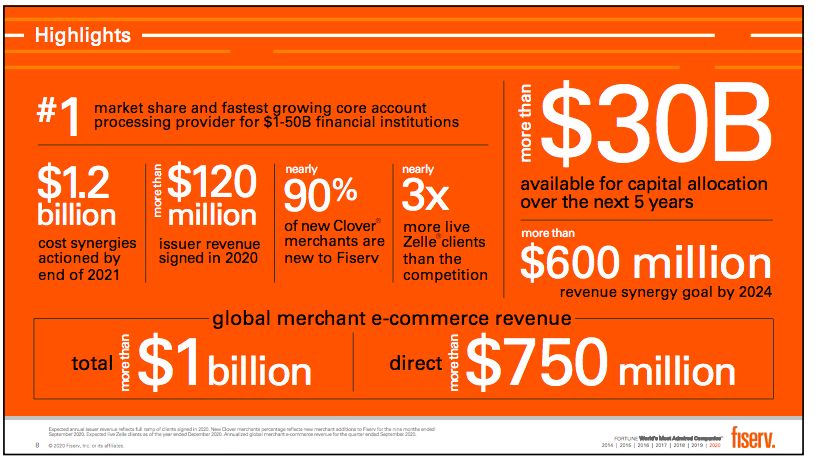
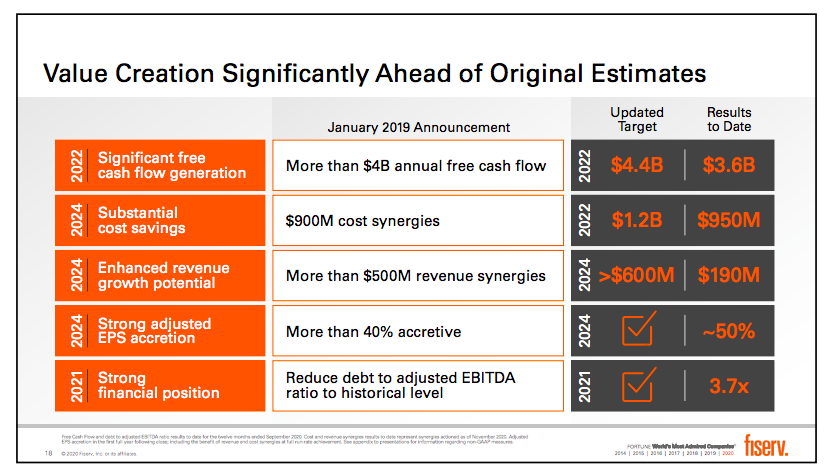
12) $FISV has both operational levers ($0.6B revenue synergies, $1.4B combined cost synergies + add\u2019l cost take out) and financial levers ($30B+ deployable FCF) to support its 15-20% compounded FCF/share growth
— BlueToothDDS (@BlueToothDDS) December 9, 2020
... and this is all before underlying business momentum (tomorrow) pic.twitter.com/JBtlGQIfBT
Let’s start with Merchant:
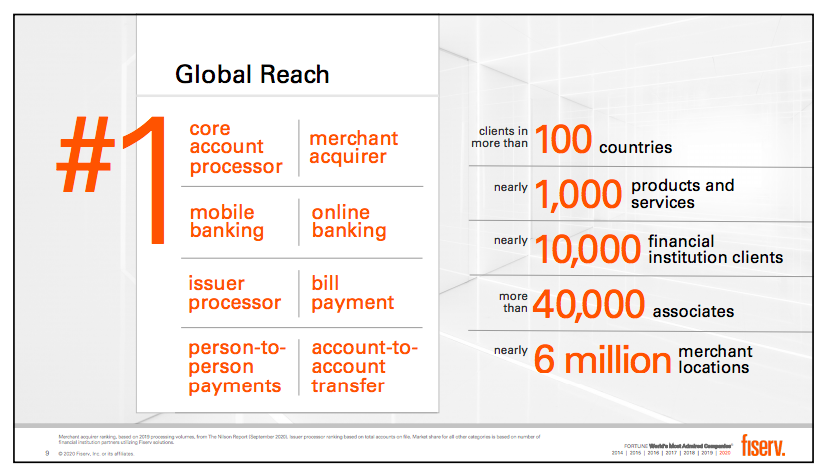
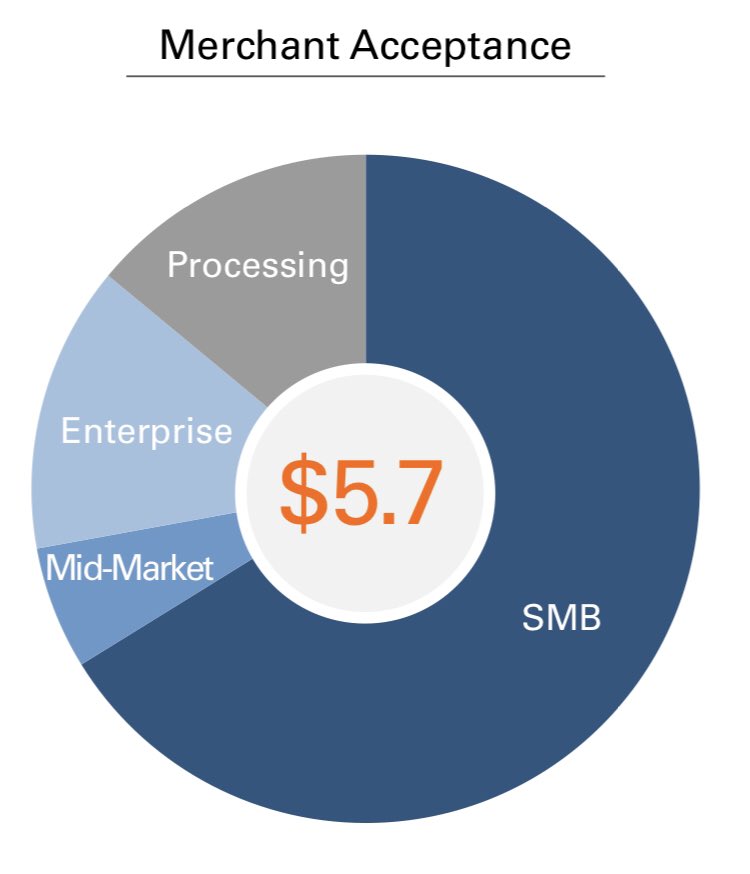
1) This segment, which ~40% of $FISV revenue today, is the #1 merchant acquirer globally processing $3T+ annually for 6M merchants worldwide
2/3 of revenue is from SMBs, ~20% from mid-to-enterprise merchants, remaining ~15% is wholesale processing
2) 🇺🇸 is 3/4 of the $FISV Merchant segment and the scale of this business is unmatched: it processes 40% of all in-person purchases in the US, covers 80% of all US zip codes and accounts for 10% of US GDP. This book of business is the most balanced in the industry https://t.co/Qlkk7lz3jQ
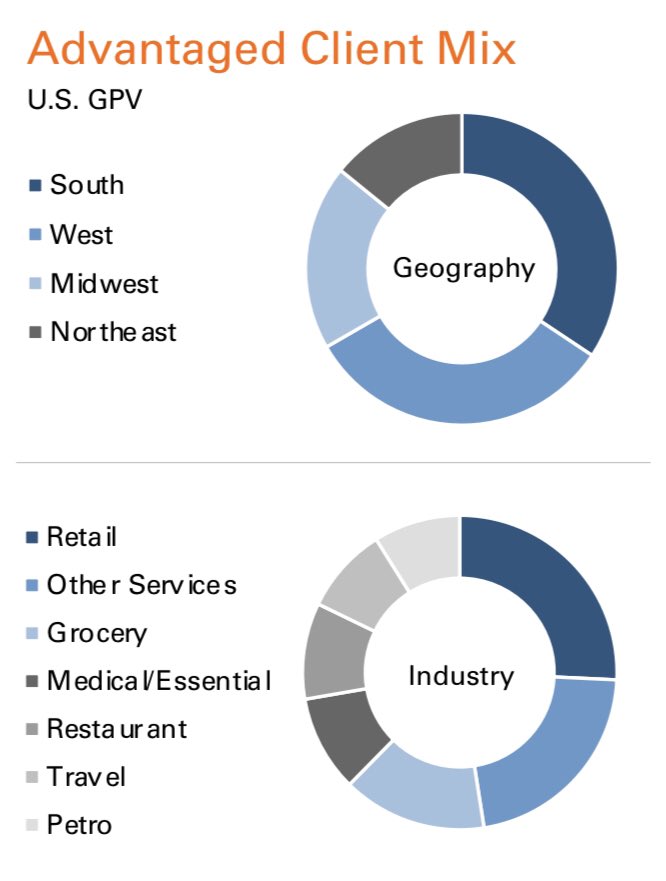
4) $FISV merchant business is the largest US acquirer processing $2.4 trillion of payments annually (including through JVs with BAC, WFC, PNC, C) accounting for 10% of \U0001f1fa\U0001f1f8 GDP. This segment includes Clover, which focuses on SMBs and is $105B runrate today growing at 40%+ annually pic.twitter.com/M5j4mbeiJX
— BlueToothDDS (@BlueToothDDS) March 6, 2020
3) Internationally, $FISV Merchant has strong position in EMEA (top 3 through various JVs and alliances) and several high growth countries, among others: India 🇮🇳 (top 3 with ~15% share), Argentina 🇦🇷 (~50% market share today), Brazil 🇧🇷 (routing ~30% of all electronic payments)
