(2/14)
Grad school app season is (mostly) over, and since academic twitter is going nuts about the idea of paying research assistants $15/hr...
Let's talk about how expensive it is to be a student applying to graduate school--especially for underrepresented students.
(1/14)
(2/14)
(3/14)
(4/14)
(5/15)
(6/14)
(7/14)
(8/14)
(9/14)
(10/14)
(11/14)
(12/14)
(13/14)
(14/14)
More from Tech


So we had to develop technologies like this to barely manage control over limited areas in Iraq's few urban centers. Only ~8 in 100 Iraqi adults owns a personal vehicle. That rate is > 1 car/adult in America yet I have never seen any doctrine paper or work of fiction address this
We've seen and struggled in civil conflicts with instant, local, universal, distributed communications (cell phone era, basically every conflict since 2000). We've seen and struggled in conflicts with instant, global, universal distributed communications (everything since 2011).
The world's most overfunded military and glow in the dark agencies struggle and largely fail to contain conflicts where fhe vast, vast majority of people are locked into a ~5mi radius of their home.
How can they possibly contain a conflict in a nation with universal car ownership and the most developed road network in the world? The average car can travel over 400 miles on one tank of gas, how can you contain the potential of that kind of mobility?
I think that's partially why the system was so freaked out by 1/6. Yes, most of it is histrionics but you don't decide to indefinitely turn your capital into the Baghdad Green Zone with fortifications and 25k troops over histrionics alone.
Hey guys, just a friendly reminder. We're watching you. pic.twitter.com/bGwi1uJBwT
— CIA Metadata Analyst with 8 kids (@CiaKids) September 23, 2019
We've seen and struggled in civil conflicts with instant, local, universal, distributed communications (cell phone era, basically every conflict since 2000). We've seen and struggled in conflicts with instant, global, universal distributed communications (everything since 2011).
The world's most overfunded military and glow in the dark agencies struggle and largely fail to contain conflicts where fhe vast, vast majority of people are locked into a ~5mi radius of their home.
How can they possibly contain a conflict in a nation with universal car ownership and the most developed road network in the world? The average car can travel over 400 miles on one tank of gas, how can you contain the potential of that kind of mobility?
I think that's partially why the system was so freaked out by 1/6. Yes, most of it is histrionics but you don't decide to indefinitely turn your capital into the Baghdad Green Zone with fortifications and 25k troops over histrionics alone.
You May Also Like






Keep dwelling on this:
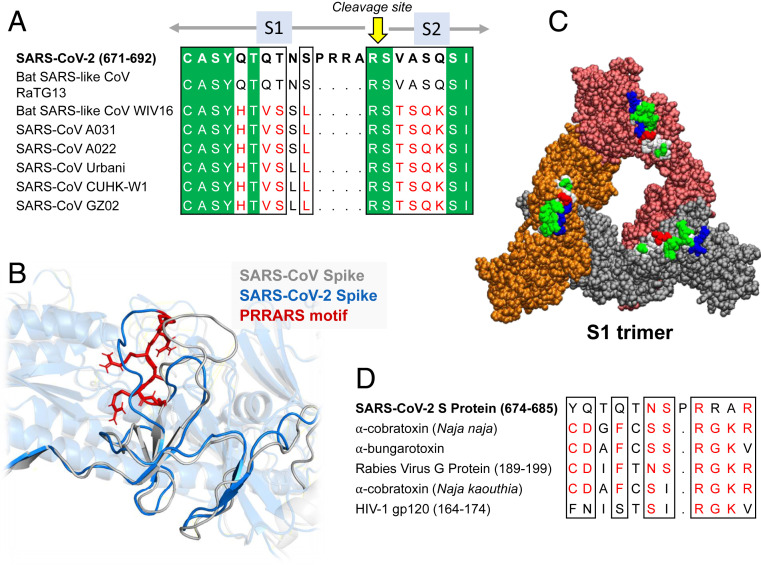
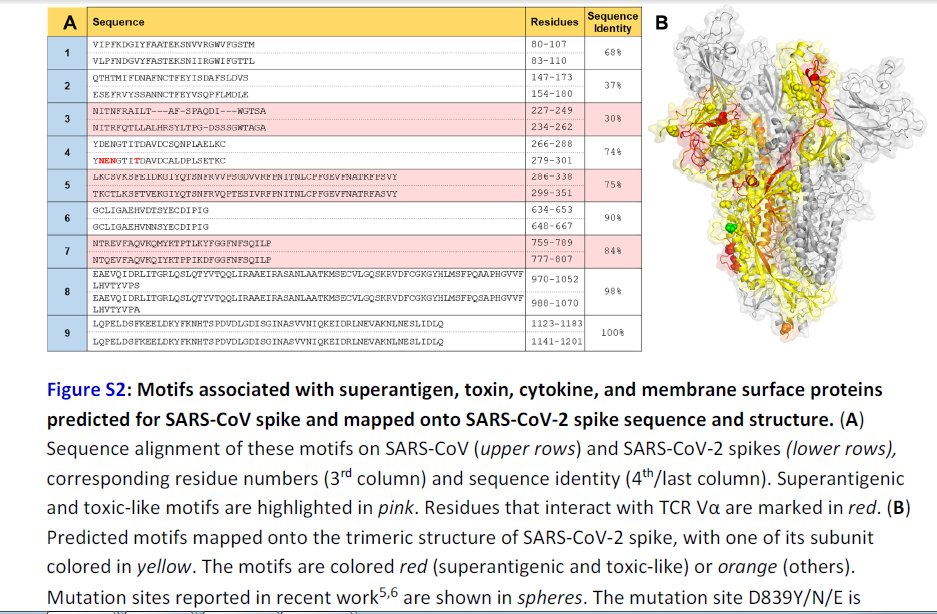
Further Examination of the Motif near PRRA Reveals Close Structural Similarity to the SEB Superantigen as well as Sequence Similarities to Neurotoxins and a Viral SAg.
The insertion PRRA together with 7 sequentially preceding residues & succeeding R685 (conserved in β-CoVs) form a motif, Y674QTQTNSPRRAR685, homologous to those of neurotoxins from Ophiophagus (cobra) and Bungarus genera, as well as neurotoxin-like regions from three RABV strains
(20) (Fig. 2D). We further noticed that the same segment bears close similarity to the HIV-1 glycoprotein gp120 SAg motif F164 to V174.
https://t.co/EwwJOSa8RK
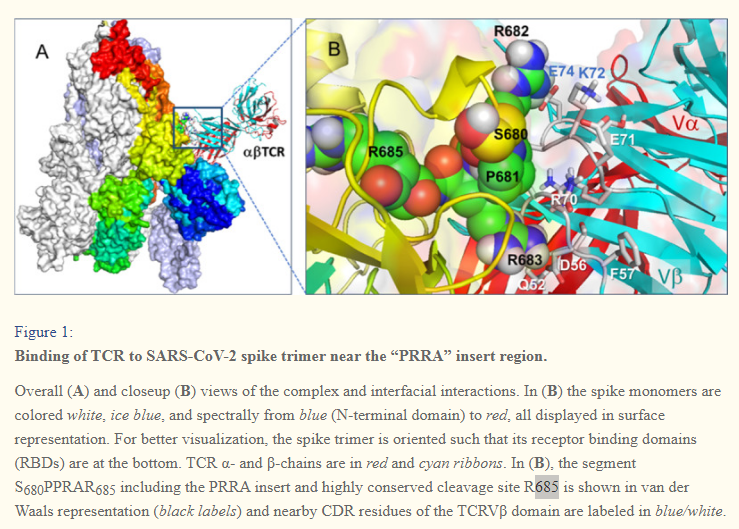
In (B), the segment S680PPRAR685 including the PRRA insert and highly conserved cleavage site *R685* is shown in van der Waals representation (black labels) and nearby CDR residues of the TCRVβ domain are labeled in blue/white
https://t.co/BsY8BAIzDa
Sequence Identity %
https://t.co/BsY8BAIzDa
Y674 - QTQTNSPRRA - R685
Similar to neurotoxins from Ophiophagus (cobra) & Bungarus genera & neurotoxin-like regions from three RABV strains
T678 - NSPRRA- R685
Superantigenic core, consistently aligned against bacterial or viral SAgs
Further Examination of the Motif near PRRA Reveals Close Structural Similarity to the SEB Superantigen as well as Sequence Similarities to Neurotoxins and a Viral SAg.
The insertion PRRA together with 7 sequentially preceding residues & succeeding R685 (conserved in β-CoVs) form a motif, Y674QTQTNSPRRAR685, homologous to those of neurotoxins from Ophiophagus (cobra) and Bungarus genera, as well as neurotoxin-like regions from three RABV strains
(20) (Fig. 2D). We further noticed that the same segment bears close similarity to the HIV-1 glycoprotein gp120 SAg motif F164 to V174.
https://t.co/EwwJOSa8RK
In (B), the segment S680PPRAR685 including the PRRA insert and highly conserved cleavage site *R685* is shown in van der Waals representation (black labels) and nearby CDR residues of the TCRVβ domain are labeled in blue/white
https://t.co/BsY8BAIzDa
Sequence Identity %
https://t.co/BsY8BAIzDa
Y674 - QTQTNSPRRA - R685
Similar to neurotoxins from Ophiophagus (cobra) & Bungarus genera & neurotoxin-like regions from three RABV strains
T678 - NSPRRA- R685
Superantigenic core, consistently aligned against bacterial or viral SAgs