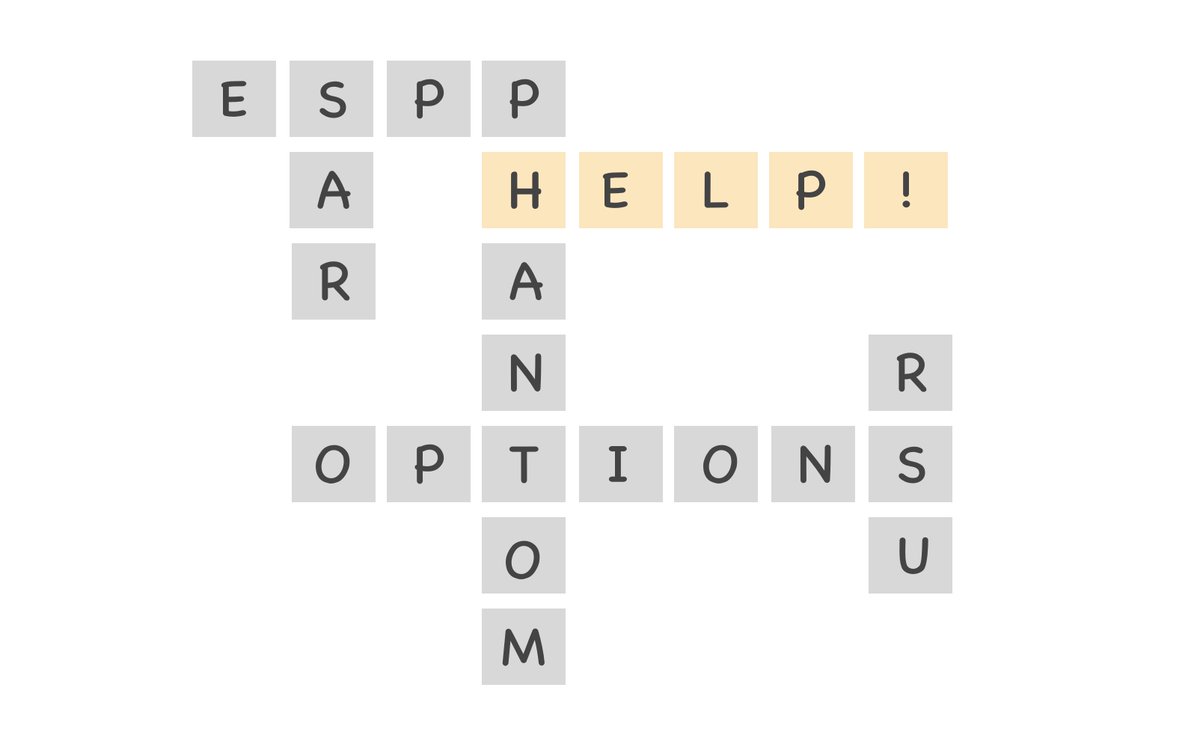
The 12 most important pieces of information and concepts I wish I knew about equity, as a software engineer.

A thread.

1. Equity is something Big Tech and high-growth companies award to software engineers at all levels. The more senior you are, the bigger the ratio can be:

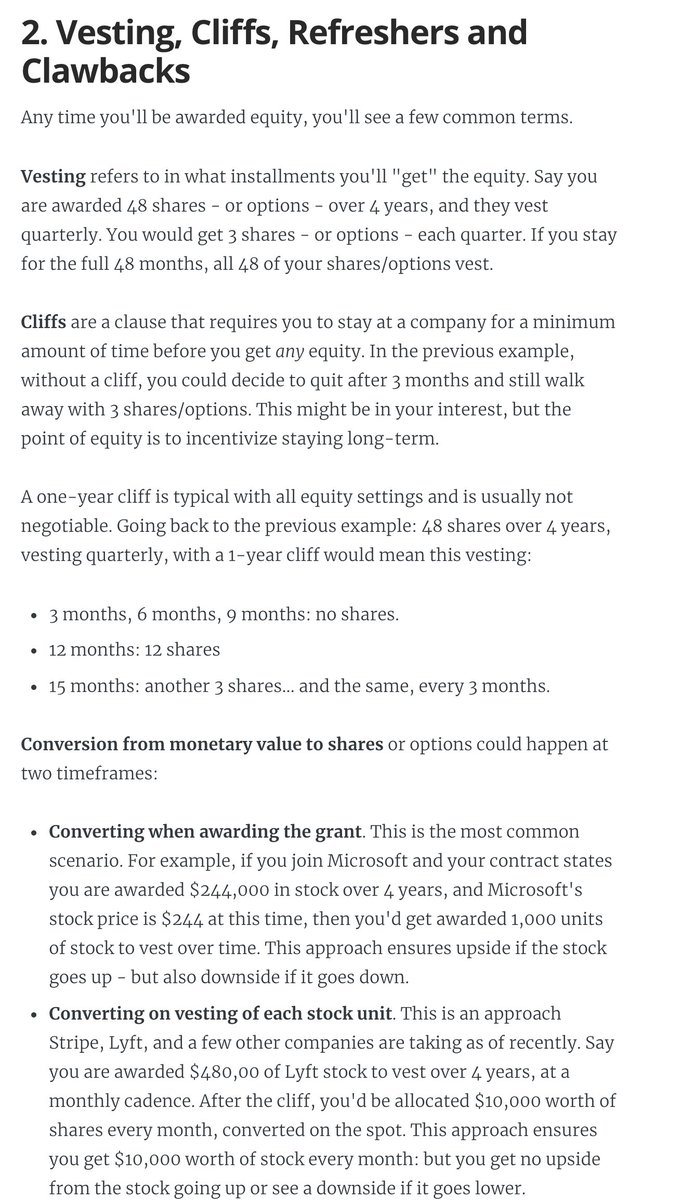
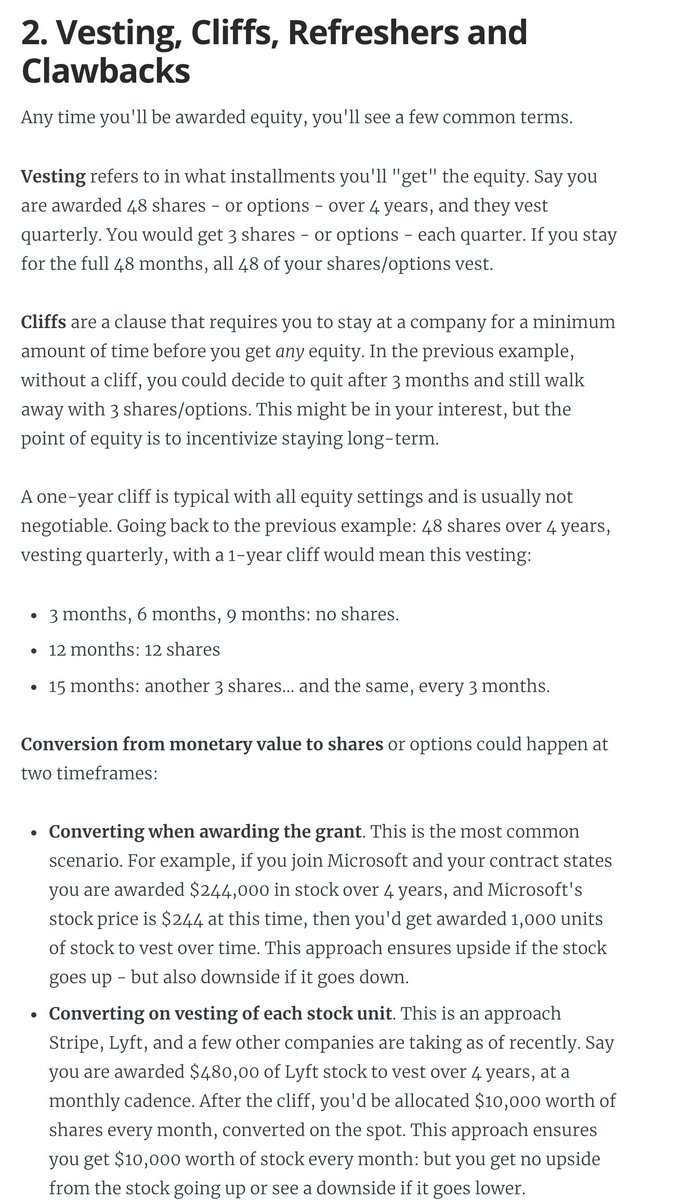
2. Vesting, cliffs, refreshers, and sign-on clawbacks.

If you get awarded equity, you'll want to understand vesting and cliffs. A 1-year cliff is pretty common in most places that award equity.

Read more in this blog post I wrote: https://t.co/WxQ9pQh2mY
3. Stock options / ESOPs.

The most common form of equity compensation at early-stage startups that are high-growth.

And there are *so* many pitfalls you'll want to be aware of. You need to do your research on this: I can't do justice in a tweet.

https://t.co/cudLn3ngqi
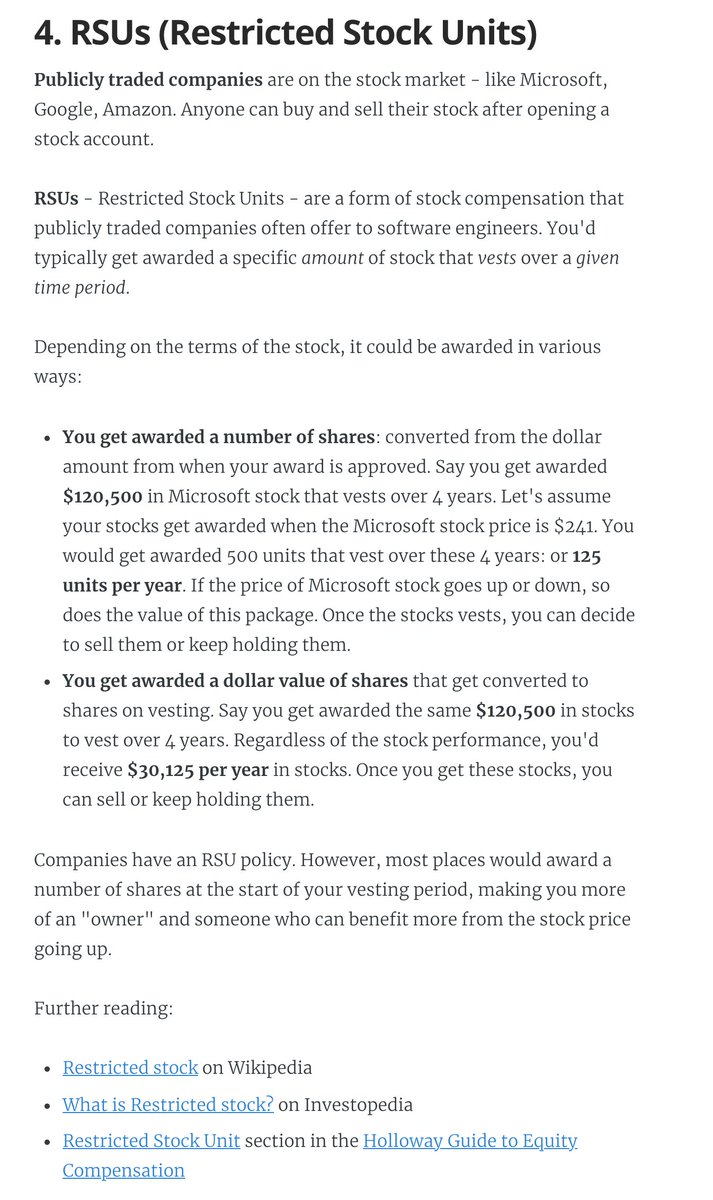
4. RSUs (Restricted Stock Units)

A common form of equity compensation for publicly traded companies and Big Tech. One of the easier types of equity to understand: https://t.co/a5xU1H9IHP

5. Double-trigger RSUs. Typically RSUs for pre-IPO companies. I got these at Uber.
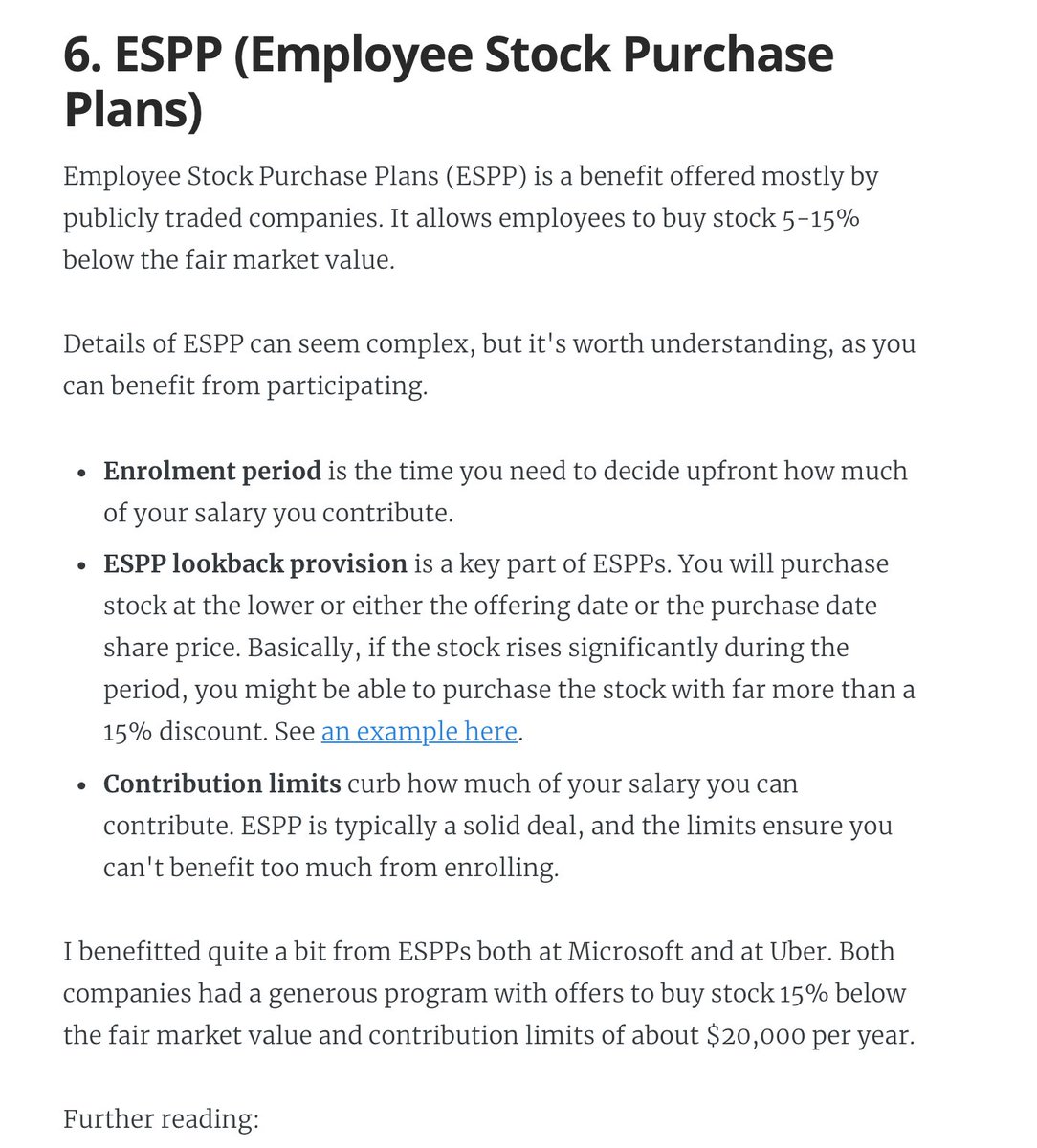
6. ESPP: a (typically) amazing employee perk at publicly traded companies. There's always risk, but this plan can typically offer good upsides.

7. Phantom shares. An interesting setup similar to RSUs... but you don't own stocks. Not frequent, but e.g. Adyen goes with this plan.
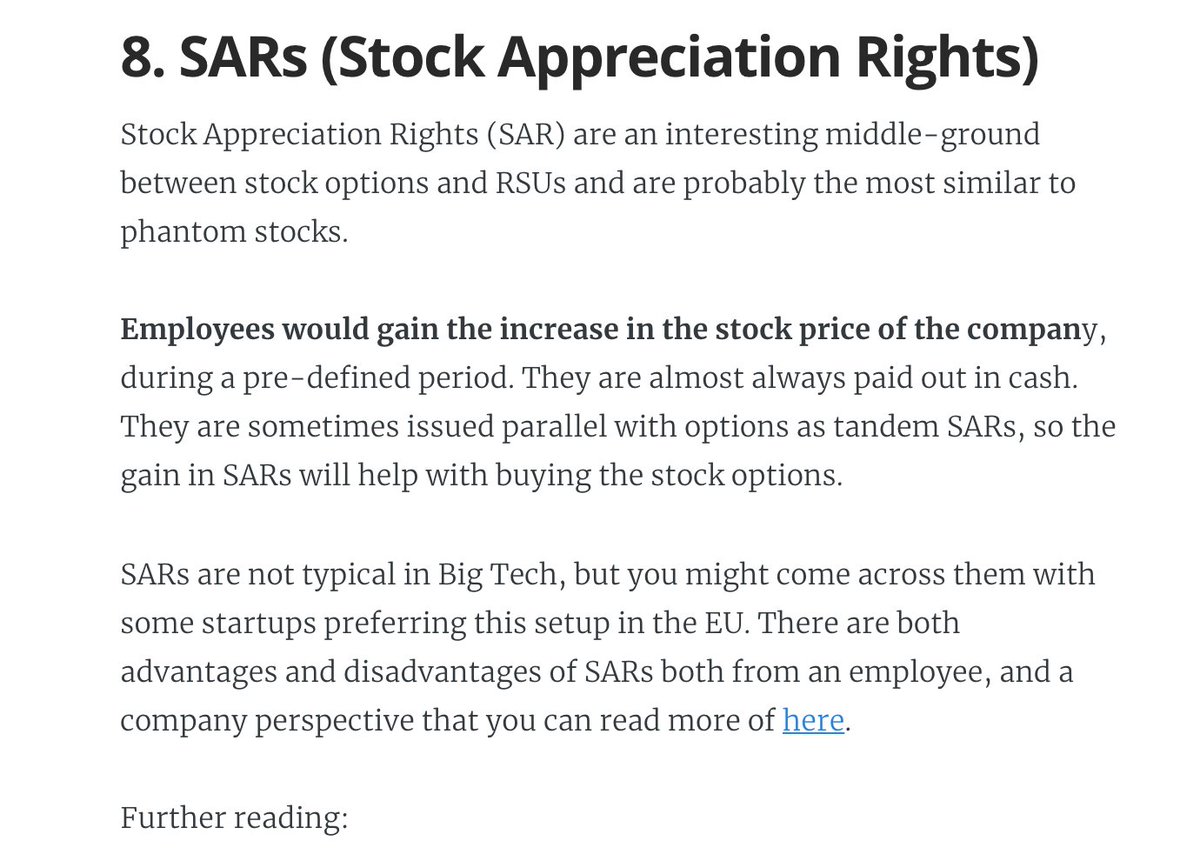
7. SARs - similar to phantom stocks. A few EU tech startups I know of use them.

8. Growth shares. A more exotic equity type. Skyscanner awarded these kinds of shares.

More: https://t.co/fuojT1jp4g
10. Dilution. What is almost certain to happen with options/shares with new fundraising rounds. Not much you can do: but be aware.

11. Taxes. The only certainty with equities is you needing to deal with this. Talk with an expert. This is important.
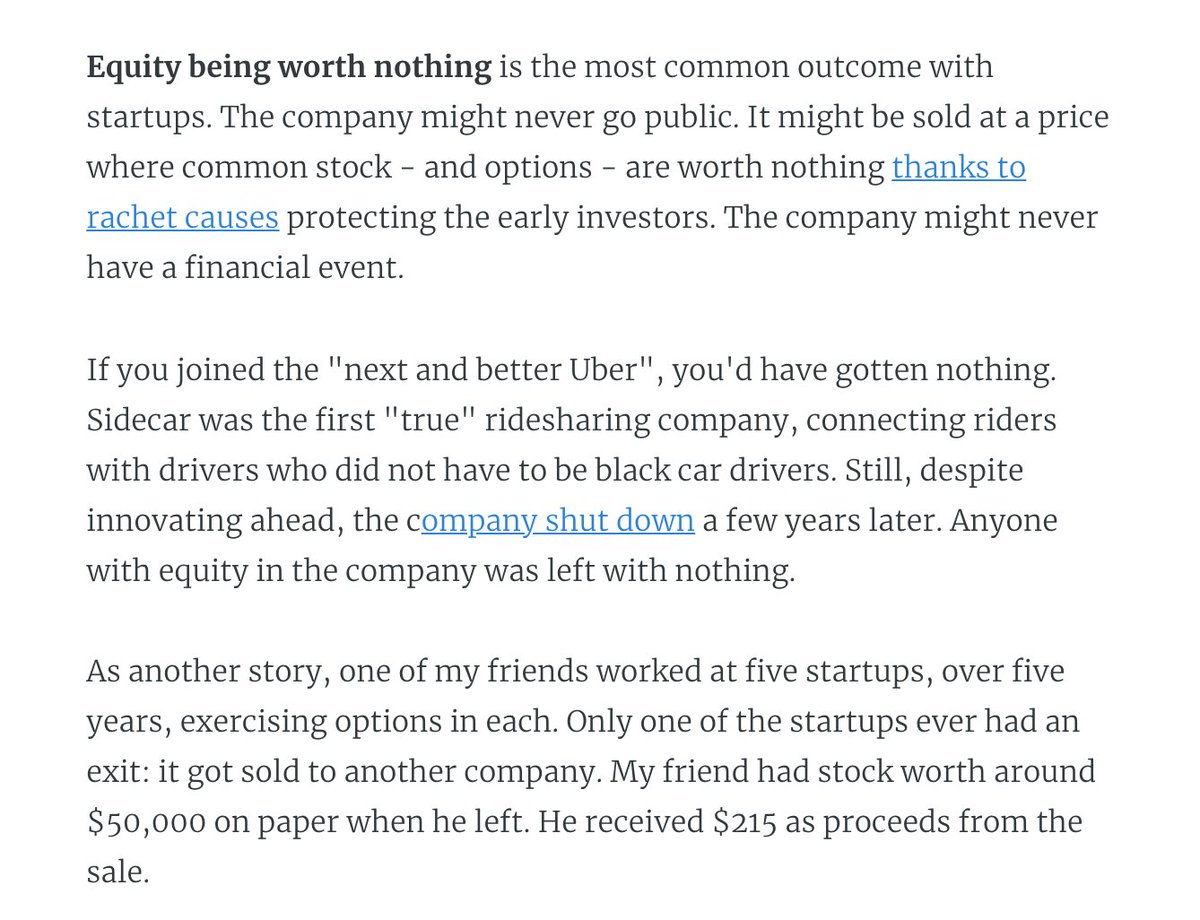
12. Equity carries plenty of risk and you *can* lose money - not just gain.

WeWork. Zenefits. Good Technologies. FanDuel. All cautionary examples.

Until you've cashed in your equity, it can evaporate. Keep this in mind.

Full article: https://t.co/fuojT1jp4g

And finally:
Most companies do not equity for software engineers. Big Tech and high-growth tech startups are ones who typically do.

But how do you get into these places? I don't have the answers, but have a few thoughts I'll send out in email form Subscribe here: https://t.co/1I7RGTXS0u

More from Tech

So we had to develop technologies like this to barely manage control over limited areas in Iraq's few urban centers. Only ~8 in 100 Iraqi adults owns a personal vehicle. That rate is > 1 car/adult in America yet I have never seen any doctrine paper or work of fiction address this


We've seen and struggled in civil conflicts with instant, local, universal, distributed communications (cell phone era, basically every conflict since 2000). We've seen and struggled in conflicts with instant, global, universal distributed communications (everything since 2011).

The world's most overfunded military and glow in the dark agencies struggle and largely fail to contain conflicts where fhe vast, vast majority of people are locked into a ~5mi radius of their home.

How can they possibly contain a conflict in a nation with universal car ownership and the most developed road network in the world? The average car can travel over 400 miles on one tank of gas, how can you contain the potential of that kind of mobility?

I think that's partially why the system was so freaked out by 1/6. Yes, most of it is histrionics but you don't decide to indefinitely turn your capital into the Baghdad Green Zone with fortifications and 25k troops over histrionics alone.

You May Also Like

क्या आप जानते हैं कि क्या है, पितृ पक्ष में कौवे को खाना देने के पीछे का वैज्ञानिक कारण!

श्राद्ध पक्ष में कौओं का बड़ा ही महत्व है। कहते है कौआ यम का प्रतीक है, यदि आपके हाथों दिया गया भोजन ग्रहण कर ले, तो ऐसा माना जाता है कि पितरों की कृपा आपके ऊपर है और वे आपसे ख़ुश है।


कुछ लोग कहते हैं की व्यक्ति मरकर सबसे पहले कौवे के रूप में जन्म लेता है और उसे खाना खिलाने से वह भोजन पितरों को मिलता है

शायद हम सबने अपने घर के किसी बड़े बुज़ुर्ग, किसी पंडित या ज्योतिषाचार्य से ये सुना होगा। वे अनगिनत किस्से सुनाएंगे, कहेंगे बड़े बुज़ुर्ग कह गए इसीलिए ऐसा करना

शायद ही हमें कोई इसके पीछे का वैज्ञानिक कारण बता सके।

हमारे ऋषि मुनि और पौराणिक काल में रहने वाले लोग मुर्ख नहीं थे! कभी सोचियेगा कौवों को पितृ पक्ष में खिलाई खीर हमारे पूर्वजों तक कैसे पहुंचेगी?

हमारे ऋषि मुनि विद्वान थे, वे जो बात करते या कहते थे उसके पीछे कोई न कोई वैज्ञानिक कारण छुपा होता था।

एक बहुत रोचक तथ्य है पितृ पक्ष, भादो( भाद्रपद) प्रकृति और काक के बीच।

एक बात जो कह सकते कि हम सब ने स्वतः उग आये पीपल या बरगद का पेड़/ पौधा किसी न किसी दीवार, पुरानी

इमारत, पर्वत या अट्टालिकाओं पर ज़रूर देखा होगा। देखा है न?

ज़रा सोचिये पीपल या बरगद की बीज कैसे पहुंचे होंगे वहाँ तक? इनके बीज इतने हल्के भी नहीं होते के हवा उन्हें उड़ाके ले जा सके।
I’m torn on how to approach the idea of luck. I’m the first to admit that I am one of the luckiest people on the planet. To be born into a prosperous American family in 1960 with smart parents is to start life on third base. The odds against my very existence are astronomical.


I’ve always felt that the luckiest people I know had a talent for recognizing circumstances, not of their own making, that were conducive to a favorable outcome and their ability to quickly take advantage of them.

In other words, dumb luck was just that, it required no awareness on the person’s part, whereas “smart” luck involved awareness followed by action before the circumstances changed.

So, was I “lucky” to be born when I was—nothing I had any control over—and that I came of age just as huge databases and computers were advancing to the point where I could use those tools to write “What Works on Wall Street?” Absolutely.

Was I lucky to start my stock market investments near the peak of interest rates which allowed me to spend the majority of my adult life in a falling rate environment? Yup.