BC TA

How to find out the expected targets and what should be the exit criteria when you enter a trade - 🧵

Possible ways to find out the target:

Check if any patterns forming - it gets quite easy to figure out the targets that way. (1/15)

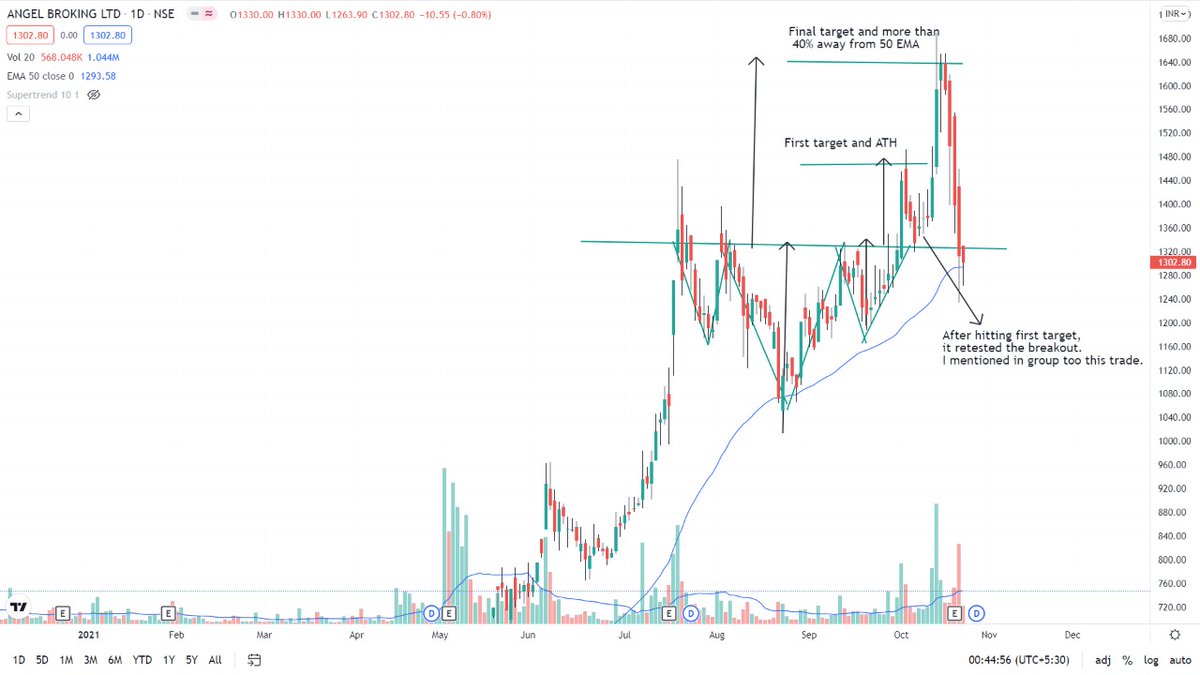
Let's say cup and handle. Our first target in this case will be the height of the handle and final target will be height of the whole cup. It's the same with H&S. First target will be the height of the shoulder and final will be the height of the head. (2/15)
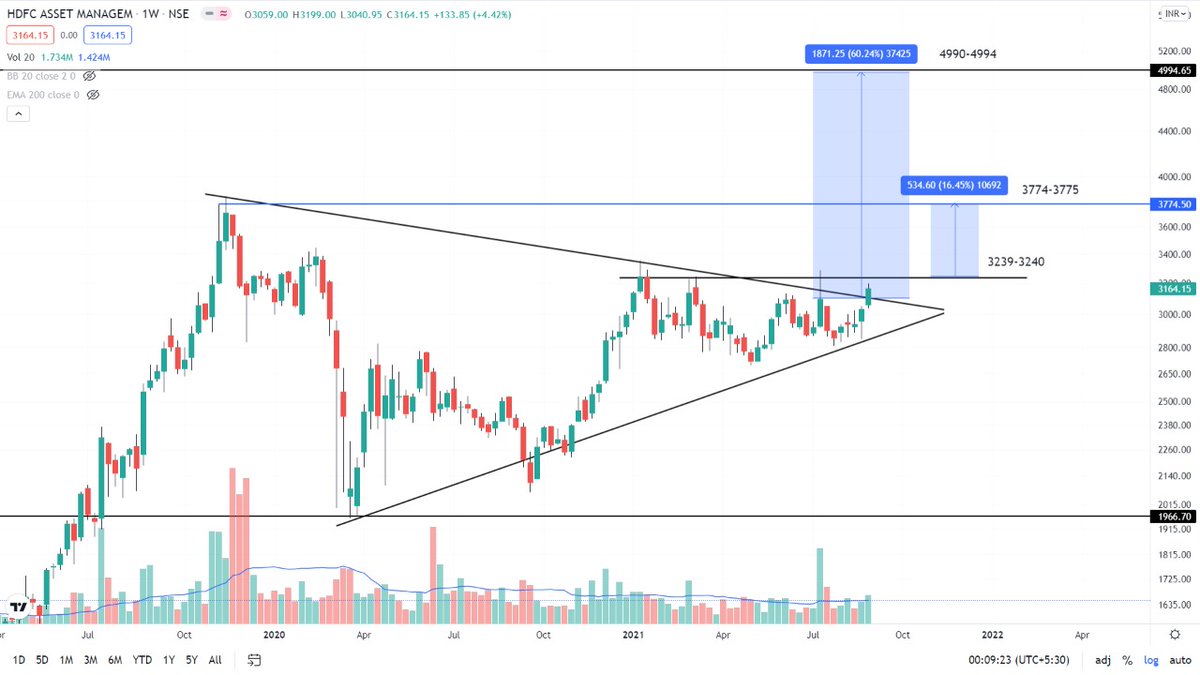
In triangles, the targets will be height of the whole triangle.

Sometimes, after hitting the first target.. stock starts consolidating or take a retest of the breakout. On some occasions, stock gives one sided move non-stop.. without any pullback. (3/15)
A lot depends on the stock behaviour too. If a particular Index gave a breakout, then too stock gives final target without pullback.

Also, if stock gives weekly breakout and market is trending during that time.. even then it gives a one sided move. (4/15)
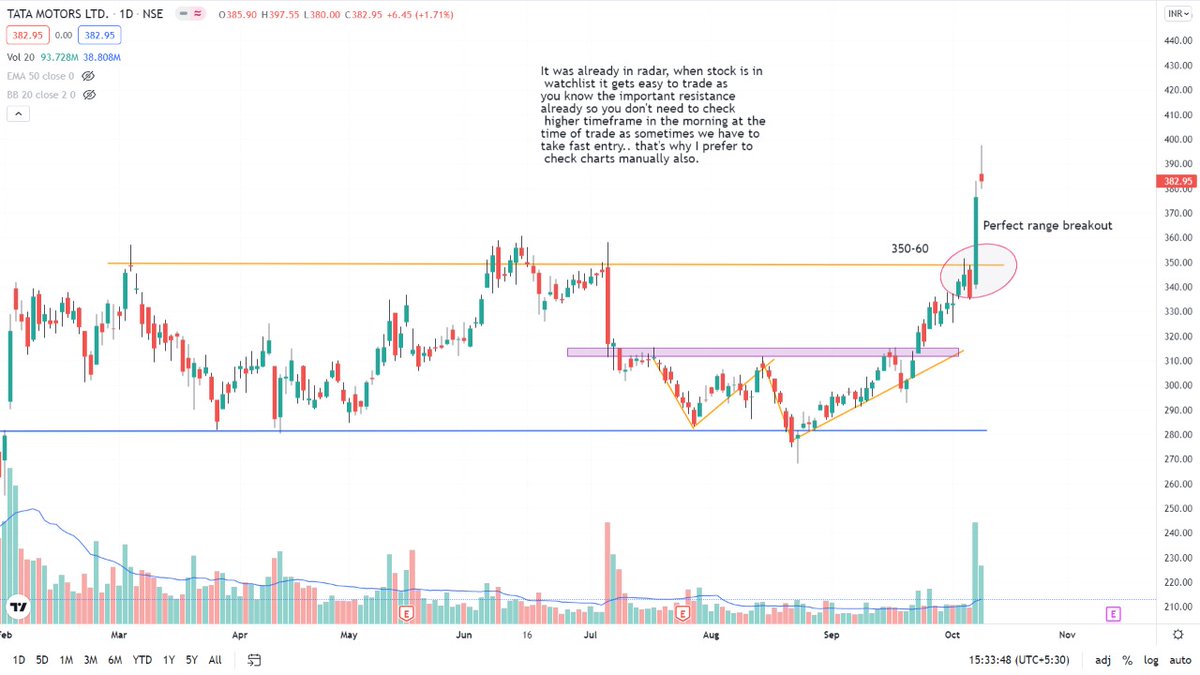
Recently, we've seen many such stocks -- Kotak Bank, TataMotors, TataPower.

Other helpful thing I learned from @Traderknight007 about exit criteria is using volume expansion and DMA/EMA. I began using it and benefitted. This is recently observed in TCS, DLF & many others. (5/15)
Now let's talk about extended move. When a stock gives one sided rally in short period of time, it's extended move.
In large caps, it's generally an extended move when stock is away 20-25% from 50 EMA and midcap/small cap give 30-35% move and then pause a little in trend. (6/15)
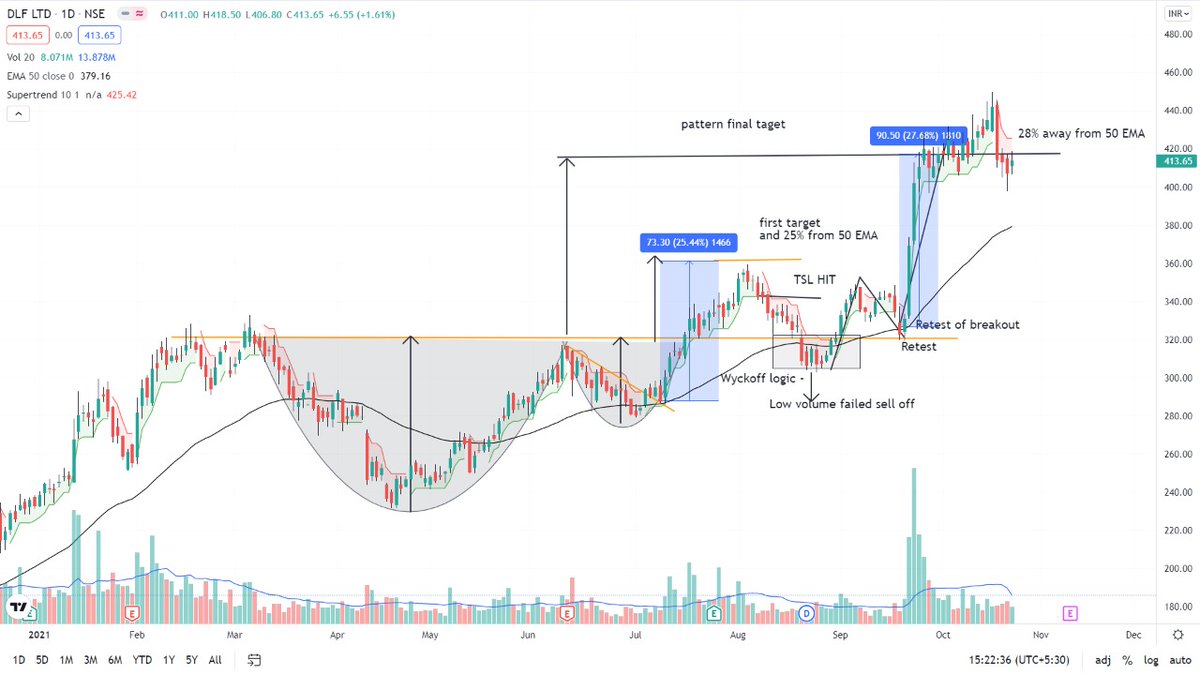
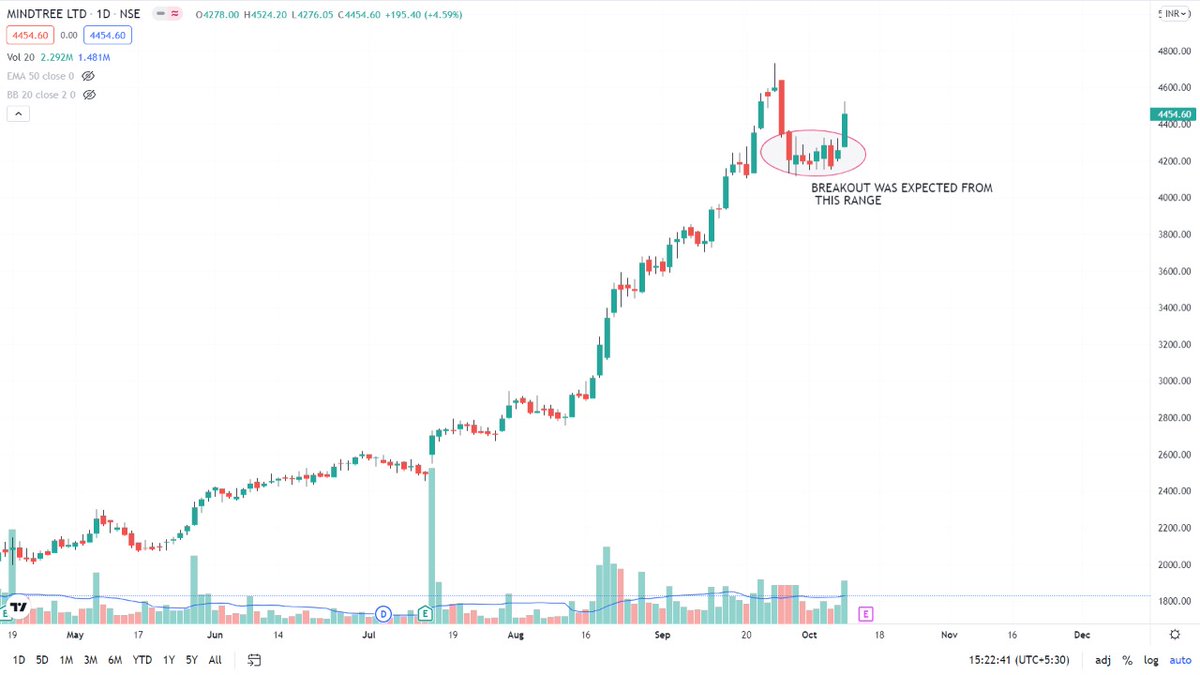
However, exceptions are always there in extended move like Mindtree, IRCTC and IEX. You can book partial profits there if targets and this condition meet and you can simply use Trailing SL for partial profits. Let's take an example of DLF. (7/15)
DLF Daily timeframe has changed trend. It began moving upside and gave breakout. Formed Inv. cup & handle and gave breakout again followed by rally of 20-25% from 50 EMA. First target was 355-60 as per handle target. Also, it has already moved 20-25% from 50EMA. (8/15)
For more understanding, go through this amazing thread of @Traderknight007 👇

https://t.co/5N6hcW6SOm

(9/15)
Now let's talk about Trailing SL

Trend followers prefer to trail their profits but you can do it as per your comfort. Just make sure you have an exit plan.

Trailing has many methods. Being a price action trader, I use swing lows and candlestick for trailing. (10/15)
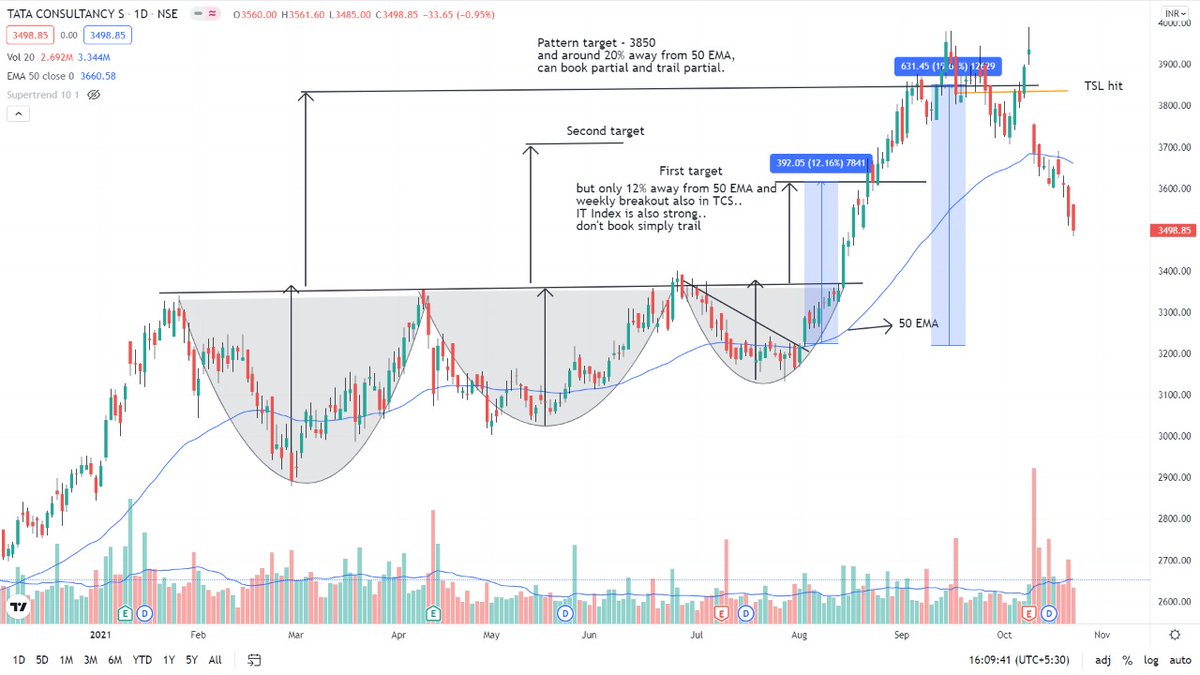
I also like Supertrend (10,1) to trail short term trades.
There are many other ways too.
@Traderknight007 has written this one more amazing thread you can go through and put this information to use. (11/15)

https://t.co/Pysa6LDK4t
Trailing is the best way to be in a trade and ride the trend as far as stock gives a move. You can capture the big move too through this. You should use trailing SL till your target shows up. It's always advisable to use one fixed method to trail SL. (12/15)
With a strong Index, stock gives easy move but if Index is sideways or weak- stocks troubles you for your target. This makes trailing SL important to minimize your loses. Once you get follow up post breakout or 2 bullish candles, start trailing your SL immediately. (13/15)
In trailing, sometimes our TSL triggers due to volatility but be ready for re- entry.
If stock breaks last swing high, enter again and use same trailing SL method. It's difficult initially to enter same trade from higher price but good opportunity shouldn't be missed. (14/15)
The trick is to not look at the price and simply follow the chart. Take a smaller quantity if you don't feel comfortable but make sure you don't miss the trade.
Having an exit plan is as important as entry plan. I hope it helps. (15/15)

More from Sheetal Rijhwani

#AffleIndia updated chart

Target - 6400+

Stop loss - 4650 https://t.co/DD6pFtSvMI

More from Ta

Thread Master File -

All my threads will be listed under here


Need help getting better entries ?
Here is your thread


This is How you can be green on every trade via risk management


Thread on high profitability support and resistance setups & trigger points.


Here’s the Jimmy Momo Script, hope you all love it

You May Also Like

So the cryptocurrency industry has basically two products, one which is relatively benign and doesn't have product market fit, and one which is malignant and does. The industry has a weird superposition of understanding this fact and (strategically?) not understanding it.


The benign product is sovereign programmable money, which is historically a niche interest of folks with a relatively clustered set of beliefs about the state, the literary merit of Snow Crash, and the utility of gold to the modern economy.

This product has narrow appeal and, accordingly, is worth about as much as everything else on a 486 sitting in someone's basement is worth.

The other product is investment scams, which have approximately the best product market fit of anything produced by humans. In no age, in no country, in no city, at no level of sophistication do people consistently say "Actually I would prefer not to get money for nothing."

This product needs the exchanges like they need oxygen, because the value of it is directly tied to having payment rails to move real currency into the ecosystem and some jurisdictional and regulatory legerdemain to stay one step ahead of the banhammer.
I’m torn on how to approach the idea of luck. I’m the first to admit that I am one of the luckiest people on the planet. To be born into a prosperous American family in 1960 with smart parents is to start life on third base. The odds against my very existence are astronomical.


I’ve always felt that the luckiest people I know had a talent for recognizing circumstances, not of their own making, that were conducive to a favorable outcome and their ability to quickly take advantage of them.

In other words, dumb luck was just that, it required no awareness on the person’s part, whereas “smart” luck involved awareness followed by action before the circumstances changed.

So, was I “lucky” to be born when I was—nothing I had any control over—and that I came of age just as huge databases and computers were advancing to the point where I could use those tools to write “What Works on Wall Street?” Absolutely.

Was I lucky to start my stock market investments near the peak of interest rates which allowed me to spend the majority of my adult life in a falling rate environment? Yup.