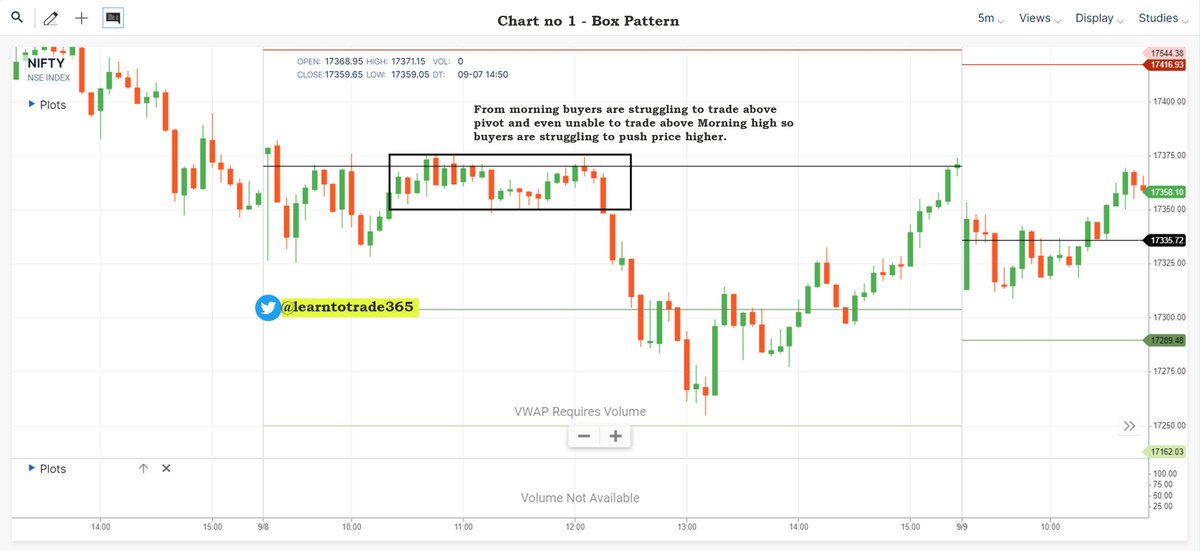
Materials I studied for hundreds of hours before I became consistently profitable as a day trader - a thread:

https://t.co/VrdX0GViIb
More from Ta


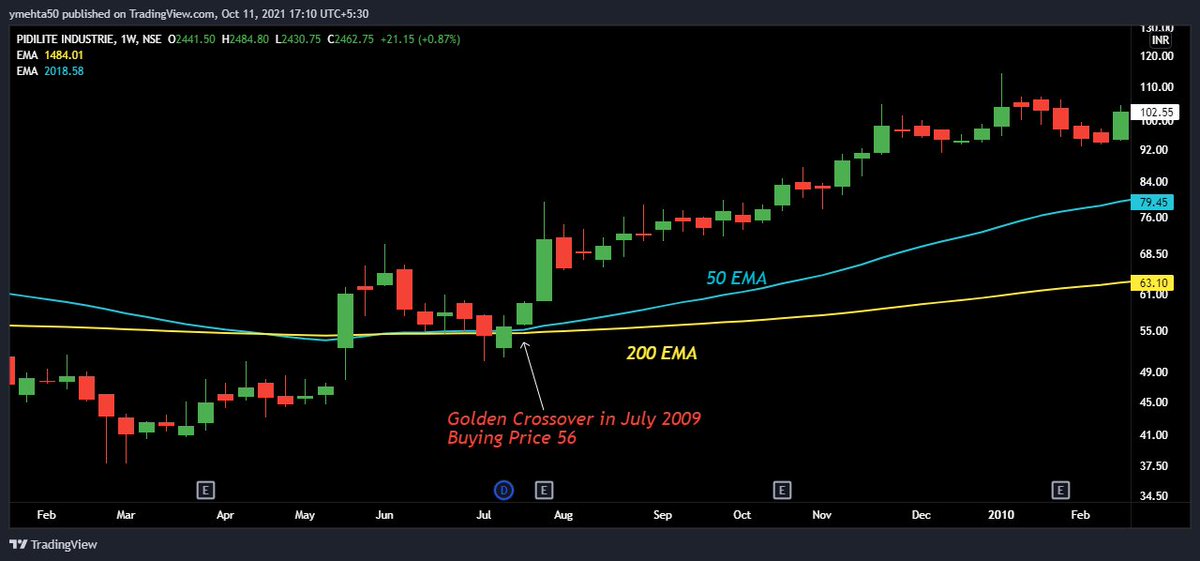

25k webinar Done in a tweet
A sweet and simple BNF Setup i use
Alligator Setup
Retweet so that everyone can get benefited.
Check Full thread for full strategy.
1. You have to use 2 charts simultaneously , first chart of bank nifty spot 15 min time frame , candle used heikin ashi
Second chart 15 min bnf future normal candle.
2. Indicator used is alligator , in the indicator you have to only use the jaw of indicator.
3. Whenever spot and future candle closes simultaneously below the jaw line , short at the low of the candle which closed below the jawline.
4. Whenever spot and future candle closes simultaneously above the jaw line , buy at the high of the candle which closes above the jawline.
5. Target and Stoploss - Ideal target which i personally take is 100 points.
Stoploss also 100 points.
On trending days you can trail and take 200/300/400 points also.
I have personally made maximum 624 points in bank nifty in a single trade.
6. Precautions - never trade on sideways days.
7. Never trade on gap up or gapdown of more than 100 points .
I have made a detailed video on the same.
Link https://t.co/XMolGUKZPF
Thankyou for reading.
A sweet and simple BNF Setup i use
Alligator Setup
Retweet so that everyone can get benefited.
Check Full thread for full strategy.
1. You have to use 2 charts simultaneously , first chart of bank nifty spot 15 min time frame , candle used heikin ashi
Second chart 15 min bnf future normal candle.
2. Indicator used is alligator , in the indicator you have to only use the jaw of indicator.
3. Whenever spot and future candle closes simultaneously below the jaw line , short at the low of the candle which closed below the jawline.
4. Whenever spot and future candle closes simultaneously above the jaw line , buy at the high of the candle which closes above the jawline.
5. Target and Stoploss - Ideal target which i personally take is 100 points.
Stoploss also 100 points.
On trending days you can trail and take 200/300/400 points also.
I have personally made maximum 624 points in bank nifty in a single trade.
6. Precautions - never trade on sideways days.
7. Never trade on gap up or gapdown of more than 100 points .
I have made a detailed video on the same.
Link https://t.co/XMolGUKZPF
Thankyou for reading.