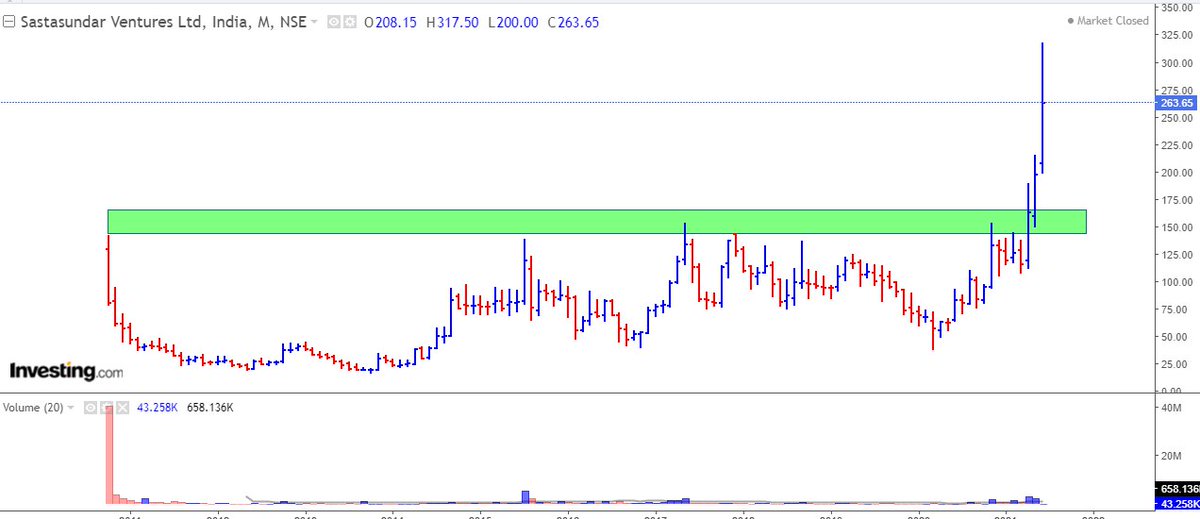
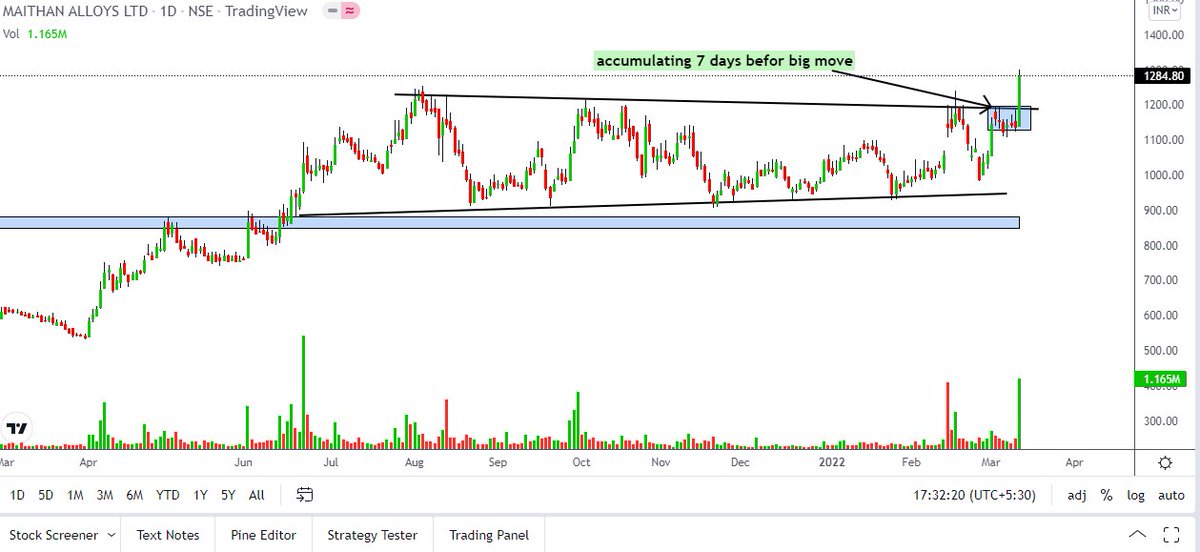
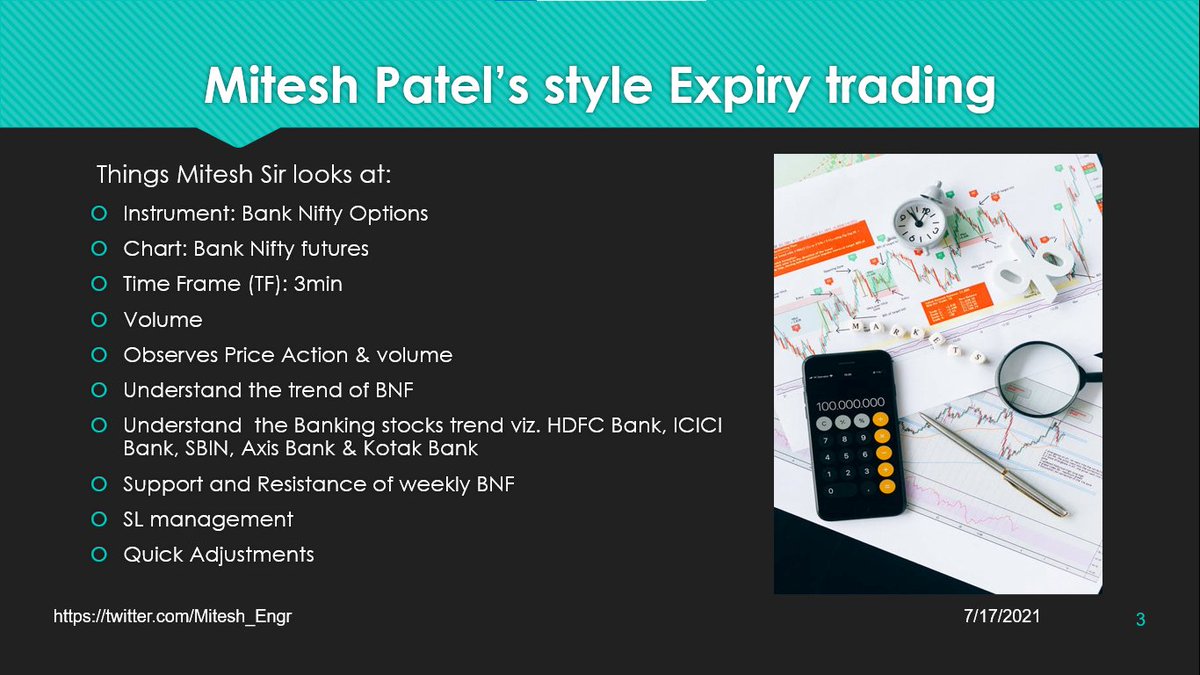
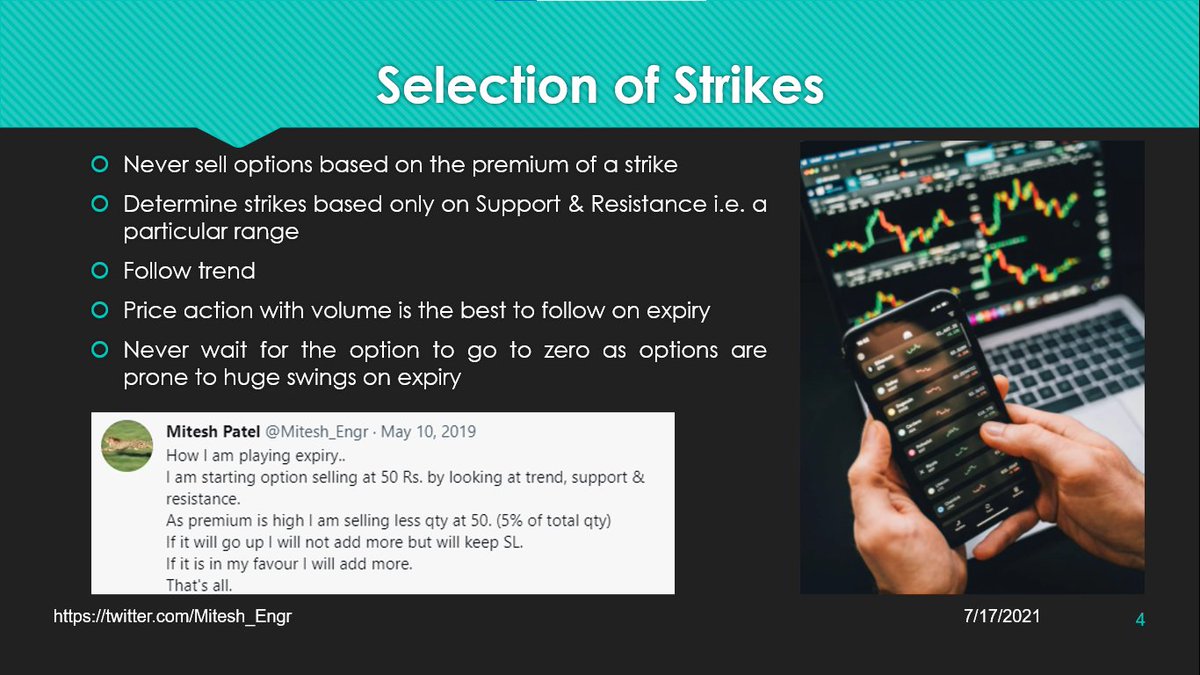
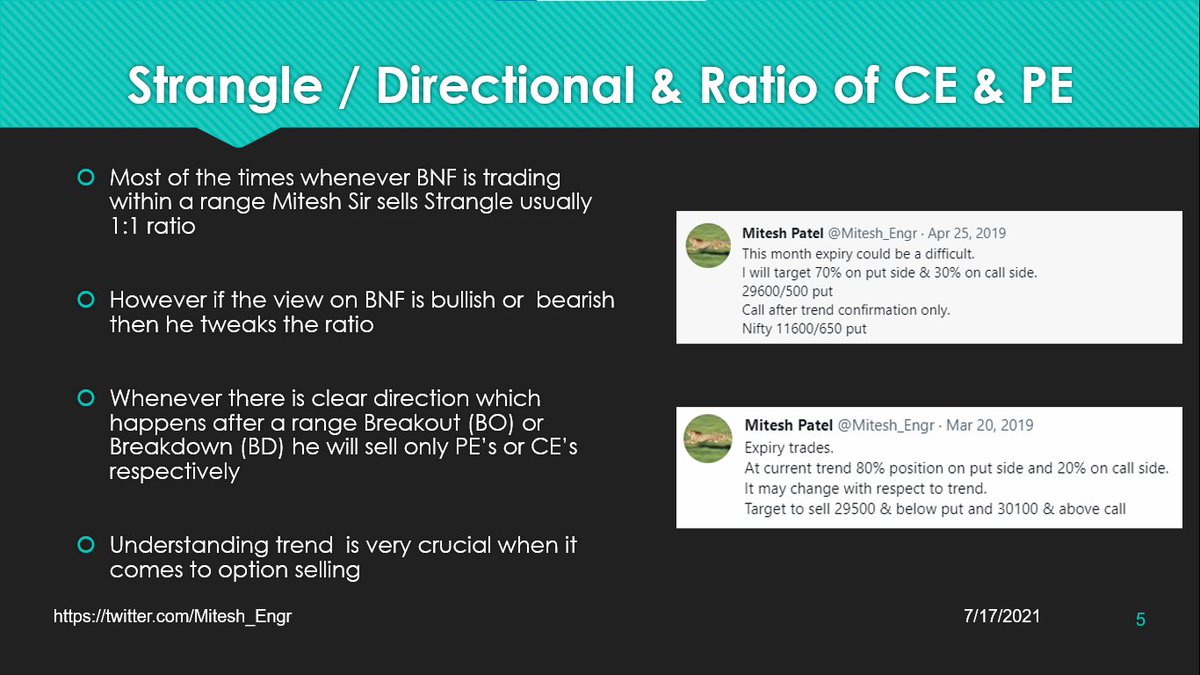
🌟Lesson 1 - weekly /monthly breakout push stock price 30/50% higher in 2/3 weeks.

Ex- #sastasundar after breakout 145/155 zone , stocks in 2/3 weeks given 30/40% return.

And in 2/3 months it was double 💞 https://t.co/9kkc3IV4Lo

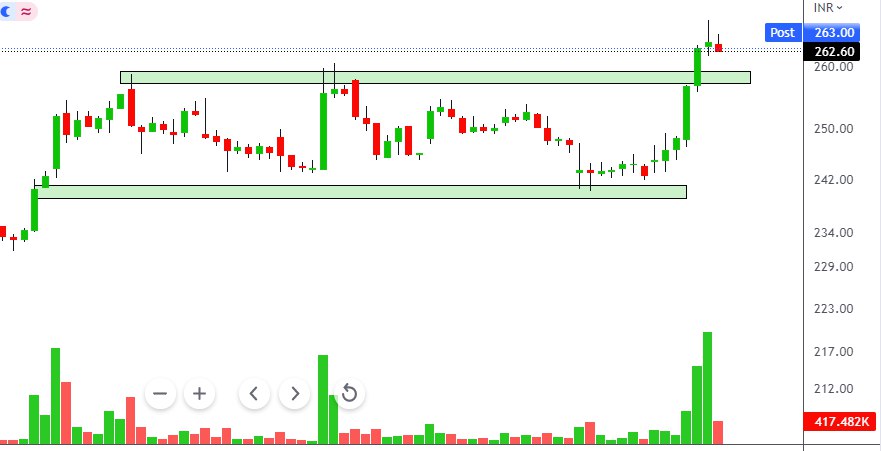
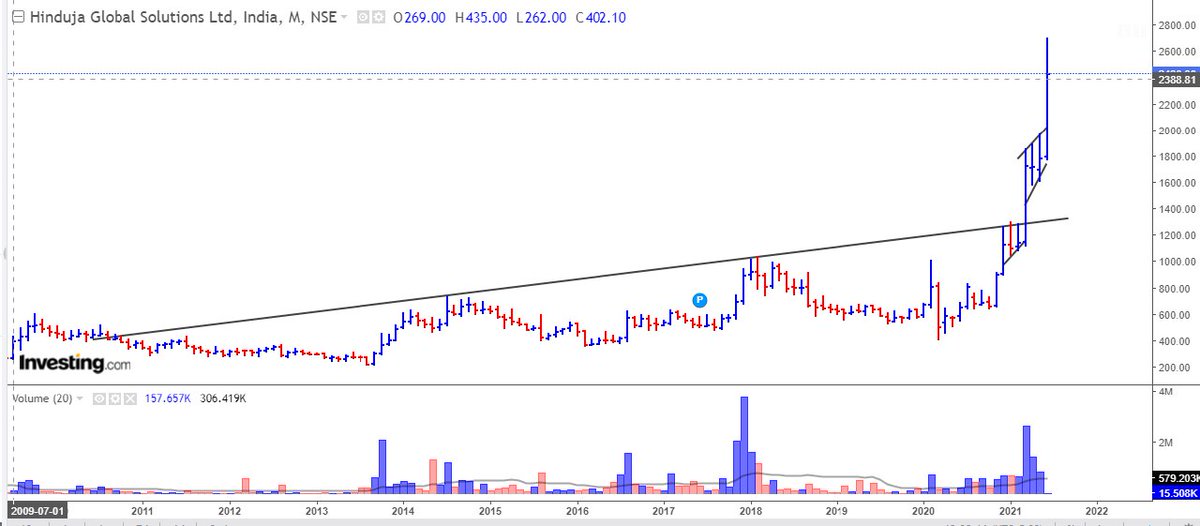
🌟Lesson 2 - if stock is making same pattern ( in 2 /3hours chart) after given breakout of (weekly /monthly chart) , then chances of stock going up is much more.

Ex - #HGS after given breakout of Trendline ( range) in monthly chart, again making same pattern 4 hours chart. 💞
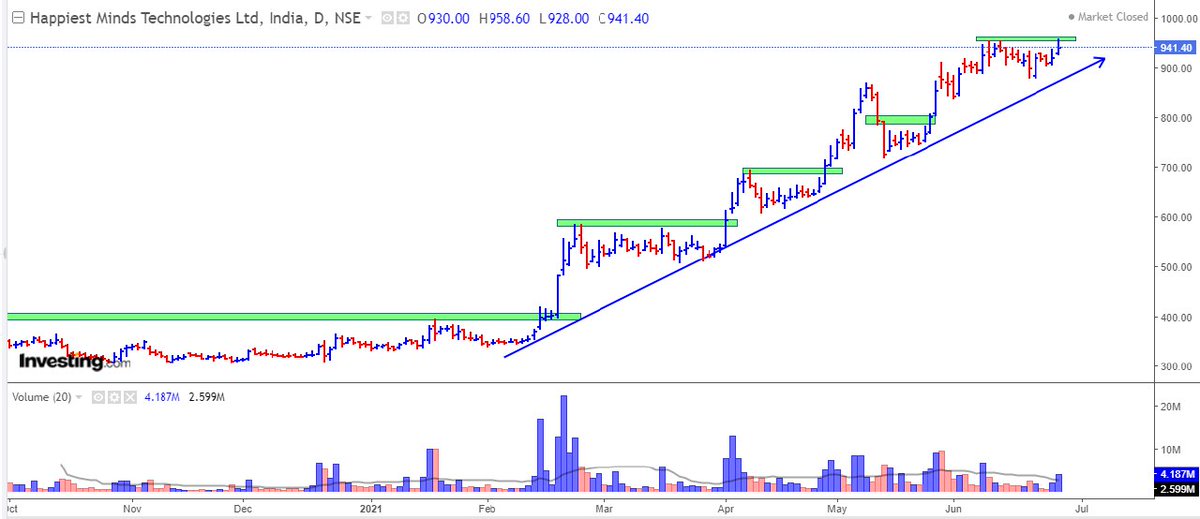
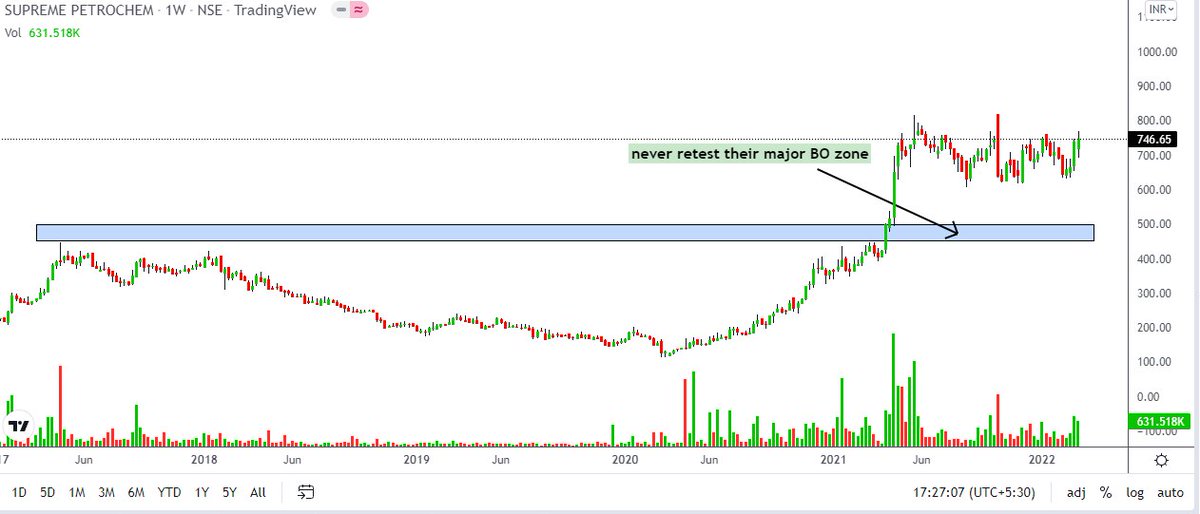
🌟Lesson 3- if stock never come to retest it's weekly & monthly breakout zone then the chances of it's 2x is much more.

EX - #happiestmind everytime consolidating & making new high. 💞

@chartmojo
@charts_breakout
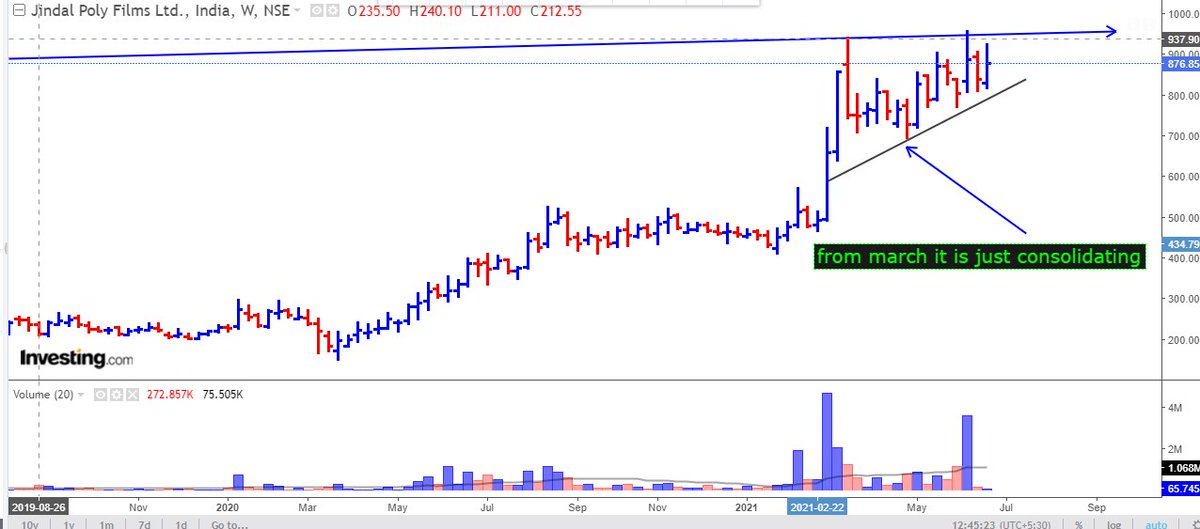
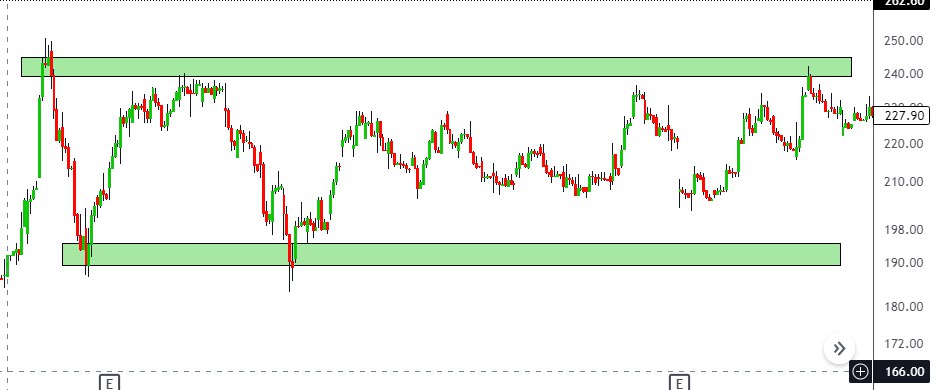
🌟Lesson 4 - when whole market fall still strongest stocks only consolidate or move down very little.

Ex - when this march market took correction 800/1000 points #jindalpoly just consolidating from that time.
Now ready for new high . 💞
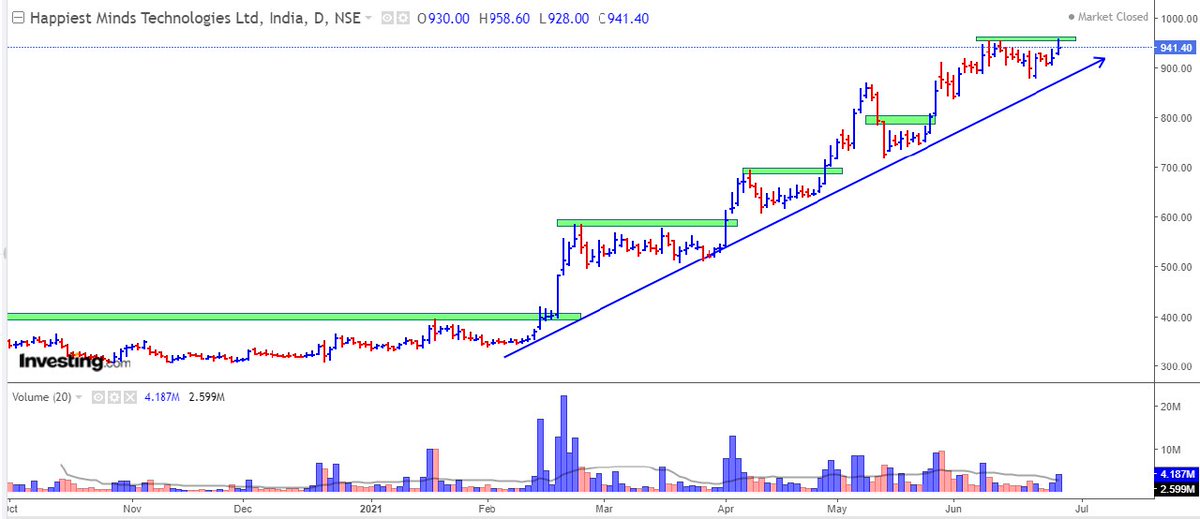
🌟Lesson 5 - when market recover the strongest stocks recover very fast & will make new high.
Ex - #happiestmind when market take little correction & again bounce little , then #happiestmind made new high before market .

More from V¶kπnT

How to find high probability breakouts intraday trades .

Based on my experience , these are the best time to trade breakouts intraday 👇

1⃣ When stock is doing small consolidation near major resistance & support
Here risk is very low,

Ex- #khaitanchem https://t.co/uGTZrfQOm4


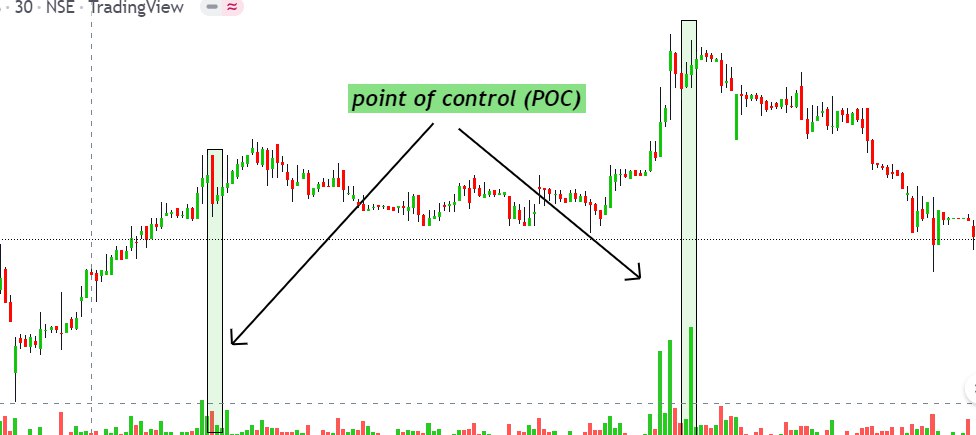
2⃣ When previous BO of stock are very strong with high volume.

#geecee


3️⃣ When stock is accumulating in very tight range with low volume & BO with very high volume.

Ex - #jagsonpal


4⃣ When major trend of stock & market must match each other.

And that time their sector must be strong 💪

#tatamotors


5⃣ Recent example of intraday tight range setup for next week which is fullfilling all that criteria 👆👇

Ex - #NDTV

Here risk is 2/3% & reward is 8/15%
Trading view scanner process -

1 - open trading view in your browser and select stock scanner in left corner down side .

2 - touch the percentage% gain change ( and u can see higest gainer of today)


3. Then, start with 6% gainer to 20% gainer and look charts of everyone in daily Timeframe . (For fno selection u can choose 1% to 4% )

4. Then manually select the stocks which are going to give all time high BO or 52 high BO or already given.

5. U can also select those stocks which are going to give range breakout or already given range BO

6 . If in 15 min chart📊 any stock sustaing near BO zone or after BO then select it on your watchlist

7 . Now next day if any stock show momentum u can take trade in it with RM

This looks very easy & simple but,

U will amazed to see it's result if you follow proper risk management.

I did 4x my capital by trading in only momentum stocks.

I will keep sharing such learning thread 🧵 for you 🙏💞🙏

Keep learning / keep sharing 🙏
@AdityaTodmal

More from Stockslearnings

#Freetip
Today's move is an example of this tweet. Save this chart for future ref. https://t.co/amUhSLrET3
This is so useful. Thank you @heartwon 🙏

You May Also Like

A brief analysis and comparison of the CSS for Twitter's PWA vs Twitter's legacy desktop website. The difference is dramatic and I'll touch on some reasons why.

Legacy site *downloads* ~630 KB CSS per theme and writing direction.

6,769 rules
9,252 selectors
16.7k declarations
3,370 unique declarations
44 media queries
36 unique colors
50 unique background colors
46 unique font sizes
39 unique z-indices

https://t.co/qyl4Bt1i5x


PWA *incrementally generates* ~30 KB CSS that handles all themes and writing directions.

735 rules
740 selectors
757 declarations
730 unique declarations
0 media queries
11 unique colors
32 unique background colors
15 unique font sizes
7 unique z-indices

https://t.co/w7oNG5KUkJ


The legacy site's CSS is what happens when hundreds of people directly write CSS over many years. Specificity wars, redundancy, a house of cards that can't be fixed. The result is extremely inefficient and error-prone styling that punishes users and developers.

The PWA's CSS is generated on-demand by a JS framework that manages styles and outputs "atomic CSS". The framework can enforce strict constraints and perform optimisations, which is why the CSS is so much smaller and safer. Style conflicts and unbounded CSS growth are avoided.