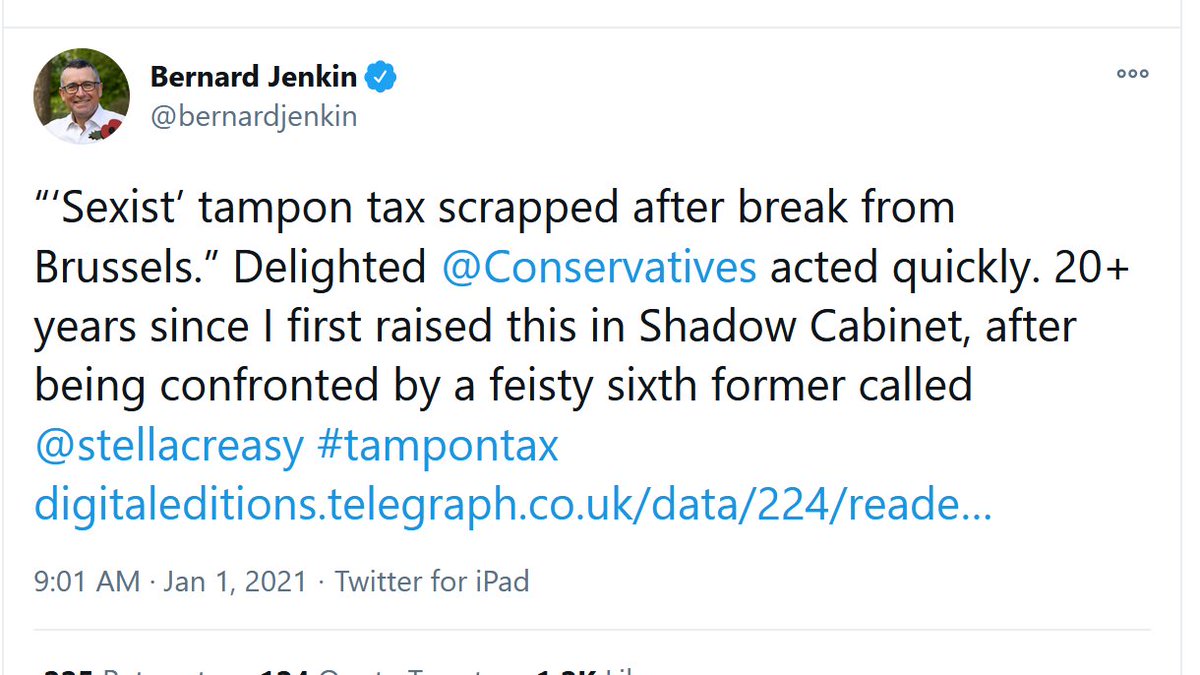
Next we have Bernard Jenkin, Conservative MP for Harwich and North Essex. The patronising way in which he calls Stella Creasy "feisty" really shows his commitment against sexism. Nice job!
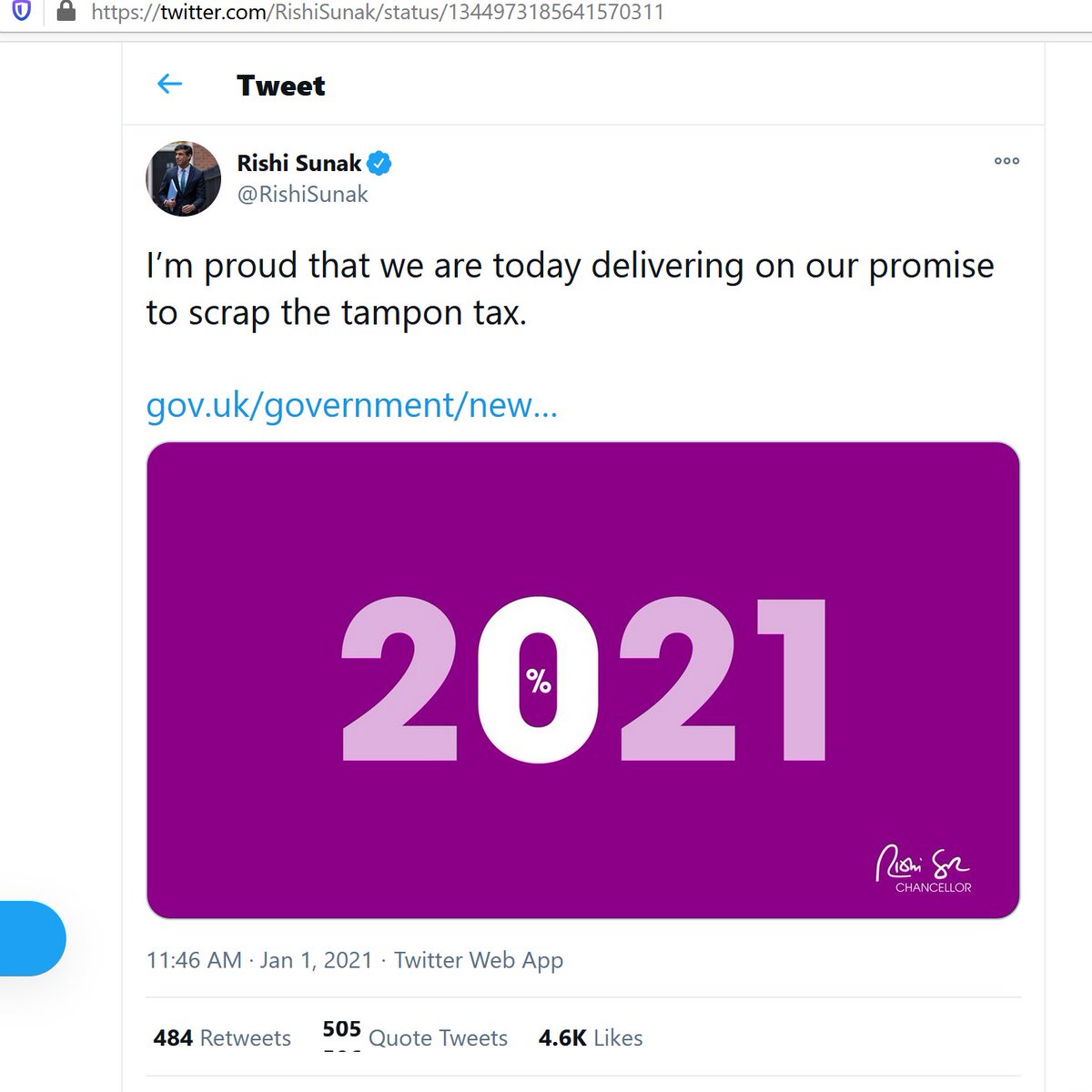
Rishi Sunak, the Chancellor and Conservative MP for Richmond, Yorkshire, also voted against the 2015 motion to abolish the Tampon tax. What's with the autographed graphics, Rishi? Do you think you're some kind of rock star?
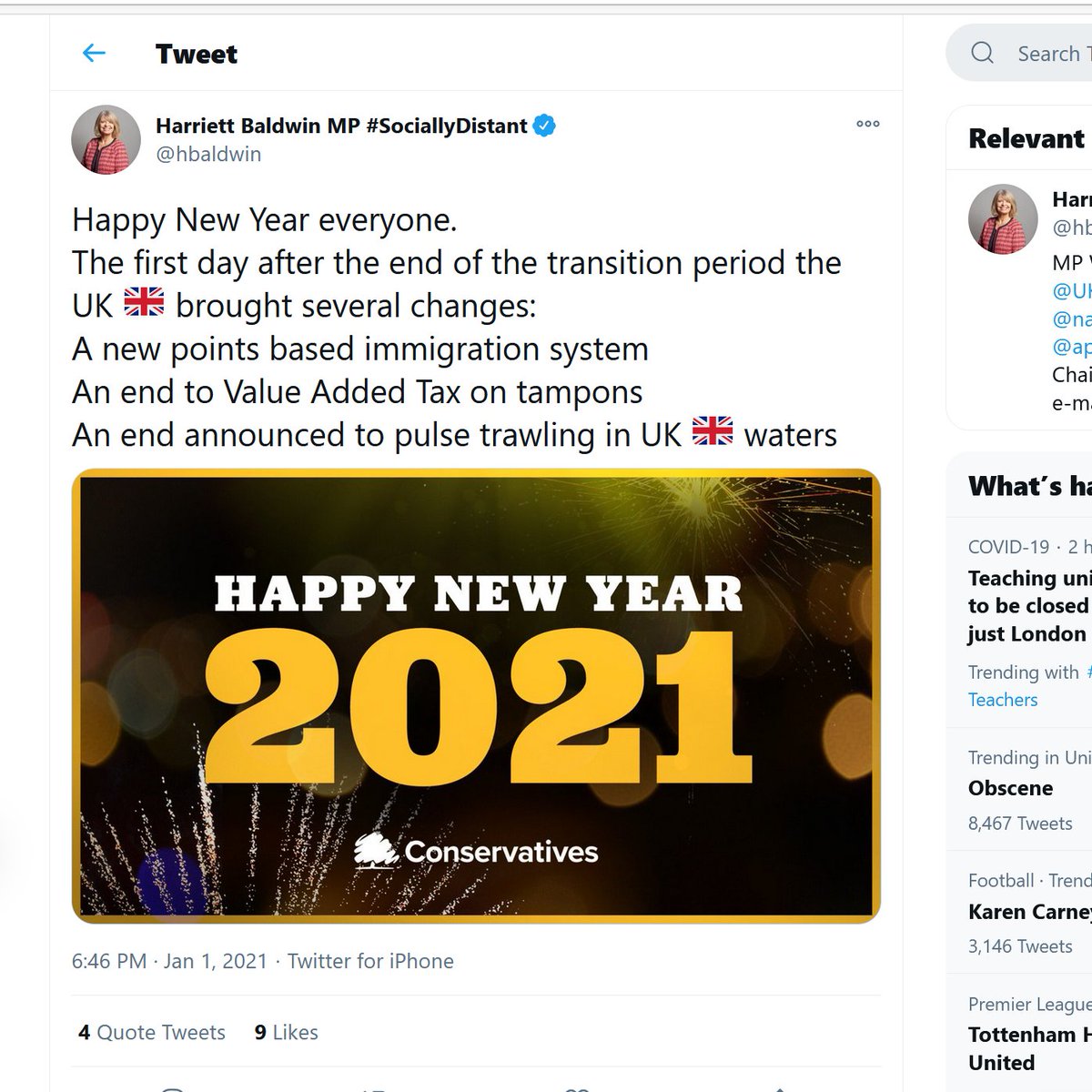
Harriet Baldwin, Conservative MP for West Worcestershire has posted the lie that it was EU membership which prevented us ditching the Tampon tax. Harriet, you voted against the 2015 motion to abolish this tax. Have you forgotten?
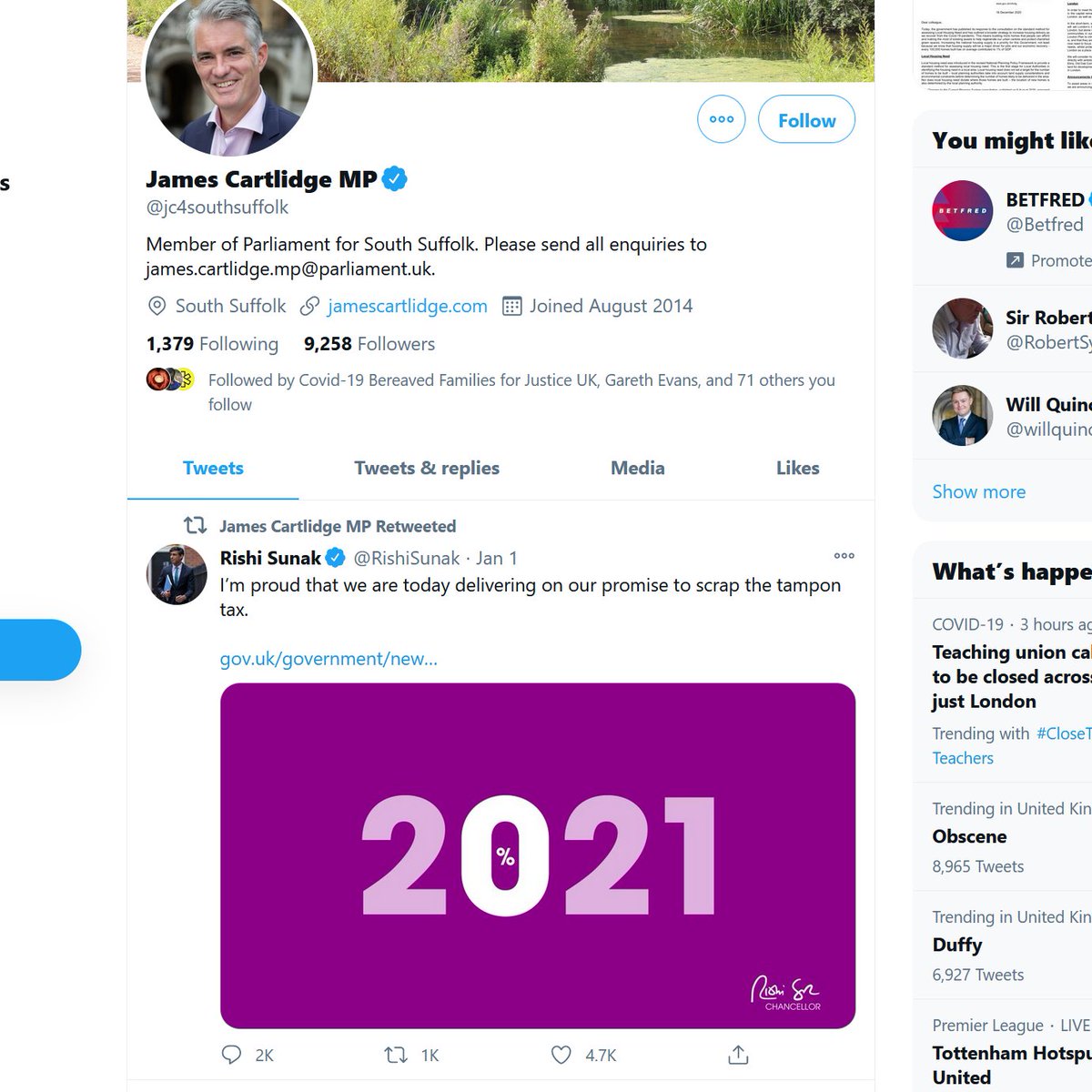
James Cartlidge, Conservative MP for South Suffolk didn't post his own tweet. But he did retweet Rishi Sunak. James, how soon you forgot your vote in 2015 against abolishing the Tampon tax!
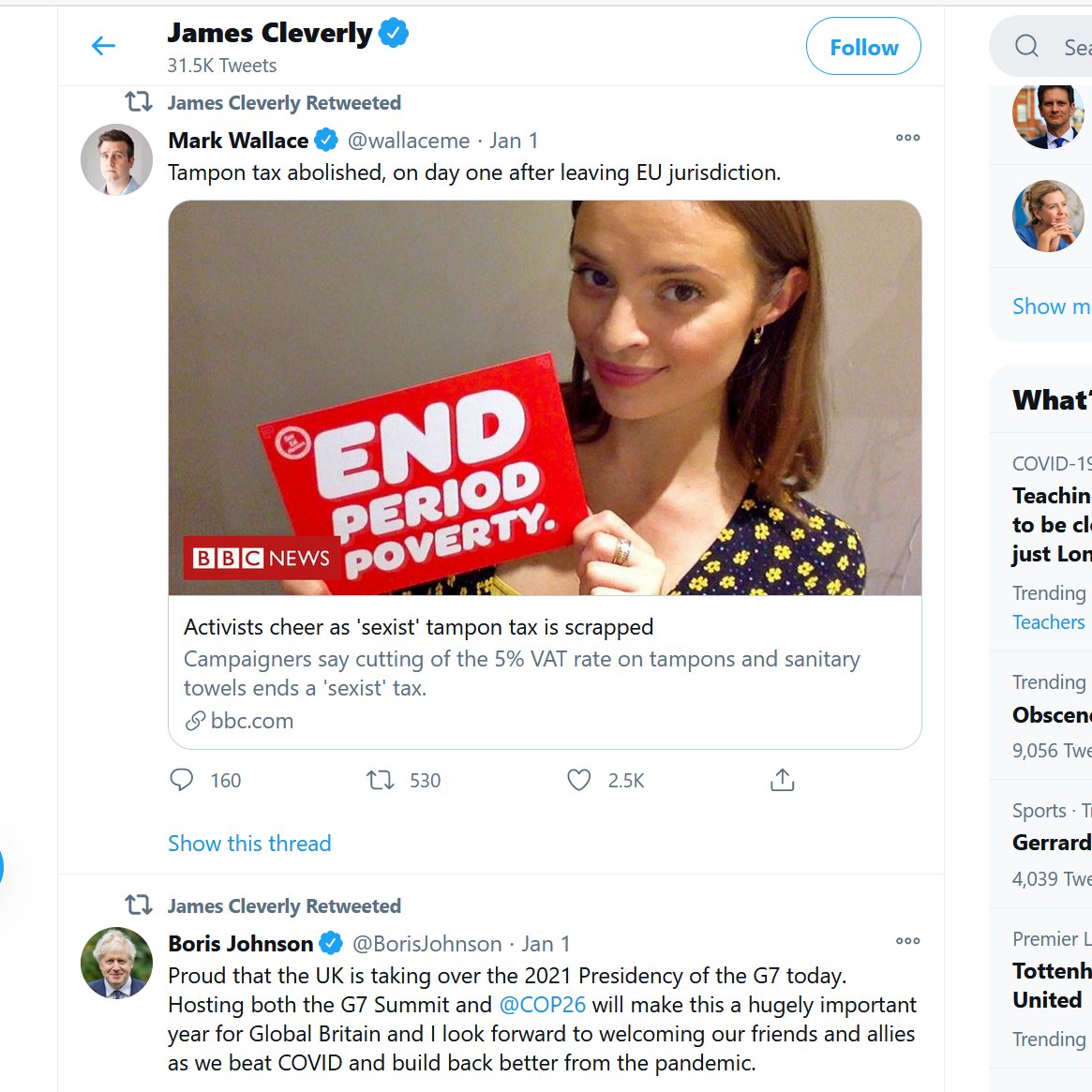
James Cleverly, Conservative MP for Braintree, didn't post his own tweet about yesterday's vote to abolish the Tampon tax. But he retweeted this tweet instead. James voted against axing this tax back in 2015, but has forgotten. Too much New Year's Baileys?
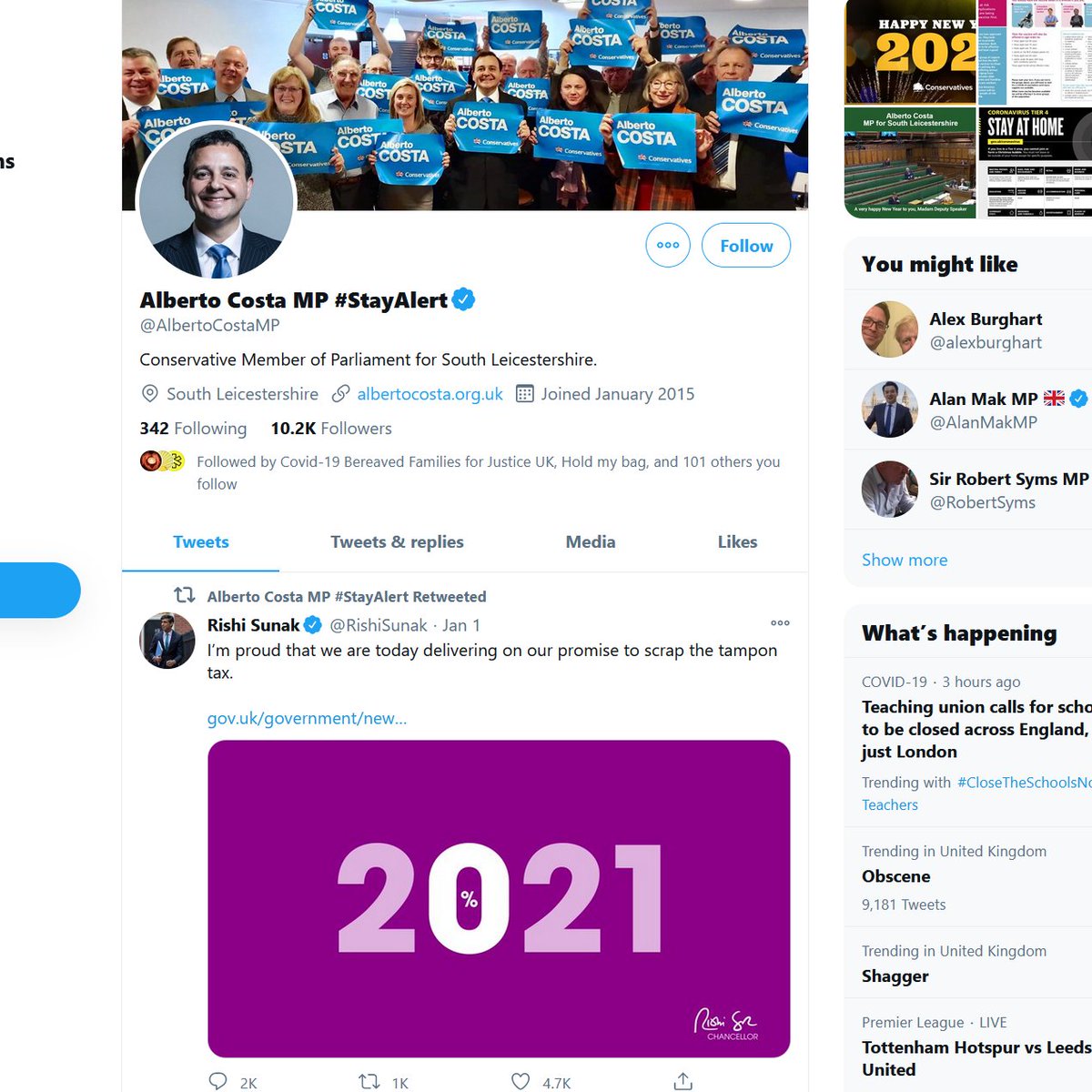
Alberto Costa, Conservative MP for South Leicestershire retweeted Rishi Sunak's tweet. Alberto has forgotten that time in 2015 when he voted against the abolition of the Tampon tax. But it was five years ago, right?
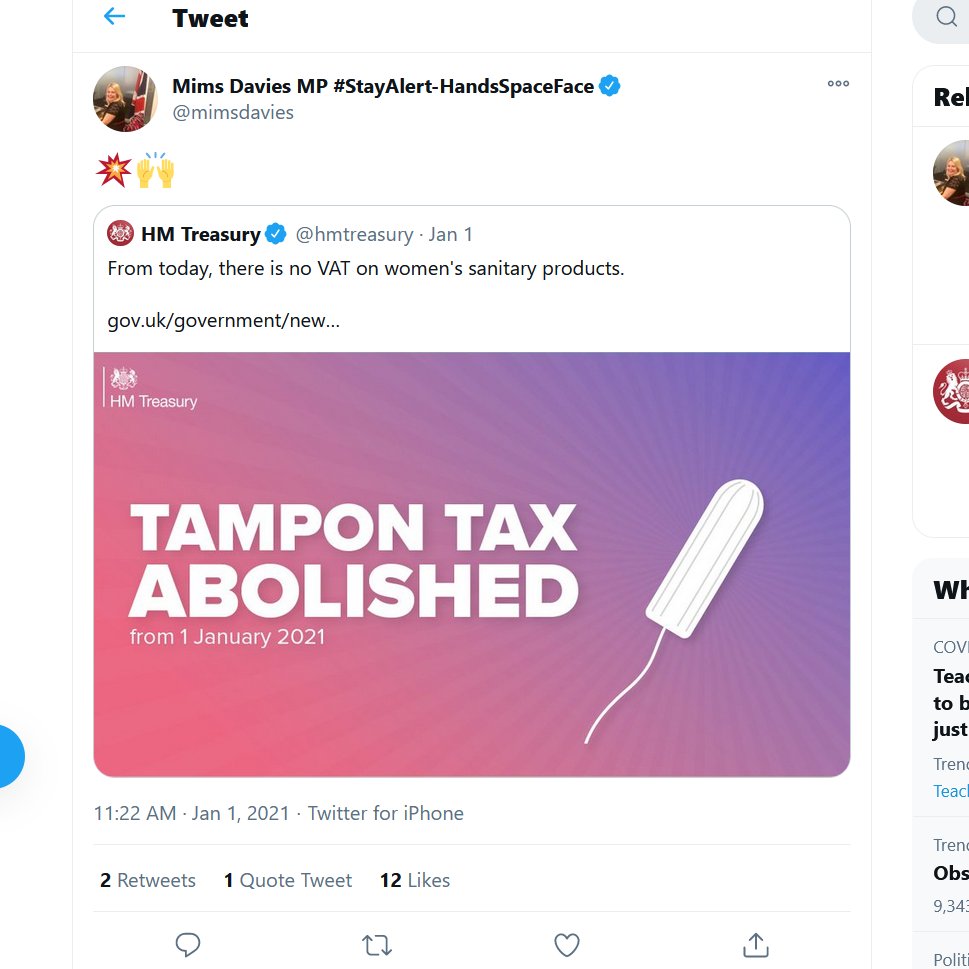
Mims Davies, Conservative MP for Mid Sussex quote tweeted the Treasury tweet, adding some celebratory emojis. Mim, you and your colleagues could have voted to abolish the Tampon tax five years ago. Why didn't you?
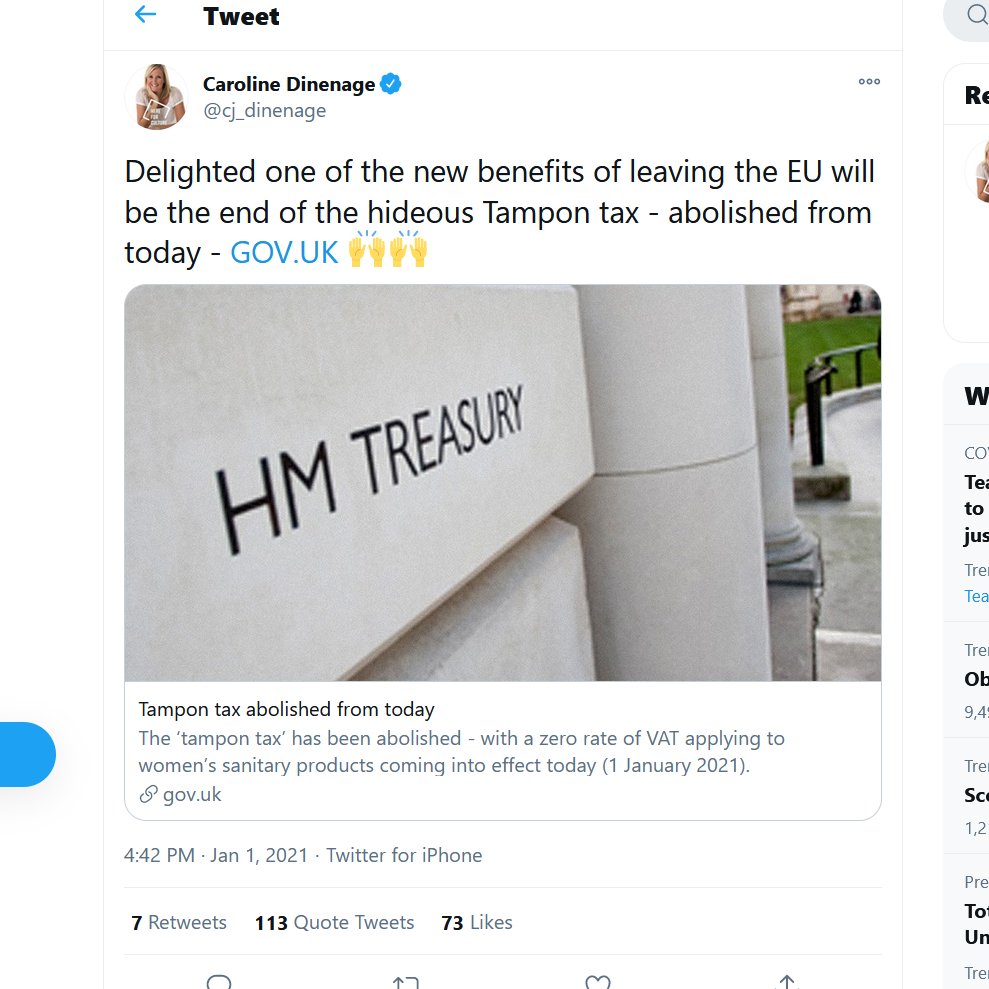
Caroline Dinenage, Conservative MP for Gosport, has tweeted that the Tampon tax is "hideous". So why was it she voted against its abolition in 2015? And why is she blaming this on the EU, when it was actually down to her and the majority of her Tory colleagues?
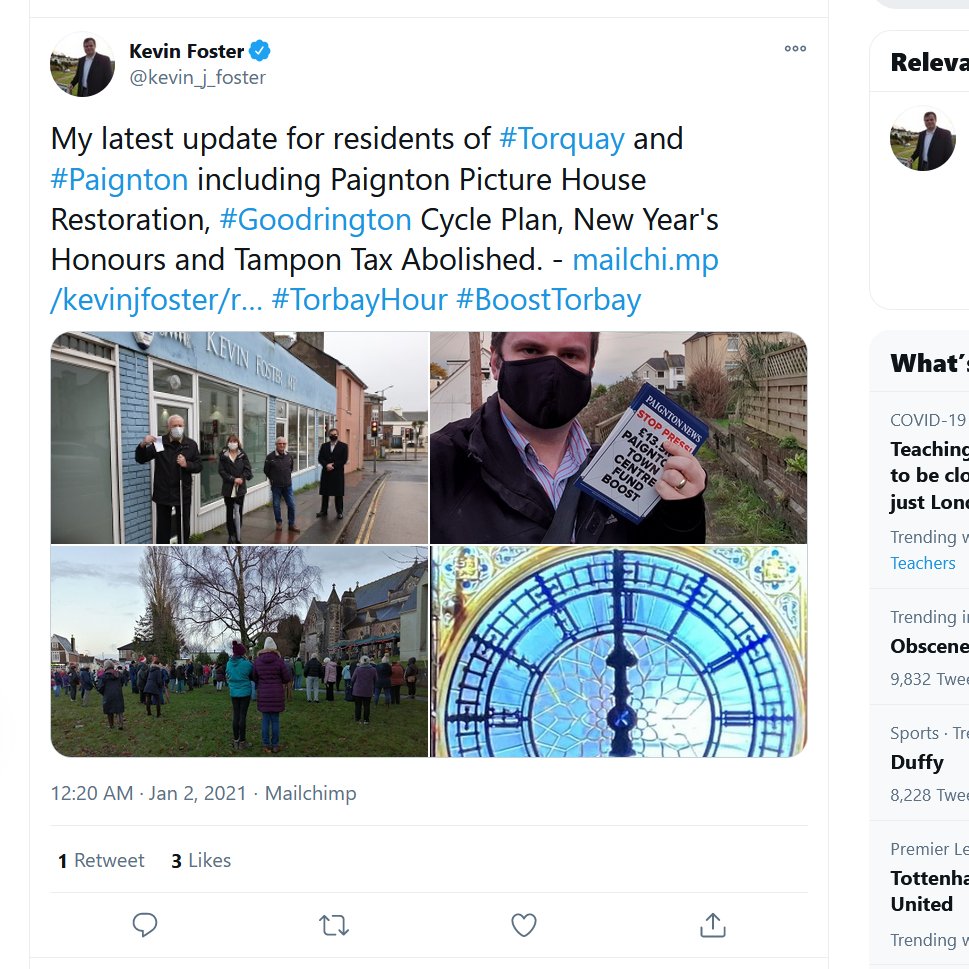
Kevin Foster, Conservative MP for Torbay, was keen to share the news about yesterday's vote to abolish the Tampon tax. If only he hadn't voted against the motion to abolish this unfair tax back in 2015?
Marcus Fysh, Conservative MP for Yeovil, has retweeted two tweets about the Tampon tax vote yesterday. But he was one of the Tory MPs who voted against a motion to abolish the tax in 2015.
Dame Cheryl Gillan blames the EU for the charging of tax on tampons. This isn't correct. Cheryl has also conveniently forgotten that she voted against abolishing the tampon tax back in 2015.
Richard Graham, Conservative MP for Gloucester, appears to be unhappy at criticism that the Tories are wrongly blaming the EU for the tampon tax. Something you "couldn't make up" is the Richard voted against the motion to abolish the tax in 2015.
Robert Halfon, Conservative MP for Harlow, suggests EU membership prevented abolishing the Tampon Tax, conveniently forgetting there is zero tax on these products in Ireland (in the EU) and that he voted against the abolition of tampon tax in 2015.
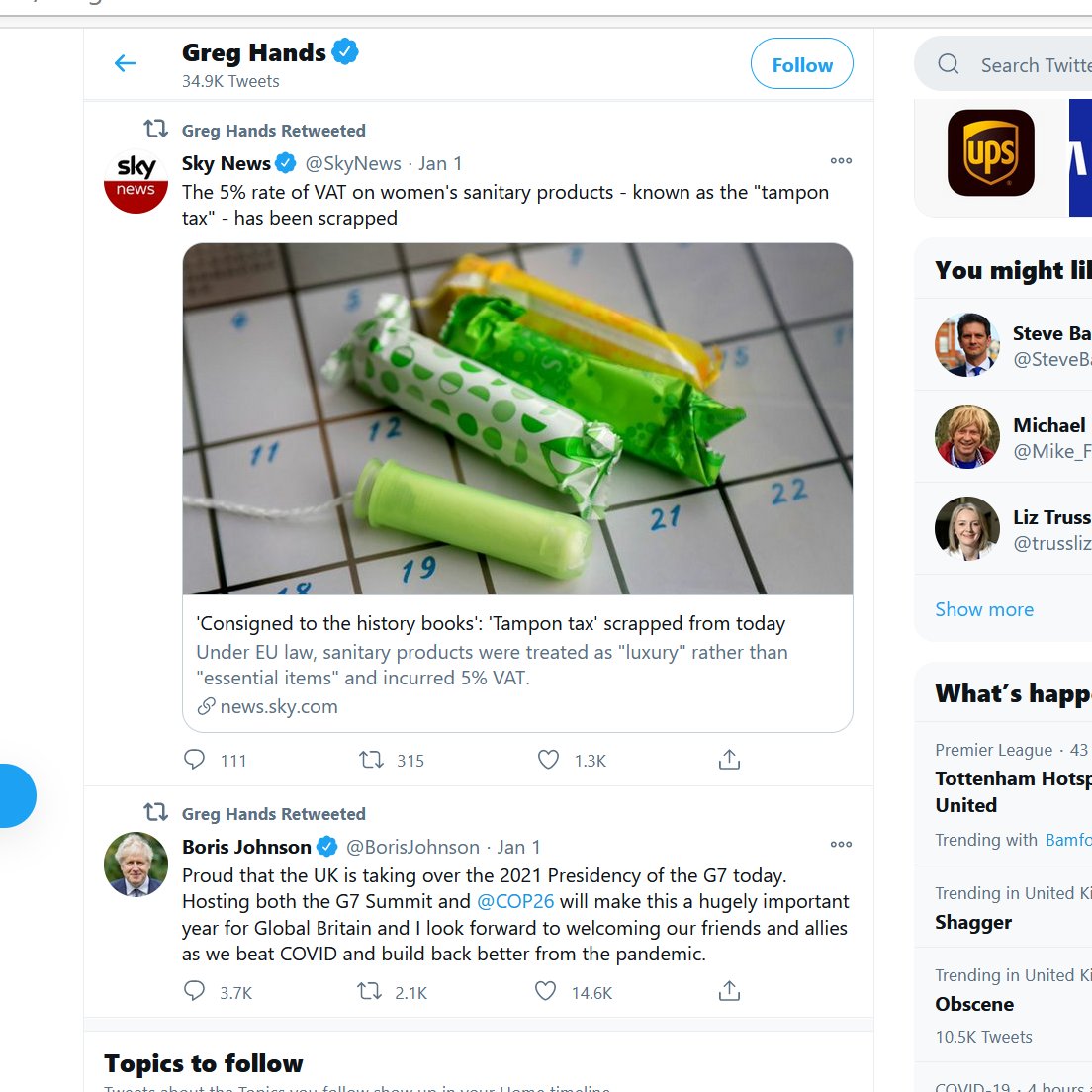
Greg Hands, Conservative MP for Chelsea and Fulham has retweeted the Sky news coverage of the abolition of the tampon tax. He fails to mention that he voted against the 2015 motion to abolish this tax. Could he have forgotten?
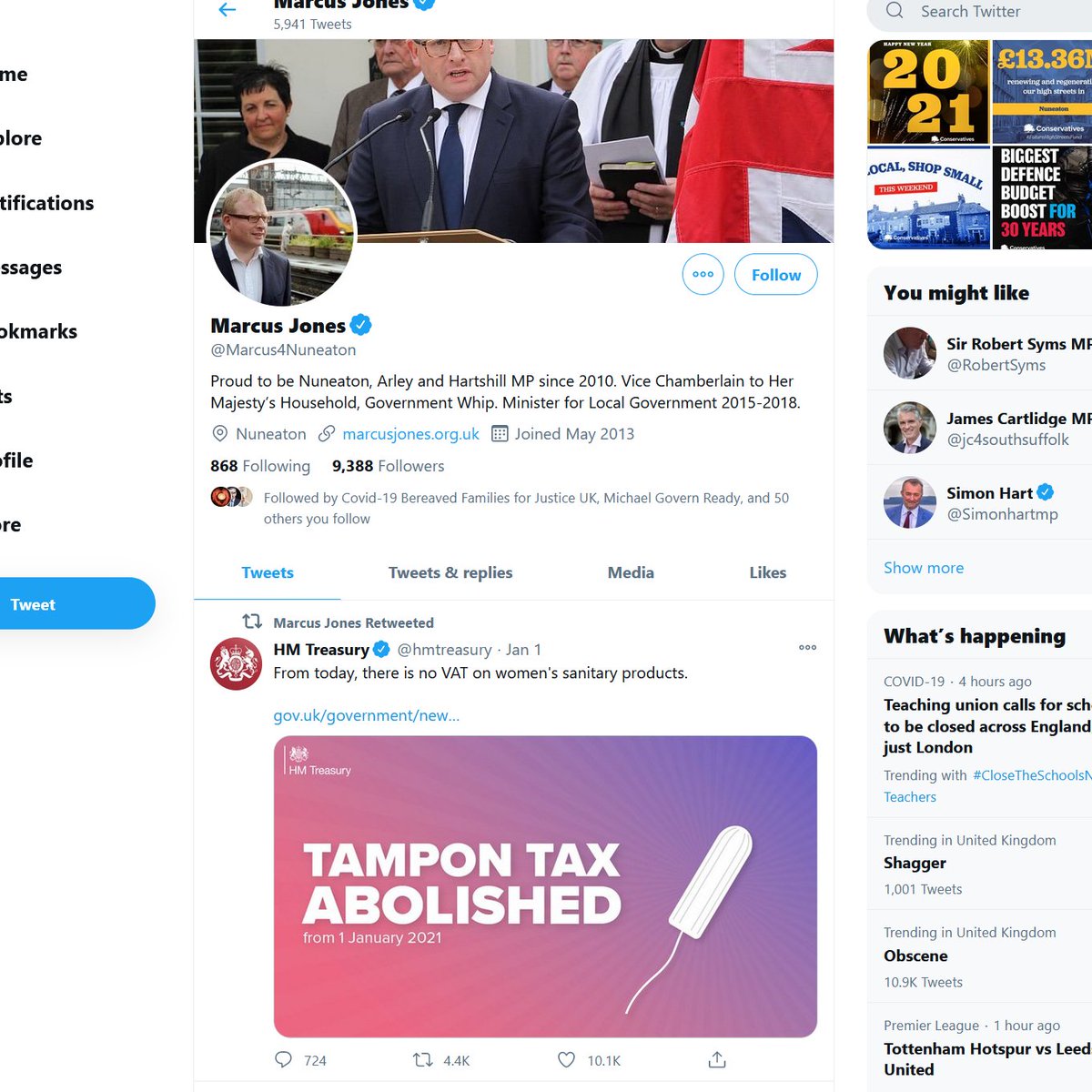
Marcus Jones, Conservative MP for Nuneaton, has retweeted the Treasury tweet. I doubt he would want people to know he voted against the motion to abolish the Tampon tax in 2015.
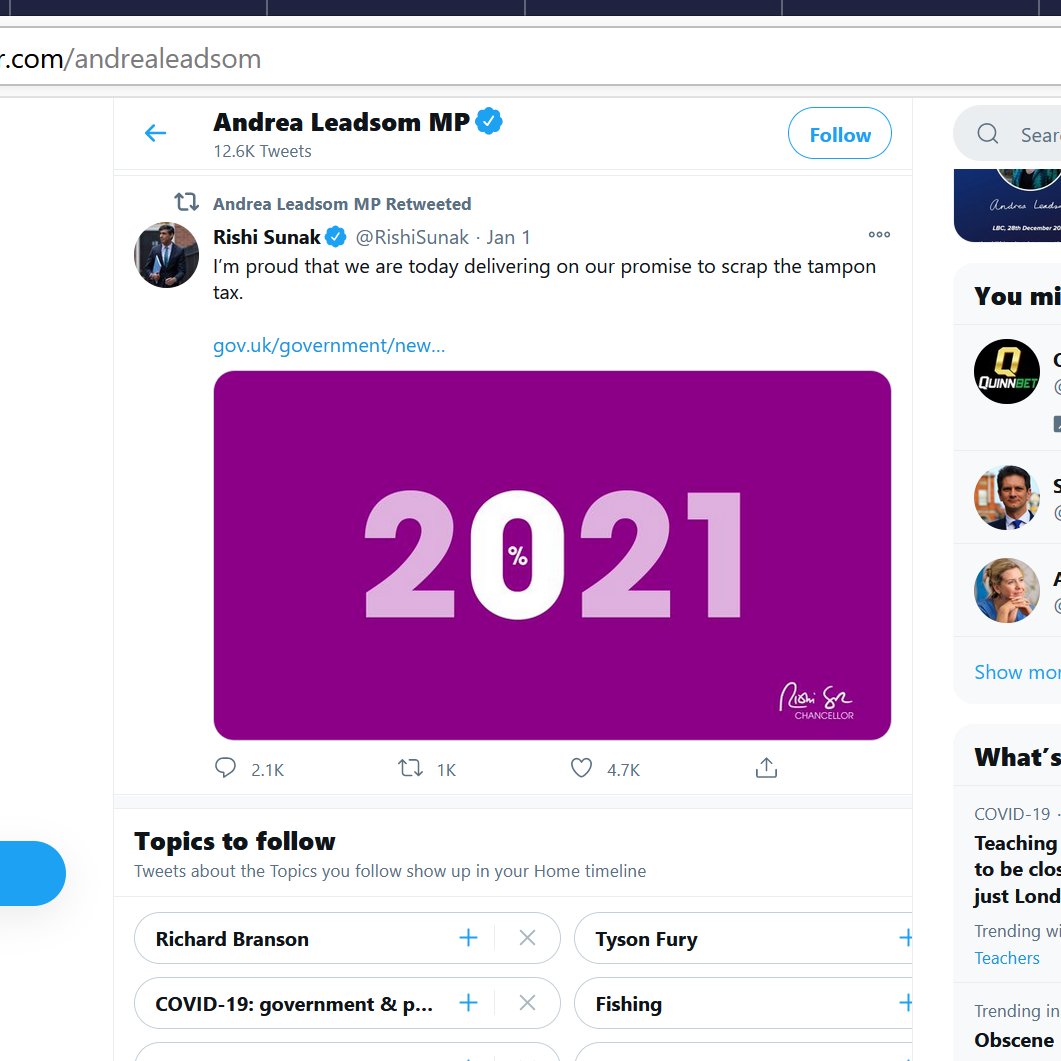
Andrea Leadsom, Conservative MP for South Northamptonshire retweeted a tampon tax tweet from yesterday. She's forgotten 2015 when she voted against a motion to abolish the unfair tax.
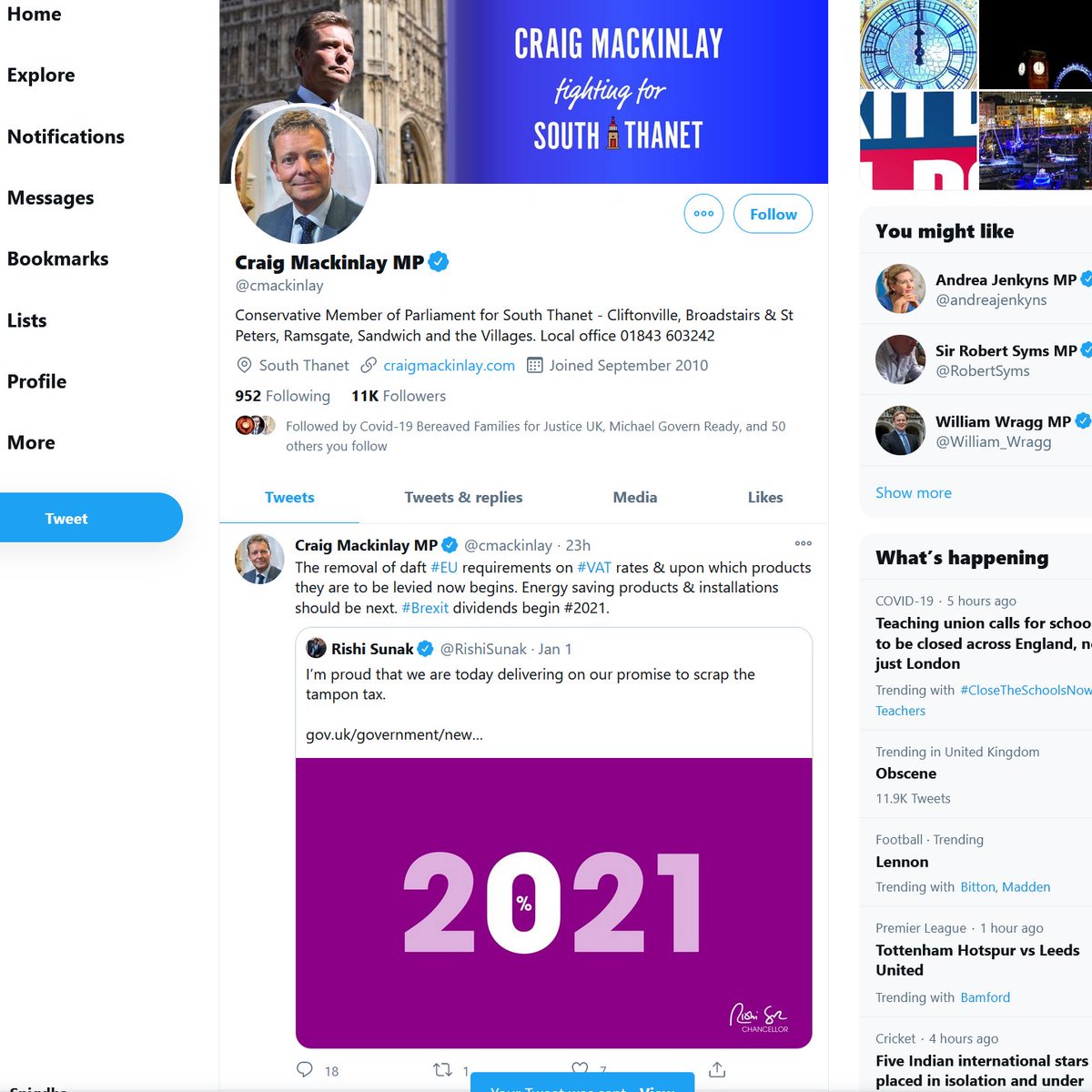
Craig Mackinlay, Conservative MP for South Thanet, says "daft" EU regulations were the reason for the unfair tampon tax. He doesn't seem to know these products are tax free in Ireland. Will someone remind him that he voted against the abolition of the tampon tax in 2015?